

Advanced Weather Sealing: Protecting Your UK Home from the Elements
Discover the crucial role of advanced weather sealing in UK homes. Learn about different technologies, materials, Building Regulations, and practical tips for a durable, energy-efficient property.

Shard Architectural Glazing
19 February 2026
Discover the crucial role of advanced weather sealing in UK homes. Learn about different technologies, materials, Building Regulations, and practical tips for a durable, energy-efficient property.
📋In This Article
- Why Weather Sealing Matters: Beyond Just Keeping Dry
- Understanding Weather Sealing Technologies and Materials
- Weather Sealing and UK Building Regulations (Part L)
- Installation and Maintenance: Best Practices for Longevity
- Choosing the Right Weather Sealing Solutions for Your Home
- The Shard AG Difference: Expert Weather Sealing in Architectural Glazing
In the unpredictable climate of the UK, effective weather sealing is not merely a convenience but a fundamental necessity for any home. From driving rain and strong winds to fluctuating temperatures, the elements constantly challenge the integrity of our buildings. Proper weather sealing technology acts as your home's first line of defence, safeguarding against moisture ingress, heat loss, and draughts. This comprehensive guide will delve into the world of weather sealing, exploring its importance, the technologies involved, and how it contributes to a comfortable, energy-efficient, and durable home.
Why Weather Sealing Matters: Beyond Just Keeping Dry
Many homeowners associate weather sealing primarily with preventing leaks. While crucial, its role extends far beyond this singular function. A well-sealed building offers a multitude of benefits that directly impact comfort, cost, and structural longevity.
The UK Climate Challenge
The British weather is notoriously varied. We experience significant rainfall, often accompanied by strong winds that can drive moisture into the smallest gaps. Freezing temperatures in winter demand excellent thermal performance, while even mild summers require protection against humidity and potential overheating. Effective weather sealing addresses these challenges head-on.
Key Benefits of Superior Weather Sealing
Enhanced Energy Efficiency
Minimises heat loss through gaps and cracks, reducing the need for heating and lowering energy bills. It also prevents unwanted heat gain in warmer months.
Improved Indoor Comfort
Eliminates draughts, maintains more stable indoor temperatures, and reduces noise pollution from outside, creating a more pleasant living environment.
Protection Against Moisture Damage
Prevents water ingress that can lead to damp, mould growth, timber rot, and structural deterioration, preserving the integrity of your home.
Increased Property Value
A well-maintained, energy-efficient home with robust weather sealing is more attractive to potential buyers and commands a higher market value.

Understanding Weather Sealing Technologies and Materials
Weather sealing is not a 'one-size-fits-all' solution; it involves a combination of materials and techniques applied strategically across different parts of a building. The choice of technology depends on the specific application, exposure levels, and desired performance.
Common Weather Sealing Materials
- EPDM Rubber (Ethylene Propylene Diene Monomer): Highly durable, flexible, and resistant to UV radiation and extreme temperatures. Commonly used for gaskets, seals around windows and doors, and flat roofing membranes.
- Silicone Sealants: Excellent for sealing joints around windows, doors, and expansion joints. They offer superior flexibility, UV resistance, and longevity compared to acrylic or latex sealants.
- Polyurethane Sealants: Strong, flexible, and paintable, often used for sealing larger gaps, movement joints, and construction elements that require a more robust bond.
- Brush Seals and Fin Seals: Typically found in sliding doors and windows, these provide a barrier against draughts and dust while allowing smooth operation.
- Compression Seals (Gaskets): Made from various rubber or synthetic materials, these are designed to be compressed between two surfaces, creating a tight, impermeable barrier. Common in modern window and door frames.
- Foam Tapes and Backer Rods: Used to fill larger gaps before applying a sealant, ensuring proper sealant depth and adhesion, and improving thermal performance.
- Weatherstripping: A broad term for flexible materials (rubber, silicone, felt, foam) applied around movable components like doors and windows to block air and moisture infiltration.
Advanced Sealing Systems for Glazing
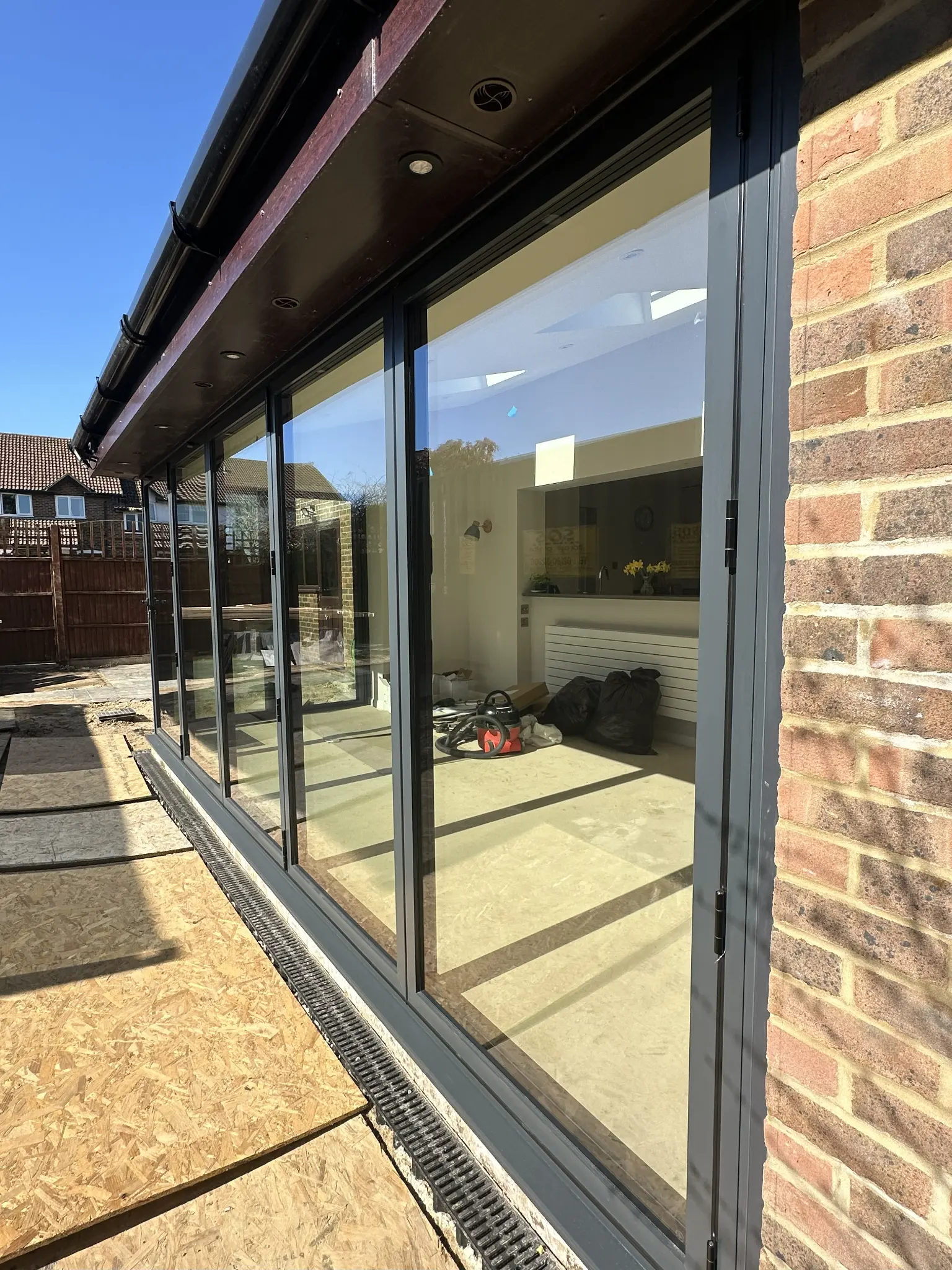
Modern architectural glazing, including large bifold doors, sliding doors, and curtain walling, relies on sophisticated multi-layer sealing systems. These often incorporate:
- Dual or Triple Gasket Systems: Multiple layers of EPDM or similar gaskets are integrated into the frame design to create robust air and water barriers.
- Thermal Breaks: Non-conductive materials (e.g., polyamide) integrated into aluminium frames to prevent heat transfer, working in conjunction with seals to maintain thermal efficiency.
- Drainage Channels: Glazing systems are often designed with internal drainage channels to manage any water that bypasses the primary seals, directing it safely away from the building's interior.
Weather Sealing and UK Building Regulations (Part L)
Compliance with UK Building Regulations is paramount for any new build, extension, or significant renovation project. Part L (Conservation of Fuel and Power) specifically addresses thermal performance, which is directly impacted by effective weather sealing.
Key Requirements for Thermal Performance (England, 2022 Standards)
Building Regulations set minimum U-value targets for different building elements. A U-value measures how effectively a building element prevents heat from escaping; lower values indicate better insulation. Poor weather sealing can significantly undermine even well-insulated components.
Pro Tip
Always consult your local Building Control body or a qualified architect/surveyor at the earliest stages of your project. They can provide specific guidance on compliance for your unique circumstances and ensure all aspects of your build, including weather sealing, meet the latest standards.
| Building Element | Minimum U-Value Requirement (W/m²K) | Impact of Weather Sealing |
|---|---|---|
| New Walls / Extensions | 0.18 | Prevents air leakage through wall-to-frame junctions, ensuring the insulation performs optimally. |
| Floors | 0.18 | Seals perimeter junctions to prevent draughts and moisture from rising. |
| Roofs | 0.15 | Seals around rooflights, eaves, and penetrations to prevent heat loss and water ingress. |
| New Build Windows/Doors | 1.2 | Critical for achieving this U-value; relies on high-performance gaskets and seals within the frame. |
| Replacement Windows/Doors | 1.4 | Essential for maintaining thermal performance and preventing draughts in existing openings. |
While the U-values focus on heat transfer through materials, weather sealing directly addresses air permeability – the uncontrolled leakage of air into or out of a building. High air permeability leads to significant heat loss, even if the U-values of the components are met. Building Regulations require new dwellings to undergo an air tightness test, and effective weather sealing is crucial for passing this test.
Installation and Maintenance: Best Practices for Longevity
Even the most advanced weather sealing materials will fail if not installed correctly or if neglected over time. Professional installation and regular maintenance are key to ensuring long-term performance.
Professional Installation
- Skilled Technicians: Ensure that installers are experienced and trained in the specific weather sealing systems being used, particularly for complex glazing installations.
- Preparation is Key: Surfaces must be clean, dry, and free from debris before sealants or tapes are applied. Proper primers may be required for optimal adhesion.
- Correct Application: Sealants must be applied at the correct depth and width, with appropriate tooling to ensure full contact and a smooth, continuous bead. Gaskets must be properly seated and not twisted or stretched.
- Adherence to Manufacturer Guidelines: Always follow the manufacturer's instructions for specific products, including curing times and environmental conditions for application.
Maintenance and Inspection
Regular checks can identify issues before they escalate into significant problems.
- Visual Inspections: Annually check all visible seals around windows, doors, and other penetrations for cracks, shrinkage, discolouration, or signs of deterioration.
- Test for Draughts: On a windy day, hold a lit candle or tissue near windows and doors to detect air leaks.
- Cleanliness: Keep seals clean. Dirt and debris can compromise their integrity. Use mild soap and water; avoid harsh chemicals that could degrade the material.
- Prompt Repair: Address any signs of damage immediately. Minor cracks can quickly become major leaks if left unattended. Remove old, degraded sealant completely before applying new.
Choosing the Right Weather Sealing Solutions for Your Home
When embarking on a new build, extension, or renovation, consider weather sealing as an integral part of your design and material specification, not an afterthought.
Key Considerations
- Location and Exposure: Homes in exposed coastal areas or on hilltops will require more robust sealing solutions than those in sheltered urban environments.
- Building Materials: Different building materials (e.g., brick, timber, render) interact differently with sealants and require specific interface solutions.
- Type of Opening: Fixed windows, casement windows, sliding doors, and bifold doors each have unique sealing requirements due to their operational mechanisms.
- Durability and Longevity: Invest in high-quality, long-lasting materials. While they may have a higher upfront cost, their extended lifespan and superior performance offer better value in the long run.
- Aesthetics: Consider how sealants and weatherstripping will look. Many modern sealants come in various colours to blend seamlessly with your chosen frames and finishes.
For architectural glazing, such as large glass panels or complex bifold door systems, the weather sealing is often an inherent part of the product's design. Opt for systems from reputable manufacturers that have been rigorously tested for air, water, and wind resistance to British and European standards (e.g., BS EN 12207 for air permeability, BS EN 12208 for water tightness, BS EN 12210 for wind resistance).
The Shard AG Difference: Expert Weather Sealing in Architectural Glazing
At Shard AG, we understand that exceptional architectural glazing requires equally exceptional weather sealing. Our commitment to quality means we specify and install systems that incorporate the latest advancements in sealing technology.
We work with leading manufacturers whose products are designed with multi-point sealing systems, high-performance gaskets, and integrated drainage to ensure superior protection against the UK's challenging weather conditions. Our expert installation teams are meticulously trained to ensure every seal and joint is perfectly executed, guaranteeing optimal thermal performance, air tightness, and water resistance for your home.
Whether you're planning a new build, an extension, or a renovation, choosing Shard AG means investing in glazing solutions where weather sealing is a core component of the design, providing you with peace of mind, enhanced comfort, and long-term energy efficiency.
Explore Our Products
Discover how Shard Architectural Glazing can transform your home with our premium glazing solutions:
Ready to Transform Your Home?
Get in touch with our expert team for a free consultation and personalised quote. We'll help you choose the perfect glazing solution for your property.