
Bi-Parting Sliding Doors: UK Homeowner's Comprehensive Guide
Explore bi-parting sliding doors for your UK home. Understand their design, benefits, technical specifications, Building Regulations, and installation considerations.

Shard Architectural Glazing
3 March 2026
Explore bi-parting sliding doors for your UK home. Understand their design, benefits, technical specifications, Building Regulations, and installation considerations.
📋In This Article
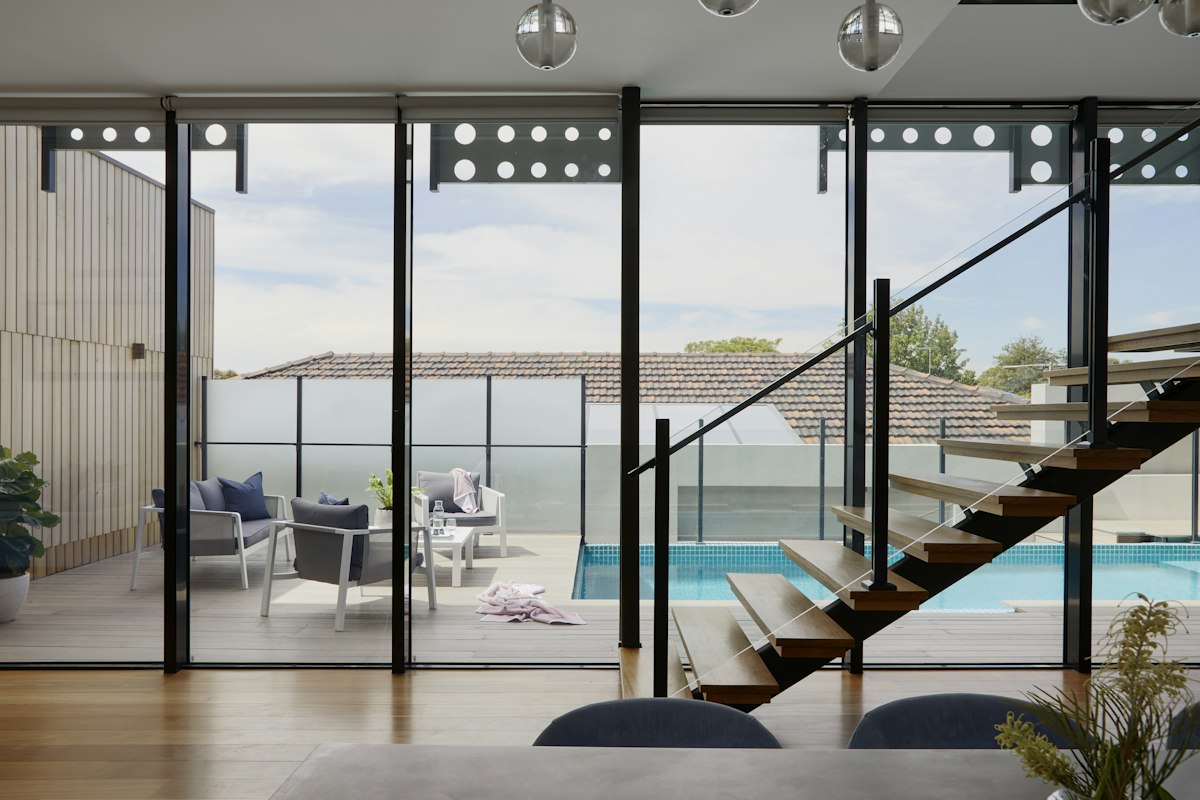
Bi-parting sliding doors offer a sophisticated and practical solution for homeowners seeking to maximise light, space, and seamless transitions between indoor and outdoor living areas. Unlike traditional single-panel sliding doors, bi-parting systems feature two door panels that meet in the middle and slide open in opposite directions. This design creates a wider, unobstructed opening, making them an increasingly popular choice for extensions, conservatories, and large openings in modern UK homes.
This comprehensive guide will delve into the intricacies of bi-parting sliding doors, covering their design, benefits, technical specifications, UK Building Regulations compliance, and crucial considerations for installation and maintenance. Our aim is to provide you with the expert knowledge needed to make an informed decision for your property.
What Are Bi-Parting Sliding Doors?
At their core, bi-parting sliding doors consist of two independent door panels that operate on a shared track system. When closed, these panels meet precisely in the centre, often secured by a multi-point locking mechanism. When opened, each panel slides smoothly along its track, moving away from the central meeting point towards opposite ends of the opening. This action effectively halves the door panels' width, creating a generous central aperture.
The mechanism typically involves rollers at the bottom (bottom-hung) or top (top-hung) of the panels, running within a track. Bottom-hung systems are more common as they bear the weight of the glazing on the floor track, reducing stress on the lintel above. Top-hung systems, while offering a cleaner floor threshold, require a very robust lintel to support the entire weight of the doors.
Bi-parting doors are distinct from bi-fold doors, which fold back in a concertina style, and standard patio sliders, which usually have one fixed and one sliding panel, or two sliding panels moving in the same direction to stack. The key advantage of bi-parting is the creation of a central, symmetrical opening.
Common Configurations
- Two-panel bi-parting: The most straightforward setup, with two panels meeting in the middle and sliding outwards.
- Four-panel bi-parting: Two central panels meet and slide outwards, while two outer panels remain fixed, or all four panels can slide, with the central two sliding outwards and the outer two sliding inwards behind the central ones.
- Multi-panel bi-parting: Larger systems can incorporate multiple panels, allowing for even wider openings, where panels might stack at either end.
Benefits and Considerations for UK Homes
Choosing bi-parting sliding doors involves weighing their significant advantages against certain practical considerations.
Maximized Opening
Bi-parting doors offer a wider clear opening than many other door types, typically allowing for 50% of the total width to be open, enhancing connectivity between spaces.
Enhanced Natural Light
The large glass panels inherent in sliding door designs flood interiors with natural light, reducing reliance on artificial lighting and creating a brighter, more inviting atmosphere.
Space Efficiency
Unlike hinged doors that require swing space, sliding doors operate within their own footprint, making them ideal for areas where space is at a premium, both internally and externally.
Modern Aesthetic
Their sleek lines and expansive glazing contribute to a contemporary, minimalist aesthetic, complementing modern architectural designs and adding significant visual appeal to a property.
Potential Considerations
- Wall Space Requirement: While they don't require swing space, the panels do need clear wall space (or a pocket in pocket door systems) to slide into when open. This needs to be factored into the design.
- Thermal Performance: While modern bi-parting doors are highly energy-efficient, the large glazed area means that the U-value of the glass and frame is critical for maintaining indoor temperatures.
- Cost: Generally, bi-parting sliding door systems can be more expensive than standard patio doors due to their larger size, more complex tracking systems, and high-quality glazing.
- Cleaning: Large expanses of glass require regular cleaning to maintain their pristine appearance, especially in areas prone to dirt or grime.
Pro Tip
When planning for bi-parting sliding doors, consider the prevailing wind direction. While they offer excellent ventilation, strong winds can make operating very wide openings challenging, and proper securing mechanisms are essential when open.
Technical Specifications and Materials
The performance and longevity of bi-parting sliding doors depend heavily on the materials used and their technical specifications.
Frame Materials
- Aluminium: Highly durable, lightweight, and incredibly strong, allowing for very slim sightlines and large glass panels. Aluminium frames are resistant to corrosion and require minimal maintenance. They are also available in a wide range of powder-coated finishes.
- uPVC: A cost-effective option offering good thermal insulation. uPVC frames are low maintenance and come in various colours, though they typically have wider sightlines than aluminium.
- Timber: Offers a natural, warm aesthetic and excellent thermal properties. Timber frames require more maintenance (e.g., painting or staining) but can be highly durable if properly treated and cared for. Engineered timber options provide enhanced stability.
- Composite: Combines the best features of different materials, such as timber internally for warmth and aluminium externally for weather resistance and low maintenance.
Glazing Options
The glazing is crucial for both thermal performance and security.
- Double Glazing: Standard for all new and replacement doors in the UK. Typically consists of two panes of glass separated by a sealed cavity filled with inert gas (e.g., argon) to improve insulation.
- Triple Glazing: Features three panes of glass and two gas-filled cavities, offering superior thermal and acoustic insulation, though it adds weight and cost.
- Low-Emissivity (Low-E) Coatings: A microscopic metallic coating on one of the glass surfaces that reflects heat back into the room in winter and reduces heat gain in summer.
- Toughened Glass: Essential for safety, especially in large panes. It shatters into small, relatively harmless pieces if broken.
- Laminated Glass: Consists of two or more panes bonded together with a plastic interlayer, providing enhanced security (holds together when broken) and acoustic insulation.
Hardware and Security
High-quality hardware is vital for smooth operation and security.
- Multi-Point Locking Systems: Standard for modern doors, engaging at multiple points along the frame for enhanced security.
- Anti-Lift Mechanisms: Prevent the door panels from being lifted off their tracks when closed.
- High-Security Cylinders: Often comply with British Standard BS EN 1303 or TS007 (3-star) for resistance against common attack methods.
- Smooth Running Rollers: Essential for effortless operation, especially with heavy glazing.
| Feature | Aluminium Frames | uPVC Frames | Timber Frames |
|---|---|---|---|
| Typical U-value (Frame + Glazing) | 1.2 - 1.4 W/m²K | 1.3 - 1.6 W/m²K | 1.2 - 1.5 W/m²K |
| Sightlines | Very Slim (20-80mm) | Medium (70-120mm) | Medium to Wide (80-150mm) |
| Durability | Excellent | Good | Good (if maintained) |
| Maintenance | Very Low | Low | Medium to High |
| Cost (Relative) | High | Low to Medium | Medium to High |
| Colour Options | Extensive (RAL colours) | Good (limited by foil wraps) | Natural, Paint/Stain |
UK Building Regulations and Compliance
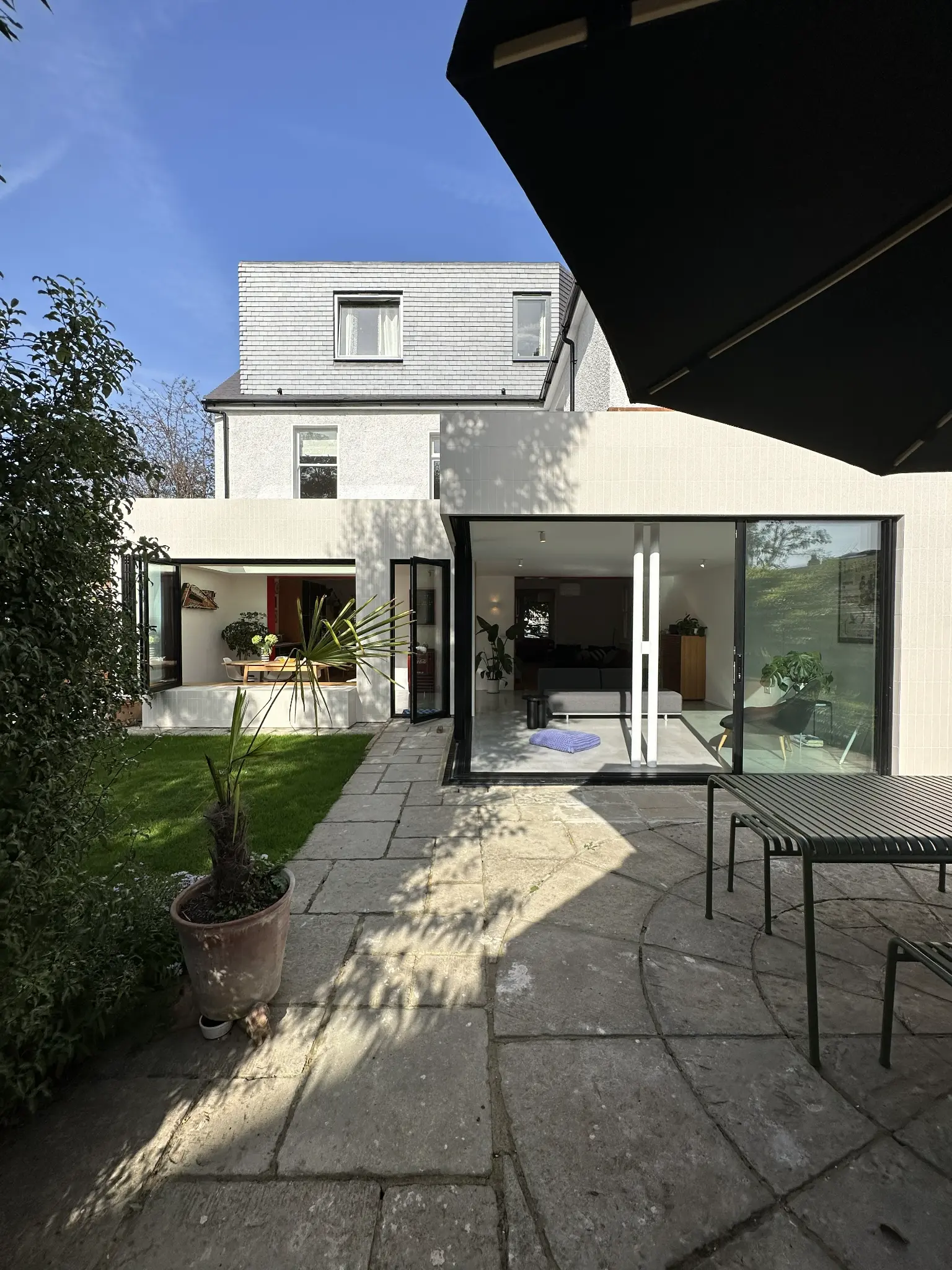
Any installation of new or replacement doors must comply with current UK Building Regulations, particularly concerning thermal performance, safety, and ventilation. Failing to comply could affect the legality of your installation and future property sales.
Part L: Conservation of Fuel and Power
This section mandates minimum energy efficiency standards. For new build properties and extensions in England (2022 standards):
- Windows and Doors: The maximum allowable U-value is 1.2 W/m²K.
For replacement doors in existing dwellings:
- Replacement Windows and Doors: The maximum allowable U-value is 1.4 W/m²K.
These values are crucial. A lower U-value indicates better insulation. Bi-parting doors, with their large glazed areas, must be specified with high-performance glazing and thermally broken frames to meet these requirements.
Part F: Ventilation
New and replacement windows and doors typically require trickle vents to ensure adequate background ventilation, even when the doors are closed. This helps prevent condensation and maintains indoor air quality. There are specific requirements for the equivalent area (EA) of these vents.
Part K: Protection from Falling, Collision and Impact
This part addresses safety glazing. All glass in doors and adjacent to doors must be safety glass (toughened or laminated) to prevent serious injury in case of breakage.
Part B: Fire Safety
While less common for external bi-parting doors, if they are part of an escape route or affect fire compartmentation, specific fire safety considerations may apply. Always consult with Building Control.
It is highly recommended to consult with your local Building Control body or an approved inspector before commencing any work to ensure full compliance. Reputable installers will be familiar with these regulations and can advise accordingly.
Installation and Maintenance Considerations
Proper installation is paramount for the long-term performance, security, and thermal efficiency of bi-parting sliding doors. Maintenance, while generally low, is also key to their longevity.
Professional Installation
- Structural Opening: The opening must be perfectly level, plumb, and square. Any deviation can lead to operational issues, draughts, and compromised security.
- Weight Distribution: Bi-parting doors, especially large ones with triple glazing, can be very heavy. The lintel above the opening and the floor structure below must be capable of supporting this weight.
- Weatherproofing: Correct sealing and flashing around the frame are essential to prevent water ingress and air leakage. This includes proper drainage for the bottom track.
- Security: All locking points and anti-lift mechanisms must be correctly aligned and adjusted to ensure optimal security.
Maintenance Tips
- Regular Cleaning: Clean glass with a non-abrasive glass cleaner and frames with warm soapy water. Avoid harsh chemicals that could damage finishes.
- Track Maintenance: Keep the bottom track free of dirt, debris, and grit. Vacuuming or wiping the track regularly will ensure smooth operation and prevent wear on the rollers.
- Hardware Check: Periodically check hinges, locks, and handles for tightness and smooth operation. Lubricate moving parts with a silicone-based spray as recommended by the manufacturer.
- Seal Inspection: Inspect weather seals and gaskets for signs of wear, cracking, or perishing. Damaged seals can lead to draughts and reduced thermal performance.
Conclusion
Bi-parting sliding doors represent a significant investment in your home, offering unparalleled views, abundant natural light, and a seamless connection to your outdoor spaces. Their elegant design and practical functionality make them a compelling choice for many UK homeowners looking to enhance their living environment.
By understanding the different material options, glazing specifications, and crucially, the requirements of UK Building Regulations, you can ensure that your chosen bi-parting doors are not only aesthetically pleasing but also perform efficiently and safely for many years to come. Always prioritise working with experienced professionals who can guide you through the selection, specification, and installation process, ensuring your new doors meet all necessary standards and exceed your expectations.
For expert advice and a wide range of high-performance bi-parting sliding door solutions, consider consulting with specialists like Shard AG. We offer bespoke designs tailored to your home's unique requirements, ensuring compliance with the latest UK Building Regulations and delivering exceptional quality and service.
Explore Our Products
Discover how Shard Architectural Glazing can transform your home with our premium glazing solutions:
Ready to Transform Your Home?
Get in touch with our expert team for a free consultation and personalised quote. We'll help you choose the perfect glazing solution for your property.