Bifold vs Sliding Doors: The Ultimate UK Homeowner's Guide
Choosing between bifold and sliding doors for your UK home? This in-depth guide covers design, performance, costs, and Building Regulations to help you decide.

Shard Architectural Glazing
4 March 2026
Choosing between bifold and sliding doors for your UK home? This in-depth guide covers design, performance, costs, and Building Regulations to help you decide.
📋In This Article
When planning a home extension or renovation in the UK, the choice of glazing for large openings can dramatically impact your living space. Two of the most popular options for connecting indoor and outdoor areas are bifold doors and sliding doors. Both offer expansive views and abundant natural light, but they achieve this through different mechanisms and come with distinct advantages and considerations. Understanding these differences is crucial for making an informed decision that suits your home's aesthetics, functionality, and budget.
This comprehensive guide will delve into the technical specifications, practical implications, and regulatory aspects of both bifold and sliding doors, helping you navigate the options available for your UK property.
Design and Operation Mechanisms
The fundamental difference between bifold and sliding doors lies in how their panels operate.
Bifold Doors: The Concertina Effect
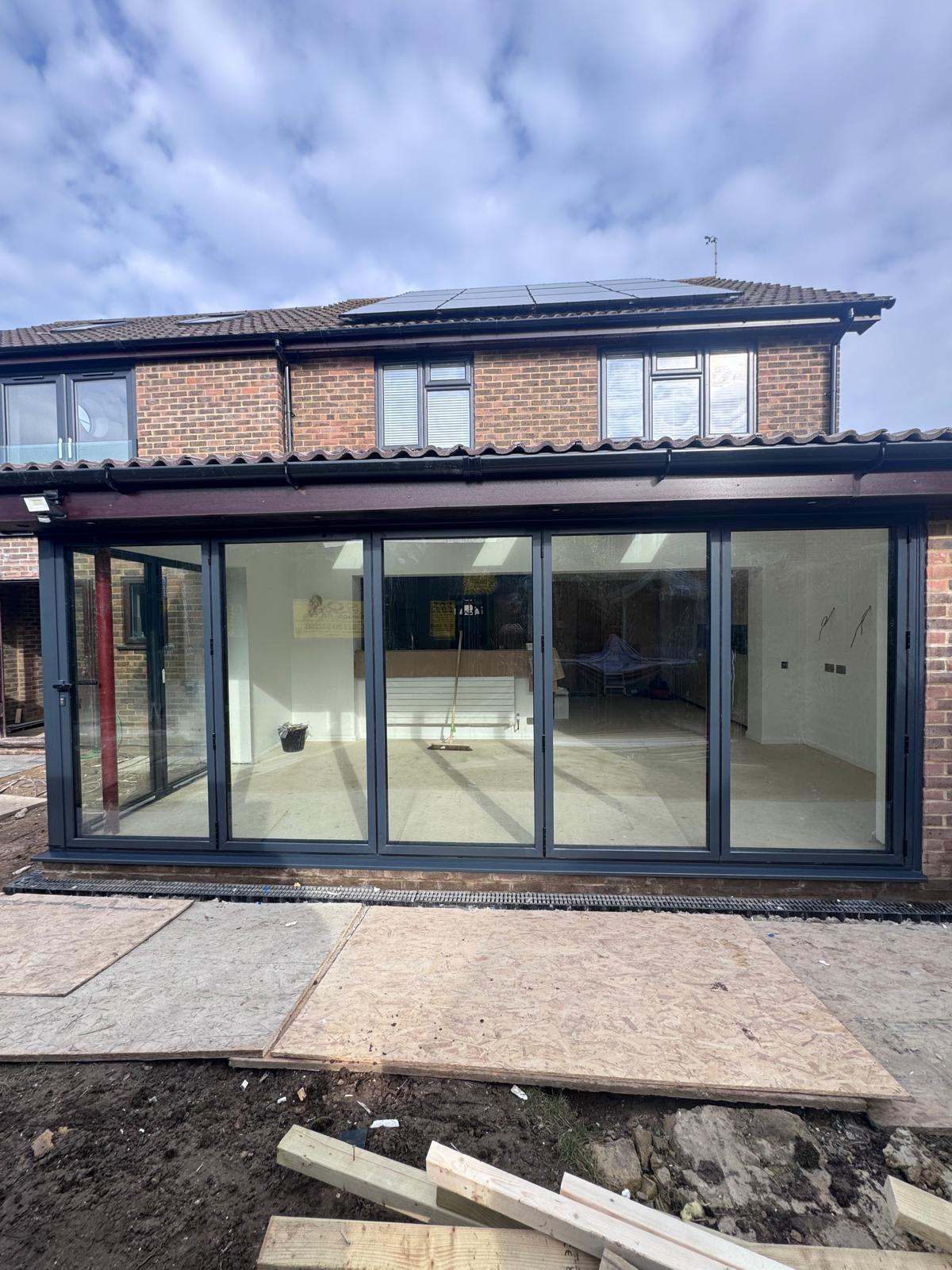
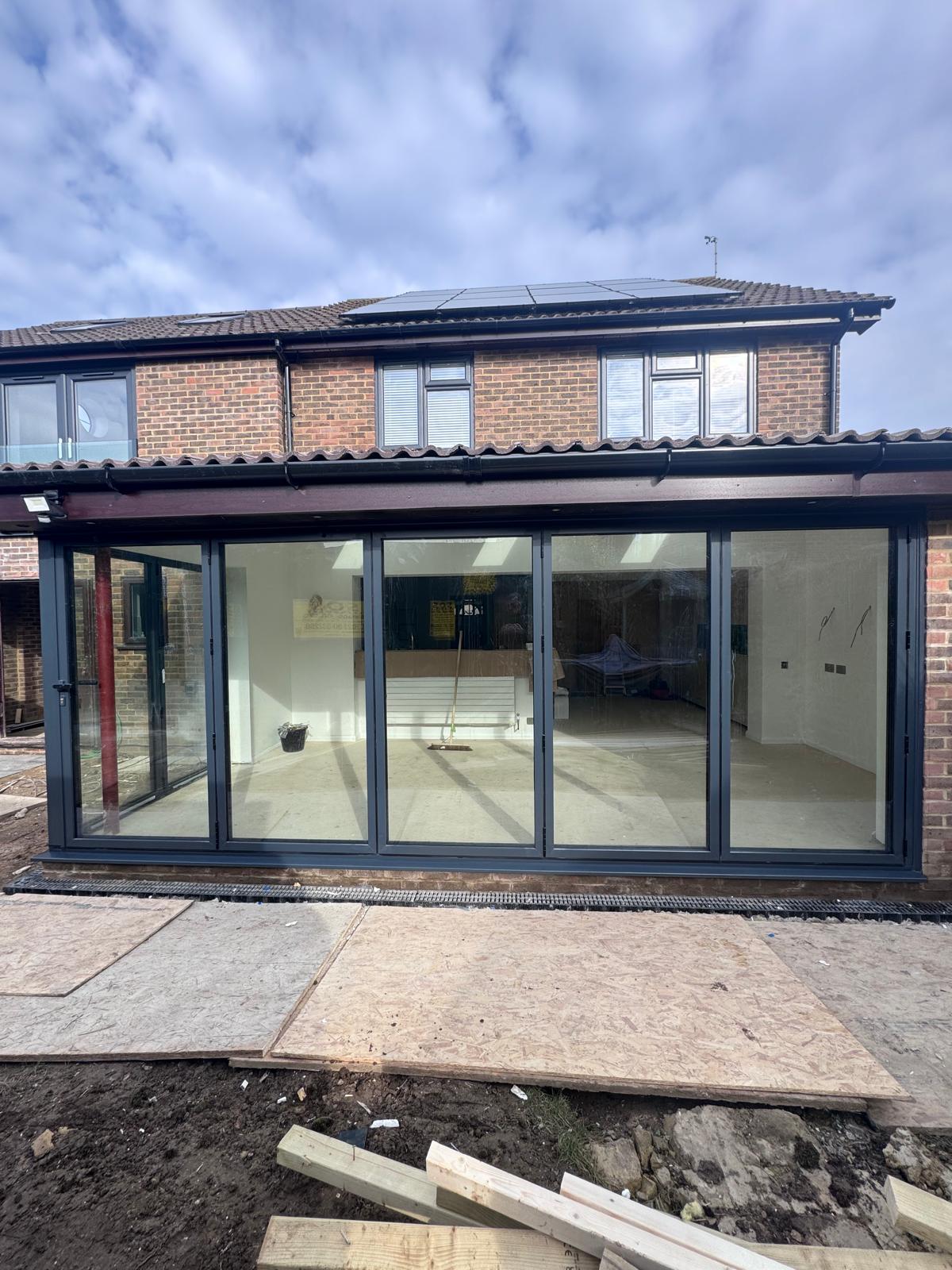
Bifold doors, also known as folding or concertina doors, consist of multiple panels that fold back on themselves, stacking neatly to one or both sides of the opening. Each panel is typically hinged to the next, and the leading panel runs on a track, allowing the entire system to open up to 90% of the aperture. This creates a virtually unobstructed opening, seamlessly merging indoor and outdoor spaces.
- Mechanism: Panels are top-hung or bottom-rolling, with hinges connecting them. A master door can often be incorporated for easy access without opening the entire system.
- Frame Material: Available in aluminium, uPVC, and timber. Aluminium is particularly popular for its strength, slim sightlines, and durability.
- Configurations: Highly versatile, with options for panels to fold inwards or outwards, and stack to one side or split to both.
Sliding Doors: The Glazed Wall Effect
Sliding doors, often referred to as patio doors or lift-and-slide doors, feature large glass panels that slide horizontally along a track, typically overlapping when open. Unlike bifolds, sliding doors do not fold away completely; a portion of the opening will always be covered by the overlapping panels. However, their large, uninterrupted glass panes offer a 'glazed wall' aesthetic, even when closed.
- Mechanism: Panels slide on rollers within a track. Modern systems, particularly lift-and-slide doors, allow the panels to be slightly lifted off their seals before sliding, offering smoother operation and superior weather sealing.
- Frame Material: Predominantly aluminium or uPVC. Aluminium allows for exceptionally large glass panels and very slim frames, maximising views.
- Configurations: Typically 2, 3, or 4 panels, with options for one or more panels to slide, and fixed panels.
Aesthetics and Sightlines
The visual impact of your chosen doors is a significant factor, influencing both the interior and exterior of your home.
Bifold Doors: Defined Panes and Full Opening
Bifold doors are characterised by their multiple vertical sightlines due to the individual panels and their frames. While modern aluminium bifolds offer much slimmer frames than older uPVC versions, these lines are still present. When fully open, however, they provide an unparalleled, wide-open aperture, creating a true indoor-outdoor living experience.
- Pros: Full opening capacity, creating a seamless transition.
- Cons: More vertical sightlines when closed, and the stacked panels can occupy space at the side of the opening.
Sliding Doors: Expansive Glass and Minimal Obstruction
Sliding doors excel in offering vast, uninterrupted expanses of glass. With fewer, larger panels, they provide a panoramic view even when closed. The slim sightlines achievable with aluminium sliding doors mean the frames recede, allowing the focus to remain on the outside world. When open, the panels stack neatly behind each other, not protruding into the living space or garden.
- Pros: Maximum glass area, minimal vertical sightlines, and panels do not intrude on space when open.
- Cons: Do not offer a 100% clear opening; a portion of the aperture will always be covered by overlapping panels.
Performance and Thermal Efficiency
For UK homeowners, thermal performance is paramount, especially with rising energy costs and stringent Building Regulations.
U-Values and Building Regulations (Part L 2022, England)
The U-value measures how effectively a material insulates; a lower U-value indicates better thermal performance. For new builds and extensions in England, Part L of the Building Regulations (2022) sets specific U-value targets:
- Windows/Doors (New Build): 1.2 W/m²K
- Windows/Doors (Replacement): 1.4 W/m²K
Both bifold and sliding doors, when specified correctly, can comfortably meet these requirements. Key factors influencing U-values include:
- Frame Material: Aluminium frames benefit from 'thermal breaks' – non-conductive barriers within the frame that prevent heat transfer.
- Glazing: Double glazing is standard, but triple glazing can significantly improve U-values, often achieving 0.8-1.0 W/m²K for the glass unit itself.
- Spacer Bars: Warm edge spacer bars (e.g., made from composite materials) reduce heat loss at the edge of the glass unit compared to traditional aluminium spacers.
Pro Tip
Always request the 'whole product U-value' from your supplier, not just the U-value of the glass unit. The whole product U-value takes into account the frame, glass, and seals, giving you an accurate measure of the door's overall thermal performance. This is what Building Control will assess.
Weather Sealing and Security
Modern bifold and sliding doors are designed for excellent weather resistance and security.
- Bifold Doors: Rely on multiple compression seals between panels and robust locking mechanisms on each panel. When properly installed, they offer excellent defence against wind and rain.
- Sliding Doors: Often feature interlocking panels and brush pile or fin seals. Lift-and-slide systems, in particular, offer superior sealing as the panels drop onto gaskets when closed, creating a tight, weather-resistant barrier. Security is enhanced by multi-point locking systems and robust cylinder locks.
For security, look for doors tested to British Standards such as PAS 24:2016, which demonstrates enhanced security performance.
Cost and Installation Considerations
The initial outlay and installation complexity are important practical considerations.
Cost Comparison
Generally, bifold doors tend to be more expensive per linear metre than sliding doors. This is due to the more complex hardware required for their folding mechanism, including multiple hinges, rollers, and locking points across several panels.
Factors influencing cost:
- Material: uPVC is typically the most budget-friendly, followed by aluminium, with high-end timber options often being the most expensive.
- Size and Number of Panels: Larger openings and more panels increase cost.
- Glazing Specification: Triple glazing, low-emissivity coatings, and specialist glass (e.g., self-cleaning, solar control) will add to the price.
- Hardware: High-quality rollers, hinges, and locking mechanisms contribute to durability and smooth operation but also to cost.
- Installation: Professional installation is crucial for performance and longevity.
Installation and Structural Requirements
Both door types require a robust, level opening and a strong lintel to support the weight. The structural opening and the lintel above it must be capable of bearing the load of the doors and any associated building structure. This is particularly important for large openings and should always be assessed by a structural engineer.
- Bifold Doors: Can be heavy, especially with triple glazing. The track system needs to be perfectly level and robust. The stacking panels require clear space on the inside or outside when open.
- Sliding Doors: Can involve very large, heavy individual glass panels, requiring careful handling during installation. The track system must be exceptionally strong and level to ensure smooth operation.
It's advisable to consult with your builder or architect early in the design process to ensure the structural integrity of your opening is adequate.
Practicality and Everyday Living
Consider how each door type integrates into your daily life and the functionality it offers.
Ventilation and Access
- Bifold Doors: Offer maximum ventilation when fully open. Many systems include a 'traffic door' or 'master door' – a single panel that can be opened independently for quick access without having to fold back the entire system, acting like a conventional door. This is a significant convenience for everyday use.
- Sliding Doors: Provide ventilation by opening one or more panels to create a gap. However, the opening is never 100% clear. Access is typically through the sliding panel(s), which can be wide but still require moving a large pane of glass.
Space Utilisation
- Bifold Doors: When open, the panels stack, taking up space at the side of the opening. This needs to be factored into your design, ensuring there's enough room for the stack without obstructing pathways or furniture.
- Sliding Doors: Panels slide behind each other, meaning they don't protrude into your living space or garden. This is a key advantage for smaller patios or rooms where space is at a premium.
Cleaning and Maintenance
Both door types are relatively low maintenance, particularly aluminium frames which only require occasional cleaning with soapy water. The large glass panels will, of course, show dirt and require regular cleaning to maintain their aesthetic appeal.
- Bifold Doors: More individual panels mean more frames to clean, but the glass panes are generally smaller and easier to reach.
- Sliding Doors: Fewer, larger glass panels mean less frame cleaning, but the large glass surfaces can be more challenging to clean thoroughly, especially the centre of very wide panes.
UK Building Regulations and Planning Permission
Any significant alteration to your home, especially involving large glazed areas, will likely fall under UK Building Regulations and may require Planning Permission.
Building Regulations
Replacing or installing new doors that form part of the thermal envelope of your home (i.e., separating heated indoor space from the outside) must comply with Part L (Conservation of Fuel and Power) of the Building Regulations. As mentioned, this means meeting specific U-value targets (1.2 W/m²K for new build/extensions, 1.4 W/m²K for replacements).
Other relevant parts of Building Regulations include:
- Part F (Ventilation): Ensuring adequate ventilation.
- Part K (Protection from falling, collision and impact): Safety glazing requirements.
- Part B (Fire Safety): Especially relevant if the doors are near a boundary or affect escape routes.
It is strongly recommended to engage with your local Building Control body or an approved inspector early in your project to ensure full compliance. They will inspect the work at various stages and issue a completion certificate.
Planning Permission
In most cases, installing bifold or sliding doors as part of an extension or alteration to an existing opening within the existing footprint of your home falls under 'Permitted Development' and does not require full planning permission. However, there are exceptions:
- Conservation Areas or Listed Buildings: Strict rules apply, and planning permission will almost certainly be required.
- Larger Extensions: If the doors are part of a new extension that exceeds Permitted Development limits, then planning permission will be needed for the entire extension.
- Material Changes: If the doors significantly alter the appearance of the property in a way that is not deemed 'like for like' replacement, especially on the front elevation.
Always check with your local planning authority before commencing work. Failure to do so could result in enforcement action.
Maximised Natural Light
Both door types allow abundant natural light to flood your home, creating brighter, more inviting living spaces and reducing reliance on artificial lighting.
Enhanced Views
Whether it's the full panoramic vista of sliding doors or the completely open aperture of bifolds, both options enhance your connection to the garden and surrounding environment.
Improved Indoor-Outdoor Flow
Seamlessly connect your interior and exterior spaces, perfect for entertaining, family life, and enjoying your garden as an extension of your home.
Increased Property Value
Modern, high-performance glazing is a desirable feature that can significantly boost the aesthetic appeal and market value of your UK property.
Bifold vs Sliding Doors: A Comparison Table
| Feature | Bifold Doors | Sliding Doors |
|---|---|---|
| Opening Style | Panels fold and stack, creating up to 90% clear opening. | Panels slide and overlap, typically 50-75% clear opening. |
| Aesthetics (Closed) | Multiple vertical sightlines due to individual frames. | Fewer, larger glass panels; expansive, uninterrupted views. |
| Space Usage (Open) | Panels stack and protrude into/out of the opening. | Panels slide behind each other, no intrusion into space. |
| Traffic Door | Often includes an independent 'traffic door' for easy access. | Access via sliding panels; no dedicated 'traffic door'. |
| Ventilation | Maximum ventilation when fully open. | Partial ventilation via open panels. |
| Thermal Performance (U-value) | Excellent (can meet 1.2 W/m²K or lower with good spec). | Excellent (can meet 1.2 W/m²K or lower with good spec). |
| Security | Multi-point locking on each panel, robust hinges. | Multi-point locking, interlocking panels, lift-and-slide offers superior sealing. |
| Cost | Generally higher due to complex hardware. | Generally lower, but large lift-and-slide can be comparable. |
| Ideal For | Creating a seamless, wide-open connection to the outdoors. | Maximising views, smaller spaces, contemporary aesthetics. |
Making Your Decision
The choice between bifold and sliding doors ultimately comes down to your priorities, the specific characteristics of your home, and your budget.
- Choose bifold doors if: You prioritise a completely open aperture, want a seamless transition between indoors and outdoors, and have space for the panels to stack.
- Choose sliding doors if: You prioritise expansive, uninterrupted views, have limited space, prefer a minimalist aesthetic, and are content with a partial opening.
Regardless of your choice, investing in high-quality doors from a reputable UK supplier is key. Ensure they meet current Building Regulations, offer excellent thermal performance, and come with reliable guarantees.
At Shard AG, we specialise in premium architectural glazing solutions for UK homeowners. Our extensive range of high-performance aluminium bifold and sliding doors are designed to meet the highest standards of aesthetics, thermal efficiency, and security. We offer expert advice, bespoke design services, and professional installation to ensure your project exceeds expectations. Contact us today to discuss your vision and discover how we can transform your home with our exceptional glazing products.
Explore Our Products
Discover how Shard Architectural Glazing can transform your home with our premium glazing solutions:
Ready to Transform Your Home?
Get in touch with our expert team for a free consultation and personalised quote. We'll help you choose the perfect glazing solution for your property.