

Choosing Glass Door Hardware: A UK Homeowner's Guide
Explore essential glass door hardware options for UK homes. Learn about hinges, handles, locks, and closers, including UK Building Regulations and practical advice.

Shard Architectural Glazing
14 March 2026
Explore essential glass door hardware options for UK homes. Learn about hinges, handles, locks, and closers, including UK Building Regulations and practical advice.
📋In This Article
Glass doors, whether internal or external, bi-folding or sliding, offer a sophisticated aesthetic that can transform any space. They invite natural light, create a sense of openness, and provide a modern touch to both traditional and contemporary homes. However, the functionality and longevity of any glass door system hinge significantly on the quality and suitability of its hardware. For UK homeowners, understanding the various options available, alongside relevant Building Regulations, is crucial for making informed decisions.
This comprehensive guide will delve into the world of glass door hardware, covering everything from hinges and handles to locking mechanisms and closers. We'll explore the technical specifications, material considerations, and practical implications to help you choose the best hardware for your specific needs, ensuring both performance and compliance.
Understanding Glass Door Types and Their Hardware Needs
Before diving into specific hardware components, it's important to recognise that different types of glass doors require distinct hardware solutions. The choice of hardware is intrinsically linked to the door's function, weight, and operational mechanism.
Hinged Glass Doors
These are perhaps the most common, operating like traditional doors. They can be single-action (opening one way) or double-action (swinging both ways). Hardware for hinged glass doors typically includes hinges, handles, and possibly a floor spring or overhead closer.
Sliding Glass Doors
Popular for patios, room dividers, and wardrobes, sliding doors operate on tracks. Their hardware includes rollers/carriages, tracks, guides, and specific flush or recessed handles. They can be top-hung (most common for glass) or bottom-rolling.
Bi-Fold Glass Doors
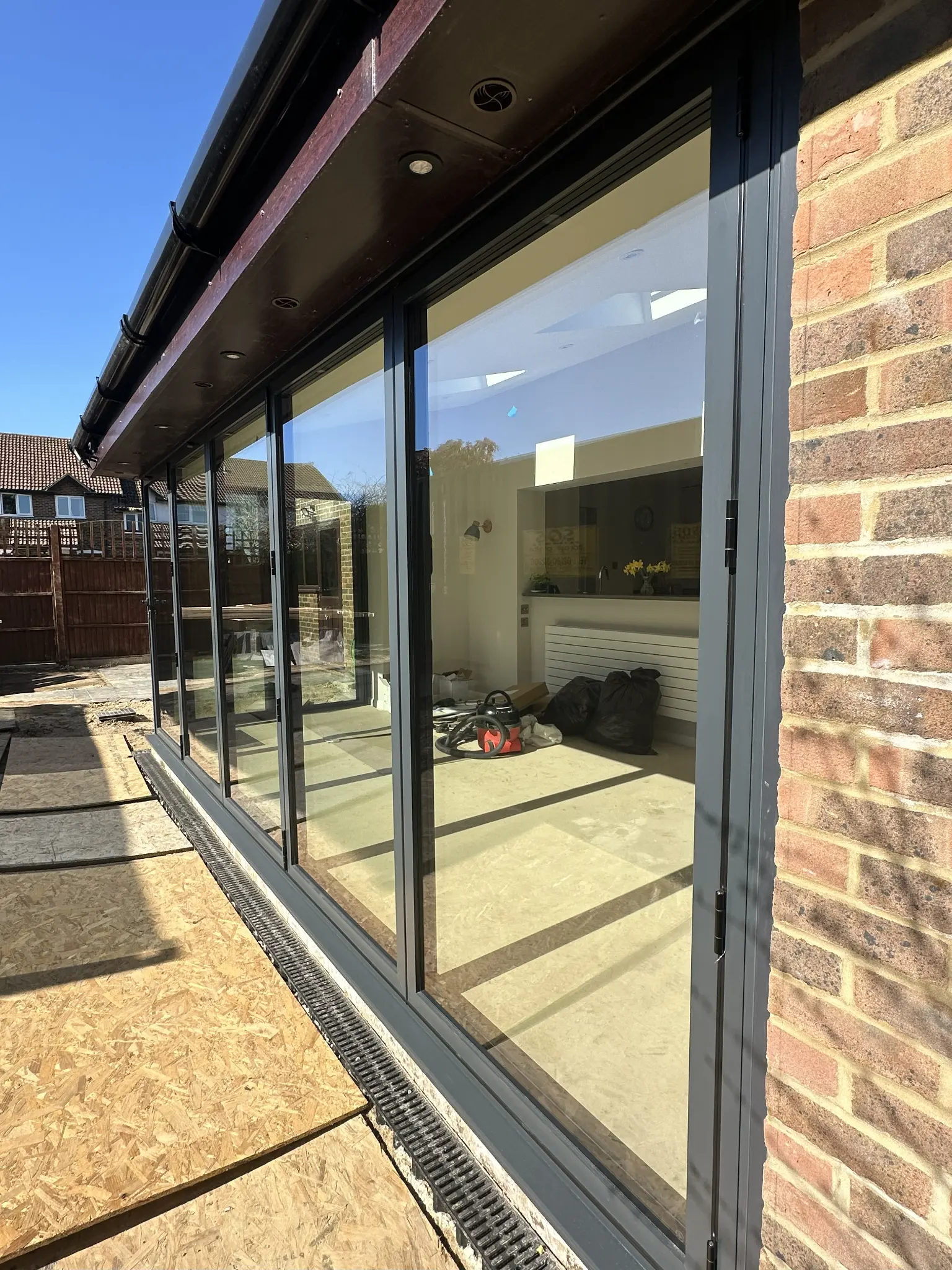
Often used for external openings to create large apertures, bi-fold doors consist of multiple panels that fold and stack. Hardware includes top and bottom tracks, hinges between panels, and various locking points.
Pivot Glass Doors
These doors rotate on a vertical axis, often offset from the frame, creating a dramatic opening. They require specific pivot hinges (top and bottom) and often a floor spring or overhead closer to control their swing.
Pro Tip
Always confirm the exact weight and thickness of your glass panels before selecting hardware. Glass weight can vary significantly based on type (e.g., laminated vs. toughened) and thickness, directly impacting the load-bearing capacity required from hinges, rollers, and tracks.
.jpg)
Essential Hardware Components for Glass Doors
Let's break down the key hardware elements you'll encounter when specifying glass doors.
1. Hinges and Pivots
Hinges are critical for hinged and bi-fold doors, while pivots are used for pivot doors. They must be robust enough to support the significant weight of glass panels.
- Patch Fittings/Glass Hinges: These are specifically designed for frameless glass doors. They clamp onto the glass without needing a frame, providing a minimalist look. They come in various finishes (e.g., polished chrome, satin stainless steel) and load capacities.
- Floor Springs/Overhead Closers: Essential for self-closing doors, particularly in commercial or high-traffic areas, but also beneficial in residential settings for controlled closing. Floor springs are concealed in the floor, while overhead closers are mounted at the top of the door frame. They often include adjustable closing speed and latching action. For fire doors, specific certified closers are mandatory.
- Pivot Hinges: Used for pivot doors, these consist of a top and bottom pivot point, allowing the door to rotate. They can be centre-pivot or offset-pivot.
- Bi-Fold Hinges: For bi-fold systems, these connect the individual glass panels, allowing them to fold neatly.
2. Handles and Pulls
Glass door handles come in a vast array of styles and finishes, from sleek modern designs to more traditional options.
- Lever Handles: Common for hinged doors, often paired with a latch or lock.
- Pull Handles: Typically used on frameless glass doors or sliding doors, these can be 'D' shaped, straight bar, or flush designs. They are often bolted through the glass.
- Knobs: Less common for glass doors due to the need for through-glass fixing, but available for certain applications.
- Flush Pulls: Ideal for sliding doors where a handle needs to be recessed to allow the door to slide fully into a pocket or against a wall.
Material Considerations: Stainless steel (grade 304 or 316 for external use), brass, and aluminium are popular choices for durability and aesthetics. Finishes include polished, satin, brushed, and various PVD coatings.
3. Locking Mechanisms
Security is paramount, especially for external glass doors. Internal doors may require privacy locks.
- Patch Locks: Similar to patch hinges, these clamp onto frameless glass doors. They can be key-operated (for security) or thumb-turn (for privacy).
- Deadbolts: For framed glass doors, standard deadbolts can be integrated into the frame.
- Multi-Point Locking Systems: Essential for external bi-fold and sliding glass doors, providing enhanced security by engaging multiple locking points along the door frame.
- Roller Catches/Magnetic Catches: For internal doors where a positive latching action isn't required, these simply hold the door closed.
- Electronic Locks: Keypads, fingerprint scanners, or smart home integration offer modern security and convenience, particularly for high-end installations.
4. Sliding Door Hardware (Tracks, Rollers, Guides)
For sliding glass doors, these components dictate smooth operation.
- Tracks: Can be top-hung (most common for heavy glass) or bottom-rolling. Top-hung systems carry the door's weight from above, allowing for a clear floor threshold. Bottom-rolling systems have rollers at the base and a guide at the top.
- Rollers/Carriages: High-quality rollers with ball bearings are crucial for smooth, quiet operation and durability, especially for heavy glass panels.
- Guides: These prevent the door from swinging or derailing. Bottom guides are common for top-hung systems.
5. Seals and Weatherstripping
Crucial for external glass doors to prevent draughts, water ingress, and improve thermal performance.
- Gaskets: Rubber or silicone seals fitted around the glass or within the frame.
- Brush Seals: Often used on sliding or bi-fold doors to minimise air leakage.
- Draught Excluders: Can be fitted to the bottom of hinged doors.
UK Building Regulations and Standards
When selecting glass door hardware, compliance with UK Building Regulations is not just advisable; it's often a requirement, particularly for external doors or those affecting fire safety.
Part L (Conservation of Fuel and Power)
For external glass doors, thermal performance is key. The U-value (a measure of heat loss) of the entire door assembly, including the frame and glass, must meet specific standards. For new build properties, the U-value for windows and doors should be 1.2 W/m²K or lower. For replacement doors, it should be 1.4 W/m²K or lower. Hardware itself doesn't have a U-value, but its integration into the door system can affect overall thermal bridging. Ensure the door system (frame, glass, and seals) is specified to meet these values.
Part B (Fire Safety)
If a glass door is part of a fire-rated partition or escape route, specific fire-rated hardware will be required. This includes fire-rated hinges, closers, and intumescent seals. These components must be tested and certified to withstand fire for a specified period (e.g., 30 or 60 minutes). Always consult with Building Control and a fire safety expert for such installations.
Part K (Protection from Falling, Collision and Impact)
This part of the regulations covers safety glazing. All glass in doors and side panels adjacent to doors must be safety glass (toughened or laminated) to prevent serious injury in case of breakage. Hardware should not compromise the integrity of this safety glazing.
Part M (Access to and Use of Buildings)
For new builds or extensions, Part M dictates requirements for accessibility. This can influence handle types (e.g., lever handles are generally preferred over knobs for ease of use), door opening widths, and the force required to operate doors. Door closers, for example, should not exert excessive force.
CE Marking and British Standards (BS EN)
Many hardware components, especially those with safety implications (e.g., fire door closers, hinges), should carry a CE mark, indicating compliance with European safety, health, and environmental protection requirements. Look for products that conform to relevant British Standards (e.g., BS EN 1154 for door closers, BS EN 1935 for single-axis hinges).
Legal Language Note: While these regulations are mandatory, it's always advisable to check with your local Building Control office or a qualified professional for specific requirements pertaining to your project, as interpretations can vary, and local conditions may impose additional considerations. Non-compliance could affect the legality of your installation and future property sales.
Material and Finish Considerations
The material and finish of your glass door hardware play a significant role in both durability and aesthetics.
- Stainless Steel: Highly durable, corrosion-resistant, and low maintenance. Grade 304 is suitable for most internal applications, while Grade 316 (marine grade) is recommended for external use, especially in coastal areas, due to its superior resistance to salt corrosion.
- Brass: Offers a classic aesthetic, available in polished, satin, or antique finishes. Can tarnish over time if not lacquered or regularly polished.
- Aluminium: Lightweight and corrosion-resistant, often used for tracks and frames, and available in various anodised or powder-coated finishes.
- Finishes: Popular options include polished chrome, satin chrome, brushed stainless steel, matt black, and bronze. Consider how the finish will complement your existing decor and the door's frame (if applicable).
Installation and Maintenance
Proper installation is paramount for the performance and longevity of glass door hardware. Due to the precision required and the weight of glass, professional installation is strongly recommended.
- Precision: Glass requires careful handling and precise drilling/cutting (which is typically done during manufacturing). Hardware must align perfectly to prevent undue stress on the glass.
- Adjustments: Many hardware components, such as hinges and closers, offer adjustment capabilities. These should be set correctly during installation and periodically checked to ensure optimal door operation.
- Maintenance: Regular cleaning with appropriate, non-abrasive cleaners will preserve the finish. Moving parts (e.g., rollers, hinges) may benefit from occasional lubrication as per manufacturer guidelines. Inspect seals for wear and tear, especially on external doors.
Hardware Comparison Table
Here's a quick overview of common hardware types and their typical applications:
| Hardware Type | Primary Function | Common Door Type(s) | Key Considerations |
|---|---|---|---|
| Patch Hinges | Door pivot/swing | Frameless hinged doors | Glass thickness, weight capacity, finish, double/single action |
| Floor Spring/Closer | Controlled closing, hold-open | Hinged doors (internal/external) | Door weight, closing speed, latching action, fire rating |
| Pull Handles | Opening/closing door | Frameless hinged, sliding, pivot doors | Style, material (304/316 SS), through-glass fixing |
| Multi-Point Lock | Enhanced security | External bi-fold, sliding doors | Security rating (e.g., PAS 24), number of locking points |
| Sliding Tracks/Rollers | Smooth door movement | Sliding doors (pocket, barn, patio) | Door weight, top-hung vs. bottom-rolling, roller quality |
| Weather Seals | Thermal/acoustic insulation | External hinged, sliding, bi-fold doors | Material (EPDM, silicone), U-value contribution, durability |
Benefits of High-Quality Glass Door Hardware
Investing in superior hardware for your glass doors offers numerous advantages beyond mere aesthetics.
Enhanced Durability & Longevity
Premium hardware, typically made from robust materials like marine-grade stainless steel, is designed to withstand the rigours of daily use and environmental exposure, ensuring your doors operate smoothly for many years.
Improved Security & Safety
High-quality locking mechanisms and certified components provide superior protection against intruders and ensure compliance with safety regulations, giving you peace of mind.
Optimal Performance & Functionality
Smooth-operating hinges, quiet rollers, and precisely calibrated closers contribute to an effortless user experience, enhancing the overall functionality and enjoyment of your glass doors.
Superior Aesthetics & Finish
Well-chosen hardware complements the elegance of glass, with a wide range of finishes and designs that can elevate the visual appeal of your home and integrate seamlessly with your interior design.
Conclusion
Choosing the right hardware for your glass doors is a decision that impacts not only the visual appeal but also the long-term functionality, security, and compliance of your installation. By understanding the various types of hardware, their technical specifications, and the relevant UK Building Regulations, homeowners can make informed choices that ensure their glass doors perform beautifully and reliably for years to come.
Always prioritise quality, consider the specific demands of your door type and location, and, where necessary, consult with professionals to ensure your hardware choices meet all safety and performance standards.
If you're planning a project involving glass doors and require expert advice on hardware selection and installation, Shard AG specialises in high-quality architectural glazing solutions. Our team can guide you through the options, ensuring your glass doors are fitted with the best hardware for optimal performance, security, and aesthetic appeal, all while adhering to the latest UK Building Regulations.
Explore Our Products
Discover how Shard Architectural Glazing can transform your home with our premium glazing solutions:
Ready to Transform Your Home?
Get in touch with our expert team for a free consultation and personalised quote. We'll help you choose the perfect glazing solution for your property.