

Choosing the Best Glazing for Your UK Garden Room
Expert guide to garden room glazing options, covering U-values, frame materials, security features, and compliance with UK Building Regulations Part L (2022).

Shard Architectural Glazing
26 January 2026
Expert guide to garden room glazing options, covering U-values, frame materials, security features, and compliance with UK Building Regulations Part L (2022).
📋In This Article
Choosing the Best Glazing for Your UK Garden Room
A garden room is a valuable addition to any UK property, offering flexible space for a home office, gym, studio, or relaxation area. Crucially, the performance and aesthetic appeal of your garden room depend heavily on the quality and specification of its glazing. Since the structure is often primarily glazed, understanding the technical requirements, material options, and energy efficiency standards is essential for creating a comfortable, year-round usable space.
Understanding U-Values and Building Regulations
For a garden room to be considered habitable and used year-round, it typically needs to comply with UK Building Regulations, specifically Part L (Conservation of Fuel and Power). While small, detached structures (under 15m² internal floor area) often benefit from exemptions, if the room is larger than 30m² or features heating, compliance is mandatory. Even if exempt, adhering to modern standards ensures comfort and lower running costs.
The Importance of the U-Value
The U-value measures how effectively a building element (like a window or door) prevents heat from escaping. A lower U-value indicates better insulation and thermal performance. This is critical for glazing, which is often the weakest thermal point in the structure.
- Target U-Values (England, Part L 2022): For new extensions and structures, the limiting U-value for windows and doors is 1.2 W/m²K.
- Overall Fabric Performance: For context, walls in a new structure must achieve 0.18 W/m²K, emphasising how much better glazing needs to perform to meet the 1.2 W/m²K standard.
Pro Tip
When requesting quotes for garden room glazing, always specify that the products must meet or exceed a U-value of 1.2 W/m²K. Simply asking for 'double glazing' is insufficient, as older or lower-specification units may only achieve 1.6 W/m²K or higher, leading to significant heat loss.
Glazing Specification: Double vs. Triple Glazing
The choice between double and triple glazing depends on the desired thermal performance, budget, and the orientation of the garden room.
Double Glazing
Modern double glazing consists of two panes of glass separated by a sealed cavity, typically filled with an inert gas like Argon. The glass usually features a low-emissivity (Low-E) coating, which reflects heat back into the room.
- Performance: High-performance double glazing (e.g., 4/16/4 configuration with Argon and Low-E) can comfortably achieve U-values between 1.0 and 1.4 W/m²K, meeting the minimum Building Regulation requirements.
- Cost & Weight: It is lighter and significantly less expensive than triple glazing.
Triple Glazing
Triple glazing features three panes of glass and two gas-filled cavities. This offers superior thermal insulation and acoustic dampening.
- Performance: Triple glazing typically achieves U-values between 0.6 and 0.9 W/m²K. This level of insulation is excellent for rooms used intensively during the winter months or those exposed to high winds or cold climates.
- Considerations: It is heavier, requiring robust frames and structures, and costs considerably more than double glazing. While offering maximum efficiency, it may not always be cost-effective for a standard, well-insulated garden room structure that already meets the 1.2 W/m²K requirement with high-spec double glazing.
Frame Material Options for Garden Rooms
The frame material plays a significant role in the overall U-value, longevity, maintenance, and aesthetic of the glazed unit.
uPVC (Unplasticised Polyvinyl Chloride)
uPVC remains the most popular and cost-effective choice in the UK. Modern uPVC frames are multi-chambered, improving thermal performance and rigidity.
- Pros: Excellent value, low maintenance, good thermal performance (easily achieves 1.2 W/m²K), wide range of colours and finishes.
- Cons: Aesthetic can sometimes be considered less premium than timber or aluminium; potential for expansion/contraction in extreme temperature swings.
Aluminium
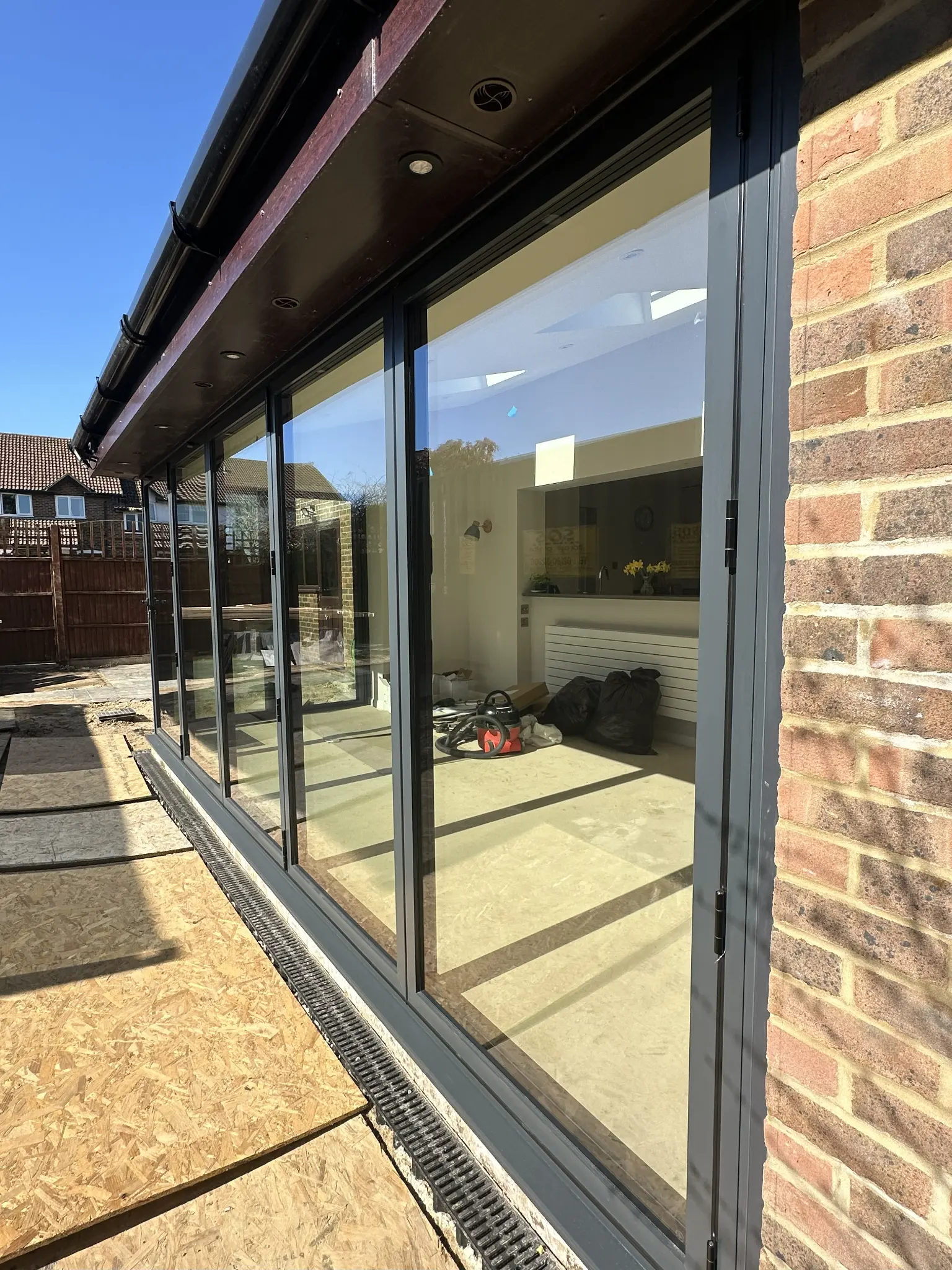
Aluminium is the preferred choice for contemporary garden rooms requiring large expanses of glass, slim sightlines, and structural integrity for bi-fold or sliding doors.
- Pros: Extremely durable, minimal maintenance, very slim profiles maximise light, ideal for large glass panels, excellent structural strength.
- Cons: Aluminium is highly conductive, so frames must incorporate a high-quality thermal break (usually polyamide) to prevent heat transfer. Frames without a robust thermal break will fail to meet efficiency standards. Higher cost than uPVC.
Timber
Timber frames offer a natural, traditional, or Scandinavian aesthetic. They are inherently good insulators.
- Pros: Excellent natural thermal performance, highly sustainable (if sourced responsibly), beautiful appearance.
- Cons: Requires regular maintenance (painting/staining) to prevent rot and warping, higher initial cost, and potential for movement if not properly manufactured and treated.
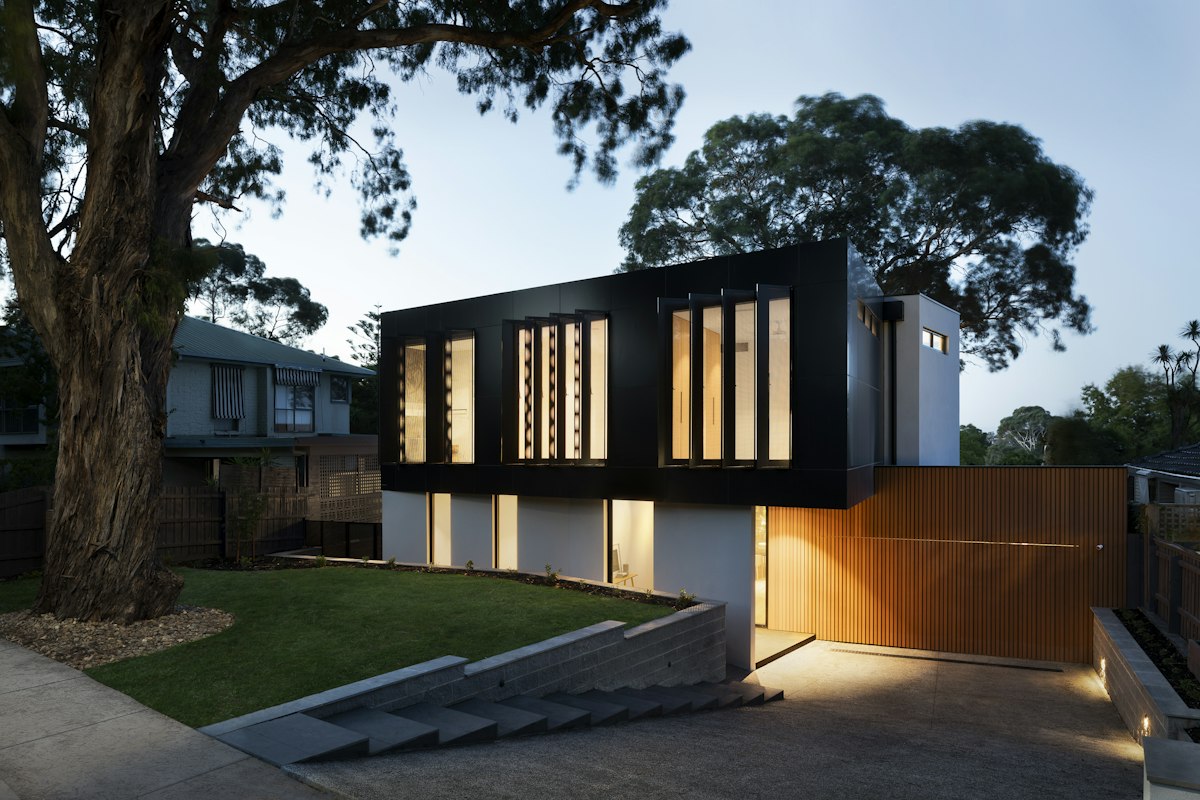
Glazing Types and Functionality
Beyond standard insulating glass units (IGUs), several specialised glass types can enhance comfort and security in a garden room.
Security and Safety Glazing
- Laminated Glass: Features a plastic interlayer (PVB) between two panes of glass. If shattered, the glass adheres to the interlayer, preventing dangerous shards and acting as a strong deterrent against forced entry. This is often required for large, low-level panes.
- Toughened (Tempered) Glass: Heat-treated for strength. If it breaks, it shatters into small, relatively harmless pieces. Required for doors and glazing near the floor level (Part K of Building Regulations).
Solar Control Glazing
Garden rooms, especially those facing south or west, can suffer from excessive solar gain, leading to overheating in the summer. Solar control glass features coatings that reflect a significant portion of the sun's short-wave radiation (heat) while still allowing ample visible light through. This is essential for creating a comfortable workspace.
Acoustic Glazing
If your garden room is near a busy road, flight path, or noisy neighbours, acoustic laminated glass can significantly reduce external noise penetration. This is achieved through varying glass thicknesses and specialised acoustic PVB interlayers.
Comparing Popular Door and Window Styles
The choice of opening mechanism affects ventilation, accessibility, and the amount of light intake.
| Style | Best For | Pros | Considerations |
|---|---|---|---|
| Bi-fold Doors | Maximising open space; connecting room to garden. | Creates a seamless transition; allows maximum light and ventilation when fully open. | Requires space for stacking panels; higher cost; requires robust frame (usually aluminium). |
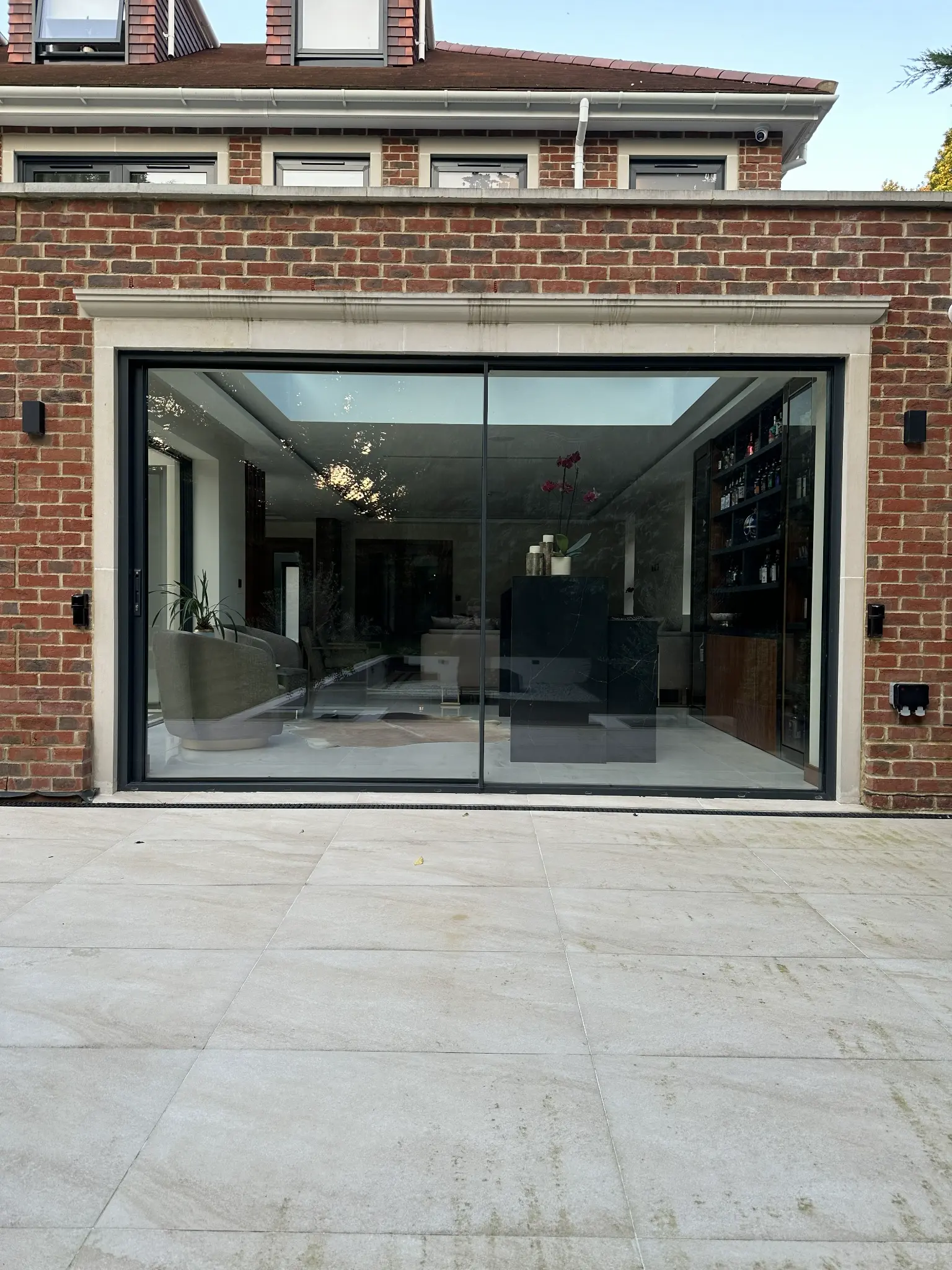
| Sliding Doors (Patio) | Large openings where space is limited. | Very large glass panes (slim sightlines); require no external or internal space to open; excellent security. | Only 50% of the opening can be accessed; ventilation is limited compared to bi-folds. |
| French Doors | Traditional aesthetics; smaller openings. | Simple operation; good ventilation; classic look. | Doors open outwards, requiring clear external space; less light intake than sliding or bi-fold walls. |
| Casement Windows | Standard ventilation and light. | Highly thermally efficient; excellent security when closed; cost-effective. | Limited opening size compared to doors. |
Design and Placement Considerations
The performance of your glazing is not just about the product specification; it’s also about how and where it is installed.
Orientation and Solar Gain
If the garden room faces south, incorporating high-performance solar control glass is highly recommended to manage internal temperatures. Conversely, if the room faces north, where solar gain is minimal, prioritising maximum light transmission and thermal insulation (low U-value) is key.
Ventilation Strategy
Adequate ventilation is vital to prevent condensation and maintain air quality, especially in a heavily glazed space. Ensure your design includes:
- Trickle Vents: Essential for background ventilation, particularly when the room is closed up. These are often mandatory under Building Regulations unless an alternative ventilation system is specified.
- Opening Windows/Doors: Allows for rapid air exchange (purging ventilation).
- Cross-Ventilation: Positioning windows on opposite walls allows air to flow efficiently through the space.
Security Features
As a detached structure, garden rooms can be vulnerable. Ensure all glazed units feature high-security locking mechanisms. Look for certification standards such as PAS 24 (Enhanced Security Performance) and Secured by Design (SBD) accreditation. These standards ensure the frames and hardware have been rigorously tested against common attack methods.
Year-Round Comfort
High-specification glazing (U-values below 1.2 W/m²K) ensures the room stays warm in winter and, with solar control, cool in summer.
Energy Savings
Lower U-values reduce the reliance on supplementary heating, significantly cutting utility bills over the lifetime of the structure.
Noise Reduction
Double or triple glazing, especially when specified with acoustic laminate, provides a quiet sanctuary, ideal for home offices or studios.
Increased Property Value
A well-built, compliant, and aesthetically pleasing garden room is a highly desirable feature that adds significant market value to your home.
Conclusion: Choosing the Right Partner
Selecting the right glazing for your garden room involves balancing thermal performance, aesthetic goals, and budget constraints. Prioritising a low U-value (1.2 W/m²K or better) and robust security features will ensure your investment provides a comfortable, functional space for decades.
When planning your project, it is highly recommended to consult with local Building Control regarding specific requirements for detachment and heating, and to work with a glazing specialist who is familiar with the latest UK standards and thermal modelling.
For UK homeowners seeking bespoke, high-performance architectural glazing solutions for their garden rooms, Shard AG provides expert consultation and installation services. Specialising in thermally broken aluminium and high-specification IGUs, Shard AG ensures compliance with Part L (2022) while delivering sleek, modern designs tailored to your specific needs.
Explore Our Products
Discover how Shard Architectural Glazing can transform your home with our premium glazing solutions:
Ready to Transform Your Home?
Get in touch with our expert team for a free consultation and personalised quote. We'll help you choose the perfect glazing solution for your property.