

.jpg)
Designing for Natural Ventilation: A UK Homeowner's Guide
Understand how passive ventilation works in UK homes, covering stack effect, cross-ventilation, and compliance with Building Regulations Part F for healthier, energy-efficient living.

Shard Architectural Glazing
25 December 2025
Understand how passive ventilation works in UK homes, covering stack effect, cross-ventilation, and compliance with Building Regulations Part F for healthier, energy-efficient living.
📋In This Article
Designing for Natural Ventilation: A UK Homeowner's Guide
Natural ventilation is a fundamental principle of sustainable building design, offering a cost-effective and energy-efficient way to maintain high indoor air quality and thermal comfort. For UK homeowners undertaking renovations or new builds, understanding how to effectively harness natural air movement is crucial for compliance with Building Regulations and achieving a healthy living environment.
The Core Principles of Natural Ventilation
Natural ventilation relies on pressure differences created by wind and temperature variations to move air through a building without mechanical assistance (such as fans or air conditioning units). Implementing a successful natural ventilation strategy requires careful consideration of the building's orientation, layout, and the placement of openings.
Stack Effect (Buoyancy Ventilation)
The stack effect is driven by temperature differences. Warm air is less dense than cool air, causing it to rise. In a building, this means warm, stale air naturally rises and escapes through high-level openings (like clerestory windows or roof vents), drawing cooler, fresh air in through low-level inlets (like trickle vents or ground floor windows). This effect is particularly effective in taller buildings or those with double-height spaces.
Cross-Ventilation (Wind-Driven Ventilation)
Cross-ventilation uses wind pressure. Air enters the building through an opening on the windward side (high pressure) and exits through an opening on the leeward side (low pressure). For this to be effective, the inlet and outlet openings must be strategically placed, ideally on opposing walls, and the internal layout should minimise obstructions to airflow. Generally, the outlet opening should be larger than the inlet to maintain optimal airflow velocity.
Pro Tip
When designing for cross-ventilation, ensure the distance between the inlet and outlet is no more than five times the floor-to-ceiling height. If the distance is too great, the airflow velocity drops significantly, resulting in poor air exchange in the centre of the room.
UK Building Regulations Part F: Ventilation Requirements
In the UK, ventilation design is governed primarily by Approved Document F (Part F) of the Building Regulations. Part F aims to ensure adequate ventilation to protect the health of the occupants by providing fresh air, removing moisture, and controlling pollutants.
Part F classifies ventilation into three main types:
- Background Ventilation: Continuous low-level airflow, typically provided by trickle vents in window frames, even when the windows are closed.
- Purge Ventilation: High-rate ventilation used to rapidly remove high concentrations of pollutants or moisture (e.g., opening a window fully).
- Extract Ventilation: Mechanical ventilation required in moisture-producing rooms (kitchens, bathrooms) to remove steam and odours.
Compliance and Airflow Standards
For natural ventilation systems, compliance often hinges on the adequate sizing and placement of background ventilators. Part F specifies minimum equivalent area (EA) requirements for these vents, usually measured in millimetres squared (mm²).
| Room Type / Application | Minimum Background Ventilation Equivalent Area (EA) | Purge Ventilation Requirement |
|---|---|---|
| Habitable Rooms (Living rooms, bedrooms) | 5,000 mm² per room | Openable window area of at least 1/20th of the floor area |
| Kitchens (with extract fan) | 5,000 mm² per room | Openable window area of at least 1/20th of the floor area |
| Utility Rooms / Bathrooms | 2,500 mm² per room (if no extract fan) | Openable window area of at least 1/20th of the floor area |
| Dwellings with High Airtightness (New Builds) | Increased requirement, typically 8,000 mm² per habitable room | As above |
It is vital that when replacing windows in existing homes, the new frames incorporate trickle vents that meet or exceed the original ventilation capacity, or the home risks becoming non-compliant and suffering from condensation issues.
Key Design Elements for Optimised Airflow
Effective natural ventilation relies heavily on architectural choices made early in the design process. These elements help control the volume, velocity, and direction of air movement.
Window and Door Placement
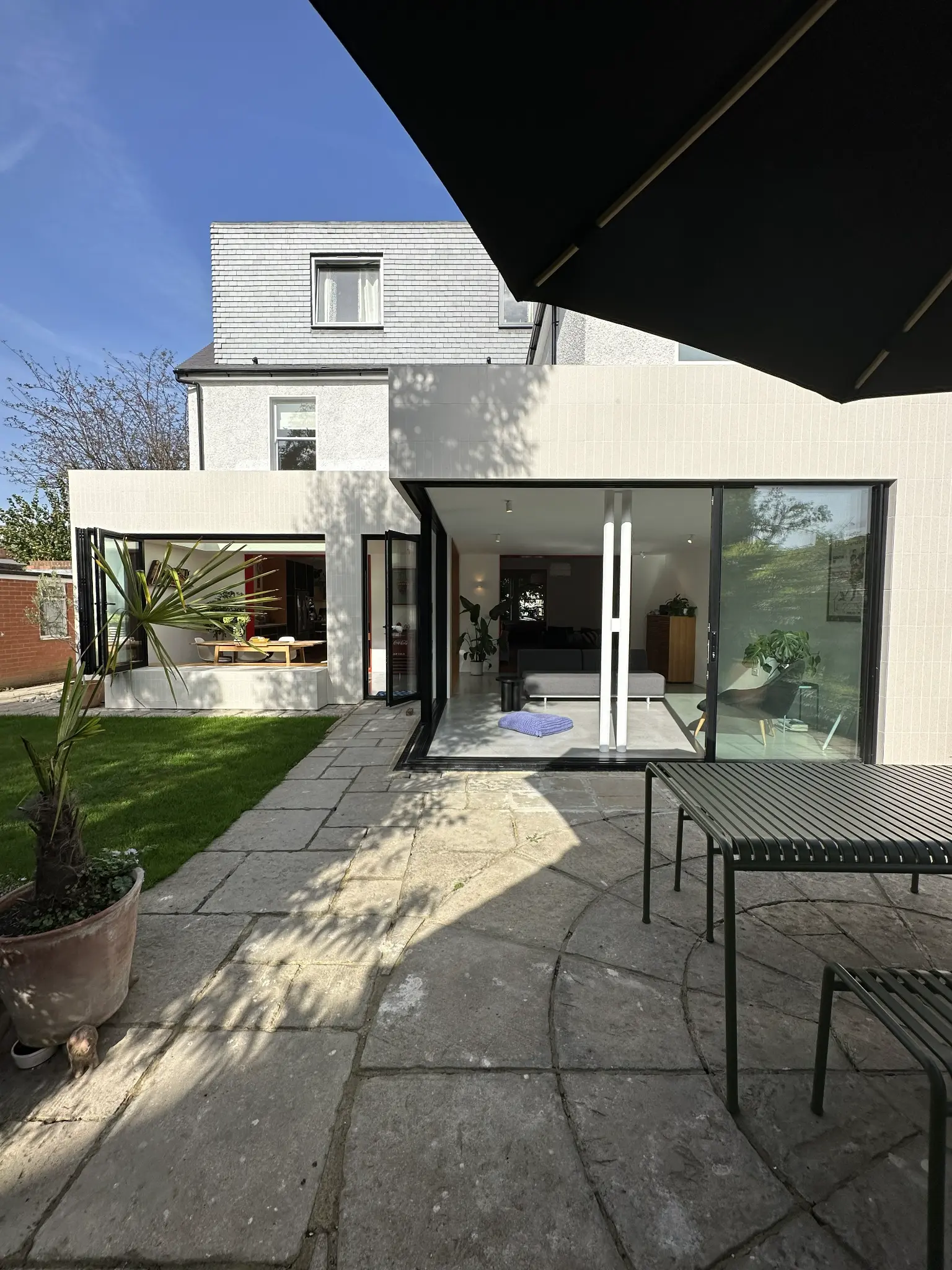
The size, type, and location of glazing are the most significant factors in natural ventilation. For cross-ventilation, openings should be positioned high and low on opposite walls. If openings are on the same wall, the air will short-circuit, failing to ventilate the whole space.
- Louvres and Top-Hung Vents: These are excellent for controlled ventilation, especially in wet weather, as they minimise rain ingress while allowing air exchange.
- Casement Windows: Offer maximum opening area for purge ventilation. Positioning them to catch prevailing winds can enhance cross-ventilation.
- Internal Doors and Vents: To facilitate air movement between rooms, internal doors should be undercut (typically 10-15mm gap at the bottom) or fitted with transfer grilles to allow air to move towards extract points (like kitchens or bathrooms).
Thermal Mass and Shading
While not strictly ventilation elements, thermal mass and shading significantly impact the need for and effectiveness of natural cooling through ventilation.
High thermal mass materials (like concrete or heavy masonry) absorb heat during the day and release it slowly at night. By ventilating the building during cooler evening hours (a process known as night-time cooling), the thermal mass is cooled down, ready to absorb heat the next day, reducing peak indoor temperatures.
External shading (e.g., overhangs, brise soleil) prevents solar gain, reducing the internal heat load and lessening the demand on ventilation to cool the space.
Challenges and Practical Considerations
While natural ventilation is highly desirable, it is not without limitations, particularly in the dense urban environments common across the UK.
Noise and Security
The primary drawback of relying on open windows for ventilation is the potential ingress of external noise and the compromise of security, especially on ground floors or in high-traffic areas. This is where high-performance trickle vents become essential, providing continuous background ventilation without needing to open the main window sash.
Air Quality and Pollutants
In areas with high levels of external air pollution (e.g., near major roads), relying solely on natural ventilation can introduce harmful particulates (PM2.5) and nitrogen dioxide (NO₂) into the home. In such cases, a combination approach, perhaps using mechanical ventilation with heat recovery (MVHR) systems incorporating high-grade filters, may be necessary to ensure healthy indoor air quality.
Controllability and Comfort
Natural ventilation is highly dependent on external weather conditions (wind speed, temperature). This lack of precise control can sometimes lead to draughts in winter or insufficient cooling on still, hot summer days. Occupant behaviour is also key; the system only works if residents actively manage the openings (windows, vents) according to the conditions.
The Benefits of Integrated Natural Ventilation
When correctly designed and implemented, a natural ventilation strategy offers significant advantages for UK homeowners.
Reduced Energy Costs
By eliminating the need for mechanical cooling (air conditioning), natural ventilation drastically cuts electricity consumption, leading to lower utility bills and reduced carbon emissions.
Superior Indoor Air Quality (IAQ)
Continuous air exchange removes stale air, volatile organic compounds (VOCs), and excess moisture, reducing the risk of mould, condensation, and respiratory issues.
Acoustic and Aesthetic Integration
Modern architectural glazing solutions can integrate subtle, high-performance trickle vents and automated openings, ensuring ventilation requirements are met without compromising the aesthetic appeal or acoustic performance of the windows.
Low Maintenance and Reliability
Unlike mechanical systems that require regular servicing, filters, and electrical components, passive natural ventilation systems are robust, require minimal maintenance, and have a long operational lifespan.
Conclusion and Glazing Solutions
Designing for natural ventilation is an investment in the long-term health and efficiency of a property. It requires a holistic approach, integrating architectural design with high-performance glazing and compliant ventilation components, ensuring the home breathes effectively while remaining thermally efficient and secure.
Achieving the delicate balance between airtightness (essential for thermal performance) and adequate ventilation (essential for air quality) is the core challenge in modern UK construction.
***
Shard AG Expertise: If you are planning a renovation or new build and require expert advice on integrating compliant, high-performance glazing solutions that optimise natural ventilation while adhering to UK Building Regulations Part F, Shard AG offers bespoke design consultation. We specialise in specifying and installing architectural windows and doors that incorporate advanced trickle ventilation systems and automated opening mechanisms, ensuring your property benefits from superior air quality and energy efficiency.
Explore Our Products
Discover how Shard Architectural Glazing can transform your home with our premium glazing solutions:
Ready to Transform Your Home?
Get in touch with our expert team for a free consultation and personalised quote. We'll help you choose the perfect glazing solution for your property.