


Frameless glass solutions represent the pinnacle of modern architectural design, offering unparalleled light transmission and seamless integration between interior and exterior spaces. For UK homeowners seeking to maximise views and achieve a minimalist aesthetic, understanding the technical specifications and regulatory landscape is crucial. This comprehensive guide delves into the practicalities, performance, and compliance requirements associated with incorporating frameless glazing into your property.
Understanding Frameless Glazing Systems
The term 'frameless' is often used broadly in the glazing industry. While truly frameless systems—where the glass is structurally bonded or supported solely at the edges—exist, many solutions marketed as frameless utilise minimal, recessed, or concealed aluminium profiles to provide necessary structural integrity and weather sealing.
These systems are typically defined by their reliance on sophisticated engineering to handle loads (wind, snow, impact) and their commitment to visual purity. Common applications include structural glass extensions, glass balustrades, frameless sliding doors, internal partitions, and walk-on rooflights.
Key Components of Frameless Systems
- Structural Silicone Joints: Instead of traditional mullions, adjacent glass panels are often joined using high-performance, UV-resistant structural silicone sealant. This provides a clean, near-invisible connection.
- Laminated and Toughened Glass: Due to the lack of a protective frame, the glass itself must perform the structural role. This necessitates the use of robust safety glass, typically toughened (tempered) or, more commonly for structural applications, laminated safety glass (two or more panes bonded by an interlayer, usually PVB or SentryGlas).
- Concealed Fixings: Perimeter fixings are often recessed into the floor, ceiling, or wall structure, ensuring that only the glass edge is visible.
- High-Performance Coatings: Low-emissivity (Low-E) coatings are essential for thermal performance, especially in large glazed areas, helping to reflect internal heat back into the room.
Structural Considerations and Safety
Unlike standard windows, frameless systems often bear load and form part of the building envelope's structure. This requires careful design and calculation by a structural engineer, especially for applications like glass extensions or load-bearing rooflights.
Glass Specification and Thickness
The thickness of the glass required depends heavily on the application, the size of the pane, and the local wind load calculations (which vary across the UK). For vertical glazing, thicknesses often range from 10mm to 25mm, while walk-on glass or large structural roofs may require significantly thicker, multi-layer laminated units (e.g., 33mm or more).
Safety Glazing (Building Regulations Part K): All glazing in critical locations (low level, doors, or adjacent to doors) must comply with Part K of the Building Regulations, mandating the use of toughened or laminated glass that breaks safely or remains intact upon breakage.
Balustrades and Barriers
Frameless glass balustrades, whether internal or external, must meet stringent performance criteria regarding impact resistance and line loads. UK standards dictate the minimum horizontal force the barrier must withstand. For domestic properties, this is typically 0.74 kN/m (kilonewtons per metre) applied at the top edge. Balustrades must be designed so that if one pane fails, the remaining structure maintains integrity, often requiring the use of structural laminated glass or a continuous handrail.
Pro Tip
When planning a structural glass installation, ensure your supplier provides full structural calculations signed off by a qualified engineer. This documentation is vital for Building Control approval and insurance purposes. Never rely solely on aesthetic design; structural integrity must always be the priority.
Thermal Performance and UK Building Regulations (Part L 2022)
One of the primary challenges of frameless glazing is achieving adequate thermal performance, especially given the large surface area of glass involved. The UK Building Regulations Part L (Conservation of Fuel and Power) sets strict standards for heat loss.
U-Values Explained
The U-value measures how effectively a building element (like a window or wall) prevents heat from escaping. A lower U-value indicates better insulation. For frameless systems, the overall U-value must account for the glass unit itself (Ug) and the thermal performance of the edge seals and minimal framing (Uf).
| Application | Maximum U-Value (W/m²K) - England Part L 2022 | Typical Frameless System Requirement |
|---|---|---|
| New Build Windows/Doors | 1.2 W/m²K | Requires triple glazing or high-spec double glazing with warm edge spacers and Low-E coatings. |
| Replacement Windows/Doors | 1.4 W/m²K | Achievable with high-performance double glazing (e.g., Argon-filled, Low-E). |
| New Extensions (Average) | Varies based on calculation method (e.g., area-weighted average or limiting the glazed area to 25% of the new floor area). | Requires careful balancing of glazing area and wall insulation (Walls: 0.18 W/m²K). |
To meet the stringent 1.2 W/m²K or 1.4 W/m²K targets, frameless systems often require:
- Double or Triple Glazing: Standard double glazing (4/16/4mm) might achieve 1.6 W/m²K. High-performance systems use wider cavities (18mm+) filled with inert gas (like Argon or Krypton) and multiple Low-E layers to reach 1.4 W/m²K or lower.
- Warm Edge Spacers: These replace traditional aluminium spacers within the sealed unit to reduce thermal bridging at the glass edge.
- Thermal Breaks: Even minimal concealed frames must incorporate polyamide thermal breaks to prevent heat transfer and condensation risk.
Weatherproofing, Condensation, and Maintenance
The absence of substantial frames places greater emphasis on the quality of the installation and the sealing materials used to ensure weather tightness.
Water Ingress and Drainage
In frameless sliding or folding door systems, drainage is critical. Tracks are often recessed into the floor for a flush threshold, but this requires robust sub-surface drainage channels to manage rainwater runoff and prevent water pooling or ingress. Homeowners must ensure that the surrounding patio or decking slopes away from the threshold.
Condensation Risk
Condensation occurs when warm, moist internal air meets a cold surface. While high-performance glazing reduces the risk on the main pane surface, the edges of frameless glass (where the structural silicone or minimal fixings are located) can be prone to thermal bridging if the design is poor. Proper ventilation and heating management are essential in rooms featuring extensive frameless glazing.
Cleaning and Maintenance
Frameless glass requires regular cleaning to maintain its aesthetic clarity. Access for cleaning, especially for large structural rooflights or high-level balustrades, must be considered during the design phase. Unlike traditional windows, there are no frames to protect the edges of the glass, so care must be taken during cleaning to avoid chipping or damaging the structural silicone joints.
Design Applications and Aesthetics
Frameless glazing offers incredible versatility, transforming how light and space interact within a property.
Frameless Sliding and Bi-Fold Doors
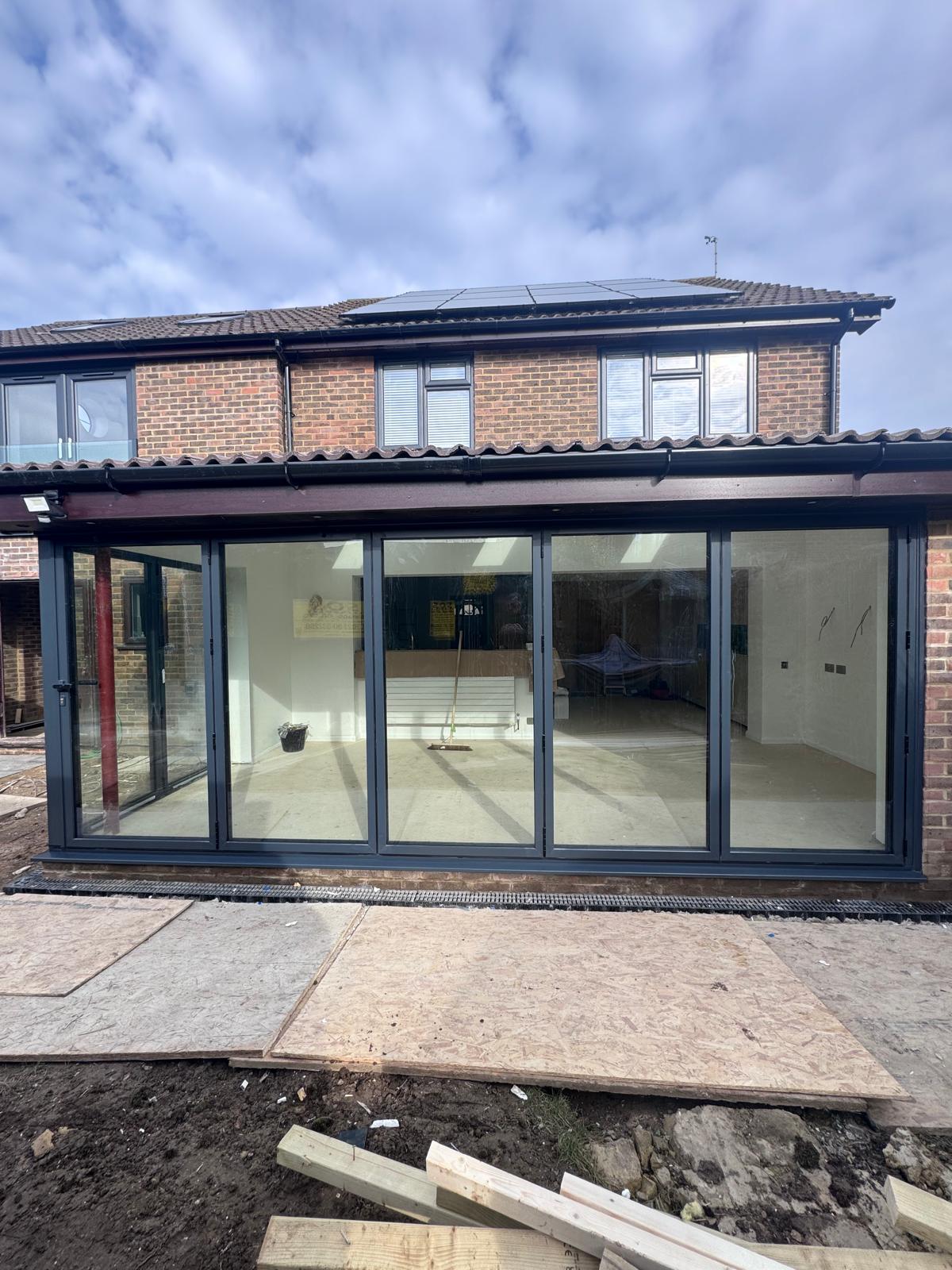
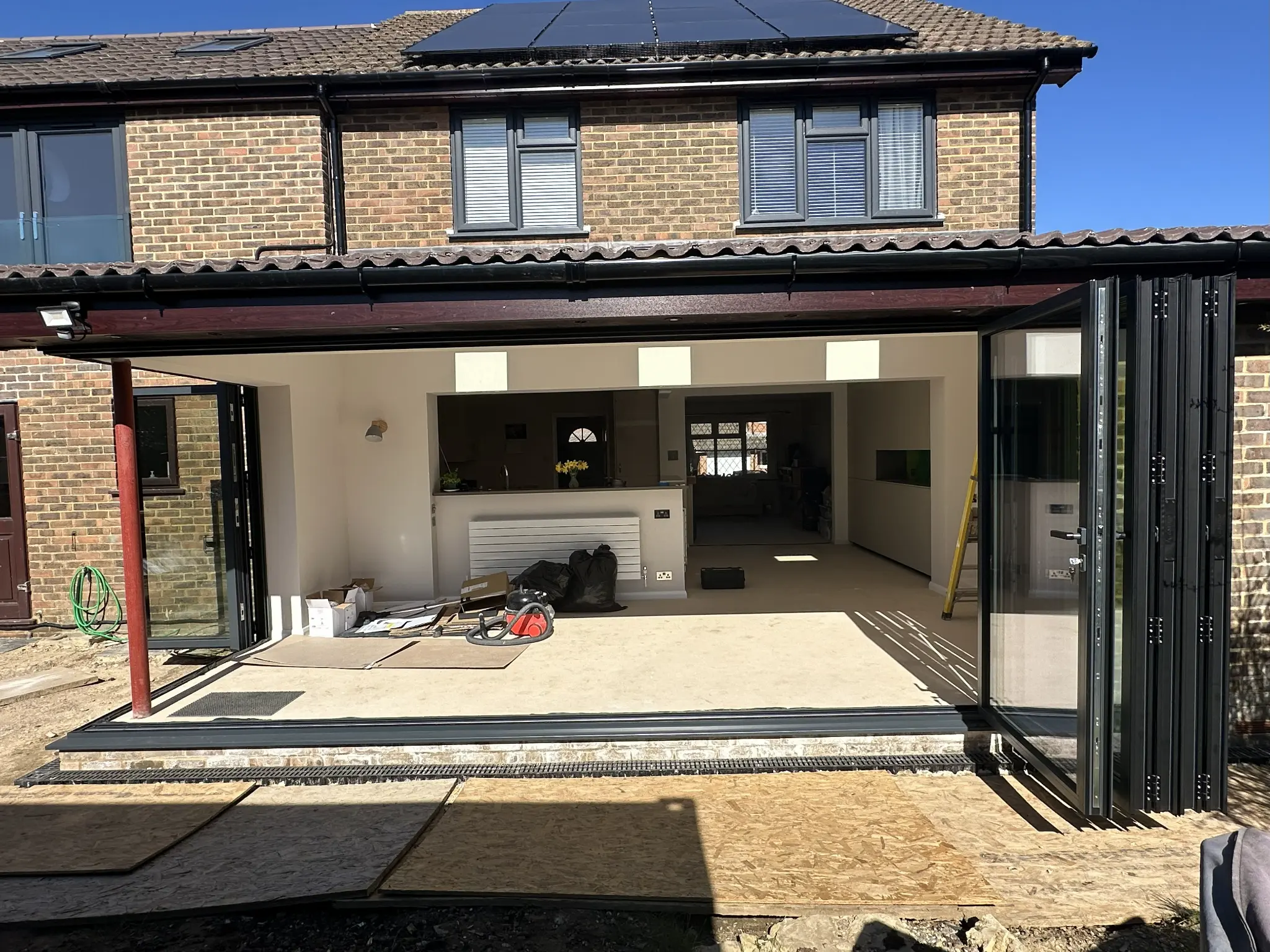
These systems are popular for creating large, uninterrupted openings. High-end frameless sliders often feature panels that stack neatly to one side, with the tracks fully concealed beneath the finished floor level, achieving a truly seamless transition to the garden or balcony.
Structural Glass Boxes and Extensions
A structural glass box is perhaps the most dramatic use of frameless technology. The walls and roof are formed entirely of bonded, load-bearing glass panels. This design requires meticulous planning regarding solar gain (overheating) and ventilation, often necessitating integrated shading solutions or automatically opening vents.
Internal Partitions and Walk-On Floors
Internally, frameless glass is used to divide spaces without blocking light, maintaining an open-plan feel while offering acoustic separation. Walk-on glass floors or rooflights introduce light into lower levels, requiring specialist anti-slip treatments and extremely robust laminated specifications.
Maximum Light Transmission
By eliminating bulky frames and mullions, frameless systems allow the maximum possible amount of natural light to enter the space, enhancing mood and reducing reliance on artificial lighting.
Uninterrupted Views
The primary aesthetic benefit is the creation of seamless, panoramic views, effectively blurring the line between the indoor living space and the outdoor environment.
Modern Minimalist Aesthetic
Frameless glass aligns perfectly with contemporary architectural trends, providing clean lines, simplicity, and a high-end, sophisticated finish.
Increased Property Value
High-quality, structurally sound, and compliant frameless glazing installations are often seen as a significant architectural upgrade, positively impacting property valuation.
Choosing the Right Supplier and Installation
Due to the complexity and structural importance of frameless systems, selection of the supplier and installer is paramount. This is not a project suited for general builders without specialist glazing experience.
Specialist Expertise Required
Look for companies that specialise specifically in structural and frameless glazing. They should employ or partner with structural engineers familiar with glass loading calculations and have a proven track record of installations that meet UK Building Control approval.
Warranties and Certification
Ensure the glass units carry appropriate warranties against failure (e.g., misting between panes) and that the installation process is covered. Ask about the quality and longevity of the structural silicone and sealants used, as these are critical to the system's long-term performance and weatherproofing.
Shard AG understands the unique demands of the UK climate and regulatory environment. We specialise in designing, engineering, and installing bespoke frameless glass solutions, ensuring every project meets the stringent requirements of Part L 2022 and Part K safety standards while delivering the aesthetic excellence our clients expect. Our approach combines cutting-edge glass technology with meticulous structural design to achieve truly invisible architecture.
.jpg)