


Adding an extension to your home is a significant investment, offering the chance to transform living spaces, increase natural light, and enhance connection with the garden. However, the success of the project hinges largely on the specification of the glazing. Choosing the right windows, doors, and rooflights requires a careful balance between aesthetics, thermal performance, and compliance with stringent UK Building Regulations.
This comprehensive guide provides UK homeowners with the technical knowledge and practical tips needed to specify high-performance glazing that ensures your new extension is comfortable, efficient, and compliant.
Understanding Building Regulations Part L (Conservation of Fuel and Power)
In England, any new extension must comply with Part L of the Building Regulations, which governs thermal efficiency. Compliance is crucial, not just for legal reasons, but to ensure your new space doesn't become prohibitively expensive to heat in winter or overheat in summer. The regulations specify maximum U-values (a measure of heat loss) for different elements of the building fabric.
For extensions, there are two primary routes to compliance: the 'elemental' approach and the 'whole dwelling' or 'area-weighted' approach. Most homeowners use the elemental approach for straightforward extensions.
Key U-Values for New Extensions (England, 2022 Standards)
- Walls: 0.18 W/m²K
- Roofs: 0.15 W/m²K
- Floors: 0.18 W/m²K
- Windows, Rooflights, and Glazed Doors (New Build Standard): 1.2 W/m²K
It is vital that the glazing you select meets or exceeds the required 1.2 W/m²K U-value. While replacement windows often only need to meet 1.4 W/m²K, new extensions must adhere to the stricter 1.2 W/m²K standard. Achieving this usually requires high-quality double glazing with warm edge spacers, argon gas filling, and low-emissivity (Low-E) coatings, or high-specification triple glazing.
Pro Tip
While the regulation sets a maximum U-value of 1.2 W/m²K, aiming for a lower U-value (e.g., 1.0 W/m²K or less) provides a buffer against calculation errors and significantly reduces long-term energy costs. Always request the certified U-value from your supplier, ensuring it accounts for the entire unit (glass and frame), not just the centre pane.
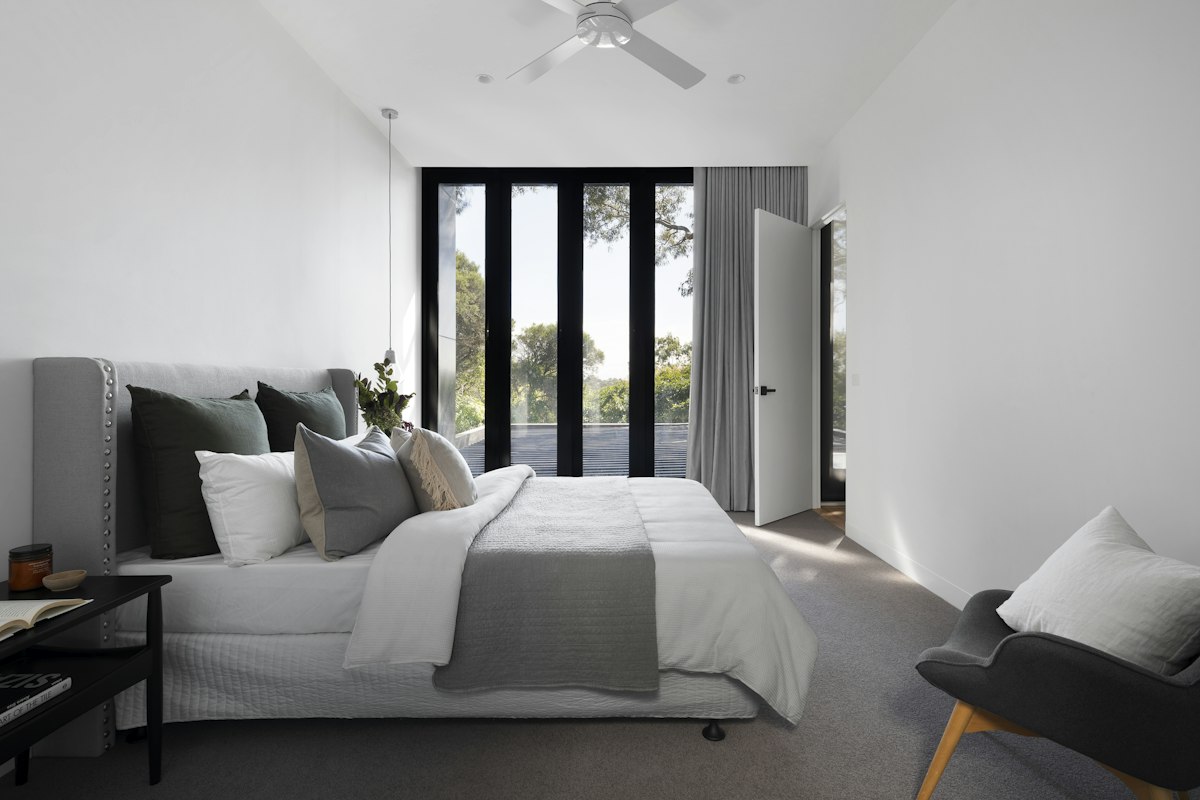
Design Considerations: Glazing Ratio and Overheating
A common mistake in extension design is specifying too much glass without considering the consequences. While maximising light is desirable, excessive glazing can lead to two main problems: non-compliance and overheating.
The 25% Rule (Glazing Ratio)
Historically, Building Regulations allowed the total area of new openings (glazing) in an extension to be no more than 25% of the new floor area, plus the area of any openings that were blocked up in the existing house. If you exceed this 25% ratio, you must demonstrate compliance using the 'whole dwelling' calculation method (SAP or SBEM), proving that the overall energy performance of the house remains adequate.
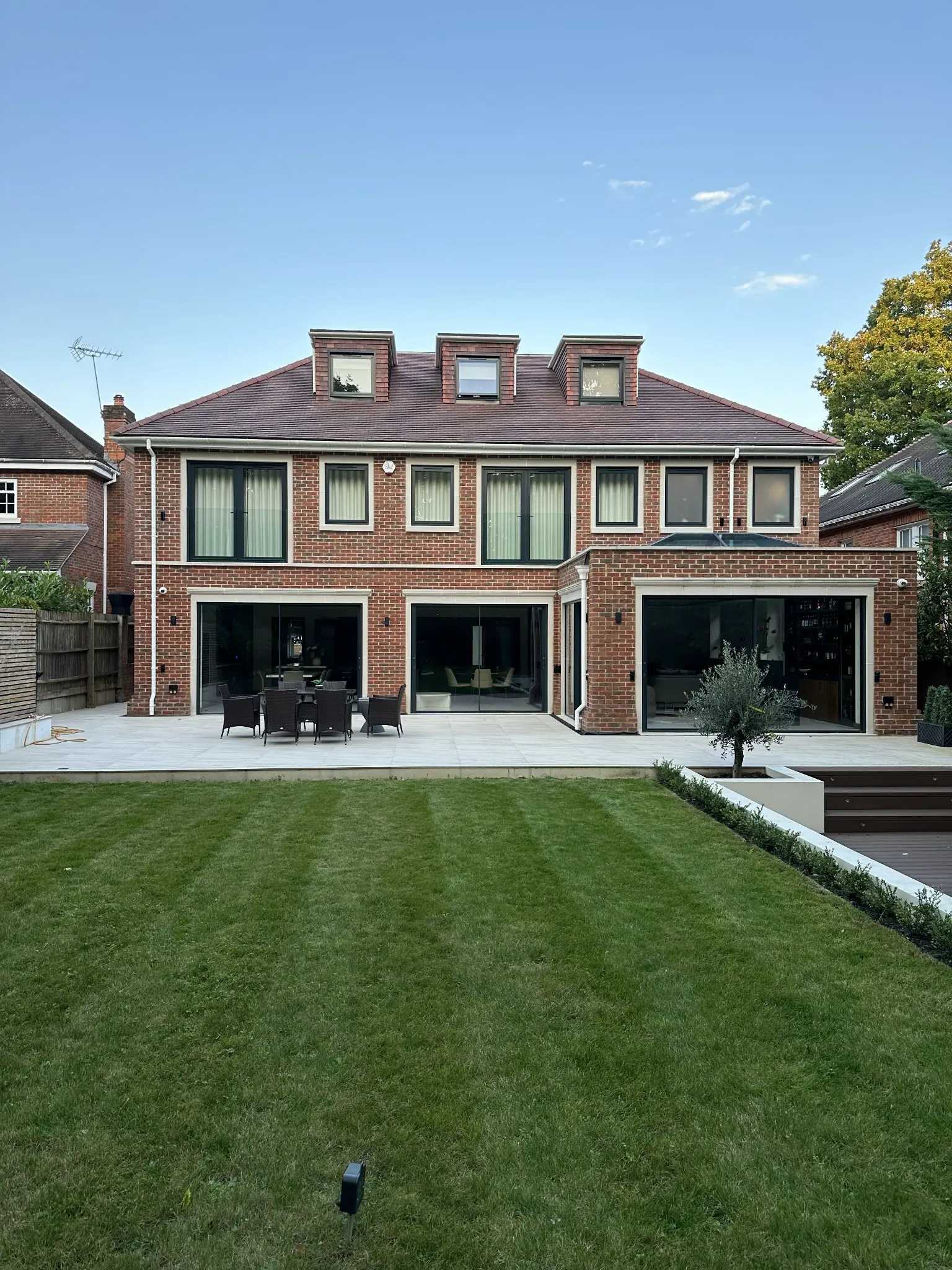
If you plan a 'glass box' extension, such as a large conservatory or an extension with expansive sliding doors and a glazed roof, you will certainly exceed the 25% rule and must engage an energy assessor to produce detailed calculations proving compliance.
Managing Solar Gain and Overheating
Large south or west-facing glazed areas receive significant solar radiation, which can cause the internal temperature to soar during summer (known as solar gain). Mitigating solar gain is essential for comfort.
- Solar Control Coatings: Specify glass with solar control coatings. These coatings reflect a portion of the sun's heat while still allowing light transmission. Look for a low G-value (Solar Heat Gain Coefficient); a typical G-value for high-performance glass is around 0.35.
- Orientation: Place the largest glazed elements on the north or east elevations where solar gain is less intense.
- Shading Solutions: Integrate external shading (brise soleil, overhangs, pergolas) or internal blinds/curtains into the design from the outset.
- Ventilation: Ensure adequate ventilation is planned, either through opening sections in large doors or dedicated trickle vents (required by regulations unless continuous mechanical ventilation is installed).
Choosing the Right Glazing Products for Your Extension
Modern architectural glazing offers a vast array of options, each suited to different design goals and budgets.
1. Sliding and Bi-Fold Doors
These are popular choices for creating seamless transitions between indoor and outdoor spaces.
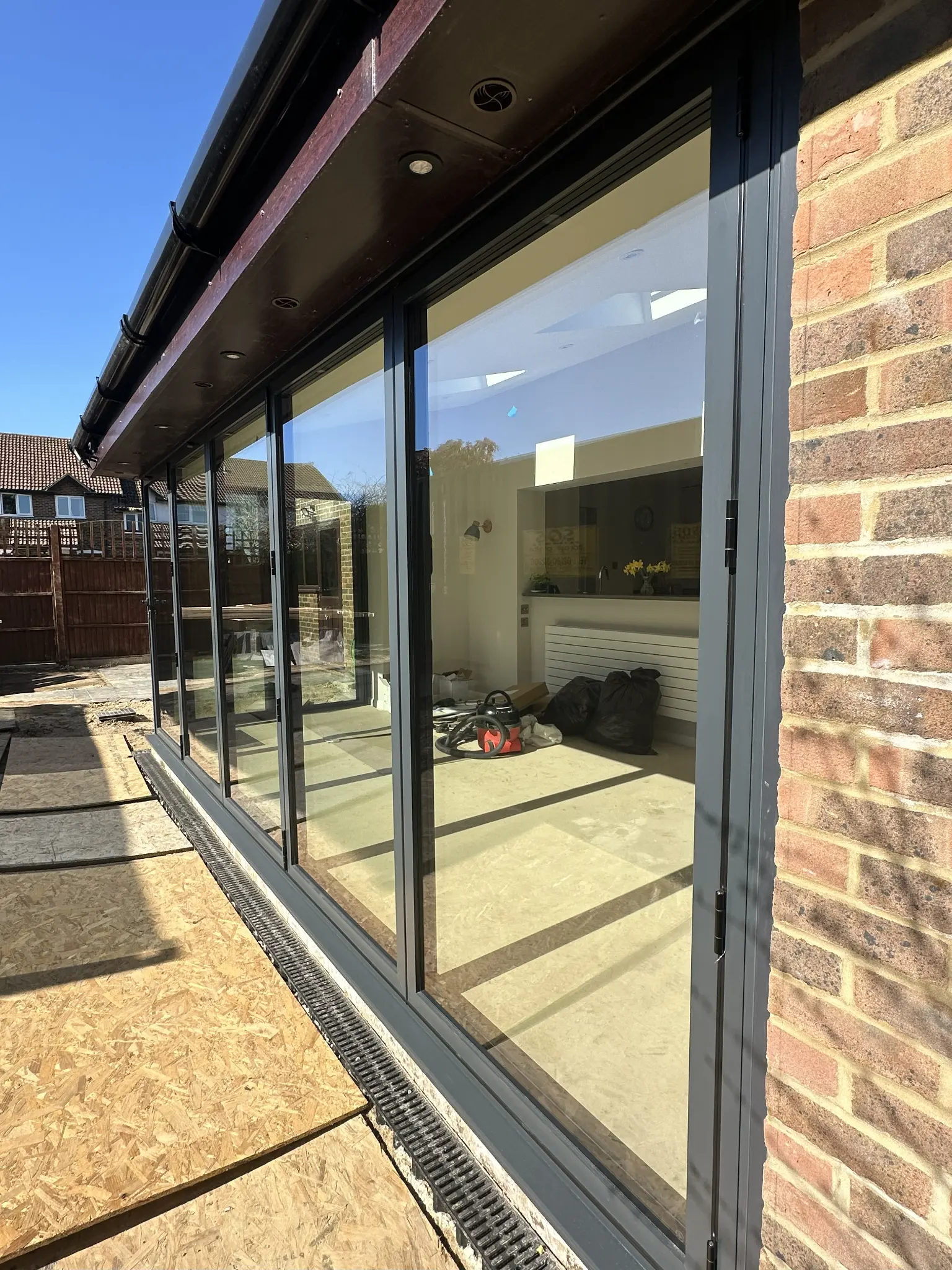
- Bi-Fold Doors: Offer a near-total opening, stacking neatly to one side. Ensure the frames are thermally broken and the running gear is robust, especially for large spans.
- Sliding Doors (Lift & Slide or Inline): Offer larger individual panes of glass and thinner sightlines than bi-folds, providing a cleaner, more contemporary aesthetic when closed. They typically offer better thermal performance than bi-folds due to fewer breaks in the seals.
2. Rooflights and Lanterns
Roof glazing is invaluable for bringing light deep into the floor plan, especially in single-storey extensions.
- Flat Rooflights: Provide a minimalist look. Ensure they are specified with laminated inner panes for safety and security, and that the upstand (kerb) is built correctly to prevent water ingress.
- Roof Lanterns: Create a dramatic architectural feature. Look for thermally broken aluminium frames and ensure the pitch is sufficient for self-cleaning properties.
3. Frameless and Minimalist Glazing
For high-end architectural projects, minimalist glazing is often desired.
- Structural Glass: Used for glass box extensions or large fixed panels where the glass itself forms part of the structure. This requires specialist engineering input.
- Minimal Frame Systems: Feature extremely thin aluminium frames (sometimes recessed into the floor and ceiling) to maximise the visible glass area. While aesthetically striking, these systems often come at a premium and require precise installation tolerances.
Technical Specification Comparison: Double vs. Triple Glazing
While double glazing is the standard minimum for compliance, many homeowners are now considering triple glazing for superior performance, particularly in large glazed areas.
| Feature | High-Performance Double Glazing | High-Performance Triple Glazing |
|---|---|---|
| Typical Construction | Two panes, one Low-E coating, Argon filled | Three panes, two Low-E coatings, Argon/Krypton filled |
| U-Value (Whole Unit) | 1.2 – 1.4 W/m²K (Meets 2022 Regs) | 0.8 – 1.0 W/m²K (Exceeds Regs) |
| Cost | Standard | 20-40% higher than high-spec double glazing |
| Weight | Moderate | Heavy (Requires stronger frames/hardware) |
| Solar Gain (G-value) | Good (Can be customised) | Excellent (Often lower G-value) |
| Acoustic Performance | Good | Excellent (Significantly reduces external noise) |
Installation and Long-Term Performance
Even the best glazing products will fail if installed incorrectly. Proper installation is critical for thermal efficiency, weather resistance, and longevity.
The Importance of Thermal Breaks
Glazing frames made of conductive materials like aluminium must incorporate a thermal break—a non-metallic barrier within the frame profile. This break prevents heat from escaping through the frame itself (thermal bridging). Always confirm that your chosen system is 'thermally broken'.
Sealing and Weatherproofing
The junction between the frame and the building structure is a common point of failure. Ensure that:
- Airtightness: High-quality seals and tapes are used around the perimeter to prevent air leakage (draughts), which significantly impacts energy performance.
- Waterproofing: Correct flashing and drainage channels are installed, particularly around large doors and rooflights, to manage rainwater runoff and prevent damp penetration.
- Thresholds: For large sliding doors, consider the threshold design. While flush thresholds offer the best seamless transition, they require meticulous drainage planning to ensure weather tightness.
Enhanced Comfort
High-performance glazing minimises cold spots and draughts, ensuring the space remains comfortable right up to the glass edge, even in winter.
Reduced Energy Bills
By achieving U-values of 1.2 W/m²K or less, you drastically reduce heat loss, lowering the demand on your heating system and saving money.
Increased Property Value
A well-designed, energy-efficient extension with modern architectural glazing significantly increases the desirability and market value of your home.
Superior Acoustics
Thicker glass units and multiple panes (especially triple glazing) provide excellent sound insulation, crucial if your property is near a busy road or flight path.
Final Checklist Before Specifying
Before signing off on your glazing order, review these critical points:
- Check U-Values: Confirm the whole-unit U-value is 1.2 W/m²K or better, as required by Building Regulations Part L (2022).
- Verify Compliance Route: If your glazing exceeds the 25% ratio, ensure your architect or energy assessor has completed the necessary SAP calculations.
- Assess Solar Gain: If facing south/west, confirm the G-value of the glass is low (e.g., 0.35) to prevent summer overheating.
- Confirm Thermal Breaks: Ensure all aluminium frames are fully thermally broken.
- Safety Glazing: All glazing near the floor (below 800mm) or in doors must be safety glass (toughened or laminated) according to Building Regulations Part K (Protection from Falling, Collision and Impact).
Specifying glazing for an extension requires technical precision. Consulting with an expert supplier early in the design process ensures that aesthetics, performance, and regulatory compliance are all successfully achieved.
***
About Shard AG: Shard Architectural Glazing specialises in supplying and installing high-specification glazing solutions for bespoke home extensions and renovations across the UK. We work closely with homeowners, architects, and builders to provide thermally efficient sliding doors, rooflights, and structural glass systems that meet the stringent requirements of current UK Building Regulations.