
.jpg)

Glazing is arguably the most critical design element in any modern home extension. It dictates the flow of natural light, the connection to the garden, and, crucially, the thermal performance and energy efficiency of the new space. For UK homeowners embarking on an extension project, understanding the technical specifications and regulatory requirements is essential for success.
This comprehensive guide provides expert tips on selecting, specifying, and installing glazing that meets the stringent demands of UK Building Regulations Part L (Conservation of Fuel and Power) while delivering stunning aesthetics and year-round comfort.
Understanding UK Building Regulations Part L (2022)
Before selecting any product, it is vital to understand the minimum performance standards required by law. In England, the current standard is set by Building Regulations Part L (2022). These regulations govern the energy efficiency of the building fabric, including walls, roofs, and all glazed elements.
The primary metric for measuring thermal performance is the U-value, measured in Watts per square metre Kelvin (W/m²K). A lower U-value indicates better insulation and less heat loss.
Minimum U-Value Requirements for Extensions (England 2022)
- Opaque Elements (Walls/Floors/Roofs): These elements must achieve very low U-values (e.g., Walls 0.18 W/m²K, Roofs 0.15 W/m²K).
- Glazed Elements (Windows and Doors): Standard replacement windows and doors must achieve a U-value of 1.4 W/m²K or better. However, for new extensions, the entire extension must meet the target emission rate. Generally, individual elements must meet the following performance standards:
- Windows and Doors (New Opening): 1.2 W/m²K (or better).
- Rooflights: 1.2 W/m²K (or better).
The 25% Rule: Historically, extensions were limited to having glazed areas no larger than 25% of the total floor area of the new extension, plus the area of any openings they replace. While the 2022 regulations encourage a whole-house approach, if you exceed this 25% threshold, you must prove compliance using the 'Standard Assessment Procedure' (SAP) calculation, demonstrating that compensatory measures (like thicker insulation elsewhere or renewable energy sources) offset the increased heat loss from the larger glazed area.
Pro Tip
Always specify glazing with U-values significantly better than the minimum required (e.g., aiming for 1.0 W/m²K or lower for windows). This future-proofs your extension, reduces heating bills, and provides a greater margin of error if you plan on incorporating large expanses of glass.
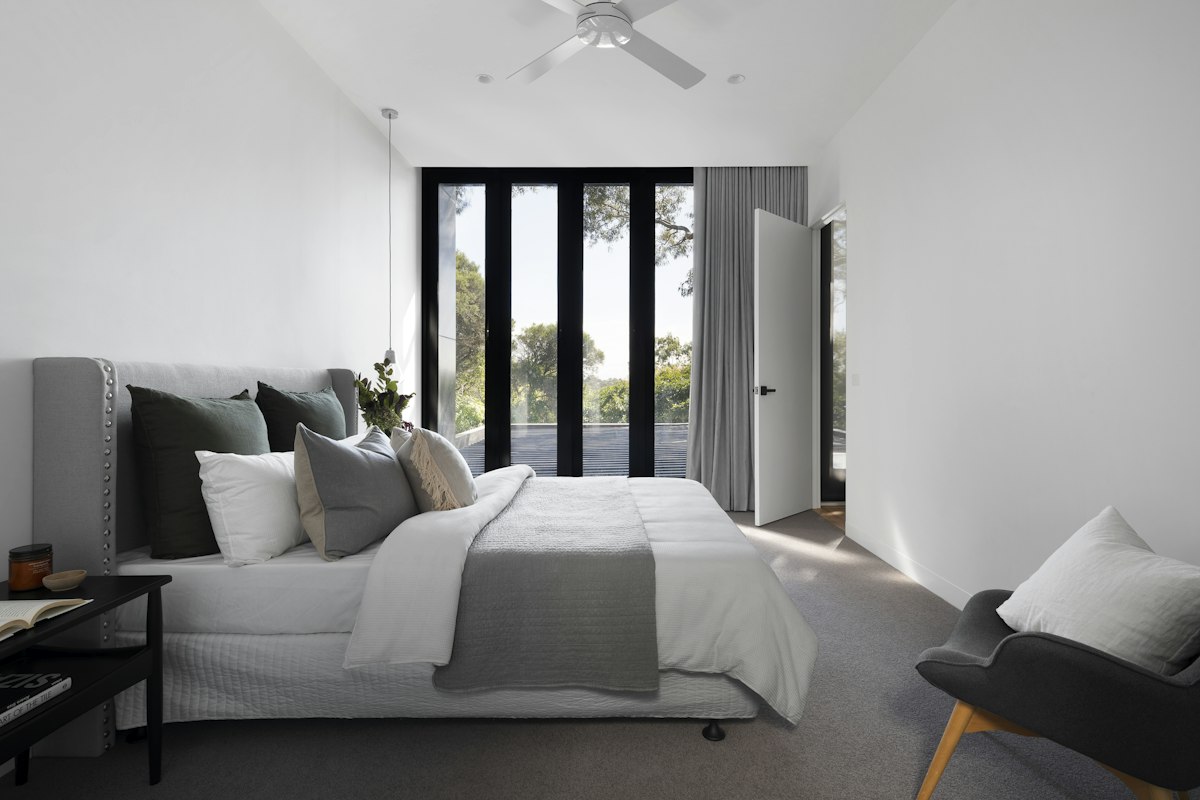
Choosing the Right Glazing Type for Your Extension
The choice between different glazing systems—bi-fold doors, sliding doors, fixed panes, or rooflights—depends on aesthetics, budget, and functionality. However, the performance characteristics remain paramount.
Double vs. Triple Glazing
While double glazing is the standard minimum requirement, modern high-performance extensions often benefit from triple glazing. Triple glazing incorporates three panes of glass and two gas-filled cavities (typically Argon or Krypton), significantly lowering the U-value.
| Feature | High-Performance Double Glazing | Triple Glazing |
|---|---|---|
| Typical U-Value (Centre Pane) | 1.2 – 1.0 W/m²K | 0.8 – 0.5 W/m²K |
| Cost | Standard | Higher (15% - 30% increase) |
| Weight | Moderate | Heavy (Requires robust framing/structure) |
| Acoustic Performance | Good | Excellent (Superior noise reduction) |
| Application | Standard windows, smaller doors | Large fixed panes, areas exposed to high wind/cold, noise pollution areas |
Understanding Solar Heat Gain (G-Value)
While U-values measure heat *loss*, the G-value (or Solar Factor) measures the amount of solar energy (heat) that passes through the glass. This is expressed as a figure between 0 and 1.0. A G-value of 0.5 means 50% of the sun's heat is transmitted indoors.
- South & West Facing Extensions: In the UK, extensions facing south or west are prone to overheating, especially with large glazed areas. Here, you should specify glass with a lower G-value (e.g., 0.3 to 0.4) to reduce solar gain and prevent the space from becoming a greenhouse in summer.
- North & East Facing Extensions: Overheating is less of a concern. You might opt for a slightly higher G-value (e.g., 0.5 to 0.6) to maximise passive solar heating during colder months, reducing reliance on central heating.
Key Design Considerations for Large Glazed Areas
Large format glazing—such as panoramic sliding doors or expansive fixed picture windows—requires careful planning beyond just the thermal performance.
Structural Support and Sightlines
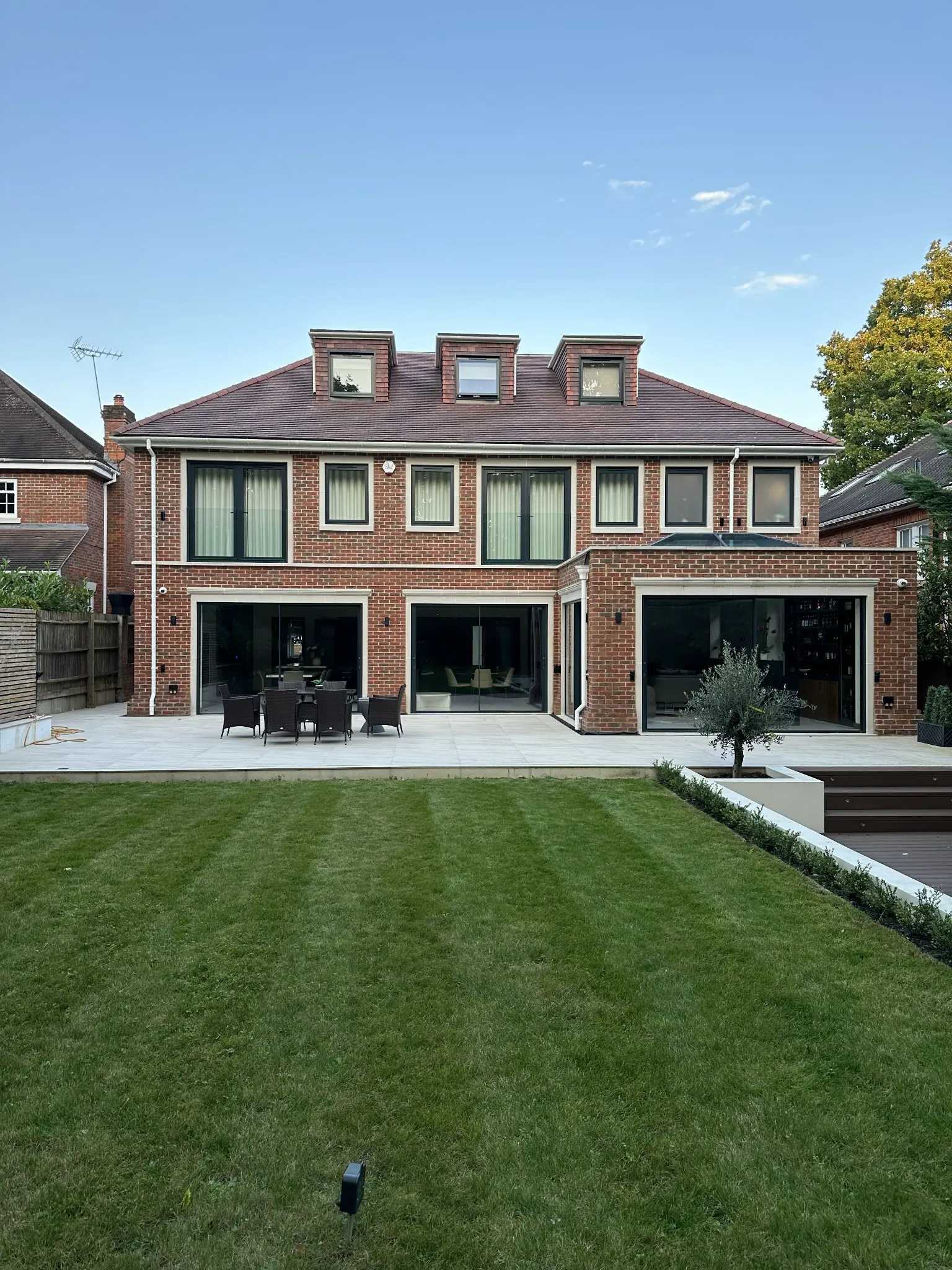
Modern extensions often feature minimal frames and vast glass panels, creating the desired 'frameless' look. Achieving this requires integrating the structural support (like steel posts or lintels) *outside* the visible frame line.
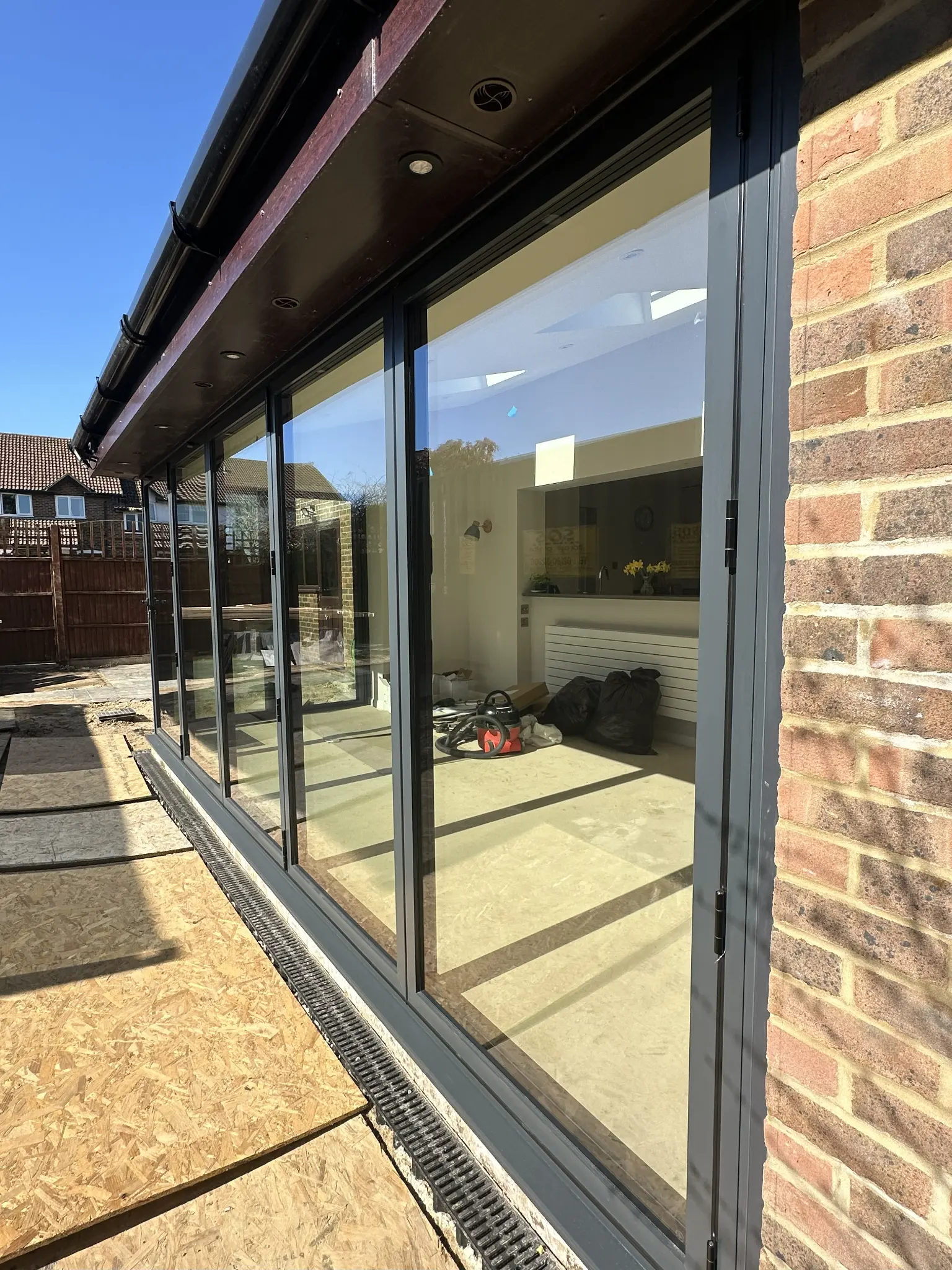
- Sliding Doors: Look for lift-and-slide or slimline systems that offer sightlines (the width of the vertical frame where panels meet) as narrow as 20mm to 30mm. Ensure the threshold is recessed flush with the floor finish for a seamless transition between the indoor and outdoor spaces.
- Fixed Glazing: Fixed panes offer the best thermal performance and the slimmest sightlines, as they do not require moving parts. They are ideal for maximising views and light in areas where ventilation is not required.
Ventilation Strategy
Large glazed areas can quickly lead to condensation or overheating if ventilation is inadequate. Building Regulations Part F (Ventilation) must be adhered to.
- Trickle Vents: While sometimes considered unsightly, trickle vents are often a necessary requirement for background ventilation, especially in airtight modern extensions. Ensure they are specified to match the frame colour and are discreetly positioned.
- Opening Elements: Ensure that, even if you opt for large fixed panes, there are sufficient opening windows or doors nearby to allow for rapid purge ventilation (e.g., opening a window fully to quickly cool the room).
Roof Glazing Options: Flat Rooflights and Lanterns
Roof glazing is an incredibly effective way to draw daylight deep into the heart of an extension, especially if the extension is built against the rear of the existing house.
Flat Rooflights
Flat rooflights offer a sleek, minimalist aesthetic, sitting flush with the roofline. They provide excellent, uniform light distribution.
- Specification: Always choose thermally broken frames and double or triple glazing with a U-value of 1.2 W/m²K or better.
- Installation Pitch: Even 'flat' rooflights must be installed with a slight pitch (typically 3° to 5°) to ensure water runoff and prevent pooling, which can damage seals over time.
Glazed Lanterns
Glazed lanterns provide a more dramatic architectural statement and add vertical volume to the space. They are particularly effective over dining areas or kitchens.
- Thermal Bridging: Lanterns often have more complex frames than flat rooflights. It is crucial to ensure the entire system—including the upstand (kerb) and all connecting profiles—is thermally broken to prevent cold spots and condensation.
- Solar Control: Due to their angle, lanterns receive intense sunlight. High-performance solar control glass is essential to mitigate excessive heat gain during the summer months.
Practical Installation and Finishing Tips
The performance of high-specification glazing relies entirely on correct installation and integration with the building fabric.
- Thermal Breaks: Ensure that the frames of all doors and windows are correctly specified with thermal breaks. A thermal break is a material of low thermal conductivity placed between the inner and outer frame sections, preventing heat from escaping through the metal structure itself.
- Airtightness: The junction between the window frame and the wall structure is a common source of air leakage. Use high-quality expanding foam, tapes, and membranes to create an airtight seal around the perimeter of the frame. This is crucial for achieving high energy efficiency standards and passing required airtightness tests.
- Shading Solutions: Plan for shading early. Large glazed areas benefit hugely from external shading (like brise soleil or external blinds) or internal solutions (integrated blinds or heavy curtains). External shading is far more effective as it blocks solar heat before it enters the building envelope.
Enhanced Comfort
High-performance glazing maintains stable internal temperatures, eliminating cold spots and draughts, making the extension usable year-round.
Reduced Energy Bills
Low U-values minimise heat loss, significantly reducing the energy required for heating, leading to lower utility costs.
Superior Aesthetics
Slimline frames and large panels maximise natural light penetration and offer uninterrupted views, enhancing the architectural appeal of your home.
Acoustic Insulation
Well-specified double or triple glazing provides excellent sound dampening, crucial for extensions built near busy roads or noisy areas.
Conclusion and Next Steps
Glazing an extension is a significant investment, but when specified correctly, it delivers immense value in terms of light, comfort, and energy performance. Focus on achieving low U-values, balancing solar gain (G-value) based on orientation, and ensuring seamless integration with the structural elements of your extension.
Always consult with your architect, structural engineer, and Building Control officer early in the design process to ensure your chosen glazing solution complies with all current UK regulations, particularly the requirements of Part L.
If you are looking for expert guidance on selecting high-performance, architecturally stunning glazing solutions for your next UK home extension project, Shard AG specialises in bespoke slimline sliding doors, structural glass, and high-specification rooflights designed to exceed current Building Regulation standards.