
Maximising Views: The Benefits of Corner Sliding Doors
Explore the architectural and practical advantages of installing corner sliding doors in UK homes. Learn about design considerations, thermal performance, and Building Regulations compliance.

Shard Architectural Glazing
24 January 2026
Explore the architectural and practical advantages of installing corner sliding doors in UK homes. Learn about design considerations, thermal performance, and Building Regulations compliance.
📋In This Article
Maximising Views: The Benefits of Corner Sliding Doors
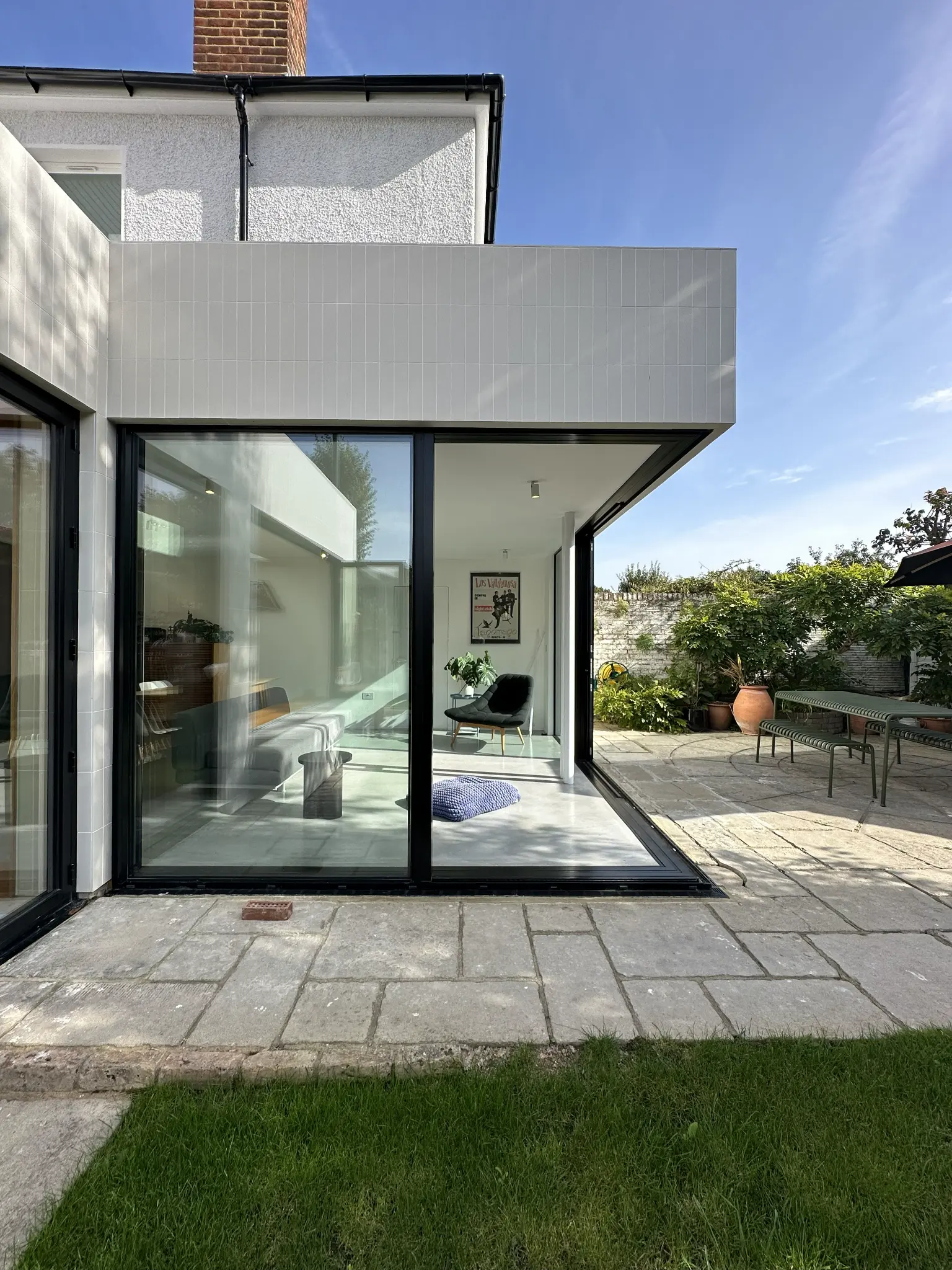
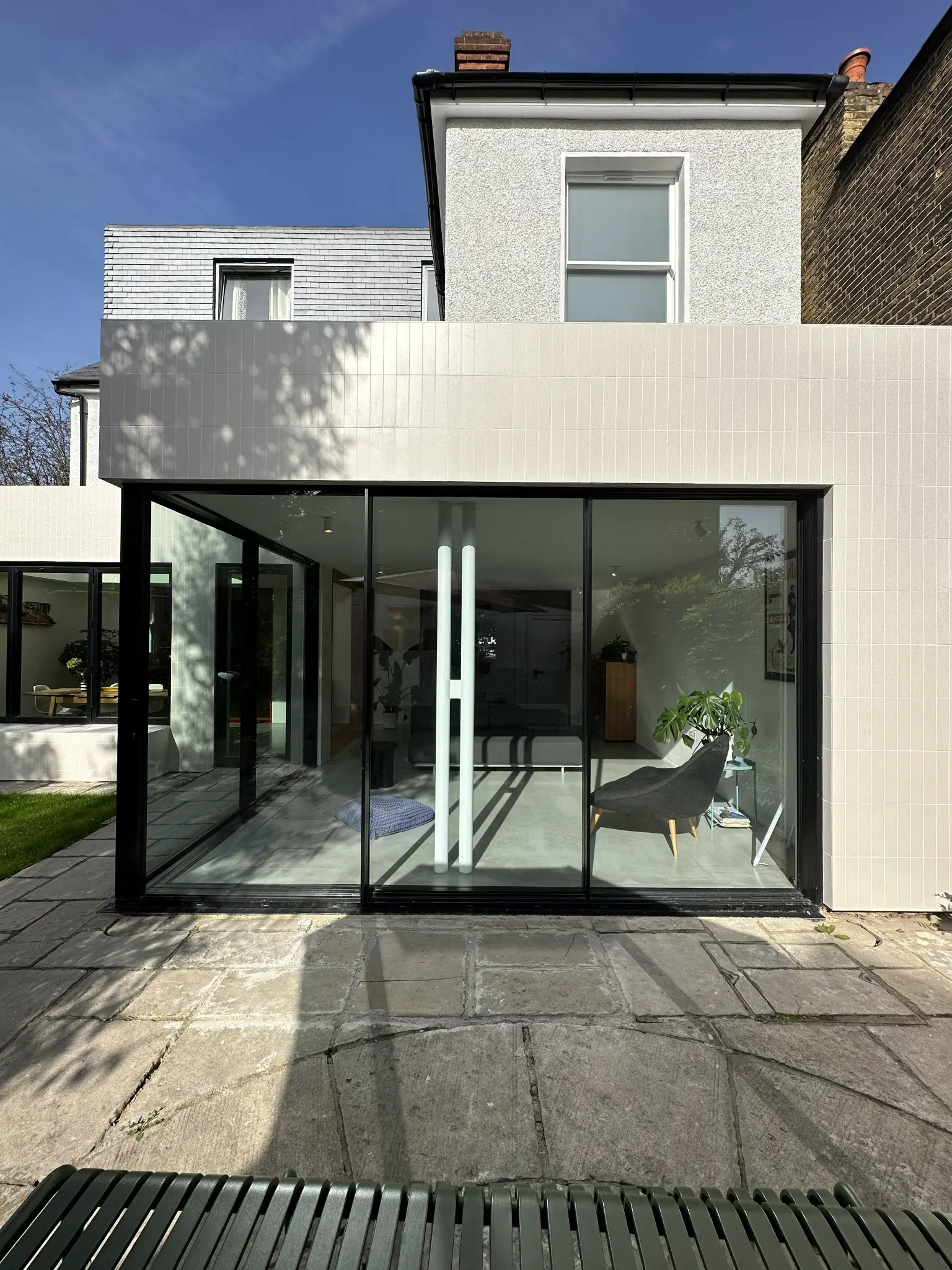
Corner sliding doors, often referred to as ‘open corner’ or ‘zero corner’ systems, represent a pinnacle of modern architectural glazing. Unlike traditional patio doors that terminate against a fixed wall or frame, these systems meet at a 90-degree angle, allowing both sides to slide open, completely removing the corner post. The result is a dramatic, unobstructed opening that seamlessly connects interior and exterior spaces.
For UK homeowners undertaking ambitious renovation projects or designing a new build, understanding the technical specifications and practical implications of corner sliding doors is crucial for achieving both aesthetic impact and regulatory compliance.
Design Impact and Aesthetics
The primary appeal of corner sliding doors lies in their unparalleled aesthetic impact. By eliminating the structural corner post, they create a floating roof effect, blurring the lines between the home and the garden or patio area. This design choice fundamentally transforms the feel of a room.
Uninterrupted Panoramic Views
Standard glazing systems, even large bi-fold or patio doors, always retain a vertical obstruction where the frame meets the wall. Corner systems remove this visual barrier entirely. When fully open, the view is completely panoramic, offering maximum light ingress and an expansive feel, which is particularly valuable in smaller or darker spaces.
Seamless Indoor-Outdoor Flow
The ability to open two adjacent walls simultaneously creates a truly expansive opening, ideal for entertaining. This configuration effectively turns the adjacent outdoor space into an extension of the living area, vastly improving the functionality of kitchens, dining rooms, and garden rooms.
Architectural Statement
Choosing a corner sliding system signals a commitment to high-end, contemporary design. These doors are often paired with minimal frame systems (sometimes called ‘slimline’ or ‘minimalist’ systems) to further enhance the glass-to-frame ratio, making the glazing itself a key architectural feature.
Maximum Light
Allows light to penetrate from two adjacent elevations, dramatically brightening the interior space throughout the day.
Floating Corner Effect
Creates a striking visual effect where the roof appears unsupported, enhancing modern architectural design.
Unrivalled Access
Provides the widest possible opening onto a patio or garden, perfect for social gatherings and large furniture movement.
Weather Protection
When closed, modern systems offer exceptional weather tightness and thermal efficiency, crucial for the UK climate.
Technical Considerations and Structural Requirements
Installing corner sliding doors is significantly more complex than fitting standard linear doors, primarily due to the structural demands of supporting the roof load where the corner post is removed.
The Need for Specialist Support
In a standard build, the corner of the room is a critical load-bearing point. When this point is removed, the entire load from the roof structure above must be transferred elsewhere. This requires the installation of a substantial structural beam or lintel that spans the entire opening, supported by columns or piers set back into the remaining walls.
Structural Engineering: It is mandatory to engage a qualified Structural Engineer early in the project. They will calculate the precise loads and design the necessary steelwork (often a large steel box frame or a complex cantilever system) to ensure the building remains stable. This design must be approved by local Building Control.
Pocketing and Stacking Options
Corner sliding doors require space for the glass panels to stack when open. There are two main methods:
- External Stacking: Panels stack neatly against the exterior wall on one or both sides of the corner.
- Pocketing (Cavity Stacking): Panels slide into a dedicated cavity built into the adjacent wall structure. This offers the cleanest look, as the panels completely disappear, but requires significant wall thickness and meticulous planning to ensure the cavity remains dry and accessible for maintenance.
Thermal Performance and UK Building Regulations
All new and replacement glazing installations in England and Wales must comply with Part L (Conservation of Fuel and Power) of the Building Regulations. Given the large surface area of glass involved, achieving the required thermal efficiency is paramount.
U-Value Compliance
The U-value measures how effectively a component prevents heat loss (lower is better). For domestic projects in England (2022 standards):
- New Build Glazing: Maximum U-value of 1.2 W/m²K.
- Replacement Glazing: Maximum U-value of 1.4 W/m²K.
Corner sliding doors must meet these stringent requirements. This necessitates the use of high-specification materials:
- Double or Triple Glazing: Modern systems typically use high-performance double glazing with low-emissivity (Low-E) coatings and argon gas filling. Triple glazing may be required in some new build scenarios or very exposed locations to meet the 1.2 W/m²K threshold comfortably.
- Thermally Broken Frames: The aluminium frames must incorporate effective thermal breaks (usually polyamide strips) to prevent heat transfer through the metal itself.
Pro Tip
When specifying corner doors, always request the overall system U-value (Uw), not just the glass U-value (Ug). The overall system U-value accounts for the frame and seals, which significantly impact compliance. Ensure your chosen supplier provides documentation confirming compliance with Part L for your specific project type.
Security, Weatherproofing, and Operation
Concerns often arise regarding the security and weather performance of a door system that lacks a fixed corner post. Reputable manufacturers have developed sophisticated engineering solutions to address these challenges.
Security Standards (PAS 24)
In the UK, security standards are often benchmarked against PAS 24:2016 (Enhanced Security Performance Requirements for Doorsets and Windows). While not always mandatory for every installation, choosing a system certified to PAS 24 provides assurance against opportunistic break-ins. Key security features include:
- Multi-point locking mechanisms integrated into the sliding panels.
- Anti-lift blocks to prevent panels from being prised off the track.
- Laminated or toughened safety glass.
Weatherproofing and Drainage
The corner junction is the most vulnerable point for water ingress. High-quality corner doors utilise precision engineering:
- Interlocking Seals: Panels feature complex, multi-chambered seals that compress tightly when closed.
- Drainage Channels: The bottom track incorporates sophisticated drainage systems to manage rainwater, especially important if a flush threshold (level with the internal floor) is desired. A flush threshold requires excellent external drainage (e.g., linear drains) to prevent water pooling near the track.
Operation and Hardware
Due to the weight of the large glass panels, smooth operation is vital. Look for systems that feature:
- High-quality stainless steel rollers and tracks.
- Precision-engineered handles and locking mechanisms that engage and disengage the corner junction easily.
Cost and Maintenance Comparison
Corner sliding doors represent a premium investment compared to standard bi-fold or patio door systems. The increased cost stems from the complexity of the engineering, the specialised hardware, and the necessary structural modifications.
Initial Investment Breakdown
The total project cost must account for:
- The bespoke door system itself (specialised corner hardware).
- Structural engineering consultation and calculations.
- The cost of the large steel beam or frame required to support the corner.
- Installation labour, which is more complex and time-consuming than standard glazing.
Maintenance
Maintenance is generally straightforward, focusing on keeping the tracks clean of debris (which can impede smooth sliding) and ensuring the seals and locking mechanisms remain lubricated. Given the complexity of the corner junction hardware, it is advisable to use installers who offer comprehensive warranties and maintenance support.
| Feature | Corner Sliding Doors | Standard Bi-Fold Doors |
|---|---|---|
| Aesthetic Impact | Dramatic, zero-corner opening; floating roof effect. | Large opening, but always retains vertical frame posts when open. |
| Structural Requirement | Requires significant structural steelwork (lintel/box frame) to support the roof load above the missing corner post. | Requires standard lintel support across the linear opening. |
| Thermal Performance (U-Value) | Excellent (achievable 1.2 W/m²K or better) using high-spec thermal breaks and glazing. | Excellent, generally easier to achieve low U-values due to fixed frame structure. |
| Security Vulnerability | Requires specialised locking hardware at the corner junction; must be PAS 24 compliant. | Standard multi-point locking across individual panels. |
| Cost | High (Premium product + specialist structural costs). | Medium to High (Standard premium product). |
Final Design and Installation Checklist
Before committing to a corner sliding door system, homeowners should ensure they have addressed these critical points:
- Planning Permission: While internal alterations rarely require planning permission, if the external appearance of the house is significantly altered (especially in conservation areas or listed buildings), check with your local authority.
- Building Control Approval: Structural alterations (removing the corner post) and compliance with Part L (thermal performance) mandate Building Control involvement. A structural engineer's drawings must be submitted and approved.
- Drainage Strategy: Plan external drainage carefully, especially for flush thresholds, to manage heavy UK rainfall effectively and prevent water from entering the track.
- Access for Installation: Ensure there is adequate access for the delivery and installation of very large, heavy glass panels and the structural steelwork.
By focusing on robust structural planning and selecting a thermally efficient, secure system, corner sliding doors offer a transformative addition to any contemporary UK home.
About Shard AG
Shard AG specialises in the design, supply, and installation of high-performance architectural glazing solutions across the UK. We offer a range of bespoke corner sliding door systems engineered to meet the stringent demands of UK Building Regulations, ensuring exceptional thermal performance (down to 1.0 W/m²K) and certified security (PAS 24). Our expert team works closely with architects and structural engineers to integrate these complex systems seamlessly into ambitious new build and renovation projects.
Explore Our Products
Discover how Shard Architectural Glazing can transform your home with our premium glazing solutions:
Ready to Transform Your Home?
Get in touch with our expert team for a free consultation and personalised quote. We'll help you choose the perfect glazing solution for your property.
.jpg)