

Minimal Frame Glazing: Design, Performance, and UK Regulations
Explore the technical specifications and design considerations for minimal frame sliding doors. Understand U-values, structural requirements, and compliance with UK Building Regulations Part L.

Shard Architectural Glazing
19 January 2026
Explore the technical specifications and design considerations for minimal frame sliding doors. Understand U-values, structural requirements, and compliance with UK Building Regulations Part L.
📋In This Article
Minimal Frame Glazing: Design, Performance, and UK Regulations
Minimal frame glazing systems, often referred to as slimline or frameless sliding doors, represent a significant shift in contemporary architectural design. These systems are engineered to maximise natural light and views by drastically reducing the visible aluminium profile surrounding the glass panels. For UK homeowners planning high-end extensions or renovations, understanding the technical nuances and regulatory requirements of these sophisticated systems is crucial.
What Defines Minimal Frame Glazing?
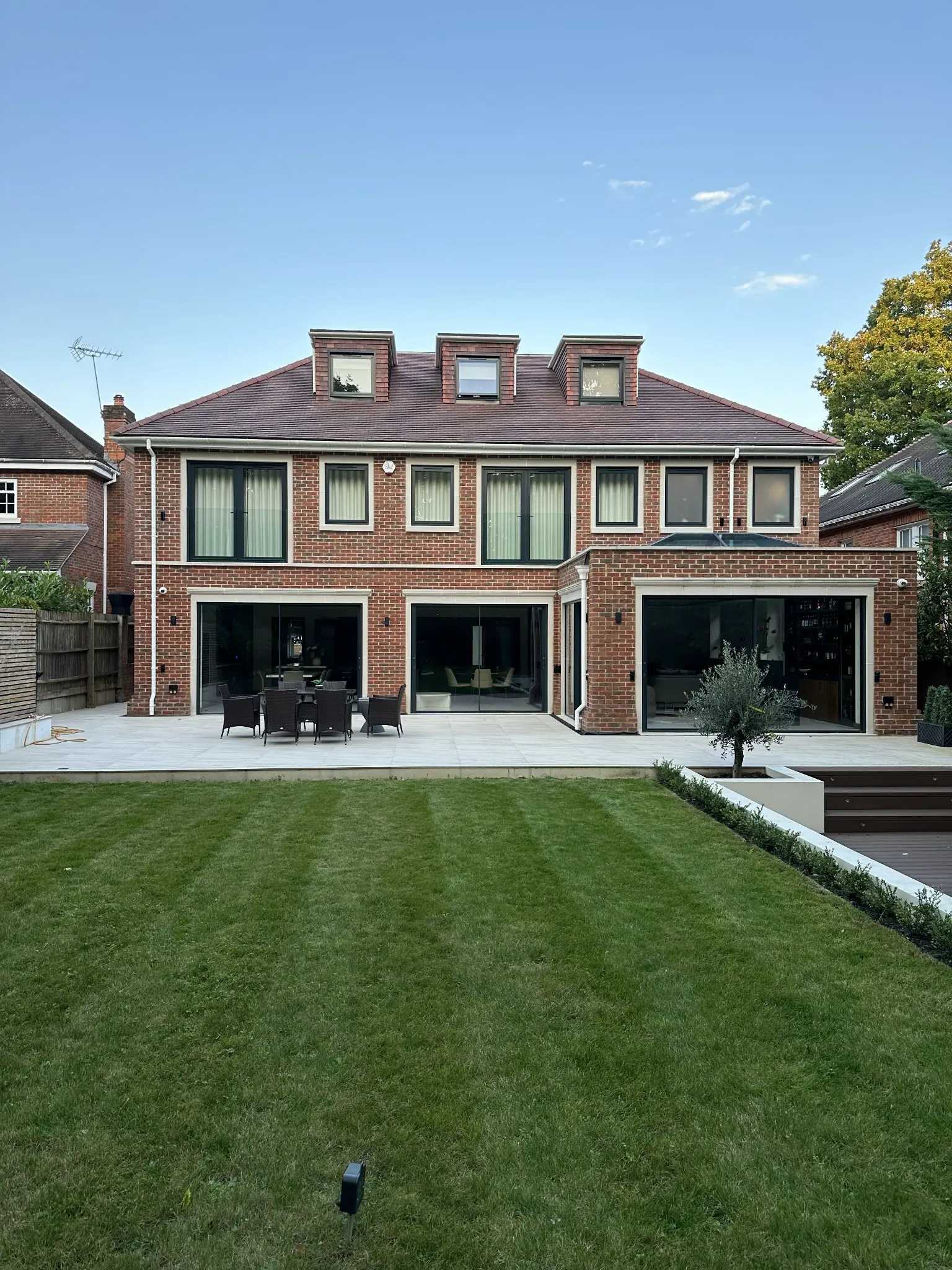
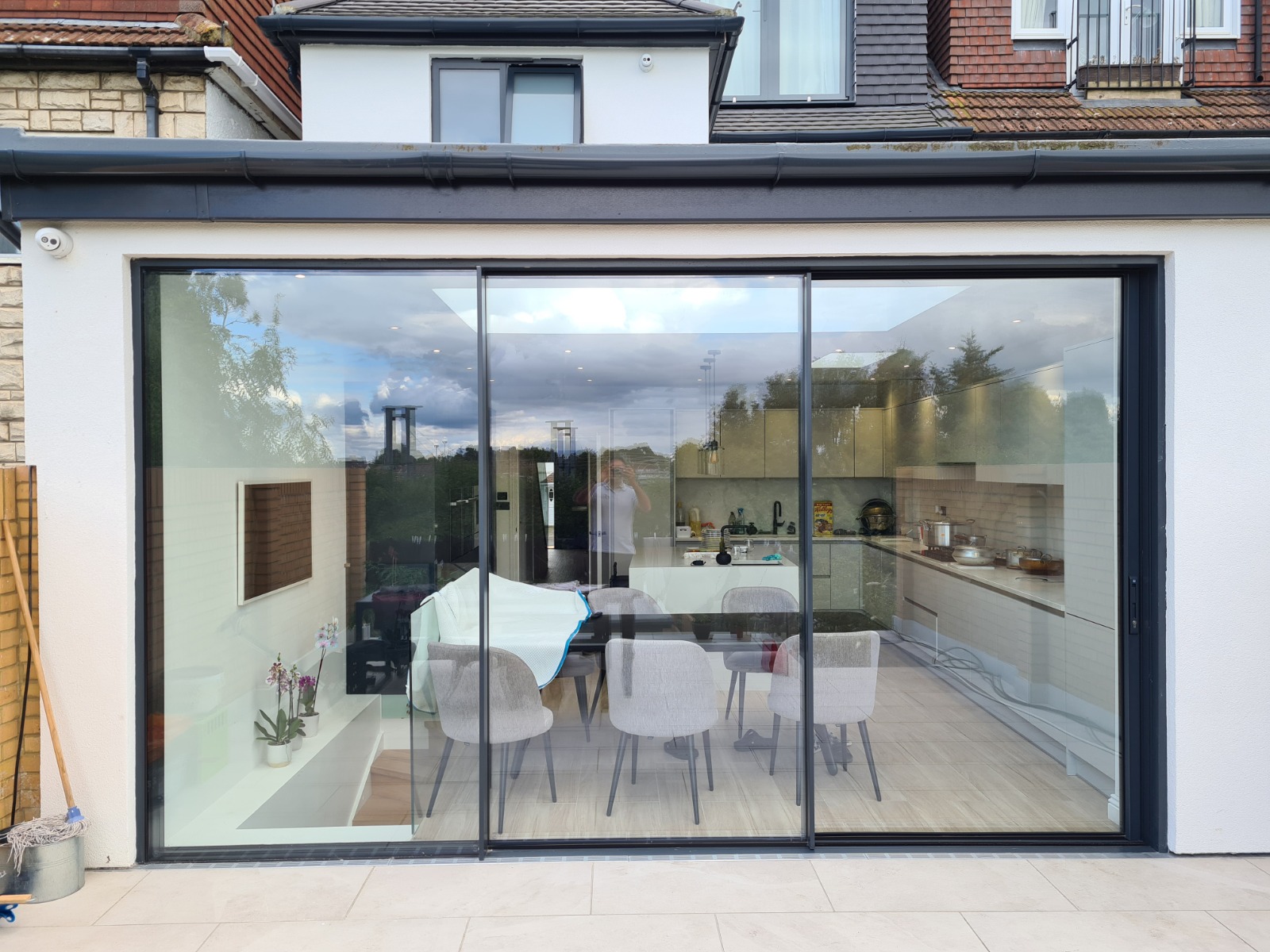
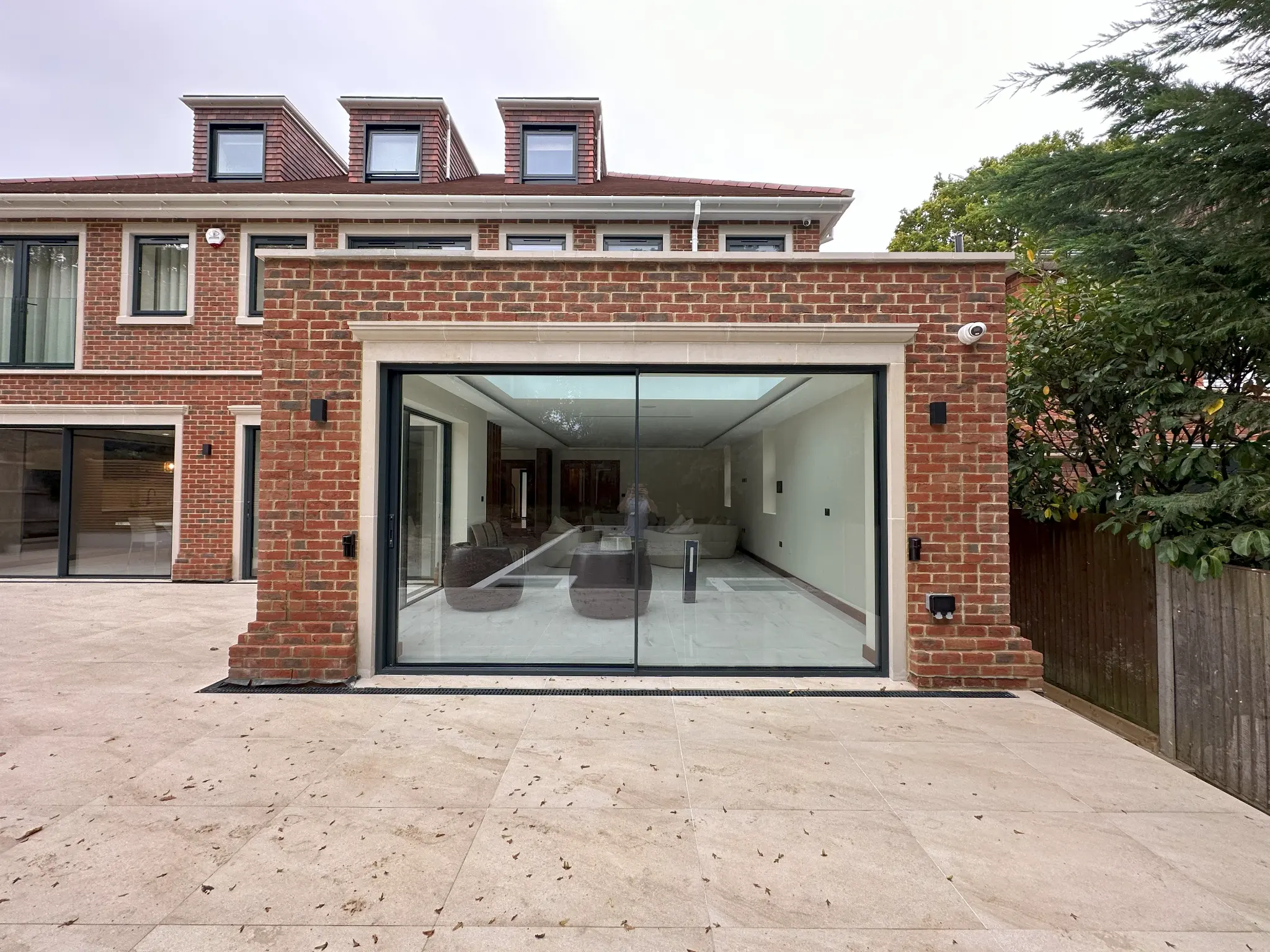
Minimal frame glazing is characterised by its incredibly narrow sightlines—the visible width of the frame profile where two panels meet. While traditional patio doors might feature sightlines of 80mm to 120mm, true minimal systems typically achieve sightlines ranging from a mere 18mm down to 25mm. The key to achieving this minimal aesthetic lies in the engineering: the majority of the frame structure, including the tracks and perimeter supports, is concealed within the floor, walls, and ceiling structure.
The Engineering Behind the Aesthetic
Unlike standard sliding doors where the frame supports the weight, minimal systems often rely on the surrounding building structure for stability. The glass panels themselves are typically large, heavy, and structurally bonded to the slim vertical profiles. The running gear—the rollers and tracks—are precision-engineered to handle the substantial weight of these large glass units, often accommodating panels exceeding 3 metres in height and width.
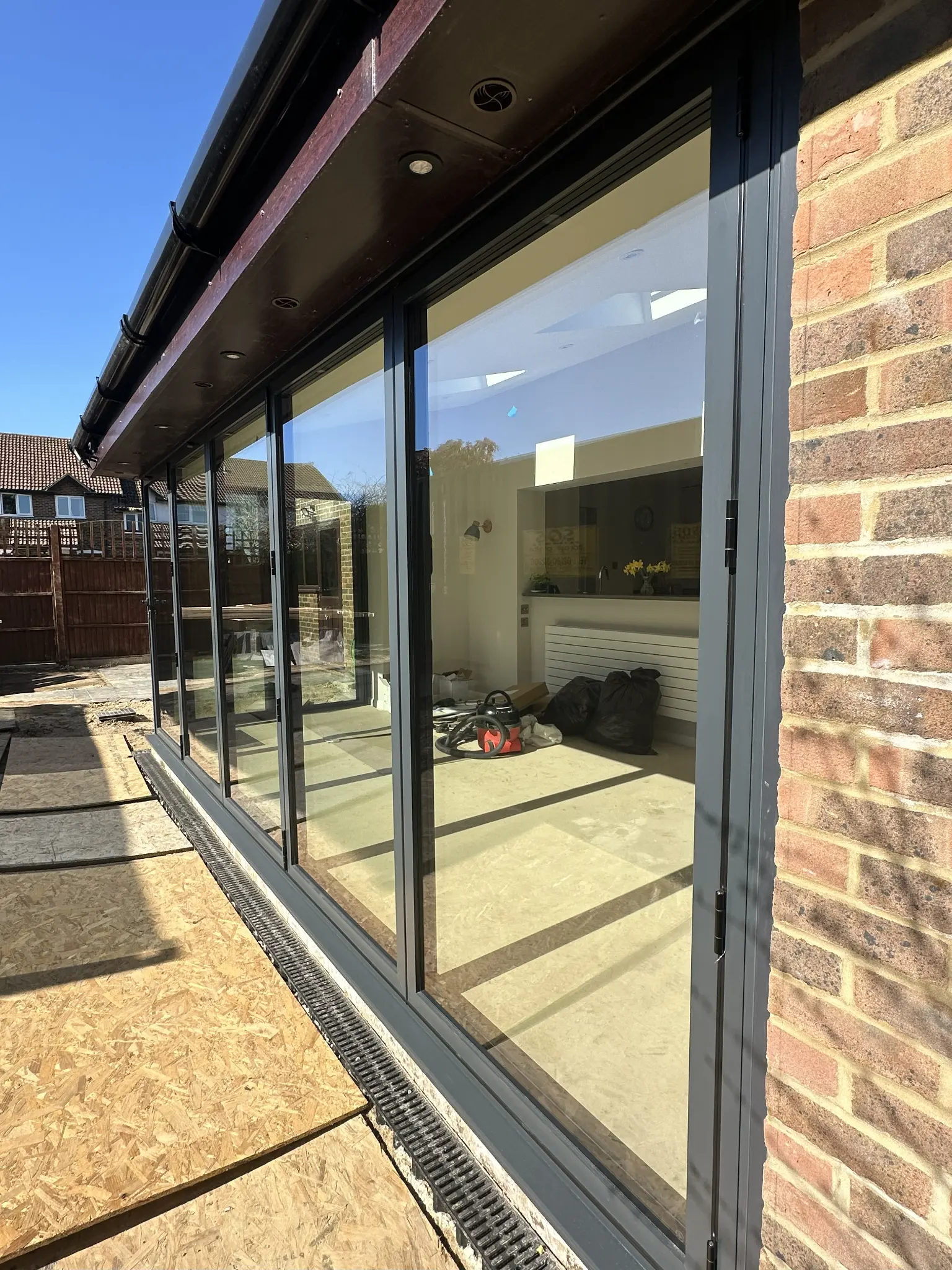
- Concealed Tracks: The bottom track is recessed into the floor slab, creating a seamless transition between indoor and outdoor spaces.
- Hidden Frames: Perimeter frames are integrated into the wall build-up, leaving only the edge of the glass visible.
- Structural Glazing: The glass unit is integral to the structural integrity of the moving panel, enabling the use of extremely slender vertical interlocks.
Performance and UK Building Regulations (Part L)
A primary concern for any glazing installation in the UK is thermal performance, governed by Building Regulations Part L (Conservation of Fuel and Power). Minimal frame systems must demonstrate compliance through their U-value.
Understanding U-Values
The U-value measures how effectively a building element (like a window or door) prevents heat from escaping. The lower the U-value, the better the thermal performance. Achieving low U-values in minimal frame systems is challenging because metal (aluminium) is highly conductive, even when thermally broken.
For installations in England, the current maximum U-value requirements under Part L (2022 standards) are stringent:
- New Dwellings (New Build): Maximum U-value for windows and doors is 1.2 W/m²K.
- Existing Dwellings (Replacement/Extension): Maximum U-value for windows and doors is 1.4 W/m²K.
To meet these requirements, minimal frame systems almost universally require the use of high-performance double glazing or, increasingly, triple glazing, combined with sophisticated thermal breaks within the slim aluminium profiles.
Pro Tip
When comparing minimal frame systems, always request the specific U-value calculation for the actual size and configuration you plan to install (the 'project U-value'). Generic U-values based on a small reference window may not accurately reflect the performance of a vast, multi-panel installation.
Air Permeability and Weathertightness
Because minimal frames rely on precise engineering and often feature large sliding panels, air and water tightness are critical. High-quality systems use multi-point locking mechanisms and advanced sealing technologies (such as brush seals, compression seals, and drainage channels) to achieve excellent ratings for:
- Wind Resistance: Crucial for tall buildings or exposed coastal locations.
- Water Tightness: Measured by the pressure the system can withstand before water ingress occurs.
- Air Permeability: Minimising drafts and heat loss.
Design and Structural Considerations
Integrating minimal frame glazing requires careful coordination between the architect, structural engineer, and glazing installer, particularly regarding load-bearing and drainage.
Load Transfer and Head Detail
Minimal systems often require the entire door frame to be concealed, meaning the opening must be precisely prepared. The structural lintel or beam above the opening must be designed to carry the building load without deflection, as even slight movement can compromise the operation and sealing of the doors.
Furthermore, the head (top) detail must incorporate space for the concealed frame, insulation, and often, integrated blinds or shading systems, which must be planned from the outset of the construction phase.
Drainage and Recessed Tracks
Achieving the desired flush threshold—where the internal floor level meets the external patio or decking without a step—is a hallmark of minimal design. However, this creates a potential water ingress risk.
Effective drainage is non-negotiable. Recessed tracks must sit within a meticulously designed drainage channel (often a linear drain or gravel trap) that directs rainwater away from the building envelope. Failure to plan adequate drainage can lead to damp issues and potential damage to the track system itself.
| Feature | Minimal Frame System | Standard Sliding Door |
|---|---|---|
| Sightline (Interlock) | 18mm – 25mm | 80mm – 120mm |
| Typical Panel Size | Up to 12m² (or larger) | Up to 6m² |
| U-Value Requirement (UK Part L) | 1.2 W/m²K (New Build) or 1.4 W/m²K (Extension) | 1.2 W/m²K (New Build) or 1.4 W/m²K (Extension) |
| Frame Integration | Fully concealed in walls/floor | Surface mounted frame |
| Glazing Type (for compliance) | High-performance double or triple glazing | Standard double glazing |
Advantages and Potential Drawbacks
While minimal frame glazing offers unparalleled aesthetic benefits, homeowners must weigh these against practical and cost considerations.
Uninterrupted Views
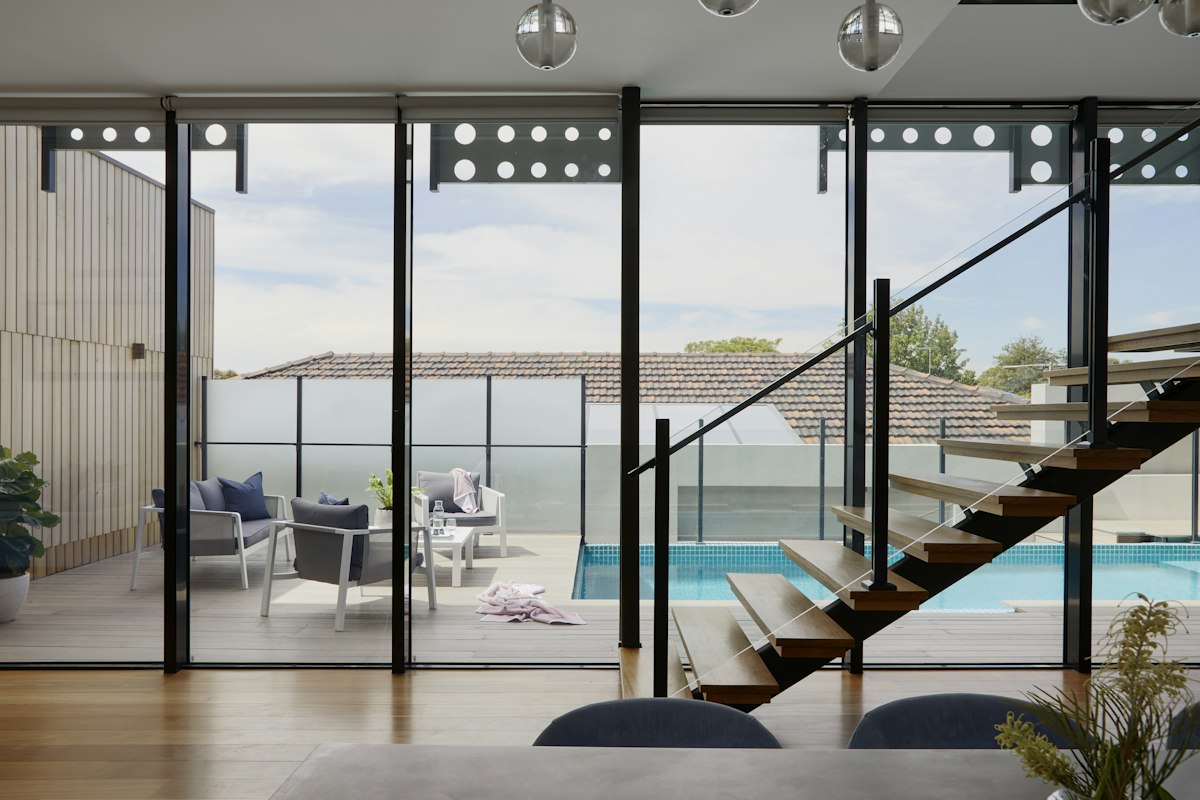
The primary appeal is the maximisation of glazed area, creating a true wall of glass that seamlessly connects the interior space with the garden or landscape.
Increased Natural Light
By reducing the opaque frame material, these systems allow deeper penetration of daylight, reducing the need for artificial lighting and enhancing well-being.
High Thermal Performance
Despite the slim profile, advanced systems utilise sophisticated thermal breaks and high-specification glass to meet stringent UK energy efficiency standards.
Modern Aesthetics
They provide a sleek, contemporary finish that is highly sought after in modern architectural projects, adding significant visual value to a property.
Potential Drawbacks and Considerations
1. Cost and Installation Complexity
Minimal frame systems are significantly more expensive than standard patio doors due to the precision engineering, high-specification materials, and complex installation requirements. Installation must be undertaken by specialists, often requiring crane lifting for large glass units.
2. Maintenance and Operation
Due to the weight of the large panels, operation must be smooth and reliable. While high-quality systems are robust, any issues with the concealed running gear can be complex and costly to access and repair. Regular cleaning of the tracks is essential to ensure smooth operation.
3. Structural Integration
The requirement for concealed frames means that these systems must be planned and integrated early in the construction process. They are generally not suited for simple retrofit installations into existing, unprepared openings.
4. Security
Security is paramount. Ensure that the chosen system holds relevant security certifications, such as PAS 24 (a UK standard for enhanced security performance), and features robust multi-point locking mechanisms concealed within the frame profile.
Choosing the Right Specification
Selecting the correct minimal frame system involves balancing aesthetic desires with practical performance needs, particularly regarding thermal efficiency and structural integrity.
Glazing Specification
The glass itself is the largest component and dictates much of the performance. For minimal frame systems, specifying low-emissivity (Low-E) coatings, argon gas filling, and warm edge spacer bars is standard practice to achieve the required U-values. If noise reduction is a factor (e.g., near busy roads), acoustic laminated glass should be considered.
Configuration Options
Minimal frame systems offer various opening configurations:
- Sliding (Straight Run): Panels slide horizontally, stacking neatly at one or both ends.
- Pocket Doors: Panels slide fully into a cavity wall, disappearing completely for a truly unobstructed opening. This requires careful structural planning to accommodate the pocket.
- Corner Openings: Panels meet at a 90-degree corner without a fixed post (a 'floating corner'), offering a dramatic architectural effect.
Always ensure that the chosen supplier provides comprehensive technical drawings detailing the interface between the frame, the waterproofing membrane, the insulation, and the surrounding structural elements. This level of detail is essential for successful installation and Building Control sign-off.
Final Thoughts and Supplier Selection
Minimal frame glazing systems are a premium product that transforms the relationship between a building and its environment. They require meticulous planning, expert installation, and a deep understanding of UK Building Regulations, particularly concerning thermal performance (Part L) and structural support.
When selecting a supplier, prioritise those who can demonstrate:
- Proven U-value calculations for large panel sizes.
- Compliance with UK security standards (e.g., PAS 24).
- Extensive experience working alongside structural engineers and main contractors.
If you are embarking on a high-specification architectural project in the UK and require expert guidance on selecting, specifying, and installing market-leading minimal frame glazing systems, Shard AG offers bespoke consultation and precision-engineered solutions. Our focus is on delivering systems that not only meet the highest aesthetic standards but also exceed the thermal and structural requirements demanded by modern UK construction.
Explore Our Products
Discover how Shard Architectural Glazing can transform your home with our premium glazing solutions:
Ready to Transform Your Home?
Get in touch with our expert team for a free consultation and personalised quote. We'll help you choose the perfect glazing solution for your property.