.jpg)
Optimising Glazing for Your UK Home Extension: A Guide
Maximise light, energy efficiency, and design in your UK home extension. Explore glazing options, Building Regulations, and expert tips for success.

Shard Architectural Glazing
1 February 2026
Maximise light, energy efficiency, and design in your UK home extension. Explore glazing options, Building Regulations, and expert tips for success.
📋In This Article
Extending your home is an exciting project, offering the chance to create more space, enhance natural light, and improve your property's overall aesthetic and functionality. A critical component in any modern extension is its glazing – windows, doors, and rooflights. Far from being a mere afterthought, the right glazing choices can transform an extension, impacting everything from its energy efficiency and comfort to its visual appeal and connection with the outdoors.
This comprehensive guide will delve into the essential considerations for glazing in UK home extensions, covering everything from design principles and material choices to crucial Building Regulations and practical installation tips. Our aim is to equip you with the knowledge needed to make informed decisions, ensuring your new extension is not only beautiful but also performs optimally.
Understanding Gl Glazing Options for Extensions
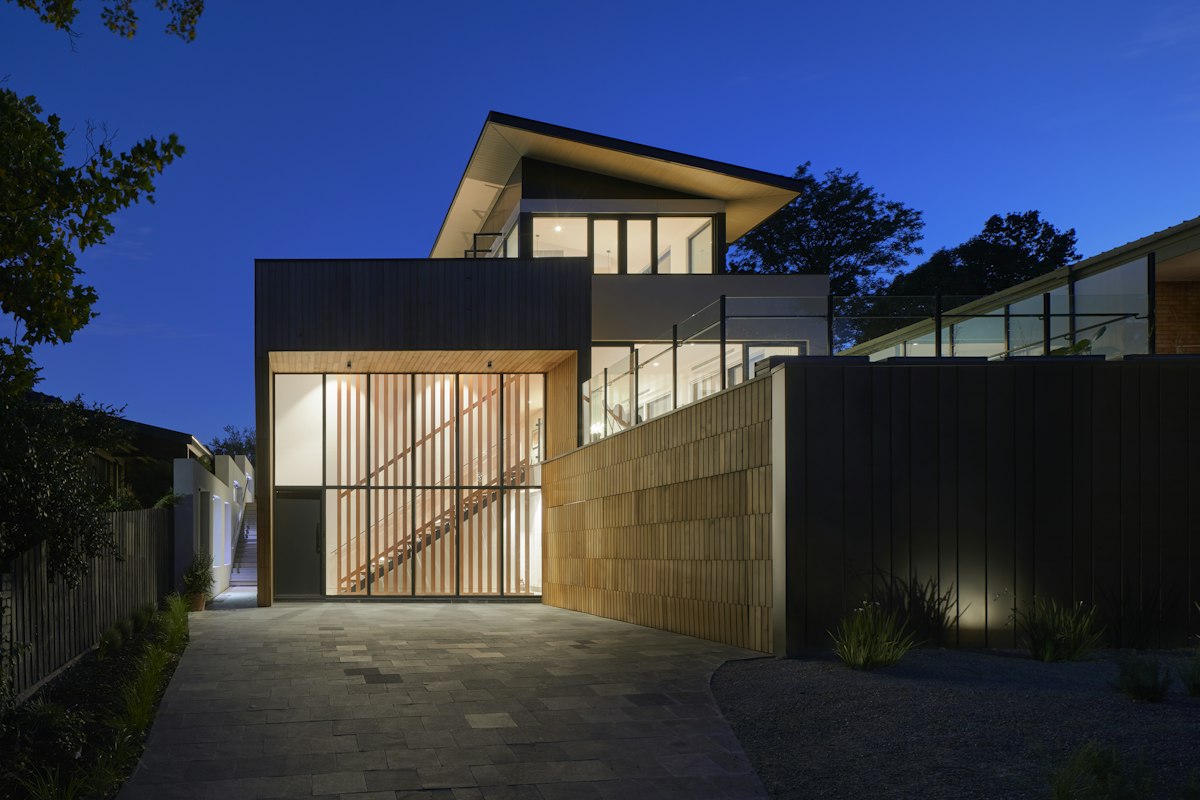
The world of architectural glazing offers a vast array of choices, each with its own characteristics and benefits. For home extensions, the primary goal is often to maximise natural light and create a seamless transition between indoor and outdoor spaces, while maintaining thermal performance.
Windows
- Casement Windows: The most common type in the UK, offering excellent ventilation and security. Available in various materials like uPVC, timber, and aluminium.
- Tilt and Turn Windows: Provide dual functionality – tilting inwards for ventilation or opening fully like a casement. Ideal for larger openings and easy cleaning.
- Sliding Sash Windows: Often chosen for period properties, but modern versions offer excellent thermal performance and can add character to a contemporary extension.
- Fixed Pane Windows (Picture Windows): Non-opening windows designed purely to maximise views and light. Crucial for thermal performance as they have no opening mechanisms.
Doors
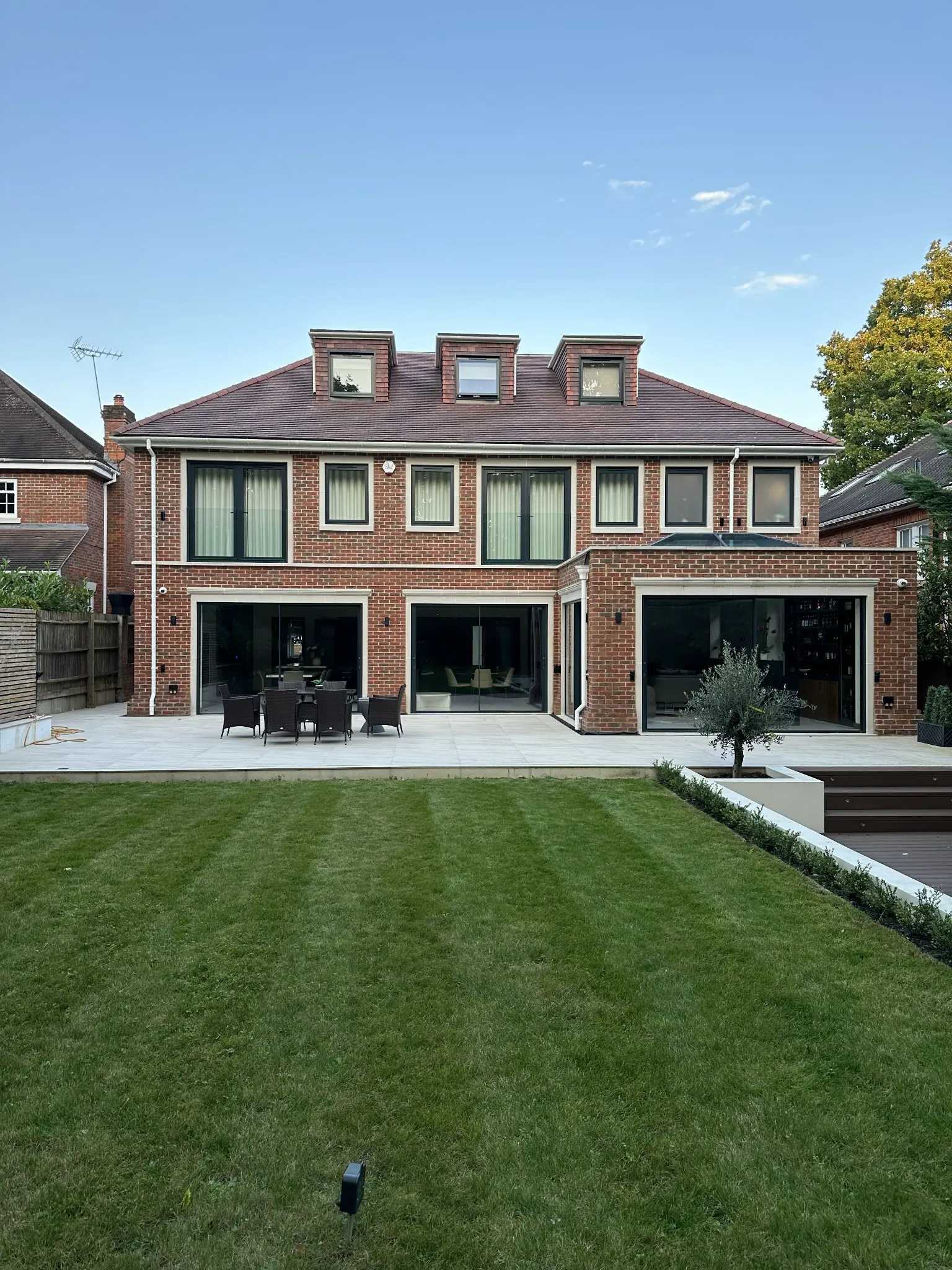
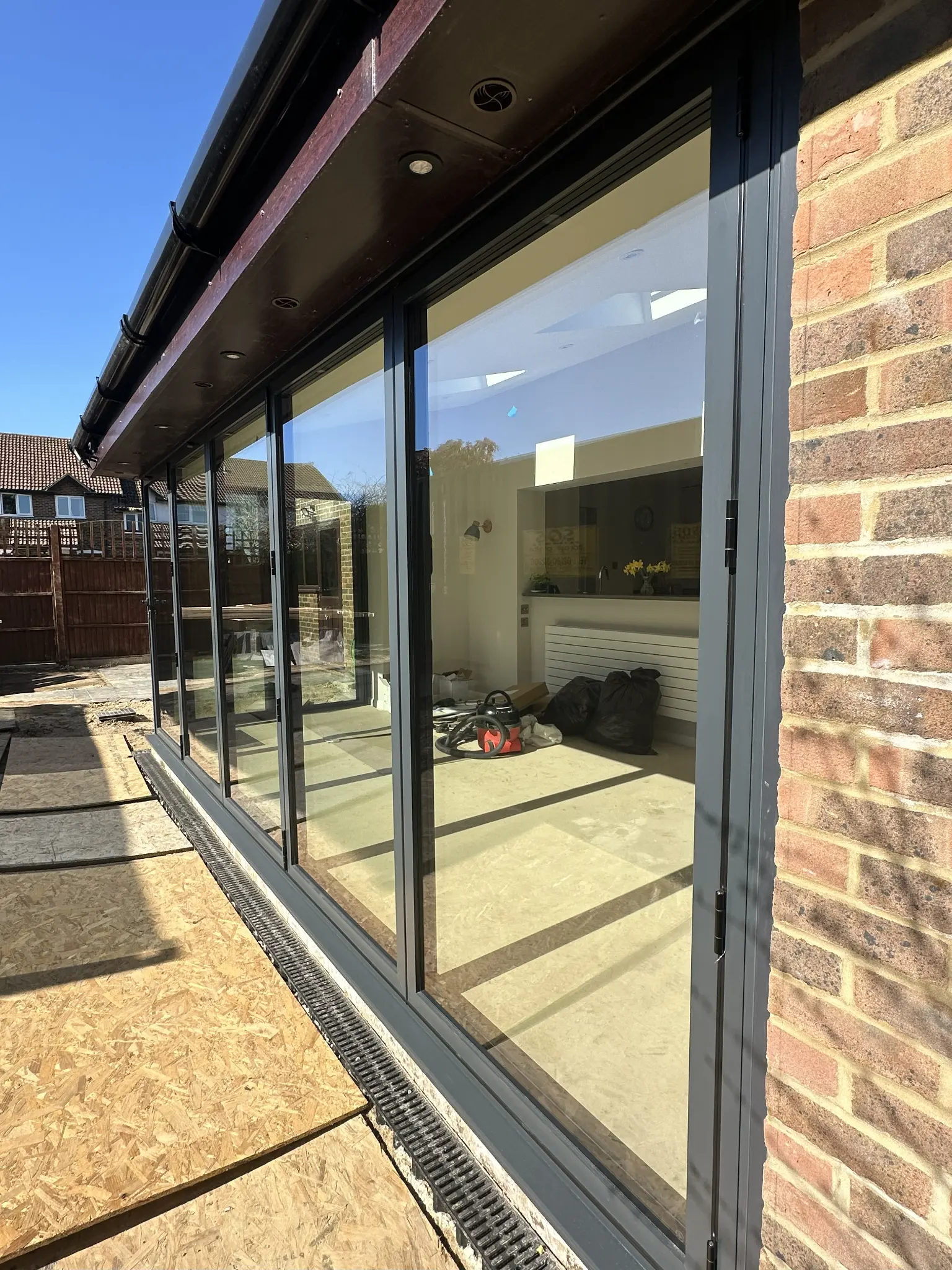
- Bi-Fold Doors: A popular choice for extensions, these doors fold back concertina-style to create a wide, unobstructed opening, blurring the lines between inside and out.
- Sliding Patio Doors: Offer large expanses of glass and slide parallel to the wall, saving space compared to bi-folds. Available in two, three, or even four-panel configurations.
- French Doors: Traditional double doors that open outwards, providing a classic aesthetic and a good connection to the garden.
- Single Entrance/Exit Doors: Standard doors, often chosen for utility rooms or side access, available in various styles and materials.
Roof Glazing
- Rooflights/Skylights: Individual glazed units installed into a pitched or flat roof, bringing light deep into the extension. Can be fixed, manual, or electrically operated.
- Lantern Roofs: A raised, often pyramid or rectangular shaped glazed structure, typically installed on a flat roof. They create a dramatic architectural feature and flood the space with light.
- Glass Roofs/Walk-on Glass: Specialist applications, with glass roofs offering expansive overhead light and walk-on glass providing light to spaces below while maintaining floor space above.
Glazing Materials and Performance Considerations
The frame material and the glass specification are pivotal to the performance, longevity, and appearance of your extension's glazing.
Frame Materials
- uPVC (unplasticised Polyvinyl Chloride): Cost-effective, low maintenance, and offers good thermal performance. Available in various colours and finishes.
- Aluminium: Strong, lightweight, and allows for very slim frames, maximising glass area. Excellent for large spans like bi-fold and sliding doors. Durable and low maintenance.
- Timber: Offers a natural, warm aesthetic. Can be engineered timber for enhanced stability. Requires more maintenance than uPVC or aluminium but provides excellent insulation and can be painted or stained.
- Composite (Alu-Clad Timber): Combines the warmth of timber internally with the durability and low maintenance of aluminium externally, offering the best of both worlds.
Glass Specifications
The type of glass significantly impacts thermal performance, security, and acoustic insulation.
- Double Glazing: Two panes of glass separated by a sealed gap, typically filled with an inert gas like argon. This significantly reduces heat transfer compared to single glazing.
- Triple Glazing: Three panes of glass with two sealed gaps. Offers superior thermal and acoustic performance, though it's heavier and often more expensive.
- Low-E Coatings (Low Emissivity): A microscopic metallic coating applied to one surface of the glass that reflects heat back into the room, improving thermal efficiency without significantly reducing light transmission.
- Warm Edge Spacers: Non-metallic spacers used between the glass panes to reduce heat transfer at the edges, preventing cold spots and condensation.
- Laminated Glass: Two or more panes of glass bonded together with a plastic interlayer. Offers enhanced security (it holds together when broken) and acoustic insulation.
- Toughened Glass: Heat-treated glass that is much stronger than standard glass. When broken, it shatters into small, relatively harmless pieces. Required in critical locations for safety, such as low-level glazing or doors.
- Solar Control Glass: Designed to reduce the amount of solar heat gain, preventing overheating in south-facing extensions with large glazed areas.
Pro Tip
When selecting glass, always consider the G-value (Solar Factor) and U-value. A lower U-value indicates better thermal insulation, while a lower G-value means less solar heat gain. Balancing these two is key for comfort, especially in large glazed extensions.
UK Building Regulations and Compliance
Compliance with UK Building Regulations is mandatory for all home extensions. Part L (Conservation of Fuel and Power) is particularly relevant for glazing, setting minimum performance standards to ensure energy efficiency.
Key Requirements (Part L 2022, England)
- U-values: This measures how effectively a building element prevents heat from escaping. A lower U-value indicates better insulation. For new build and extension glazing, the maximum U-value permitted is 1.2 W/m²K. For replacement windows and doors in existing parts of the dwelling, it's 1.4 W/m²K.
- Thermal Bridging: Minimising heat loss through junctions between different building elements (e.g., where a window frame meets a wall).
- Air Tightness: Glazing must be installed to prevent excessive air leakage, which contributes to heat loss.
- Safety Glazing: Part K (Protection from Falling, Collision and Impact) requires safety glass (toughened or laminated) in critical locations, such as doors, side panels adjacent to doors, and low-level glazing (below 800mm from floor level).
- Ventilation: Part F (Ventilation) requires adequate ventilation, often achieved through trickle vents in windows or background ventilation systems.
It is highly advisable to consult with your local Building Control Body or an approved inspector early in your project to ensure your glazing choices and installation methods will meet all current regulations. Non-compliance could lead to issues with completion certificates and future property sales.
Design and Planning Tips for Glazing Your Extension
Thoughtful design and meticulous planning are crucial for maximising the benefits of glazing in your extension.
Maximising Natural Light
- Orientation: Consider the sun's path throughout the day and year. South-facing glazing brings abundant light but can lead to overheating if not managed with solar control glass or shading. North-facing glazing provides consistent, diffused light, ideal for studios or offices.
- Large Openings: Bi-fold doors, sliding doors, and large picture windows are excellent for bringing in light and views.
- Roof Glazing: Rooflights and lantern roofs are incredibly effective at illuminating deep plan spaces where vertical windows might not reach.
Thermal Comfort and Energy Efficiency
- Balance Glazing Area: While large expanses of glass are desirable, excessive glazing can lead to heat loss in winter and overheating in summer. Aim for a balanced design.
- High-Performance Glazing: Always opt for double or triple glazing with low-E coatings and warm edge spacers to achieve the best U-values.
- Shading Solutions: Integrate external shading (e.g., overhangs, brise soleil) or internal blinds/curtains to manage solar gain and glare, especially on south or west-facing elevations.
Aesthetics and Integration
- Frame Colour and Style: Choose frame colours and styles that complement your existing home and the new extension. Aluminium offers a sleek, contemporary look, while timber can provide warmth.
- Sightlines: Consider the thickness of the frames (sightlines). Slimmer frames maximise the glass area and enhance views.
- Seamless Transitions: For bi-fold or sliding doors, consider flush thresholds to create a smooth, trip-free transition between indoor and outdoor spaces.
Glazing Comparison Table
Here's a quick comparison of common glazing types for extensions:
| Glazing Type | Pros | Cons | Typical U-value (W/m²K) |
|---|---|---|---|
| Standard Double Glazing | Cost-effective, good thermal performance, widely available. | Can be surpassed by higher-spec options for thermal efficiency. | 1.4 - 1.6 |
| Double Glazing (Low-E, Argon, Warm Edge) | Excellent thermal performance, meets Building Regs, good value. | Slightly higher cost than standard double glazing. | 1.0 - 1.2 |
| Triple Glazing | Superior thermal and acoustic performance, very low U-values. | Higher cost, heavier frames, can reduce light transmission slightly. | 0.6 - 0.8 |
| Bi-Fold Doors | Large openings, seamless indoor-outdoor flow, abundant light. | Can be expensive, require space for panels to stack, thermal bridging at thresholds if not well designed. | 1.2 - 1.6 (overall unit) |
| Sliding Doors | Large glass panes, space-saving, excellent views, contemporary. | Smaller opening than bi-folds, can be heavy. | 1.2 - 1.6 (overall unit) |
| Rooflights/Lanterns | Brings light deep into rooms, architectural feature, good ventilation. | Can be prone to solar gain if not specified correctly, cleaning can be an issue. | 1.0 - 1.4 (overall unit) |
Benefits of Optimal Glazing in Your Extension
Investing in the right glazing for your home extension offers a multitude of advantages beyond just aesthetics.
Enhanced Energy Efficiency
High-performance glazing significantly reduces heat loss, leading to lower energy bills and a more comfortable internal environment year-round. It helps maintain stable indoor temperatures, reducing reliance on heating in winter and air conditioning in summer.
Increased Natural Light
Well-designed glazing floods your extension with natural light, reducing the need for artificial lighting during the day. This creates a brighter, more inviting atmosphere and can have positive effects on mood and well-being.
Improved Indoor-Outdoor Connection
Large doors and windows, especially bi-folds or sliders, create a seamless link between your indoor living space and your garden. This expands your usable living area, enhances views, and brings the outdoors in, perfect for entertaining or simply enjoying your surroundings.
Added Property Value
A well-executed extension with high-quality, energy-efficient glazing is a significant asset. It enhances the aesthetic appeal, functionality, and thermal performance of your home, making it more attractive to potential buyers and increasing its market value.
Final Considerations and Expert Advice
Before finalising your glazing plans, consider these additional points:
- Security: Ensure all windows and doors meet current security standards (e.g., PAS 24) and incorporate multi-point locking systems.
- Acoustics: If your extension is in a noisy area, consider acoustic laminated glass to reduce external noise pollution.
- Maintenance: Choose materials and designs that are easy to clean and maintain. Self-cleaning glass is an option for hard-to-reach rooflights.
- Ventilation: Plan for adequate ventilation to prevent condensation and ensure good air quality. Trickle vents are often a regulatory requirement.
- Installation: Proper installation is as crucial as the product itself. Use experienced, certified installers to ensure optimal performance and compliance.
Glazing is a significant investment in your home extension, and getting it right will pay dividends in comfort, energy efficiency, and aesthetic appeal for years to come. By understanding the options, adhering to regulations, and planning meticulously, you can create a truly outstanding space.
At Shard AG, we specialise in high-performance architectural glazing solutions for UK home extensions. Our expert team can guide you through the process, from initial design concepts to professional installation, ensuring your project meets all regulatory requirements and exceeds your expectations for quality and performance. Contact us today to discuss your extension glazing needs and discover how we can help bring your vision to life.
Explore Our Products
Discover how Shard Architectural Glazing can transform your home with our premium glazing solutions:
Ready to Transform Your Home?
Get in touch with our expert team for a free consultation and personalised quote. We'll help you choose the perfect glazing solution for your property.