The Ultimate Guide to Security Features in Modern Glazing
Understanding how modern windows and doors protect your home. We detail the latest security glazing, hardware, and compliance with UK standards like PAS 24 and Part Q.

Shard Architectural Glazing
16 January 2026
Understanding how modern windows and doors protect your home. We detail the latest security glazing, hardware, and compliance with UK standards like PAS 24 and Part Q.
📋In This Article
The Ultimate Guide to Security Features in Modern Glazing
For UK homeowners, security is paramount. While modern windows and doors are primarily chosen for their aesthetic appeal and thermal efficiency, their role in protecting your property cannot be overstated. Modern architectural glazing systems incorporate sophisticated technology and robust materials specifically designed to deter intruders and withstand forced entry attempts. This guide explores the essential security features you should look for when investing in new or replacement glazing.
Understanding UK Security Standards: PAS 24 and Part Q
When assessing the security performance of a window or door, it is crucial to look for compliance with recognised UK standards. These standards provide assurance that the product has undergone rigorous testing against common methods of burglary.
PAS 24: Enhanced Security Performance
PAS 24:2016 (Publicly Available Specification) is the benchmark standard for enhanced security performance. Products certified to PAS 24 have been independently tested to resist forced entry attempts using various tools and techniques, simulating a typical opportunistic burglar. The tests include:
- Manual attack tests (using tools like screwdrivers, crowbars, and chisels).
- Mechanical loading tests (testing the strength of the frame and fixings).
- Impact tests (testing the integrity of the glass and frame under sudden force).
If a product carries a PAS 24 certification, it means the entire assembly – the frame, the glass, and the hardware – works together as a robust security barrier.
Building Regulations Part Q: Security in Dwellings
In England, security requirements for new dwellings and extensions are covered by Building Regulations Approved Document Q (Part Q), introduced in 2015. Part Q mandates that easily accessible windows and doors (ground floor and accessible basement/first floor) must be secure. Compliance is often demonstrated by meeting the requirements of PAS 24.
It is important to note that while Part Q primarily applies to new builds and material change of use, replacement windows and doors must still meet the necessary security standards expected by insurers and local Building Control when required.
Pro Tip
Always ask your supplier for the specific PAS 24 certification documentation for the exact product range you are purchasing. A supplier may offer a PAS 24 certified door, but if you choose a non-certified handle or locking mechanism, the overall security rating may be compromised.
Glazing Security: Laminated vs. Toughened Glass
The glass itself is often the most vulnerable point in any window or door. Modern security glazing significantly enhances resistance to breakage and penetration.
Toughened (Tempered) Glass
Toughened glass is heated and rapidly cooled to increase its strength dramatically. When it breaks, it shatters into small, relatively harmless granular pieces, reducing the risk of injury. While toughened glass is mandatory for safety reasons in critical locations (like doors and low-level windows, as per UK Building Regulations Part K), it is not inherently security glass. A determined intruder can still break it relatively quickly, albeit noisily.
Laminated Security Glass
Laminated glass is the superior choice for security. It consists of two or more panes of glass bonded together by an interlayer, typically Polyvinyl Butyral (PVB). If the glass is struck and cracked, the PVB interlayer holds the shards together, preventing a hole from forming. This makes forced entry significantly more difficult and time-consuming, acting as a strong deterrent.
Laminated security glass is classified based on its resistance level, often referencing European standards (EN 356). For typical domestic applications, P1A or P2A classifications offer excellent protection against manual attack.
| Glass Type | Primary Benefit | Security Performance | Typical UK Application |
|---|---|---|---|
| Toughened Glass | Safety (shatters safely) | Low (can be broken quickly) | All critical safety locations (Part K) |
| Laminated Glass (P1A/P2A) | Security (holds integrity when broken) | High (resists penetration) | Ground floor windows, doors, vulnerable areas (Part Q compliance) |
| Laminated Acoustic Glass | Noise reduction and security | High | Urban areas requiring high security and soundproofing |
Hardware and Locking Mechanisms: The Critical Components
Even the strongest glass and frame are useless without robust hardware. The locking system, hinges, and handles are often the primary targets for forced entry.
Multi-Point Locking Systems
Modern entrance doors and large sliding or bi-fold doors should feature multi-point locking mechanisms. These systems engage several locking points simultaneously (typically 3 to 7 points) along the frame when the key is turned or the handle is lifted. This distributes the load and prevents intruders from prying the door leaf away from the frame at a single weak point.
Cylinder Security: The SS312 Diamond Standard
The cylinder (the part where the key is inserted) is a common vulnerability in uPVC and composite doors. Intruders often attempt 'lock snapping', 'bumping', or 'drilling'. To combat this, look for cylinders that meet the TS007 3-star rating or the SS312 Diamond Standard. These cylinders are designed to resist all common attack methods and are mandatory for achieving high security certification like PAS 24.
Hinges and Restrictors
For windows, hinges must be strong and secure. Look for hinges that are secured internally, preventing them from being unscrewed from the outside. For outward-opening windows, especially those on the ground floor, security hinges are essential, often featuring 'dog bolts' or interlocking points that keep the window secured even if the hinge pins are removed.
Window restrictors are also crucial, particularly for safety and child protection (Part K), but they also offer a level of security by limiting the opening gap to around 100mm, preventing entry while allowing ventilation.
Frame Material and Design Considerations
The frame material plays a significant role in overall security and longevity. Modern frames—whether aluminium, uPVC, or timber—are reinforced to resist impact and deformation.
Aluminium Glazing Systems
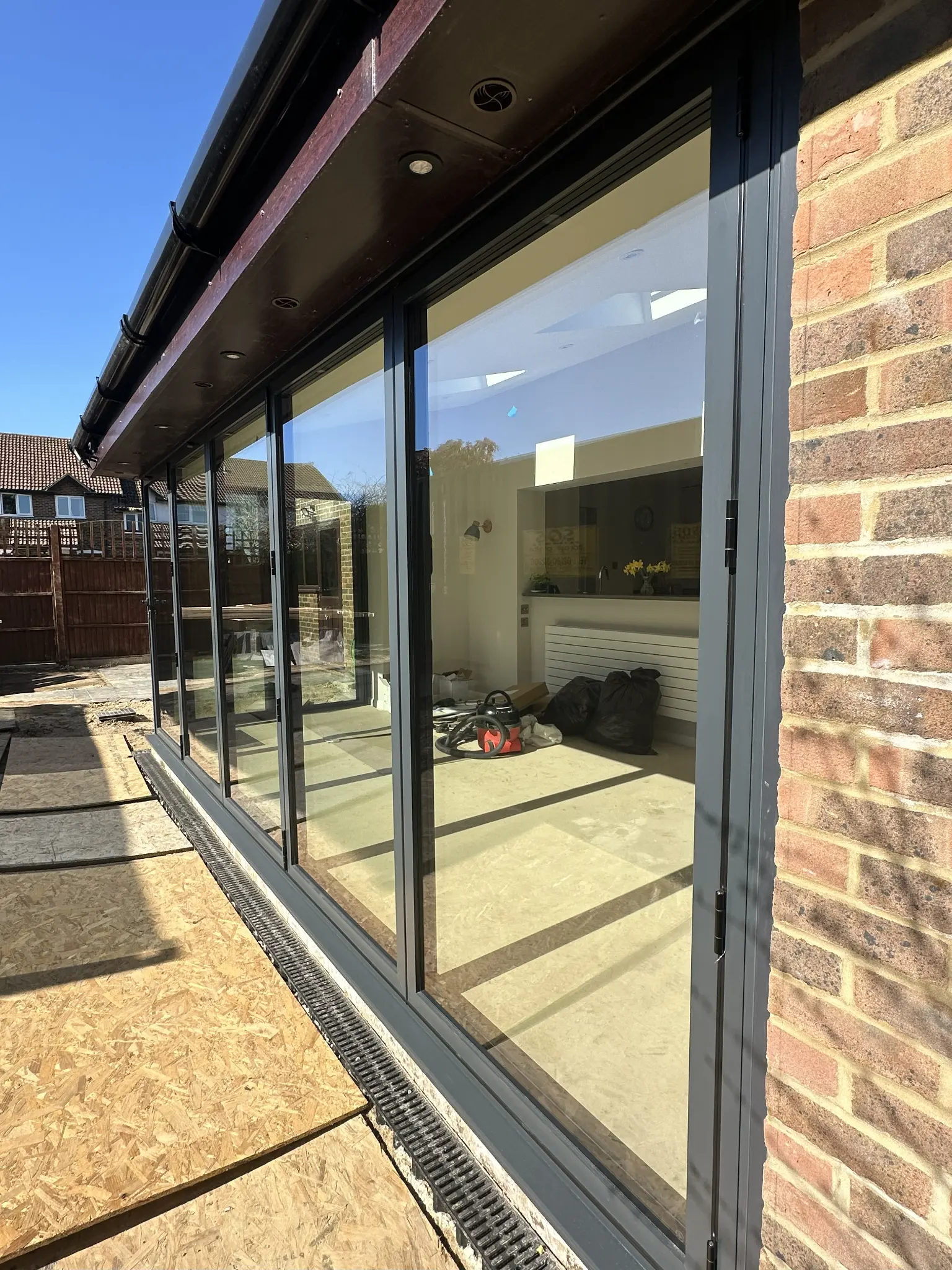
Aluminium is inherently strong and rigid, making it ideal for large, secure glazing installations like bi-fold doors and sliding patio doors. High-quality aluminium systems incorporate internal reinforcing chambers and deep profile sections that resist bending and prying. The slim sightlines often associated with aluminium do not compromise security, provided the system is certified to PAS 24.
Glazing Beads and Internal Security
Glazing beads are the strips that hold the glass unit within the frame. For maximum security, modern windows and doors should feature internal glazing beads. If the beads are external, an intruder could potentially remove them to take the glass unit out of the frame—a common, quiet method of entry. Internal beading ensures the glass can only be removed from the inside.
Considerations for Large Glazing
Large installations, such as sliding doors or curtain walling, require specific security considerations:
- Anti-Lift Mechanisms: Essential for sliding doors, preventing the door panel from being lifted off its track when closed.
- Interlocking Profiles: Where two sliding panels meet, the interlocking profile must be robust and reinforced to resist separation.
- Shear Bolts: Used on large fixed panels to secure the frame to the structure, preventing the entire frame from being forced out.
Insurance, Maintenance, and Long-Term Security
While installing high-security glazing is a major step, maintaining its integrity and ensuring it meets insurance requirements is equally important.
Insurance Requirements
Many UK home insurance policies require specific security measures to be in place, particularly regarding locking mechanisms and standards like PAS 24. Failure to comply with these requirements could invalidate a claim following a break-in. Always inform your insurer when installing new high-security doors or windows, as this may even lead to a reduction in your premium.
Regular Maintenance
Security hardware requires periodic maintenance to function correctly. Hinges, rollers, and locking points can become stiff or misaligned over time, especially in large, heavy doors. If a multi-point lock is difficult to engage, it may not be locking correctly across all points, compromising security. Regular lubrication and adjustment, typically annually, are essential to ensure the mechanisms remain smooth and fully operational.
Deterrence
High-security glazing systems, especially those with visible multi-point locks and laminated glass, act as a strong visual deterrent to opportunistic intruders.
Peace of Mind
Knowing your home complies with rigorous standards like PAS 24 and Part Q provides significant peace of mind for you and your family.
Insurance Compliance
Meeting certified security standards ensures that your home insurance policy remains valid and may qualify you for lower premiums.
Enhanced Durability
Security-focused hardware and reinforced frames are inherently more durable and resistant to wear and tear than standard components.
Summary and Professional Consultation
Security in modern glazing is a holistic concept. It’s not just about one feature, but the synergy between the frame material, the laminated glass unit, the multi-point locking system, and the anti-snap cylinder. For homeowners in the UK looking to upgrade their security, prioritising products certified to PAS 24 and featuring laminated glass and 3-star rated cylinders is the most effective strategy.
Choosing the right security glazing requires expert consultation to ensure the chosen system meets both your aesthetic goals and the stringent security and thermal requirements (such as the 1.4 W/m²K U-value limit for replacement windows under Part L 2022). A reputable glazing specialist can guide you through the complexities of PAS 24, Part Q, and insurance requirements, ensuring your investment delivers maximum protection.
At Shard AG, we specialise in supplying and installing bespoke architectural glazing systems that integrate the highest levels of security hardware and laminated glass technology. Our focus is on certified systems that provide uncompromising protection without sacrificing modern design aesthetics or thermal performance.
Explore Our Products
Discover how Shard Architectural Glazing can transform your home with our premium glazing solutions:
Ready to Transform Your Home?
Get in touch with our expert team for a free consultation and personalised quote. We'll help you choose the perfect glazing solution for your property.