

For UK homeowners considering new windows, doors, or glazed extensions, the focus often centres on thermal performance (U-values) and security. However, the often-overlooked aspect of Ultraviolet (UV) protection is equally vital for preserving your home's interior and ensuring occupant well-being.
Modern architectural glazing is engineered to do far more than just let light in; it actively manages the solar spectrum entering your property. Understanding how different types of glass filter UV radiation is crucial for making informed decisions about your investment.
The Science of UV Radiation and Glass
Sunlight is composed of visible light, infrared (heat), and ultraviolet (UV) radiation. UV radiation is invisible and is categorised into three main types based on wavelength:
- UVA (315–400 nm): Accounts for approximately 95% of the UV radiation reaching the Earth's surface. It penetrates deeply into the skin and is the primary cause of fading and material degradation indoors.
- UVB (280–315 nm): Causes sunburn and contributes significantly to fading, but most standard window glass blocks a large portion of UVB.
- UVC (100–280 nm): Extremely harmful, but completely absorbed by the Earth's atmosphere (ozone layer) and does not reach the ground.
The primary concern for architectural glazing is controlling UVA and UVB, particularly UVA, which causes long-term damage to furnishings, artwork, and flooring—a process known as photodegradation.
How Standard Glass Performs
Standard, untreated clear float glass offers some inherent UV protection, primarily against UVB. However, it is relatively ineffective against UVA:
- Standard Clear Float Glass (4mm): Blocks approximately 30–50% of UVA radiation.
- Standard Double Glazing (IGU): Blocks slightly more due to the air gap and two panes, but still allows significant UVA transmission.
While this level of protection is better than nothing, it is insufficient for protecting valuable or sensitive items from fading over time.
Advanced Glazing Technologies for UV Filtration
To achieve high levels of UV protection (often 99% or more), manufacturers employ specialised treatments, coatings, and lamination techniques.
Low-Emissivity (Low-E) Coatings
In the UK, Low-E coatings are mandatory for almost all new and replacement glazing under Part L of the Building Regulations due to their thermal benefits. These microscopic, metallic layers applied to the inner surface of the glass (typically surface 2 or 3 in an Insulating Glass Unit - IGU) are designed primarily to reflect long-wave infrared heat back into the room, improving U-values.
Crucially, Low-E coatings also provide a significant secondary benefit: they absorb or reflect a substantial portion of the UV spectrum. While their primary function is thermal, modern soft-coat Low-E glass typically blocks around 70–85% of incoming UV radiation.
Laminated Glass: The Gold Standard
For maximum UV protection, laminated glass is the most effective solution. Laminated glass consists of two or more panes of glass bonded together by an interlayer, usually Polyvinyl Butyral (PVB).
The PVB interlayer is highly effective at absorbing UV radiation. Standard laminated glass typically blocks 99% or more of UV radiation (up to 380 nm). This makes it the preferred choice for museums, galleries, and residential areas where high-value furnishings or artwork require maximum preservation.
Pro Tip
When specifying laminated glass for UV protection, ensure the PVB interlayer is standard or enhanced. While all PVB offers excellent UV filtration, always check the manufacturer's specification sheet (specifically the UV transmission percentage) to confirm it meets the 99% threshold required for maximum fading protection.
Tinted and Solar Control Glass
Solar control glass uses coatings or body tints (colour added during manufacture) to manage the amount of solar energy (heat and light) entering a building. While these systems are excellent at reducing solar gain (measured by the G-value), they also inherently reduce UV transmission.
However, relying solely on a tint for UV protection is less effective than lamination. Tints primarily manage visible light and heat, whereas lamination specifically targets the UV wavelength range.
UV Protection and UK Building Regulations
While the primary focus of Approved Document L (Conservation of Fuel and Power) is thermal efficiency, the regulations indirectly mandate the use of glass types that offer good UV filtration.
The current 2022 standards for England require new and replacement windows to achieve low U-values (e.g., 1.2 W/m²K for new builds, 1.4 W/m²K for replacements). Meeting these standards necessitates the use of high-performance IGUs, typically incorporating Low-E coatings, which, as established, significantly reduce UV transmission.
It is important to note that Building Regulations do not specifically mandate a minimum UV blocking percentage; rather, they mandate technologies (like Low-E) that provide UV blocking as a beneficial side effect. If your primary concern is preserving interiors, you must specify laminated glass, as standard Low-E may not offer the 99% protection level you require.
Safety and Security Requirements
Laminated glass is often specified for safety reasons (it holds together when shattered, reducing injury risk) and security reasons. When laminated glass is used in critical locations (e.g., large panes near the floor, overhead glazing, or accessible doors), its inherent 99%+ UV protection becomes an added benefit.
Comparison of Glazing Options
This table compares common glazing types based on their primary function and UV filtering capability:
| Glass Type | Primary Function | Typical U-Value (W/m²K) | Approximate UV Blockage (UVA) | Cost Consideration |
|---|---|---|---|---|
| Standard Clear Float (Single) | Visibility | ~5.8 | 30% - 50% | Low |
| Standard Double Glazing (No Low-E) | Basic Insulation | ~2.8 | 40% - 60% | Low |
| Double Glazing (Low-E Soft Coat) | Thermal Efficiency (Part L Compliance) | 1.2 - 1.4 | 70% - 85% | Medium |
| Laminated Glass (PVB Interlayer) | Safety, Security, Sound Reduction | Varies (often combined with Low-E) | 99%+ | High |
| Solar Control Glass | Heat Reduction (Low G-value) | Varies | 75% - 90% | High |
Practical Considerations and Trade-Offs
While achieving 99% UV protection sounds ideal, homeowners must consider the trade-offs associated with high-performance glazing.
Light Transmission and Clarity
Highly effective UV and solar control measures can sometimes slightly reduce the amount of visible light entering the room (measured as Visible Light Transmission - VLT). Laminated glass with a clear PVB interlayer typically maintains excellent clarity, but if combined with strong solar control tints or coatings, the room may feel marginally darker.
For rooms where maximising natural daylight is paramount, homeowners must balance the VLT against the desired level of UV filtration and solar heat reduction.
Cost Implications
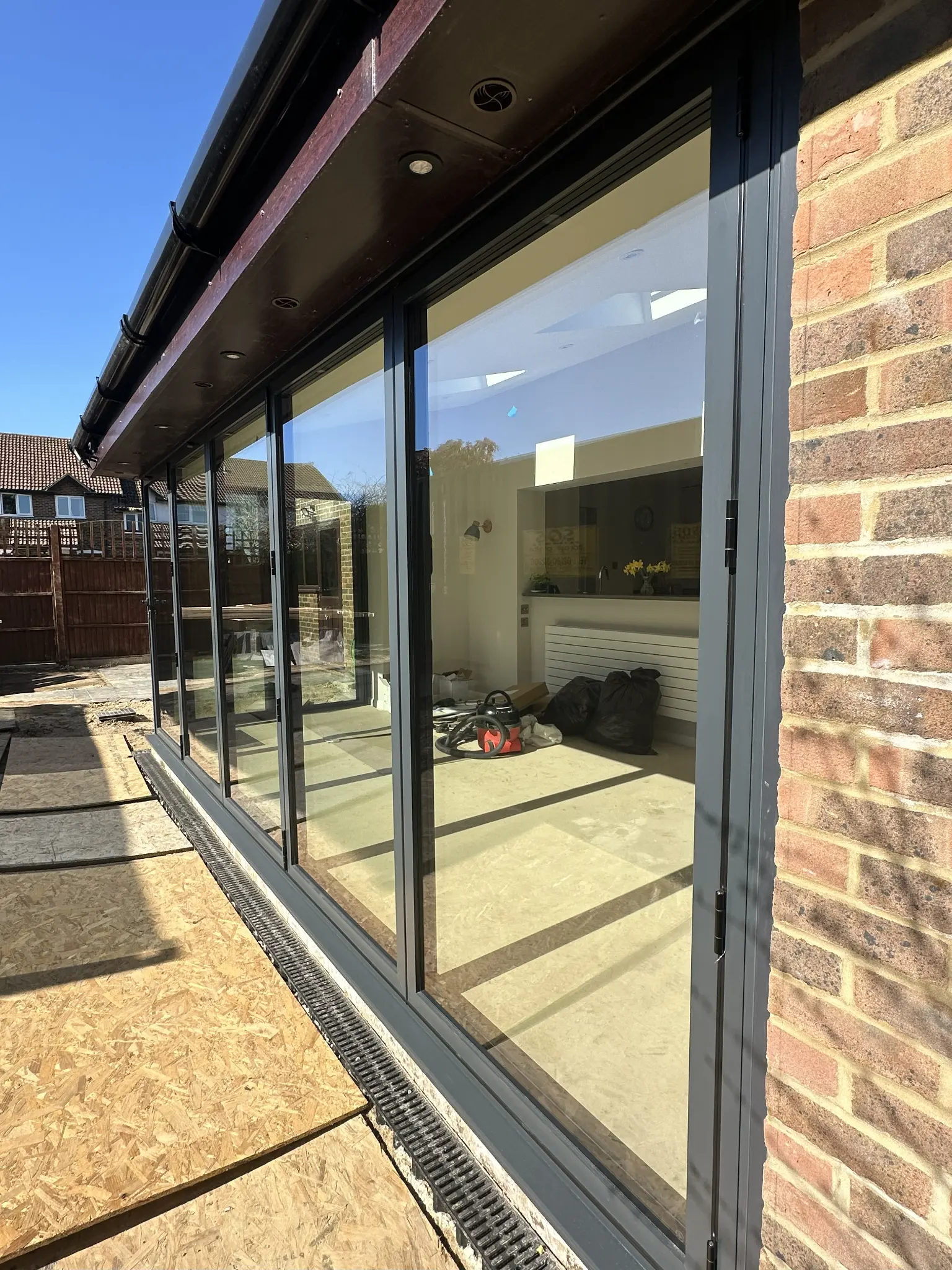
Laminated glass is significantly more expensive than standard toughened or annealed glass. When specifying large areas of glazing, such as bifold doors or large picture windows, the cost difference between standard Low-E double glazing and laminated Low-E double glazing can be substantial.
It is advisable to strategically use laminated glass only in areas where UV protection is critical (e.g., south-facing rooms with expensive furniture) and use high-performance Low-E glass elsewhere.
Interior Preservation
High UV filtration (99%+) prevents photodegradation, protecting expensive wooden floors, fabrics, artwork, and photographs from fading and discolouration over decades.
Health Benefits
Reducing exposure to UVA radiation, even indoors, is beneficial for skin health, especially for occupants who spend long periods near large windows or glazed doors.
Enhanced Security
Laminated glass, the best UV blocker, also provides superior security and safety, as the glass remains intact when broken, deterring intruders and preventing injury.
Energy Efficiency Integration
The best UV solutions (laminated glass) can be combined seamlessly with high-performance Low-E coatings to maintain excellent thermal efficiency and Part L compliance.
Specifying the Right Solution
When discussing your glazing requirements with a professional, ensure you clarify your priorities:
- If the priority is thermal efficiency and basic UV reduction: Specify high-performance double or triple glazing with a modern soft-coat Low-E coating to meet UK Building Regulations (U-value 1.4 W/m²K or better).
- If the priority is maximum interior protection (99%+ UV reduction): Specify laminated glass incorporating a PVB interlayer. This should ideally be combined with a Low-E coating for thermal performance.
- If the priority is reducing solar heat gain (G-value): Specify solar control glass, which will also provide excellent UV reduction, though usually slightly less than dedicated lamination.
Always request the technical specification sheet for the glass unit, paying close attention to the UV Transmission percentage (ideally below 1%) and the Visible Light Transmission (VLT) to ensure you achieve the right balance of protection and daylight.
For complex projects or large glazed areas like conservatories or orangeries, consulting with a structural engineer or an architectural glazing specialist is highly recommended to ensure the chosen glass meets all structural, thermal, and preservation requirements simultaneously.
***
Shard AG is a leading UK specialist in high-performance architectural glazing, providing bespoke solutions for residential extensions, renovations, and new builds. We offer a comprehensive range of glazing options, including advanced Low-E coated units and high-security laminated glass with superior UV filtration, all designed to meet current UK Building Regulations and enhance the longevity and comfort of your home.