


For UK homeowners, understanding the thermal performance of windows is crucial, not just for reducing energy bills but also for ensuring compliance with current Building Regulations. Windows are often the weakest point in a building’s thermal envelope. Choosing the right glazing system significantly impacts comfort, condensation risk, and overall property value. This comprehensive guide breaks down the key technical specifications and regulatory requirements you need to know.
The Core Metric: Understanding U-Values
The primary measurement of a window's thermal performance is its U-value (sometimes called the overall heat transfer coefficient). The U-value quantifies how quickly heat is lost through a structure. In simple terms, the lower the U-value, the better the insulation and the less heat you lose.
U-values are measured in Watts per square metre per Kelvin (W/m²K). This figure represents the rate of heat flow through one square metre of the material when the temperature difference across it is one degree Kelvin (or Celsius).
Calculating the Window U-Value (Uw)
A window's overall U-value (Uw) is a composite figure, taking into account three main components:
- Ug (Glazing U-value): The thermal performance of the glass unit itself (the glass panes and the gas cavity).
- Uf (Frame U-value): The thermal performance of the window frame material (e.g., PVC-U, timber, aluminium).
- Ψg (Psi value): The linear thermal transmittance of the spacer bar and the edge seal, which accounts for thermal bridging at the perimeter of the glass unit.
Modern, high-performance windows achieve low U-values through a combination of elements:
- Low-emissivity (Low-E) coatings: Microscopic, metallic coatings applied to the inner pane surface reflect internal heat back into the room while allowing solar energy to pass through.
- Insulating Gas Fill: Replacing air in the cavity with heavier, inert gases like Argon or Krypton significantly reduces conductive and convective heat transfer.
- Warm Edge Spacer Bars: Non-metallic or composite spacer bars reduce the thermal bridge effect at the edge of the glass, improving the overall Uw.
Pro Tip
When comparing quotes, always ensure you are comparing the overall window U-value (Uw), not just the glazing U-value (Ug). A window with a high-performance Ug but a poorly insulated frame (Uf) or a standard aluminium spacer bar will have a significantly worse overall Uw.
Thermal Standards and UK Building Regulations (Part L)
In England, the thermal performance of new and replacement windows must comply with Approved Document L (Conservation of Fuel and Power). The standards were significantly tightened in the 2022 edition, demanding much higher levels of thermal efficiency.
Minimum Performance Targets for Windows and Doors
For UK homeowners undertaking renovation or replacement projects, the following standards typically apply:
| Project Type | Maximum U-Value (W/m²K) | Applicable Regulation |
|---|---|---|
| Replacement Windows & Doors (Existing Dwellings) | 1.4 W/m²K | ADL Volume 1 (Existing Buildings) |
| New Build Windows & Doors | 1.2 W/m²K | ADL Volume 1 (New Dwellings) |
| Highly Glazed Extensions (Conservatories/Orangeries) | 1.0 W/m²K (often required) | Based on specific calculations (Limiting Fabric U-values) |
While 1.4 W/m²K is the minimum requirement for replacement windows, many homeowners opt for products achieving 1.2 W/m²K or lower. Achieving U-values below 1.0 W/m²K typically requires triple glazing or highly advanced double-glazed units with Krypton gas fill and exceptional frames.
Compliance and Certification
When replacing windows, compliance is generally demonstrated via one of two routes:
- FENSA/CERTASS Self-Certification: If your installer is registered with a competent person scheme (like FENSA or CERTASS), they can self-certify that the work meets Part L standards and notify the local authority on your behalf.
- Local Authority Building Control: If the installer is not registered, or if you install the windows yourself, you must apply to your local Building Control body for approval before work commences. Failure to comply with Part L could affect the future sale of your property.
Beyond U-Value: Solar Heat Gain (G-Value)
While the U-value measures heat loss, the G-value (or Solar Factor) measures the amount of solar heat energy transmitted through the glass into the building. It is expressed as a fraction between 0 and 1.
- A G-value of 1.0 means 100% of solar energy is transmitted.
- A G-value of 0.3 means 30% of solar energy is transmitted.
The ideal G-value depends heavily on the orientation of the window and the building's design:
- South-Facing Windows: In summer, excessive solar gain can lead to overheating. Here, a lower G-value (e.g., 0.3 to 0.4) is often beneficial to reduce cooling loads and maintain comfort.
- North-Facing Windows: Since these receive minimal direct sunlight, solar gain is less relevant. You might prioritise a high U-value and a slightly higher G-value (e.g., 0.5) if passive heating is desired during winter.
Modern glazing technology allows manufacturers to tailor the glass unit to achieve both a low U-value (good insulation) and a specific G-value (solar control) using selective Low-E coatings.
Double Glazing vs. Triple Glazing
The choice between double and triple glazing is a significant decision affecting both cost and performance.
Double Glazing
Standard modern double glazing typically uses two panes of glass, a Low-E coating, and Argon gas fill, achieving Uw values between 1.2 W/m²K and 1.4 W/m²K. This meets current minimum Building Regulation standards for replacement windows and offers an excellent balance of cost-effectiveness and performance.
Triple Glazing
Triple glazing incorporates three panes of glass and two gas-filled cavities, often resulting in Uw values as low as 0.8 W/m²K to 1.0 W/m²K, or even lower with premium specifications.
Advantages of Triple Glazing:
- Superior Thermal Insulation: Significantly lower U-values reduce heat loss dramatically.
- Increased Comfort: The inner pane remains much closer to room temperature, virtually eliminating cold spots near the window.
- Enhanced Acoustic Performance: The extra layer of glass and air gap provides better noise reduction.
Considerations for Triple Glazing:
- Higher Initial Cost: Triple glazing can be 20% to 40% more expensive than standard double glazing.
- Weight: The increased weight requires more robust frames and hinges, which can limit size options for certain window styles.
- Reduced Light Transmission: The extra pane and coatings slightly reduce the amount of natural light entering the room.
For extensions or new builds aiming for passive house standards, triple glazing is usually mandatory. For standard renovations, double glazing meeting the 1.4 W/m²K threshold remains the most common and cost-effective choice.
The Role of Frame Materials in Thermal Efficiency
While the glass unit provides the bulk of the insulation, the frame material (Uf) plays a critical role in the overall Uw. Poorly insulated frames can create thermal bridges, leading to heat loss and potential condensation.
- PVC-U (Unplasticised Polyvinyl Chloride): Highly popular in the UK due to its low maintenance and excellent thermal performance. Modern PVC-U frames use multi-chamber designs to trap air and improve insulation, easily achieving low Uf values.
- Timber: Naturally insulating and aesthetically pleasing. Requires more maintenance than PVC-U but, when engineered correctly (often laminated), offers very good thermal performance, comparable to high-end PVC-U.
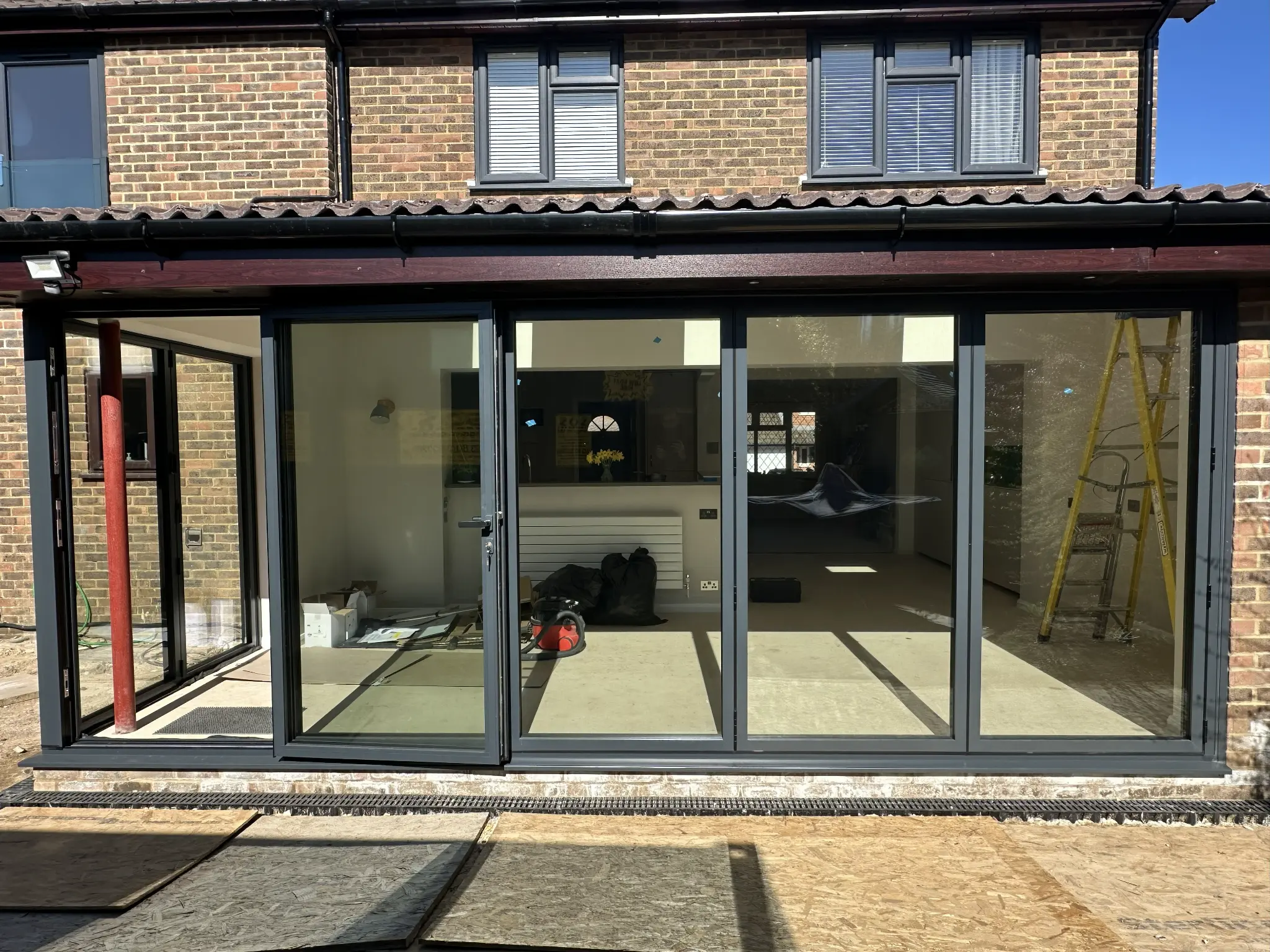
- Aluminium: Historically a poor insulator, modern aluminium frames require a sophisticated 'thermal break'—a non-metallic barrier inserted into the frame structure—to prevent heat transfer. High-quality thermally broken aluminium frames can now achieve excellent U-values, making them suitable for large-scale architectural glazing.
- Composite (Timber/Aluminium): Combines the structural strength and low maintenance of external aluminium with the insulating properties and aesthetics of internal timber, offering premium thermal performance but at a higher cost.
The Benefits of High-Performance Glazing
Investing in thermally efficient windows yields multiple long-term benefits for the homeowner:
Lower Energy Bills
By significantly reducing heat loss, high-performance glazing lowers the demand on your central heating system, resulting in substantial savings on gas or electricity consumption over the lifespan of the windows.
Improved Comfort and Health
Eliminating cold draughts and cold spots near windows creates a more stable, comfortable internal environment, reducing the risk of condensation and mould growth associated with cold surfaces.
Reduced Carbon Footprint
Using less energy for heating directly translates to a lower carbon footprint, contributing to environmental sustainability goals and compliance with UK energy efficiency standards.
Increased Property Value
Energy efficiency is a key factor in a property's Energy Performance Certificate (EPC) rating. Modern, compliant, high-performance windows are a major selling point and can increase the market value of your home.
When planning your next home improvement project, always prioritise thermal performance. Understanding U-values, complying with Part L 2022, and selecting the right combination of glass and frame materials are the keys to a warmer, more efficient, and more comfortable home.
***
About Shard AG: Shard Architectural Glazing specialises in supplying and installing high-performance, thermally efficient glazing solutions tailored for the demanding UK climate and strict Building Regulations. We offer a range of products, including premium double and triple glazing systems, designed to achieve low U-values and maximise energy savings for UK homeowners.