
Bi-Parting Sliding Doors: A UK Homeowner's Comprehensive Guide
Explore bi-parting sliding doors for your UK home. Learn about their design, benefits, technical specifications, Building Regulations compliance, and installation considerations.

Shard Architectural Glazing
7 February 2026
Explore bi-parting sliding doors for your UK home. Learn about their design, benefits, technical specifications, Building Regulations compliance, and installation considerations.
📋In This Article
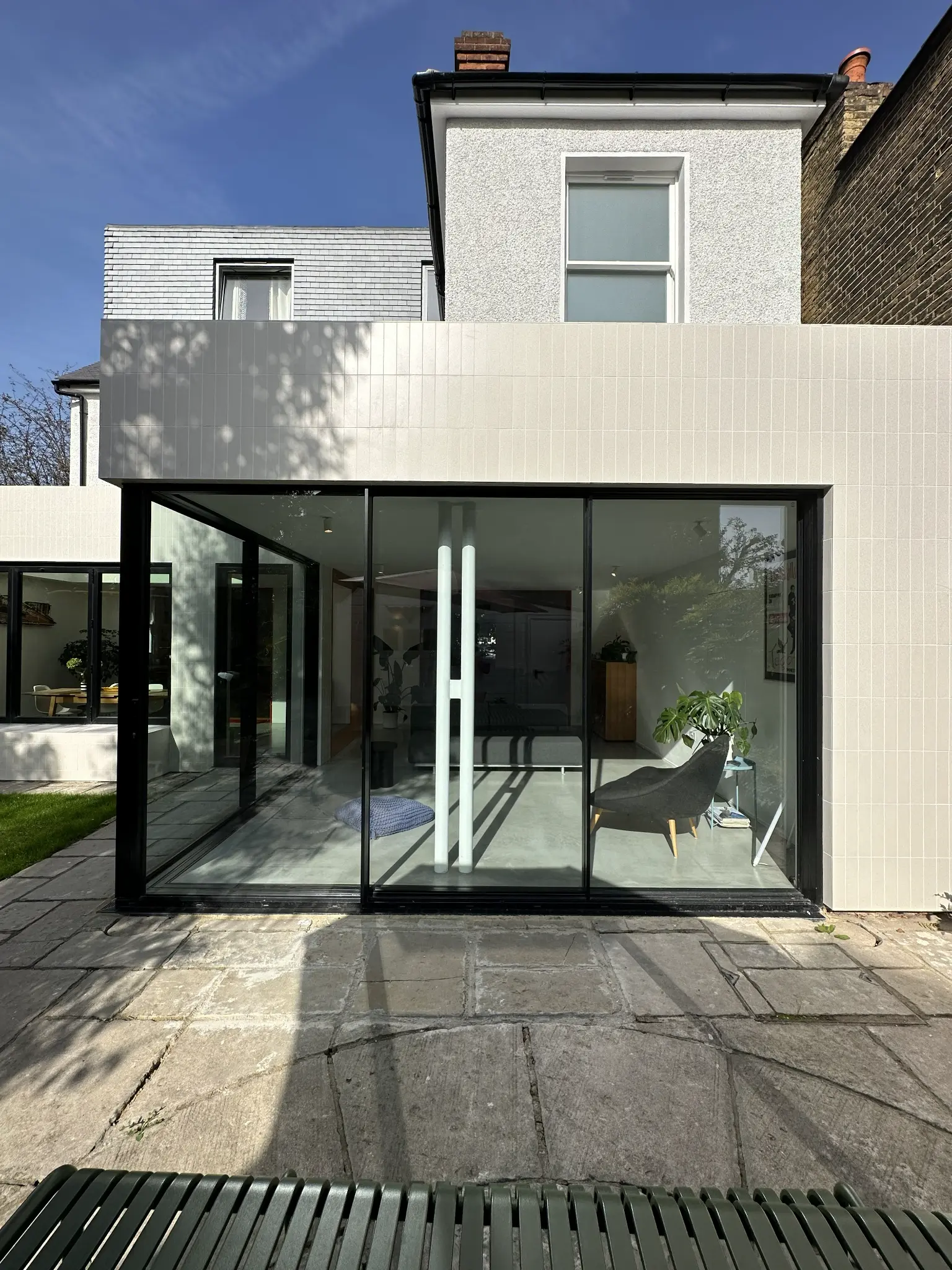
Bi-parting sliding doors, often referred to as 'centre-opening' or 'French-style' sliding doors, offer a sophisticated and highly functional solution for connecting indoor and outdoor living spaces. Unlike traditional sliding doors that stack to one side, bi-parting systems feature two door panels that meet in the middle and slide open in opposite directions, creating a wide, unobstructed opening. This design brings a unique aesthetic and practical advantages, making them an increasingly popular choice for UK homeowners.
What Are Bi-Parting Sliding Doors?
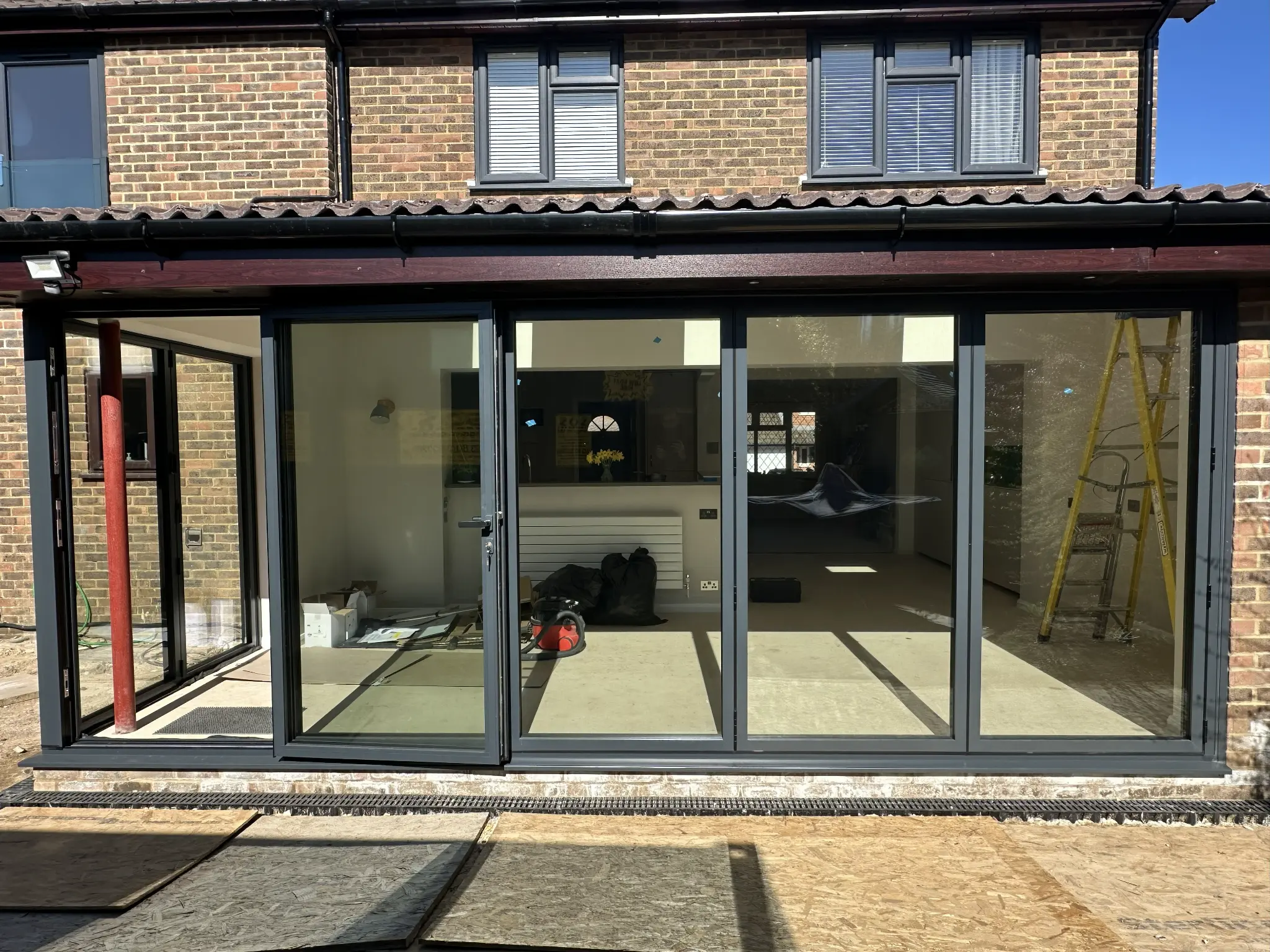
At their core, bi-parting sliding doors consist of two independent door panels that operate on parallel tracks. When opened, one panel slides to the left and the other to the right, typically disappearing behind fixed glazed panels or into a wall cavity (pocket doors). This creates a central opening that can be significantly wider than that offered by a single-panel sliding door or even many bifolding door systems, depending on the configuration.
Key Characteristics:
- Symmetrical Opening: The central opening is created by two panels moving away from each other, offering a balanced aesthetic.
- Multiple Panels: While the core concept involves two panels, larger systems can incorporate four or more panels, with two central panels bi-parting and outer panels sliding to stack behind them.
- Track System: They operate on a robust track system, usually at the head and/or cill, ensuring smooth and stable movement.
- Material Options: Available in various materials including aluminium, timber, and uPVC, each offering distinct aesthetic and performance characteristics. Aluminium is particularly popular for its strength, slim sightlines, and low maintenance.

Benefits of Bi-Parting Sliding Door Systems
Choosing bi-parting sliding doors for your property offers a range of advantages, from enhancing natural light to improving accessibility and thermal performance.
Expansive Openings
The primary advantage is the creation of a very wide, central opening. This is ideal for maximising the connection between indoor and outdoor areas, perfect for entertaining or enjoying garden views.
Enhanced Natural Light
With fewer vertical frames compared to bifold doors, and the ability to create large glass expanses, bi-parting sliders allow an abundance of natural light to flood into your living space, making rooms feel larger and brighter.
Space Efficiency
Unlike bifold doors that require space for panels to fold inwards or outwards, sliding doors operate within their own footprint. Bi-parting doors simply slide past each other, making them ideal for areas where external or internal space is at a premium.
Uninterrupted Views
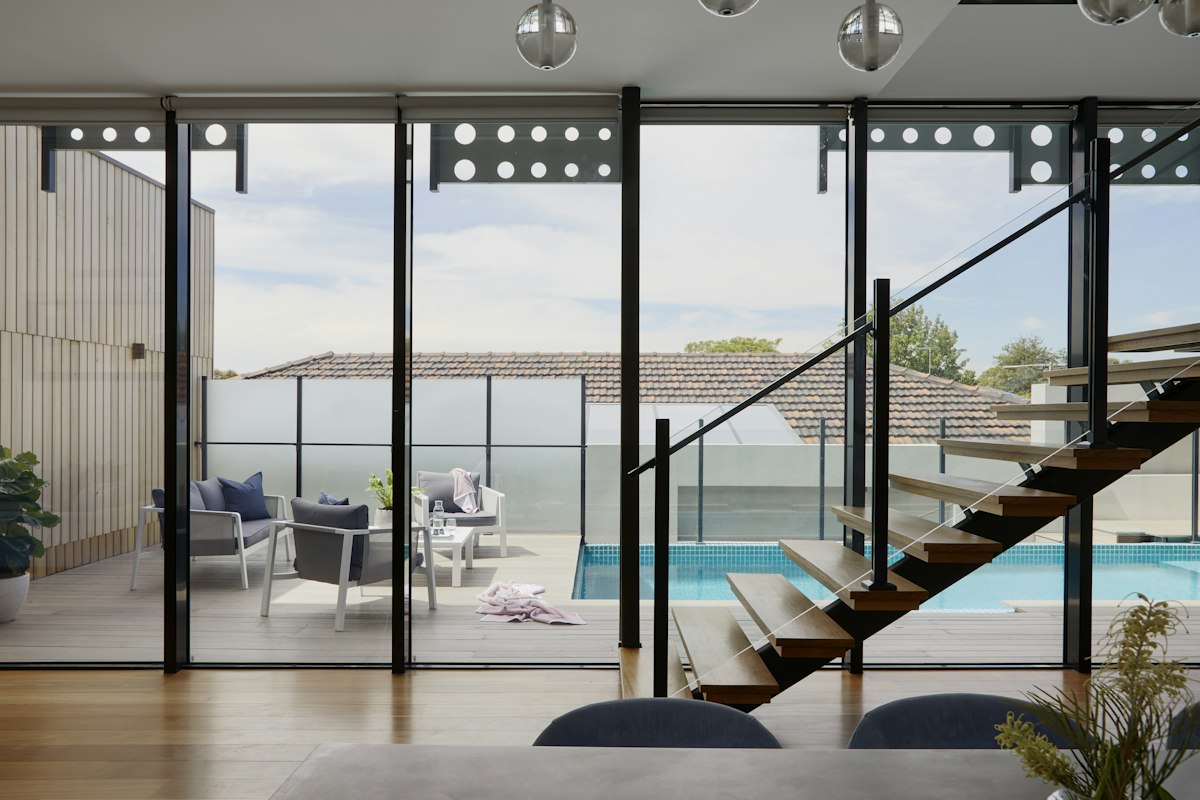
When closed, the large glass panels and often slim frames of modern bi-parting sliding doors offer panoramic, uninterrupted views of your garden or surroundings, acting as a glass wall.
Technical Specifications and UK Building Regulations
When considering bi-parting sliding doors, it's crucial to understand the technical aspects and how they align with UK Building Regulations, particularly concerning thermal performance and safety.
U-Values and Thermal Performance
The U-value measures how effectively a building component prevents heat from escaping. A lower U-value indicates better insulation. For doors and windows in England, current (2022) Building Regulations Part L specify:
- New Build Properties: A maximum U-value of 1.2 W/m²K for windows and doors.
- Replacement Doors: A maximum U-value of 1.4 W/m²K for doors.
Reputable bi-parting sliding door systems, especially those made from thermally broken aluminium or high-performance timber, are designed to meet or exceed these standards. Look for systems incorporating:
- Double or Triple Glazing: Essential for thermal efficiency.
- Low-E Coatings: Microscopic metallic layers that reflect heat.
- Warm Edge Spacers: Non-metallic spacers between glass panes to reduce heat transfer at the edges.
- Inert Gas Fills: Argon or Krypton gas between panes further improves insulation.
Security Features
Security is paramount. Modern bi-parting sliding doors should incorporate advanced locking mechanisms. Look for:
- Multi-point Locking: Locks at several points along the door frame.
- Anti-lift Mechanisms: Prevents panels from being lifted off their tracks.
- Toughened or Laminated Glass: Provides enhanced resistance against impact.
- PAS 24 Certification: This is a UK standard for enhanced security performance for doors and windows. Doors certified to PAS 24 offer a higher level of resistance to forced entry.
Glazing Standards
All glazing must comply with BS 6262-4:2005, which specifies safety glazing in critical locations. This typically means using toughened or laminated glass in doors and side panels, especially where the bottom edge of the glass is less than 800mm from floor level.
Pro Tip
Always request a U-value certificate for the specific door system you are considering. This will confirm its thermal performance and compliance with current Building Regulations. Also, check for PAS 24 certification for peace of mind regarding security.
Bi-Parting Sliding Doors vs. Bifolding Doors
While both options connect indoor and outdoor spaces, their operation and aesthetic differ significantly. Understanding these differences is key to making the right choice for your home.
| Feature | Bi-Parting Sliding Doors | Bifolding Doors |
|---|---|---|
| Opening Mechanism | Panels slide horizontally on tracks, meeting in the middle and opening away from each other. | Panels fold and stack concertina-style to one or both sides. |
| Opening Width | Can create very wide, central openings. Typically 50% of the total width is openable. | Can open almost 90% of the total width, but panels stack up. |
| Sightlines (Frame Thickness) | Typically slimmer frames, offering larger glass areas and less obstructed views when closed. | Thicker frames due to multiple hinges and folding mechanisms. More vertical lines when closed. |
| Space Required | Panels slide within their own footprint; no external/internal space needed for folding. | Requires space for panels to fold and stack, either internally or externally. |
| Accessibility | Can often achieve very low or flush thresholds, reducing trip hazards. | Thresholds can be flush, but the folding mechanism may still present minor obstacles. |
| Ventilation Options | Can be partially opened for ventilation without fully retracting. | Often require full opening of at least one panel for ventilation. Integrated 'traffic doors' are common. |
| Cost (General) | Often slightly more cost-effective for large openings due to simpler mechanism. | Can be more expensive due to complex hardware and multiple panels. |
Design and Aesthetic Considerations
The visual impact of bi-parting sliding doors is significant. They can dramatically alter the feel of a room and the exterior of your home.
Frame Materials and Finishes
- Aluminium: Highly durable, low maintenance, and allows for very slim frames (sightlines) due to its strength. Available in a vast array of RAL colours, including dual colours for different interior/exterior finishes.
- Timber: Offers a natural, warm aesthetic. Requires more maintenance but can be painted or stained to match existing décor. Excellent thermal properties when engineered correctly.
- uPVC: A cost-effective option, low maintenance, but generally has thicker frames and fewer colour options than aluminium.
Threshold Options
The threshold is the bottom part of the door frame. Considerations include:
- Standard Threshold: A slightly raised barrier, offering excellent weather resistance.
- Low Threshold: Reduced height for easier access, often with a small ramp.
- Flush Threshold: Creates a seamless transition between indoor and outdoor, ideal for accessibility and aesthetics, but may offer slightly less weather protection in extreme conditions unless expertly installed and designed.
Glazing Options
Beyond standard double or triple glazing, consider:
- Solar Control Glass: Reduces heat gain from direct sunlight, preventing overheating in south-facing rooms.
- Self-Cleaning Glass: Features a special coating that uses sunlight and rain to break down and wash away dirt.
- Acoustic Glass: Designed to reduce noise transmission, ideal for homes near busy roads or airports.
Installation and Maintenance
Proper installation is critical for the longevity, performance, and security of bi-parting sliding doors. It's not a DIY job for most homeowners.
Professional Installation
Engaging experienced installers is paramount. They will ensure:
- Accurate Measurements: Essential for a perfect fit and smooth operation.
- Level and Plumb Installation: Crucial for the doors to slide correctly and to prevent issues like drafts or water ingress.
- Correct Sealing and Weatherproofing: To protect your home from the elements and ensure thermal efficiency.
- Compliance with Building Regulations: Installers should be FENSA or CERTASS registered, ensuring their work meets current standards and providing you with a certificate of compliance.
Maintenance Tips
- Regular Cleaning: Clean glass with a non-abrasive cleaner and frames with warm soapy water.
- Track Maintenance: Keep tracks free of dirt, debris, and grit. Vacuuming and wiping them down regularly will ensure smooth operation.
- Lubrication: Periodically lubricate moving parts and locking mechanisms with a silicone-based spray, as recommended by the manufacturer.
- Hardware Checks: Inspect hinges, handles, and locks for any signs of wear or loosening.
Bi-parting sliding doors offer a compelling blend of aesthetic appeal, practical functionality, and excellent performance for UK homes. By understanding the technical specifications, Building Regulations, and design options, you can make an informed decision that enhances your living space for years to come.
If you're considering bi-parting sliding doors for your home, it's advisable to consult with a specialist supplier and installer. They can provide tailored advice, conduct site surveys, and help you navigate the various options to find the perfect solution that meets your specific requirements and complies with all relevant UK standards.
Explore Our Products
Discover how Shard Architectural Glazing can transform your home with our premium glazing solutions:
Ready to Transform Your Home?
Get in touch with our expert team for a free consultation and personalised quote. We'll help you choose the perfect glazing solution for your property.