
Bi-Parting Sliding Doors: A UK Homeowner's Guide
Explore bi-parting sliding doors for your UK home. Learn about their design, benefits, technical specifications, Building Regs compliance, and installation tips.

Shard Architectural Glazing
16 February 2026
Explore bi-parting sliding doors for your UK home. Learn about their design, benefits, technical specifications, Building Regs compliance, and installation tips.
📋In This Article
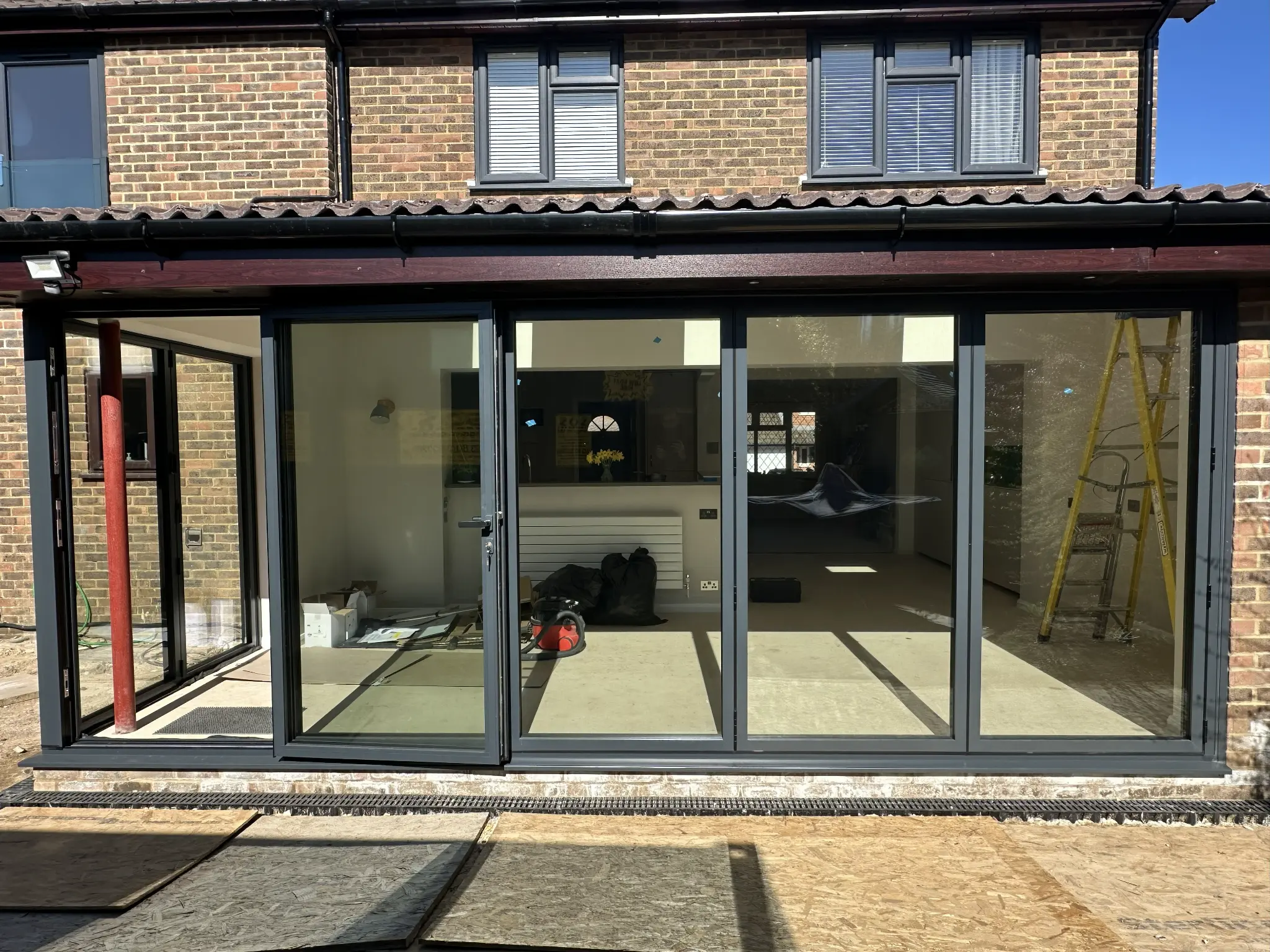
Bi-parting sliding doors offer a sophisticated and highly functional solution for connecting indoor and outdoor spaces, or for creating flexible internal room dividers. Unlike traditional patio doors or even standard sliding doors that stack to one side, bi-parting systems feature two sets of panels that meet in the middle and slide open in opposite directions. This creates a wide, central opening that can truly transform the flow and feel of a home.
For UK homeowners considering a significant glazing investment, understanding the nuances of bi-parting sliding doors is crucial. This guide will delve into their design, benefits, technical considerations, and how they align with UK Building Regulations.
What Are Bi-Parting Sliding Doors?
At their core, bi-parting sliding doors consist of two independent door sections, each typically comprising multiple panels, that slide away from a central meeting point. Imagine a pair of curtains drawing open from the middle – the doors operate on a similar principle. Each section moves along its own track, usually concealed within the frame, allowing for a symmetrical and expansive opening.
These systems are distinct from bifold doors, which fold concertina-style and stack to one or both sides, and standard sliding patio doors, where all panels typically stack to one side. The key advantage of bi-parting doors is the creation of a large, unobstructed central aperture, often perfectly framing a garden view or providing a seamless transition to an extension.
Common Configurations
- 2+2 Configuration: Two panels slide left, and two panels slide right, creating a four-panel system that opens centrally.
- 3+3 Configuration: Three panels slide left, and three panels slide right, for an even wider opening.
- Fixed Panels: Sometimes, the outermost panels might be fixed, with only the inner panels sliding to meet them.
The choice of configuration often depends on the overall width of the opening and the desired aesthetic. Materials typically include aluminium, uPVC, or timber, with aluminium being a popular choice in the UK due to its strength, slim sightlines, and durability.
Benefits of Bi-Parting Sliding Door Systems
Bi-parting doors offer a compelling array of advantages that make them a desirable choice for many modern homes and renovation projects.
Expansive Openings
The primary draw is the ability to create a truly large and symmetrical opening. When fully open, these doors effectively dissolve the barrier between indoor and outdoor spaces, enhancing natural light and ventilation.
Uninterrupted Views
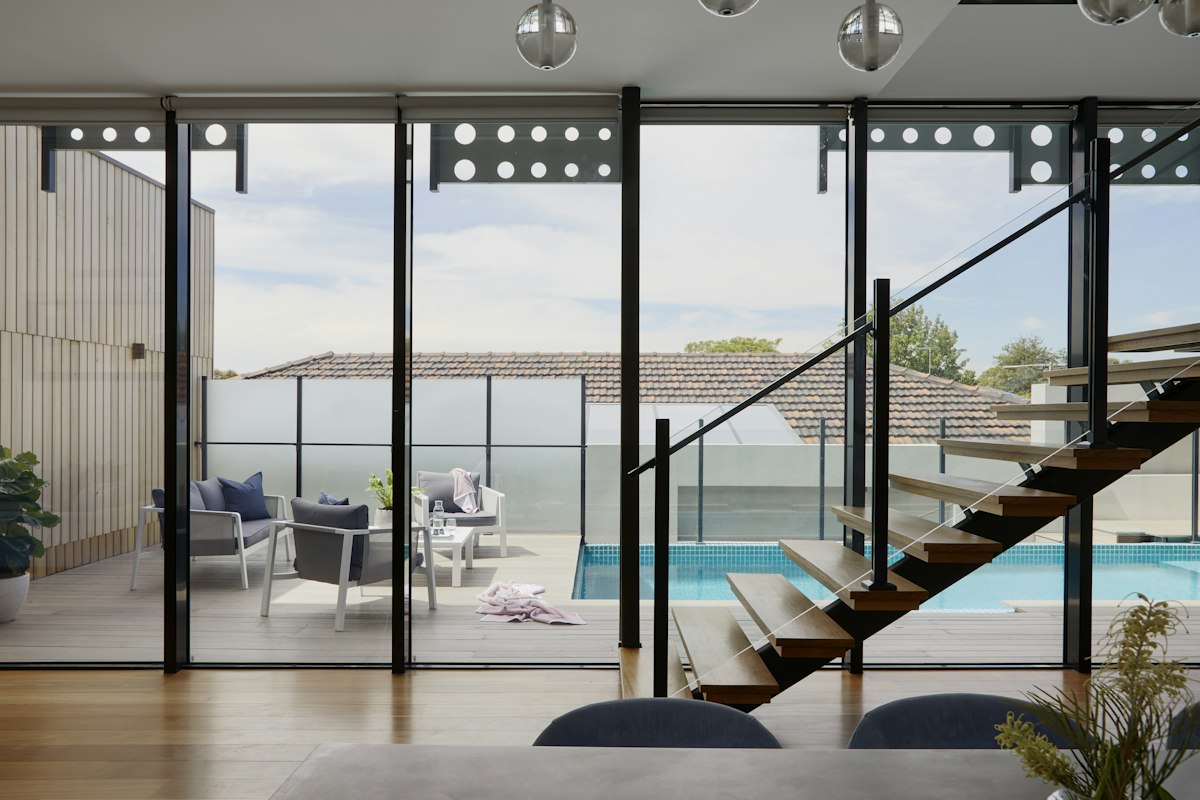
Unlike bifolds which have multiple vertical frames stacked when open, bi-parting sliders allow panels to disappear into recesses or stack neatly to the sides, leaving a clear, panoramic view. Even when closed, their typically larger glass panes and slimmer frames offer less visual obstruction.
Space Efficiency
Because the panels slide parallel to the wall, they don't intrude into the living space or garden area when open, making them ideal for smaller patios or rooms where furniture placement is a consideration. This is a significant advantage over bifold doors which require space for the folded panels.
Enhanced Security & Thermal Performance
Modern bi-parting systems are designed with multi-point locking mechanisms and robust frames. When combined with high-performance double or triple glazing, they offer excellent thermal efficiency, helping to keep homes warm in winter and cool in summer, contributing to lower energy bills.
Technical Considerations and UK Building Regulations
When investing in bi-parting sliding doors, several technical aspects and compliance with UK Building Regulations are paramount. These ensure the doors are safe, efficient, and legally installed.
U-Values and Thermal Performance
The U-value measures how effectively a component (like a door or window) prevents heat from escaping. A lower U-value indicates better insulation. For new build properties and extensions in England, Part L of the Building Regulations (2022) mandates a maximum U-value of 1.2 W/m²K for windows and doors. For replacement doors in existing dwellings, the requirement is 1.4 W/m²K.
Achieving these values typically requires high-performance double glazing (often with a low-emissivity coating and argon gas fill) or triple glazing, combined with thermally broken frames. Always request the U-value certificate for any door system you consider.
Structural Support
Bi-parting doors can be very heavy, especially when spanning wide openings with multiple large glass panels. Adequate structural support above the opening (a lintel or steel beam) is crucial. Your builder or structural engineer will need to assess the existing structure and specify any necessary reinforcements. This is particularly important for larger openings in extensions or new builds.
Threshold Options
There are generally two main threshold types:
- Standard/Weathered Threshold: This incorporates a raised barrier to provide superior weather protection, preventing water ingress. It's often recommended for exposed locations.
- Low/Flush Threshold: Designed to create a near-seamless transition between indoor and outdoor spaces, minimising trip hazards. While aesthetically pleasing, these can sometimes offer slightly less weather protection than a standard threshold and may require careful drainage solutions.
The choice depends on your aesthetic preference, exposure to weather, and accessibility requirements (e.g., for wheelchair users).
Security
Modern bi-parting doors should meet or exceed the requirements of PAS 24:2016, the UK standard for enhanced security performance of doors and windows. Look for multi-point locking systems, anti-lift devices, and toughened or laminated glass. Always check for certification.
Pro Tip
When planning for bi-parting doors, especially for new openings or extensions, always consult with your local Building Control authority early in the process. They can provide specific guidance on structural requirements, U-values, and other compliance aspects relevant to your project and location. This proactive approach can prevent costly issues later on.
Materials and Finishes
The choice of material significantly impacts the aesthetics, performance, and longevity of your bi-parting doors.
| Feature | Aluminium | uPVC | Timber (Hardwood/Engineered) |
|---|---|---|---|
| Appearance | Sleek, modern, slim sightlines. Wide colour range (RAL). | Versatile, can mimic timber. Limited colour range initially, now improving. | Classic, natural, warm. Can be painted or stained. |
| Durability & Maintenance | Highly durable, corrosion-resistant, low maintenance. Powder-coated finish lasts decades. | Durable, low maintenance, doesn't rot or rust. Can discolour over time if not high quality. | Durable if well-maintained. Requires regular painting/staining to prevent rot/warp. |
| Thermal Performance | Excellent with thermal breaks. Easily meets current U-value regs. | Good, multi-chambered profiles provide insulation. Meets U-value regs. | Naturally insulating. Good thermal performance, especially engineered timber. |
| Strength & Size | Very strong, allows for large panes and slim frames. Ideal for wide openings. | Good strength, but frames are typically thicker than aluminium for similar spans. | Strong, but can be heavy. Frame thickness depends on wood type and engineering. |
| Cost | Mid to high range. | Lower to mid range. | Mid to high range, depending on timber type and finish. |
| Environmental Impact | Recyclable, long lifespan. Energy-intensive production. | Recyclable, but less so than aluminium. Long lifespan. | Renewable resource if sourced sustainably. Biodegradable. |
Installation and Long-Term Care
Proper installation is paramount for the long-term performance, security, and weather resistance of bi-parting sliding doors. It is not a DIY job for most homeowners.
Professional Installation
Always use an experienced and certified installer. Look for companies that are FENSA or CERTASS registered, as this ensures their work complies with Building Regulations and is backed by an insurance-backed guarantee. A professional installer will ensure:
- The opening is perfectly level and plumb.
- The frame is securely fixed and square.
- Correct drainage and weather sealing are in place.
- The doors operate smoothly and lock securely.
- Any structural alterations are correctly implemented.
Maintenance and Care
While modern bi-parting doors are designed for low maintenance, some routine care will prolong their lifespan and ensure optimal performance:
- Cleaning: Regularly clean glass with a mild detergent and soft cloth. Frames can be wiped down with soapy water. Avoid abrasive cleaners.
- Tracks: Keep the tracks free of dirt, dust, and debris. A vacuum cleaner with a narrow nozzle can be effective. Lubricate moving parts (rollers, locks) periodically with a silicone-based spray, as recommended by the manufacturer.
- Seals: Inspect rubber seals for any signs of perishing or damage and replace if necessary to maintain weatherproofing.
- Hardware: Check screws and fixings periodically to ensure they remain tight.
Cost Considerations
The cost of bi-parting sliding doors can vary significantly based on several factors:
- Material: uPVC is generally the most economical, followed by aluminium and then timber, though engineered timber can be comparable to high-end aluminium.
- Size: Larger openings with more panels will naturally cost more due to increased material and glazing requirements.
- Glazing: Double glazing is standard, but triple glazing, specialist coatings (e.g., solar control), or laminated security glass will increase the price.
- Frame Finish: Standard colours are usually included, but bespoke RAL colours or special finishes can add to the cost.
- Hardware & Security: High-performance locks, advanced handles, and integrated blinds will affect the price.
- Installation: This is a significant component of the overall cost, especially if structural alterations are required.
It's advisable to obtain multiple quotes from reputable suppliers and installers, ensuring they provide a detailed breakdown of costs, including materials, installation, and any necessary structural work or Building Control fees.
Bi-parting sliding doors represent a premium glazing solution that can dramatically enhance the aesthetic appeal, functionality, and energy efficiency of a UK home. By carefully considering the design, technical specifications, Building Regulations compliance, and installation process, homeowners can make an informed decision that adds lasting value and enjoyment to their property.
If you're exploring bi-parting sliding doors for your project, Shard AG offers a range of high-quality, thermally efficient systems designed to meet rigorous UK standards. Our expert team can guide you through the options, ensuring your chosen doors perfectly complement your home and comply with all relevant regulations.
Explore Our Products
Discover how Shard Architectural Glazing can transform your home with our premium glazing solutions:
Ready to Transform Your Home?
Get in touch with our expert team for a free consultation and personalised quote. We'll help you choose the perfect glazing solution for your property.