Bifold vs Sliding Doors: The Ultimate UK Homeowner's Guide
Deciding between bifold and sliding doors for your UK home? This comprehensive guide explores design, performance, costs, and Building Regulations.

Shard Architectural Glazing
14 January 2026
Deciding between bifold and sliding doors for your UK home? This comprehensive guide explores design, performance, costs, and Building Regulations.
📋In This Article
When planning an extension, renovation, or simply upgrading your existing patio doors, the choice between bifold doors and sliding doors often emerges as a key decision. Both offer fantastic ways to connect indoor and outdoor spaces, flood your home with natural light, and enhance its aesthetic appeal. However, they achieve these goals through different mechanisms, offering distinct advantages and considerations. This guide will delve into the technical specifications, practical implications, and regulatory aspects relevant to UK homeowners, helping you make an informed choice.
Understanding the Mechanisms: Bifold vs. Sliding
While both door types are designed to maximise glazed areas, their operational principles are fundamentally different.
Bifold Doors: The Concertina Effect
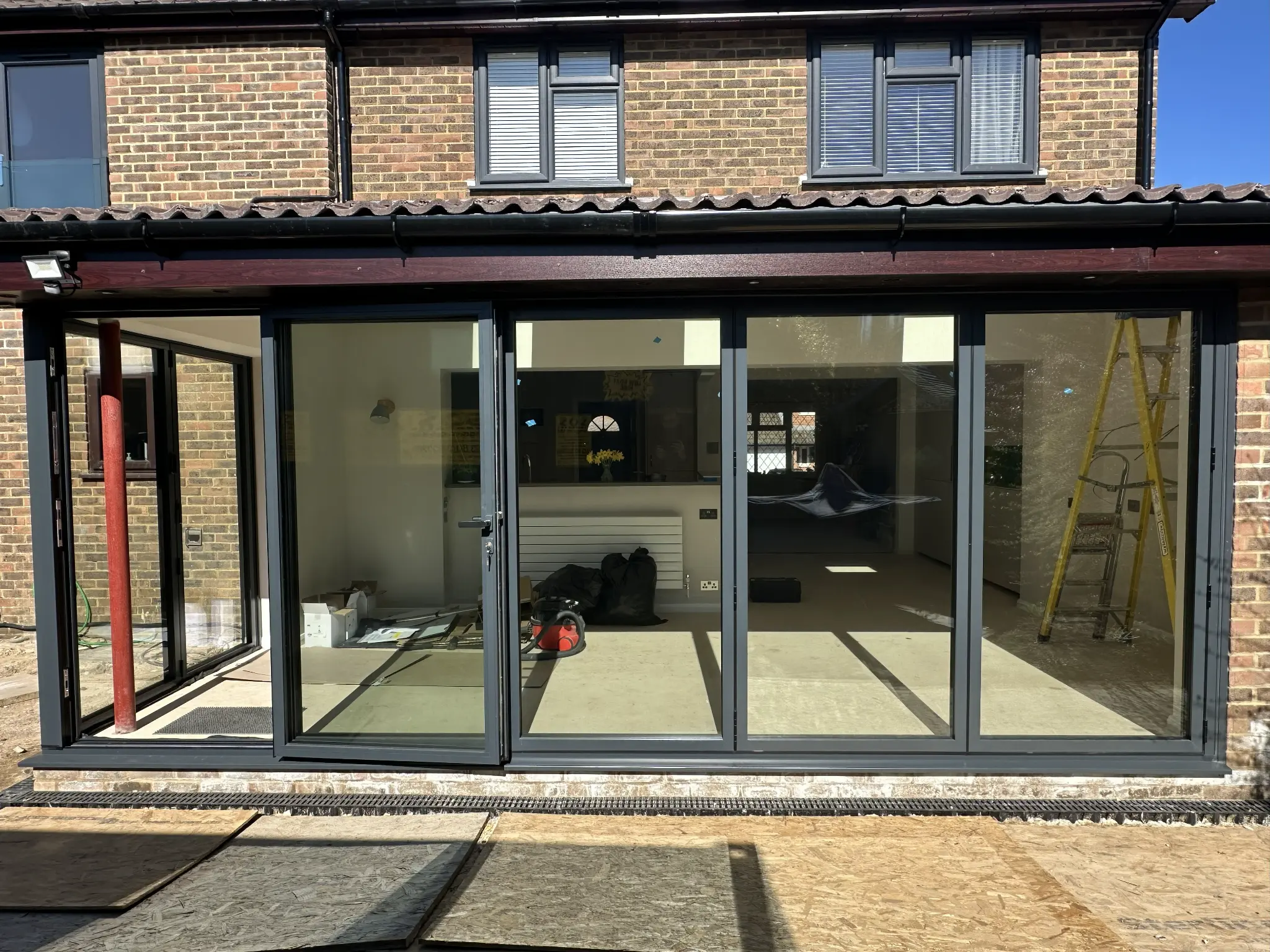
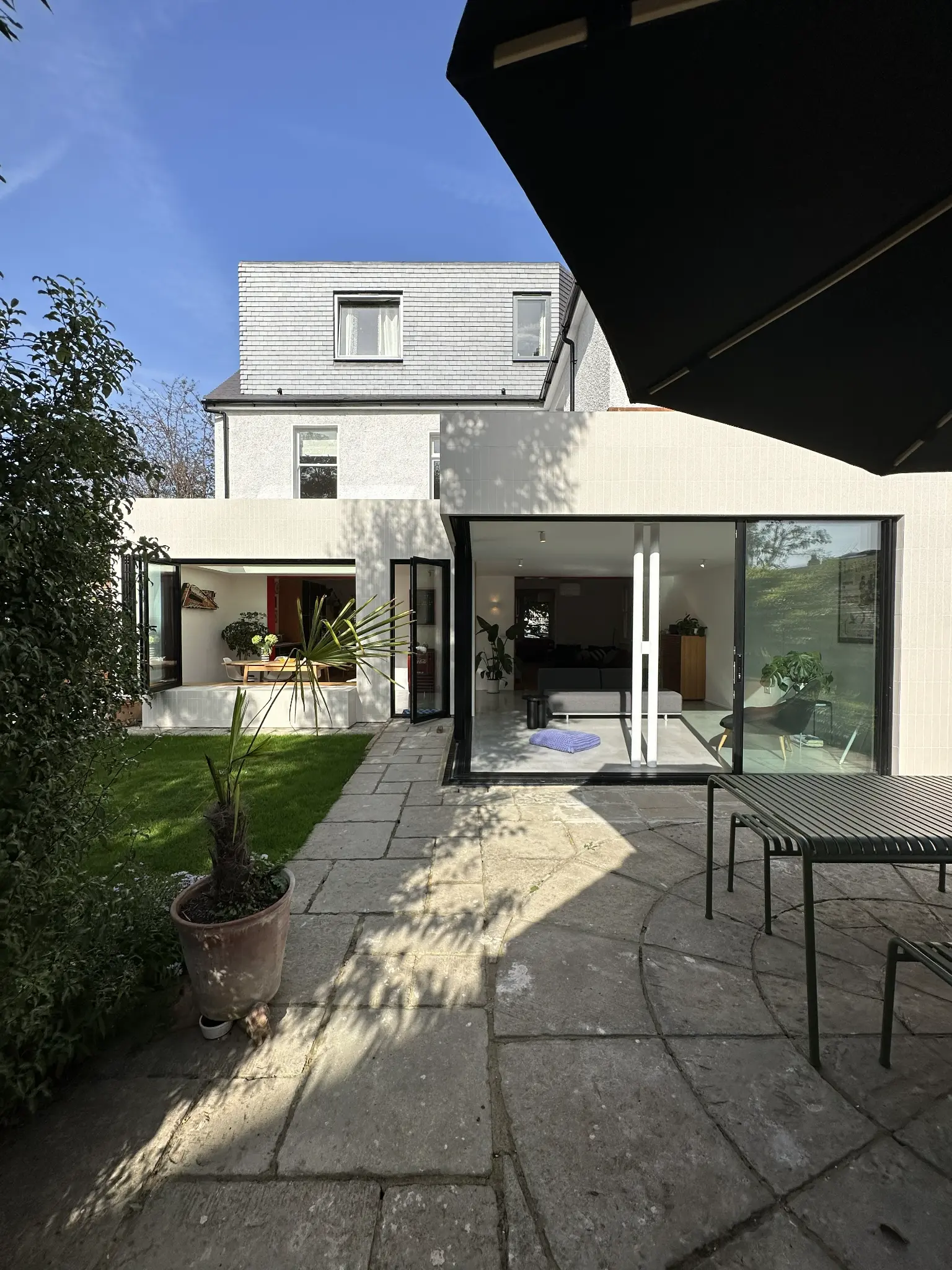
Bifold doors, also known as folding-sliding doors, consist of multiple panels that fold back on themselves in a concertina style. They are typically top-hung and bottom-guided, allowing the panels to stack neatly to one or both sides of the opening. This creates a virtually unobstructed opening, blurring the lines between your interior and garden.
- Operation: Panels are hinged together and run along a track, folding and stacking.
- Opening Size: Can achieve up to 90-95% clear opening.
- Frame Thickness: Generally feature thicker frames to accommodate the hinges and folding mechanism.
Sliding Doors: The Glazed Wall
Sliding doors, particularly modern lift-and-slide or inline sliding systems, comprise large individual glazed panels that slide past each other on a track. They typically feature fewer, larger panels compared to bifolds, creating expansive, uninterrupted glass sections even when closed. When open, the panels stack parallel to each other, maintaining a portion of the opening covered.
- Operation: Panels slide horizontally on parallel tracks, often with a lift-and-slide mechanism for smoother operation and better sealing.
- Opening Size: Typically offer 50-75% clear opening, depending on the number of panels and configuration.
- Frame Thickness: Can achieve very slim sightlines due to the simpler sliding mechanism, maximising glass area.
Design, Aesthetics, and Sightlines
The visual impact of your chosen doors will significantly influence your home's appearance, both inside and out.
Bifold Door Aesthetics
Bifold doors, with their multiple panels and visible hinges, create a more structured aesthetic. When open, they offer an unparalleled connection to the outdoors. When closed, the vertical lines of the frames can add architectural interest, but they do introduce more visual interruptions compared to sliding doors.
- Frame Material: Available in aluminium, uPVC, and timber. Aluminium is popular for its strength, slim profiles (though generally thicker than sliding), and contemporary look.
- Colour Options: Extensive, including popular choices like Anthracite Grey, Black, and various RAL colours.
- Thresholds: Can be installed with a low-profile or flush threshold for seamless indoor-outdoor transition, though careful consideration of drainage is essential for flush options.
Sliding Door Aesthetics
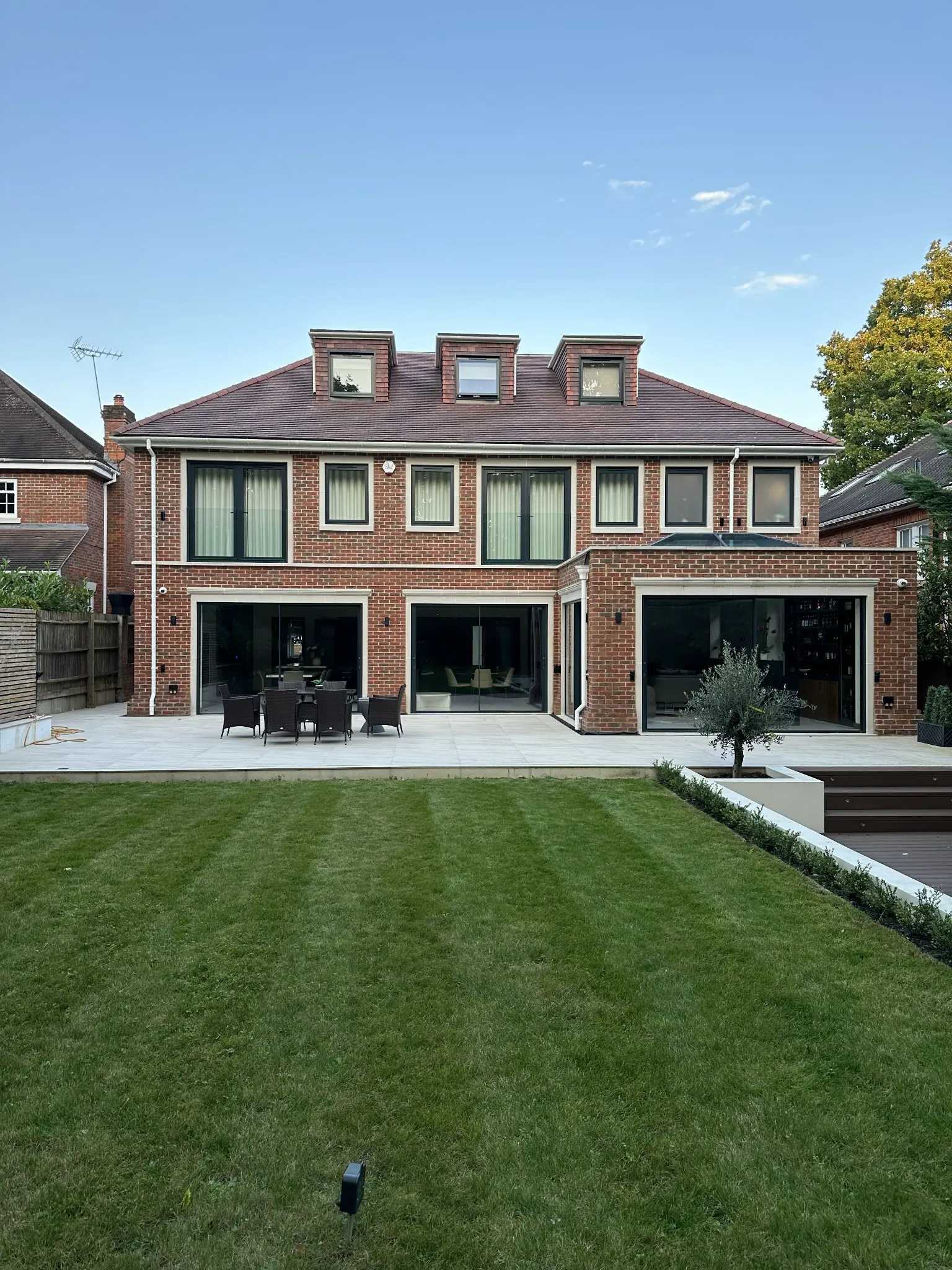
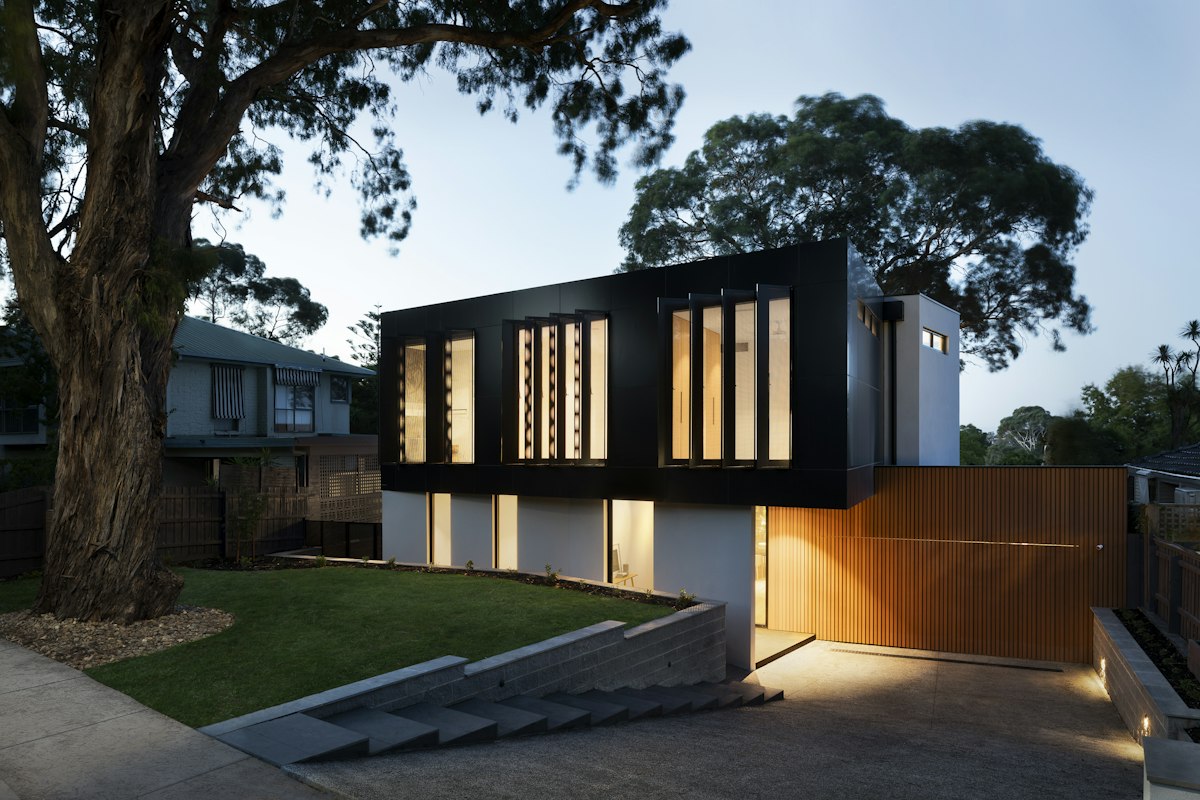
Sliding doors excel in delivering a sleek, minimalist aesthetic. Their larger, fewer panels create expansive glass walls, offering panoramic views even when closed. Modern designs often boast incredibly slim sightlines (the visible width of the frame), sometimes as narrow as 20mm, making the glass appear almost frameless.
- Frame Material: Aluminium is dominant for high-performance sliding doors due to its strength-to-weight ratio, allowing for very large glass panels and slim frames.
- Colour Options: Similar to bifolds, a wide range of colours is available.
- Thresholds: Can also be integrated with flush thresholds, requiring careful planning for weatherproofing and drainage.
Unobstructed Opening
Bifold doors offer near-complete opening, ideal for truly merging indoor and outdoor spaces during warm weather.
Panoramic Views
Sliding doors provide expansive, uninterrupted glass panels, offering superior views even when closed.
Space Efficiency
Sliding doors don't require space for panels to fold inwards or outwards, making them suitable for smaller patios or balconies.
Thermal Performance
Both types can achieve excellent U-values, but sliding doors often have fewer seals, potentially offering marginal advantages in some designs.
Performance and Practicality: Key Considerations
Beyond aesthetics, the practical performance of your doors in a UK climate is paramount.
Thermal Efficiency (U-Values)
For any new or replacement glazing in the UK, compliance with Building Regulations Part L (Conservation of Fuel and Power) is mandatory. The current standard for replacement windows and doors in England (2022) is a maximum U-value of 1.4 W/m²K. For new build extensions, it's even stricter at 1.2 W/m²K.
- Both bifold and sliding doors, when manufactured with modern thermally broken aluminium or uPVC frames and high-performance double or triple glazing, can comfortably meet and exceed these requirements.
- Glazing: Look for units with low-emissivity (low-e) coatings, warm edge spacer bars, and argon or krypton gas infills to minimise heat loss.
- Sealing: High-quality gaskets and seals are crucial for preventing draughts and water ingress.
Security
Security is a primary concern for any homeowner. Both bifold and sliding doors should meet or exceed the requirements of PAS 24:2016 (Enhanced Security Performance Requirements for Doorsets and Windows), which is often a prerequisite for Building Control approval and insurance purposes. Look for:
- Multi-point locking systems: Engaging at several points along the frame.
- Anti-lift mechanisms: Preventing panels from being lifted off their tracks.
- Toughened or laminated glass: More resistant to impact.
- Secure hinges and interlocks: For bifold doors, ensure hinges are internal or anti-jemmy. For sliding doors, ensure interlocks between panels are robust.
Space Requirements
- Bifold Doors: Require space for the panels to stack, either internally or externally. Consider furniture placement and external patio space.
- Sliding Doors: Panels slide parallel to each other, so they don't project into your living space or garden, making them ideal for smaller areas or balconies.
Maintenance
Both door types are generally low maintenance, particularly those with aluminium frames. Regular cleaning of glass and frames, along with occasional lubrication of tracks and moving parts, will ensure smooth operation and longevity.
Pro Tip
When comparing U-values, always ask for the 'overall U-value' of the complete door set (frame and glass), not just the centre pane U-value of the glass. This provides a more accurate representation of the door's total thermal performance.
Cost Considerations and Installation
The cost of bifold and sliding doors can vary significantly based on material, size, glazing specification, and manufacturer. Installation is a critical factor for both.
Pricing Overview
| Feature | Bifold Doors (Aluminium) | Sliding Doors (Aluminium) |
|---|---|---|
| Typical Cost Range (Supply Only, per linear metre) | £800 - £1,500+ | £700 - £1,800+ (can be higher for very large/slim panels) |
| Installation Complexity | Moderate to High (precise levelling of tracks and hinges) | Moderate to High (heavy glass panels, precise track alignment) |
| Frame Sightlines (Typical) | 80mm - 120mm+ | 20mm - 80mm+ (can be very slim) |
| Clear Opening Percentage | Up to 90-95% | 50-75% |
| Thermal Performance (U-value) | 1.4 W/m²K or better (double glazed) | 1.4 W/m²K or better (double glazed) |
| Best For | Seamless indoor-outdoor flow, party spaces | Maximising views, modern minimalist aesthetic, smaller spaces |
Note: These are indicative costs and can vary widely. Always obtain multiple quotes.
Installation Complexity
Both bifold and sliding doors are heavy and require specialist installation. The sub-frame must be perfectly level and structurally sound to ensure smooth operation and prevent issues like sticking or misalignment over time. Incorrect installation can lead to draughts, leaks, and premature wear. Always use an experienced, FENSA or CERTASS registered installer.
Building Regulations and Planning Permission
Understanding your obligations under UK Building Regulations and potential planning permission requirements is crucial.
Building Regulations
Replacing existing doors or installing new doors as part of an extension or new build will almost certainly fall under Building Regulations. The key areas of compliance are:
- Part L (Conservation of Fuel and Power): As mentioned, strict U-value requirements apply. For replacement doors, it's 1.4 W/m²K; for new extensions, it's 1.2 W/m²K.
- Part F (Ventilation): If you are replacing existing doors, you may need to ensure adequate ventilation is maintained, often through trickle vents in the new frames.
- Part B (Fire Safety): Particularly relevant if the doors are part of an escape route or affect fire compartmentation.
- Part K (Protection from Falling, Collision and Impact): Relates to the safety glazing requirements (e.g., toughened or laminated glass in critical locations).
Your installer should be FENSA or CERTASS registered, which means they can self-certify their work for Building Regulations compliance, saving you the hassle of directly involving your local authority's Building Control department. If your installer isn't registered, you will need to apply for Building Control approval yourself.
Planning Permission
In most cases, replacing existing doors with new ones of a similar size and appearance does not require planning permission, as it falls under 'Permitted Development'. However, you will need planning permission if:
- Your property is a listed building.
- You live in a Conservation Area, National Park, or Area of Outstanding Natural Beauty (AONB), where stricter rules apply.
- The new doors significantly alter the appearance of the property (e.g., changing a window to a door opening).
- The doors are part of a new extension or significant alteration that itself requires planning permission.
It is always advisable to check with your local planning authority before commencing work, especially if you are unsure.
Making Your Decision: Bifold or Sliding?
The 'best' choice ultimately depends on your priorities, lifestyle, and property characteristics.
- Choose Bifold Doors if:
- You prioritise a maximum, unobstructed opening to truly merge your indoor and outdoor spaces.
- You frequently entertain and want to create a large, open-plan feel.
- You appreciate the architectural statement of the folding panels.
- You have sufficient space for the panels to stack without impeding movement or furniture.
- Choose Sliding Doors if:
- You desire expansive, uninterrupted panoramic views even when the doors are closed.
- You prefer a sleek, minimalist aesthetic with very slim sightlines.
- Space is at a premium, and you cannot accommodate folding panels.
- You want to maintain a consistent 'glazed wall' appearance.
Consider visiting showrooms to see both types in operation, and discuss your specific requirements with reputable suppliers and installers. They can provide tailored advice on configurations, materials, and compliance.
Shard AG: Your Partner in Architectural Glazing
At Shard AG, we understand the nuances of architectural glazing and are committed to helping UK homeowners make the right choices for their properties. We offer a comprehensive range of high-performance bifold and sliding door systems, crafted from premium materials like thermally broken aluminium. Our expert team provides detailed consultations, ensuring your chosen doors not only enhance your home's aesthetics but also meet stringent UK Building Regulations, including the latest Part L (2022) U-value requirements. From initial design to professional installation, we guide you through every step, ensuring a seamless and satisfying experience. Contact Shard AG today to explore how our bespoke glazing solutions can transform your home.
Explore Our Products
Discover how Shard Architectural Glazing can transform your home with our premium glazing solutions:
Ready to Transform Your Home?
Get in touch with our expert team for a free consultation and personalised quote. We'll help you choose the perfect glazing solution for your property.