
Bifold vs Sliding Doors: The Ultimate UK Homeowner's Guide
Choosing between bifold and sliding doors for your UK home? This in-depth guide covers design, performance, costs, and Building Regulations to help you decide.

Shard Architectural Glazing
7 February 2026
Choosing between bifold and sliding doors for your UK home? This in-depth guide covers design, performance, costs, and Building Regulations to help you decide.
📋In This Article
When it comes to seamlessly connecting your indoor and outdoor living spaces, few architectural features offer the impact and versatility of large glazed doors. For UK homeowners looking to enhance their property's aesthetics, natural light, and functionality, the choice often narrows down to two popular options: bifold doors and sliding doors. Both offer distinct advantages and considerations, making the decision a significant one that impacts design, performance, and budget.
This comprehensive guide will delve into the technical specifications, practical implications, and aesthetic nuances of bifold and sliding doors, helping you make an informed choice for your home improvement project. We'll cover everything from thermal efficiency and security to maintenance and compliance with UK Building Regulations.
Design and Aesthetics: Opening Up Your Home
The primary appeal of both bifold and sliding doors lies in their ability to create expansive glazed openings, flooding interiors with natural light and offering panoramic views. However, their operational mechanisms lead to fundamentally different aesthetic and functional outcomes.
Bifold Doors: The 'Concertina' Effect
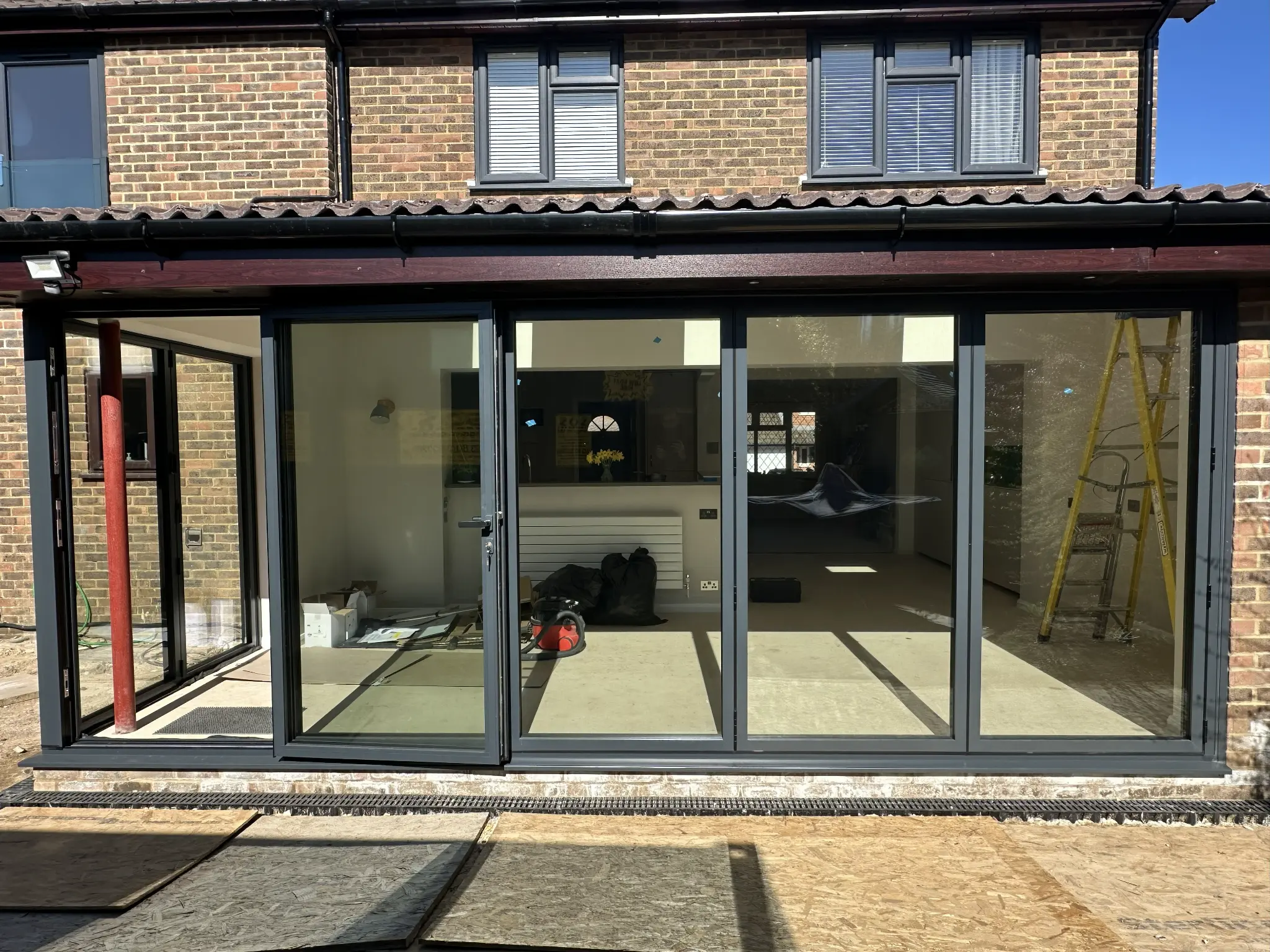
Bifold doors, also known as folding or concertina doors, consist of multiple panels that fold back on themselves, stacking neatly at one or both ends of the opening. This mechanism allows for an almost 100% clear opening, effectively blurring the lines between your home and garden. When fully open, the panels are tucked away, creating an uninterrupted transition.
- Pros: Maximised opening, dramatic 'wall of glass' effect when closed, excellent for entertaining.
- Cons: Panels stack, taking up space internally or externally; frames can be thicker due to the folding mechanism, potentially reducing glass area when closed.
Sliding Doors: Sleek and Minimalist
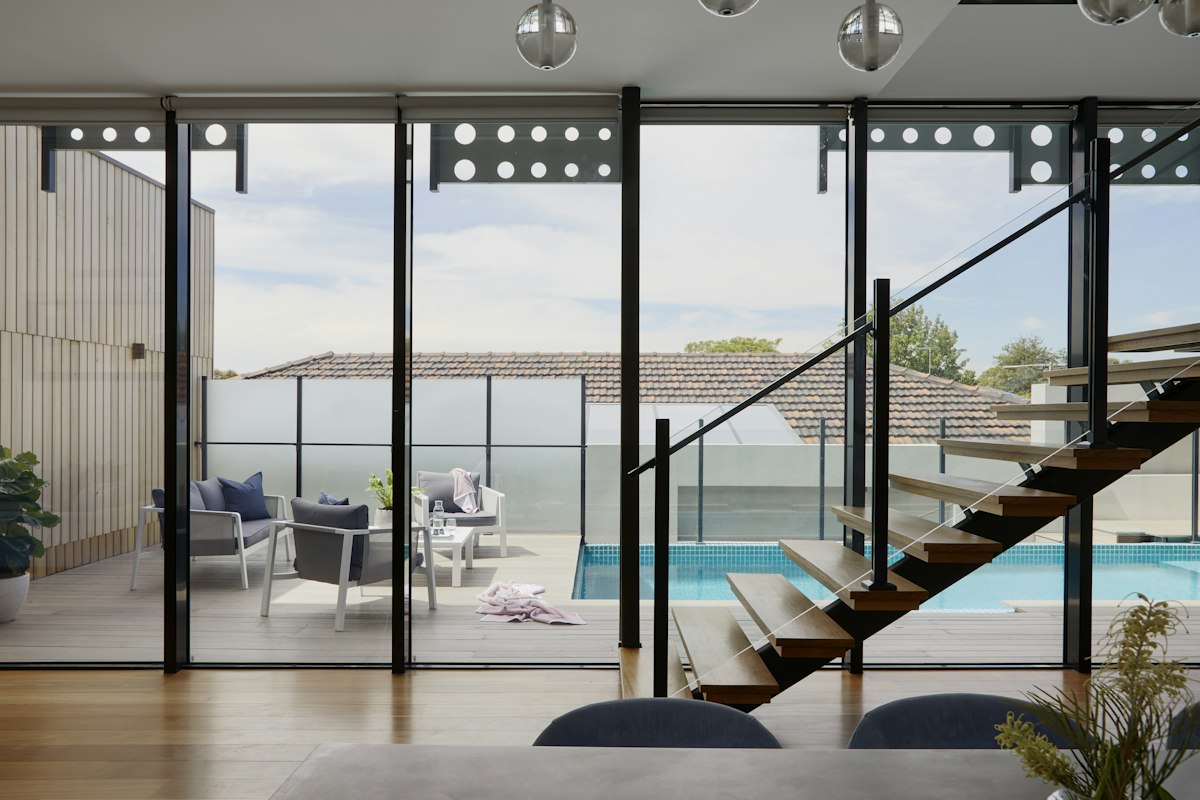
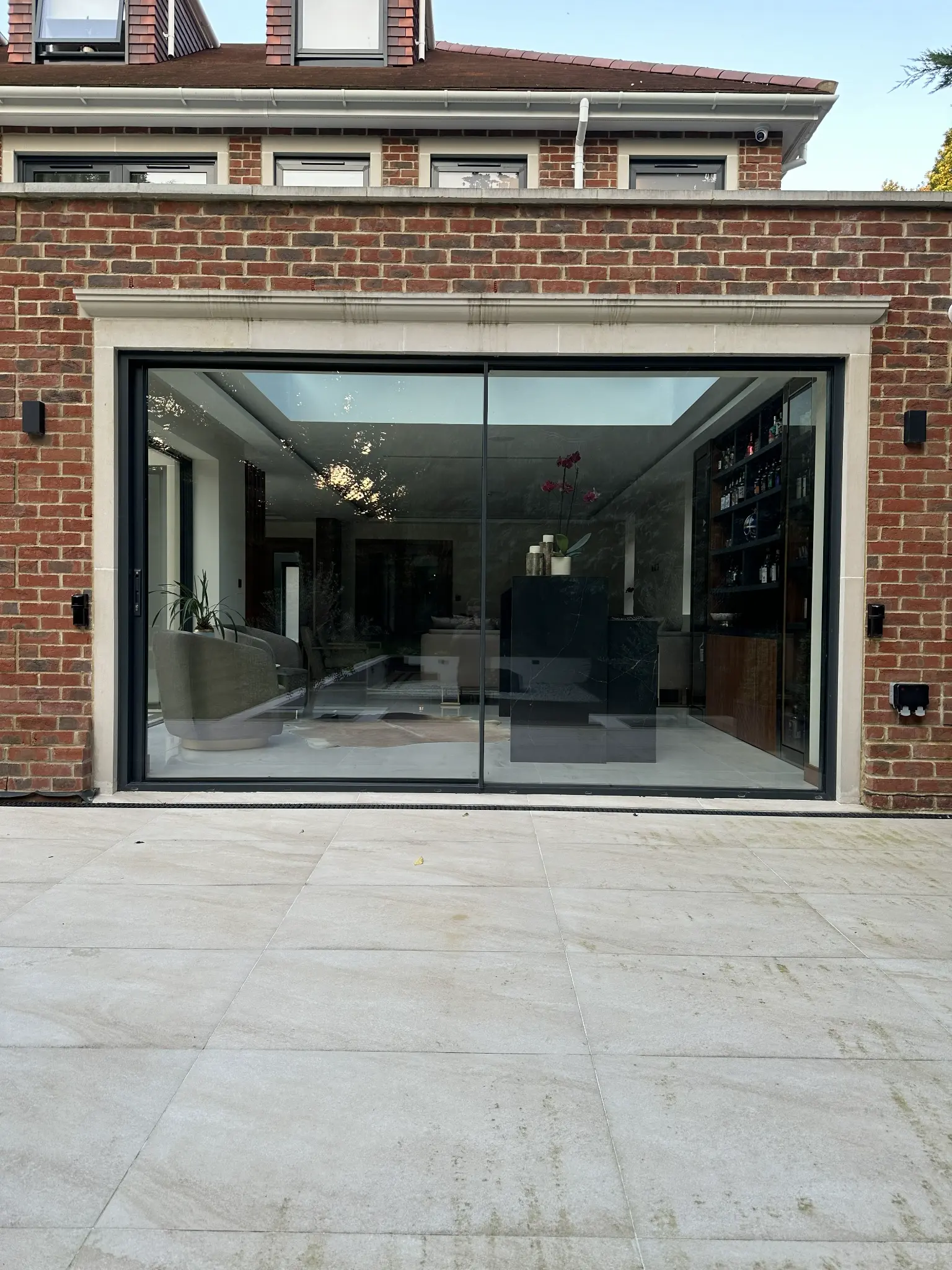
Sliding doors, particularly modern lift-and-slide or inline sliding systems, feature large glass panels that glide horizontally along a track. Typically, one panel slides behind another fixed panel, meaning a portion of the opening will always remain covered by a glass panel. However, multi-track systems can allow for larger clear openings, with panels stacking behind each other.
- Pros: Very large individual glass panes, minimal frame sightlines (especially with slim-frame designs), panels don't intrude on living space when open, ideal for tight spaces.
- Cons: Never a 100% clear opening (typically 50-75% depending on configuration), can feel less 'open' than bifolds.
Performance and Specifications: Thermal Efficiency, Security, and Durability
Beyond aesthetics, the practical performance of your chosen door system is paramount, especially in the UK's varied climate. Key considerations include thermal efficiency, security, and the durability of materials and mechanisms.
Thermal Efficiency and U-Values
In the UK, compliance with Building Regulations Part L (Conservation of Fuel and Power) is crucial for any new or replacement glazing. The thermal performance of windows and doors is measured by their U-value, which indicates how well a component prevents heat from escaping. A lower U-value signifies better insulation.
For new build dwellings, the maximum U-value for windows and doors is 1.2 W/m²K. For replacement windows and doors in existing dwellings, this value is 1.4 W/m²K.
- Bifold Doors: Modern bifold systems typically achieve U-values between 1.4 W/m²K and 1.0 W/m²K, often using thermally broken aluminium frames and high-performance double or triple glazing. The multiple frames and seals inherent in their design can sometimes make achieving extremely low U-values more challenging than with large fixed panes.
- Sliding Doors: Due to their larger individual glass panels and fewer intersecting frames, high-quality sliding doors, particularly lift-and-slide systems, can often achieve excellent U-values, frequently ranging from 1.3 W/m²K down to 0.8 W/m²K with triple glazing. The larger glass-to-frame ratio contributes to this.
Pro Tip
Always request the specific U-value for the exact door system and glazing configuration you are considering. Do not rely on generic 'up to' figures. Ensure it meets or exceeds the current Building Regulations Part L requirements for your project type (new build or replacement).
Security Features
Both bifold and sliding doors are significant entry points to your home, so robust security is non-negotiable. Modern systems incorporate advanced locking mechanisms and toughened glass to deter intruders.
- Bifold Doors: Typically feature multi-point locking systems on lead doors and intermediate panels, shoot bolts, and anti-lift pins. The hinges are often internal or designed to be tamper-proof. Glass should be at least toughened safety glass, and laminated glass can offer enhanced security.
- Sliding Doors: Often employ multi-point hook locks or claw locks that engage with the frame, along with anti-lift devices to prevent panels from being dislodged from their tracks. The large glass panes are usually toughened or laminated. Look for doors tested to PAS 24 or Secured by Design standards for reassurance.
Durability and Materials
The lifespan and maintenance of your doors will largely depend on the material and quality of components.
- Aluminium: The most popular choice for both bifold and sliding doors due to its strength, durability, low maintenance, and ability to be thermally broken. It allows for slim sightlines and comes in a vast array of powder-coated finishes.
- Timber: Offers a natural, warm aesthetic but requires more maintenance (painting/staining) and can be more expensive. Modern engineered timber systems offer good thermal performance.
- uPVC: A more budget-friendly option, but generally offers thicker frames and can have a shorter lifespan than aluminium or timber. Thermal performance can be good, but aesthetic options might be more limited.
Practical Considerations and Costs
Beyond the technical specifications, several practical factors will influence your decision, including installation requirements, maintenance, and, of course, the overall cost.
Ease of Operation and Maintenance
- Bifold Doors: Operate on a track system with rollers. High-quality systems will glide smoothly, but cheaper ones can be stiff. Regular cleaning of tracks is essential to prevent debris from hindering operation.
- Sliding Doors: Modern lift-and-slide systems are incredibly smooth and easy to operate, even with very large, heavy panels. Inline sliders are also straightforward. Maintenance is generally low, primarily involving track cleaning.
Threshold Options
Both door types offer various threshold options, from standard to flush. A flush threshold creates a seamless transition between inside and out, minimising trip hazards. However, it requires careful detailing for drainage and weatherproofing, especially in exposed locations.
Space Requirements
- Bifold Doors: When open, the folded panels stack either internally or externally. Consider the space this stack will occupy and ensure it doesn't obstruct pathways or garden features.
- Sliding Doors: Panels slide parallel to each other, so they don't protrude into your living space or garden. This makes them ideal for smaller patios or balconies.
Cost Comparison
It's challenging to give exact figures as prices vary widely based on size, material, glazing, hardware, and supplier. However, some general observations can be made:
- Bifold Doors: Often perceived as a premium product, and their intricate mechanism can lead to higher manufacturing costs. Prices generally start from around £1,000 - £1,500 per linear metre, excluding installation.
- Sliding Doors: Can sometimes be more cost-effective than bifolds, especially for very wide openings where fewer, larger panels are used. However, high-end slim-frame or lift-and-slide systems can be equally, if not more, expensive than bifolds. Prices might start from £800 - £1,200 per linear metre.
Installation costs will be additional and can vary significantly depending on the complexity of the opening, structural work required, and location.
UK Building Regulations and Compliance
Any significant alteration to your home, including the installation of new or replacement doors, will likely fall under UK Building Regulations. It is essential to ensure your chosen doors and their installation comply.
Key Regulations to Consider:
- Part L (Conservation of Fuel and Power): As discussed, U-values are critical. Ensure your doors meet the 1.2 W/m²K (new build) or 1.4 W/m²K (replacement) standard.
- Part F (Ventilation): New doors should not compromise the existing ventilation strategy. Trickle vents are often required, especially in new builds or extensions, unless alternative background ventilation is provided.
- Part K (Protection from Falling, Collision and Impact): Glazing in critical locations (e.g., within 800mm of floor level, or in and around doors) must be safety glass (toughened or laminated) to prevent injury from breakage.
- Part B (Fire Safety): For certain applications, particularly in flats or multi-storey buildings, fire resistance might be a consideration.
It is always advisable to consult with your local Building Control Body or a qualified architect/builder before commencing work. They can advise on specific requirements for your project and ensure proper certification upon completion.
Enhanced Natural Light
Both door types maximise daylight, reducing the need for artificial lighting and creating brighter, more inviting interiors.
Improved Indoor-Outdoor Flow
Seamlessly connect your living spaces with your garden or patio, perfect for entertaining and enjoying warm weather.
Increased Property Value
Modern, high-performance glazing can significantly enhance the appeal and market value of your home.
Panoramic Views
Enjoy uninterrupted vistas of your garden or surrounding landscape, even when the doors are closed.
Bifold vs Sliding Doors: At a Glance
| Feature | Bifold Doors | Sliding Doors |
|---|---|---|
| Clear Opening | Up to 100% | Typically 50-75% (multi-track can be more) |
| Frame Sightlines | Thicker due to multiple panels and folding mechanism | Slimmer, especially with large panes; minimal vertical interruption |
| Space Intrusion | Panels stack, taking up space internally or externally | Panels slide parallel, no intrusion into living space |
| U-Value Range (typical) | 1.4 - 1.0 W/m²K | 1.3 - 0.8 W/m²K (often better with large glass areas) |
| Security | Multi-point locks, shoot bolts, anti-lift pins | Multi-point hook/claw locks, anti-lift devices, PAS 24 options |
| Aesthetics (Open) | Creates a completely open 'wall' | Retains some glazed area, but offers large clear sections |
| Aesthetics (Closed) | More vertical frames, 'concertina' look | Expansive, uninterrupted glass panes, sleek |
| Maintenance | Track cleaning, occasional hinge lubrication | Track cleaning, generally low |
| Cost (per linear metre, guide) | £1,000 - £1,500+ | £800 - £1,200+ (high-end can be more) |
Making Your Decision
The choice between bifold and sliding doors ultimately depends on your specific priorities, the architectural style of your home, and your budget.
- Choose bifold doors if your primary goal is to achieve the largest possible clear opening, creating a truly seamless transition to your outdoor space for entertaining and a dramatic 'wow' factor. Be mindful of the space required for the stacked panels.
- Opt for sliding doors if you prioritise expansive, uninterrupted views, minimal frame sightlines, and a sleek, contemporary aesthetic. They are also ideal for situations where space for stacking panels is limited, and their thermal performance can often be superior.
Consider visiting showrooms to experience both types of doors in person. Operate them, feel the quality of the hardware, and visualise how they would integrate with your home's design and your lifestyle. Discuss your requirements with reputable suppliers and installers, ensuring they provide detailed specifications, U-value certificates, and confirm compliance with all relevant UK Building Regulations.
At Shard AG, we specialise in high-performance architectural glazing solutions for UK homeowners. We offer a comprehensive range of premium bifold and sliding door systems, meticulously crafted from thermally broken aluminium to meet the highest standards of thermal efficiency, security, and aesthetics. Our expert team can guide you through the selection process, providing detailed technical advice and ensuring your chosen doors not only enhance your home's beauty but also comply fully with current UK Building Regulations. Contact us today to discuss your project and discover how we can help transform your living spaces.
Explore Our Products
Discover how Shard Architectural Glazing can transform your home with our premium glazing solutions:
Ready to Transform Your Home?
Get in touch with our expert team for a free consultation and personalised quote. We'll help you choose the perfect glazing solution for your property.