

Designing Open Plan Living with Architectural Glazing
Explore how architectural glazing transforms open plan spaces in UK homes. Learn about structural considerations, thermal performance (Part L 2022), soundproofing, and practical design choices.

Shard Architectural Glazing
30 January 2026
Explore how architectural glazing transforms open plan spaces in UK homes. Learn about structural considerations, thermal performance (Part L 2022), soundproofing, and practical design choices.
📋In This Article
Designing Open Plan Living with Architectural Glazing
Open plan living remains one of the most sought-after design trends for UK homeowners, offering flexibility, increased natural light, and a better connection between internal and external spaces. When integrating open plan designs, architectural glazing plays a pivotal role, moving beyond simple windows and doors to become structural and aesthetic elements.
However, achieving a successful open plan layout requires careful consideration of several technical factors, including structural support, thermal efficiency, and compliance with UK Building Regulations, particularly concerning energy performance and fire safety.
The Appeal of Open Plan Glazing
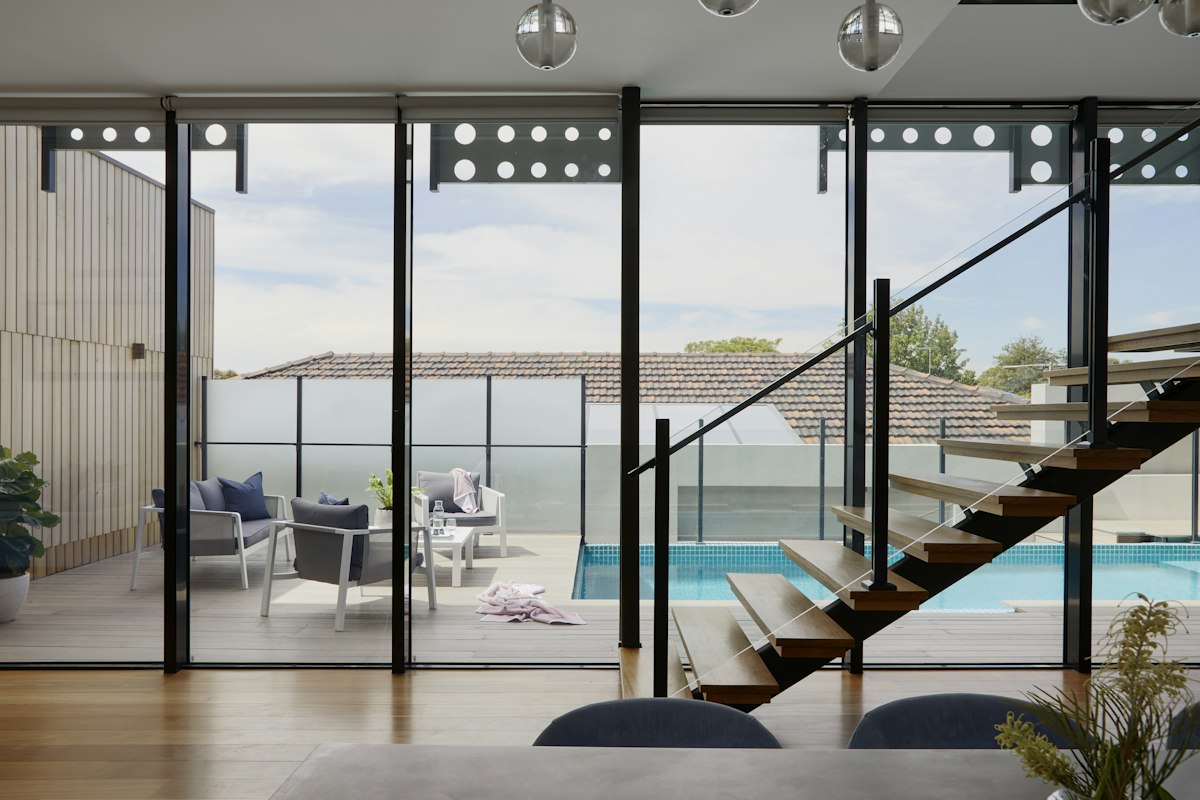
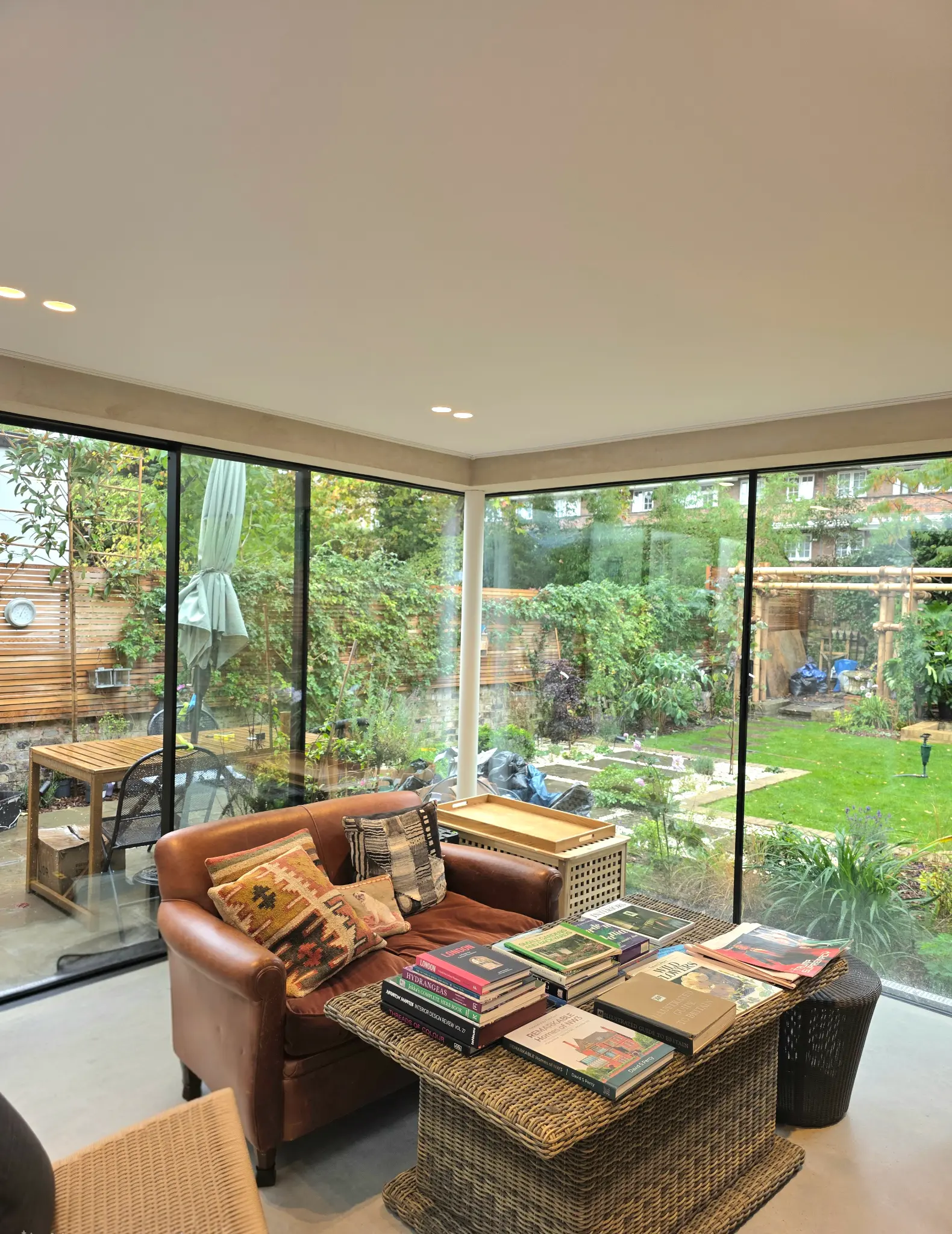
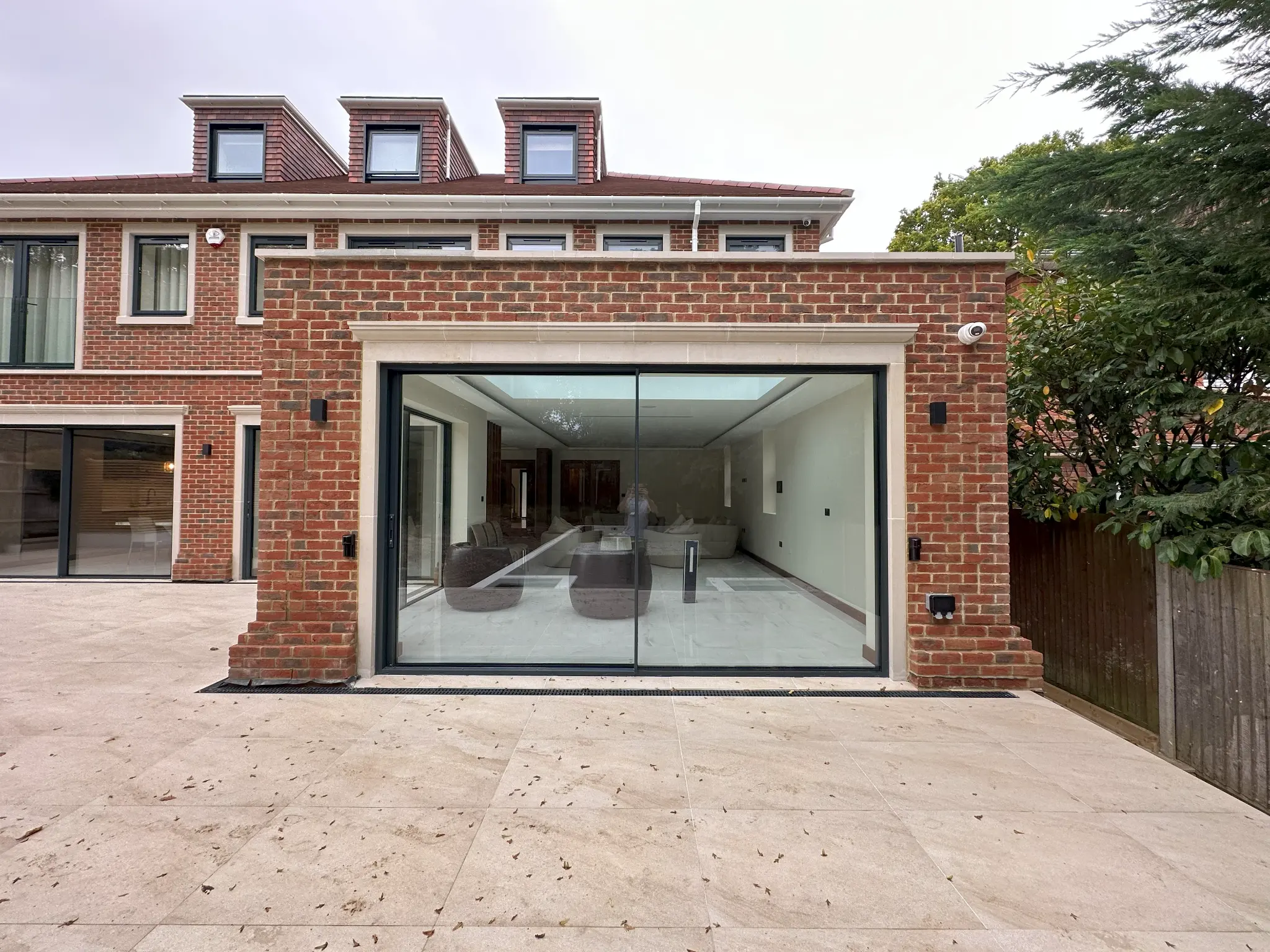
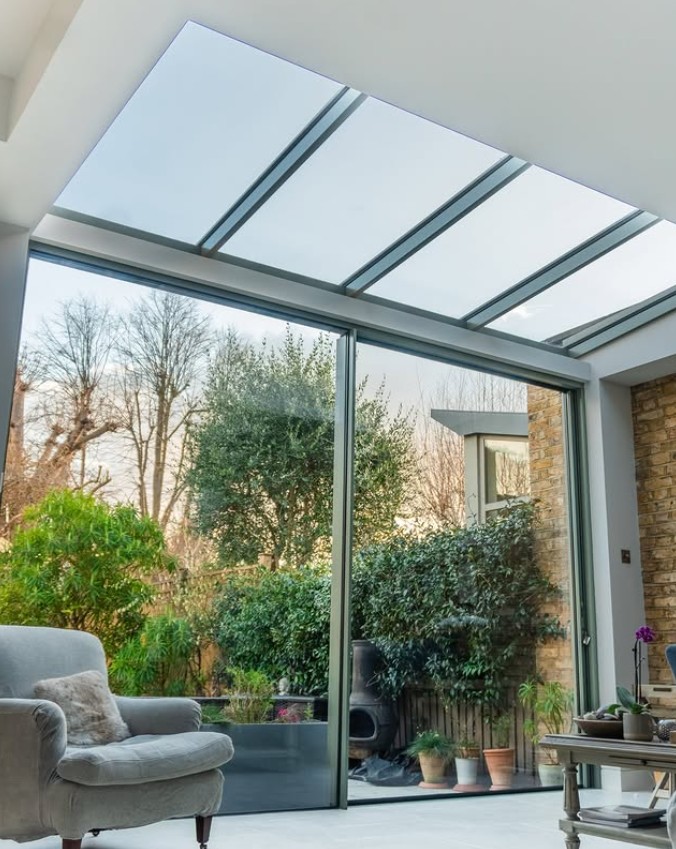
The primary driver for using extensive glazing in open plan areas is the maximisation of natural light (daylighting). Large sliding doors, bifold doors, and structural glass walls blur the boundaries between the home and the garden, creating a feeling of spaciousness that conventional walls cannot match. This integration is crucial for modern living, enhancing mood and reducing the reliance on artificial lighting during the day.
Maximising Natural Light and Space
- Visual Continuity: Glazing provides uninterrupted sightlines, making smaller homes feel significantly larger.
- Daylight Factor: Deep plan spaces, common in extensions, benefit immensely from large glazed elements, ensuring light penetrates far into the room.
- Aesthetic Value: Minimalist frame systems, like slimline aluminium or frameless structural glass, complement contemporary interior design.
Structural and Technical Considerations
Removing internal walls to create an open plan space often requires replacing load-bearing elements with robust steel supports (RSJs or goalposts). When integrating large glazed systems, the structural requirements become even more complex.
Integrating Steelwork and Glazing
For expansive openings, especially those featuring bifold or large sliding doors, the lintel or beam above must be adequately sized to carry the load of the structure above. Crucially, the glazing system itself must be integrated seamlessly with the steelwork, often requiring bespoke flashing and weatherproofing details to prevent thermal bridging and water ingress.
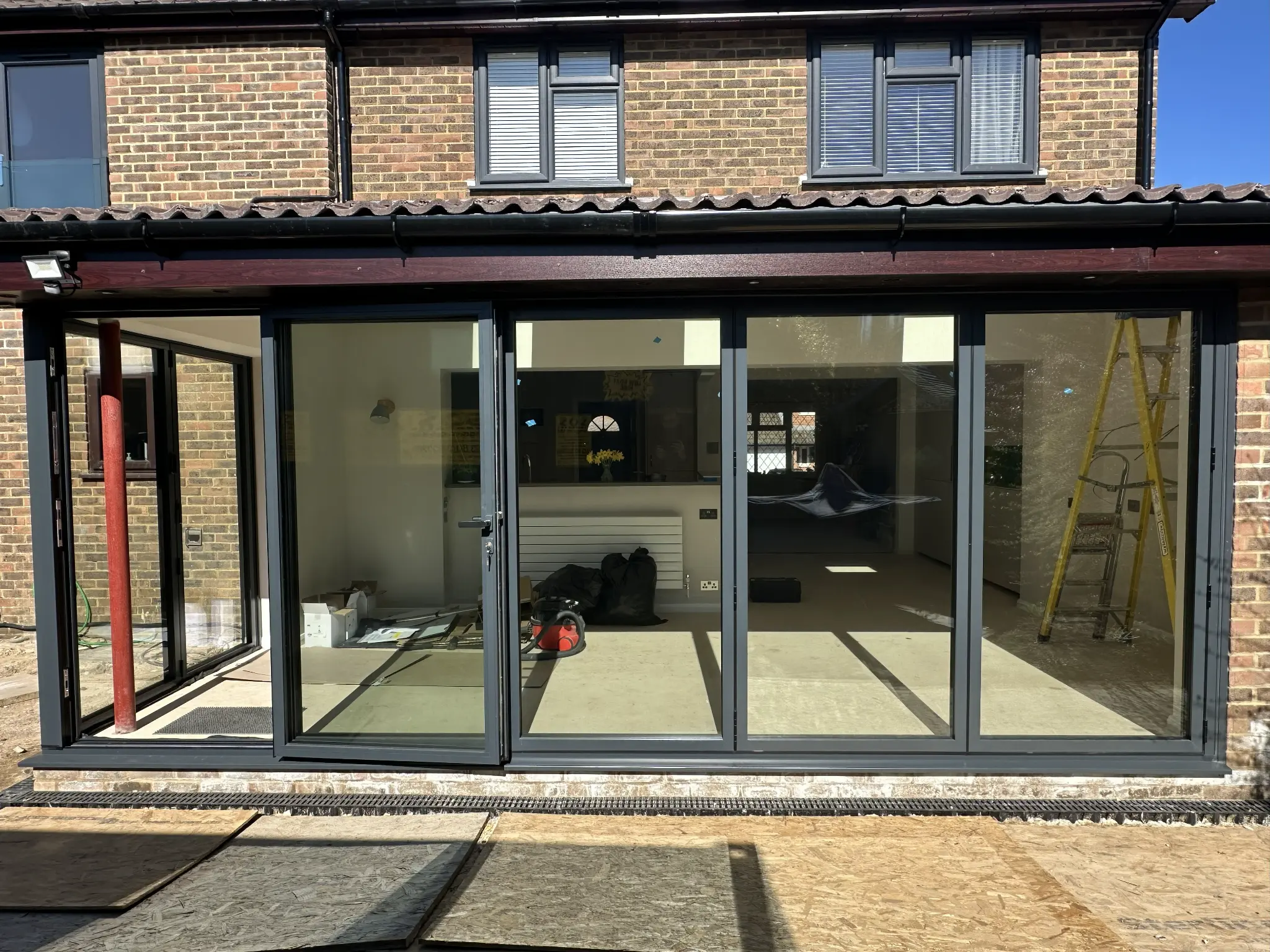
Pocket doors or slide-and-stack systems are popular choices as they allow the entire wall opening to be cleared. However, these require adequate space within the adjacent wall cavity or external pocket to house the stacked panels, which must be factored into the initial architectural design.
Thermal Performance and Part L Compliance (England 2022)
In the UK, all new extensions or major renovations must comply with Part L (Conservation of Fuel and Power) of the Building Regulations. Since glazing is inherently less insulating than a solid wall, balancing light gain with heat loss is critical.
The current standard (Part L 2022) sets stringent requirements for thermal performance. For new build elements, the maximum U-value for windows and glazed doors is 1.2 W/m²K. For replacement elements, the maximum is 1.4 W/m²K. Achieving these values with large expanses of glass necessitates high-specification components:
- Low-Emissivity (Low-E) Coatings: These microscopic coatings on the glass reflect internal heat back into the room while allowing solar gain in.
- Warm Edge Spacers: Replacing traditional aluminium spacers with composite materials reduces heat transfer at the perimeter of the sealed unit.
- Inert Gas Filling: Filling the cavity between the panes with Argon or Krypton gas improves insulation significantly compared to air.
Pro Tip
When designing a large glazed area, consider the total area of glazing relative to the floor area. If the total glazed area exceeds 25% of the floor area of the extension, you must demonstrate compliance through a SAP (Standard Assessment Procedure) calculation for the entire dwelling, proving that the overall energy performance meets or exceeds the target fabric energy efficiency rate.
Material Choices and Specification
The frame material significantly impacts both the aesthetic and the thermal performance of the glazing system.
Aluminium vs. Timber vs. uPVC
| Feature | Aluminium | Timber (Hardwood/Engineered) | uPVC |
|---|---|---|---|
| Aesthetics | Slim sightlines, modern, minimalist. | Traditional, warm, natural finish. | Versatile, thicker frames. |
| Thermal Performance | Excellent (requires thermal break). Easily meets 1.2 W/m²K. | Very good (naturally insulating). Requires maintenance. | Good, cost-effective. Limited scope for very large panes. |
| Durability & Maintenance | High durability, low maintenance (powder coating). | High durability if maintained; requires periodic re-painting/staining. | Good durability, virtually maintenance-free. |
| Cost (Relative) | High | High | Moderate |
Acoustic Performance
Open plan spaces are inherently noisier, and large glazed areas facing busy roads or urban environments can exacerbate this. Specifying laminated glass (where a thin layer of PVB is bonded between two panes) significantly improves sound dampening. Varying the thickness of the glass panes (e.g., 6mm outer, 10mm inner) also disrupts sound waves, enhancing acoustic insulation.
Fire Safety and Ventilation Requirements
When creating open plan layouts, particularly those that bypass traditional protected hallways, fire safety becomes a critical concern under Building Regulations Part B (Fire Safety).
Compartmentation and Escape Routes
In a traditional two-storey home, the staircase and hallway provide a protected route to an exit. Removing doors to create a large open plan ground floor can compromise this route. Building Control will often require compensating features:
- Sprinkler Systems: Often required in open plan layouts spanning three or more storeys, or in very large open plan ground floors where the protected route is lost.
- Mains-Powered Smoke Detection: Interlinked detectors must be installed on every floor level.
- Escape Windows/Doors: All habitable rooms must have an escape route. Large glazed doors (bifolds or sliders) can serve as an escape route provided they are easily operable and meet minimum size requirements (e.g., 450mm clear opening width and height, and a maximum sill height of 1100mm).
Ventilation Strategy (Part F)
Open plan kitchens generate significant moisture and cooking smells. Adequate ventilation is mandatory under Part F. Large glazed doors can provide excellent purge ventilation, but mechanical extraction is essential. This typically involves high-capacity extractor fans (often integrated into cooker hoods) ducted externally, designed to meet the required flow rates for the volume of the open plan space.
Design Challenges and Mitigation
While open plan living with extensive glazing offers numerous benefits, homeowners must be aware of potential drawbacks.
Overheating (Solar Gain)
In the UK climate, solar gain is often welcomed in winter, but large south or west-facing glazed areas can lead to significant overheating in summer, making the space uncomfortable.
Mitigation Strategies:
- Solar Control Coatings: Specifying glass with a low Solar Factor (G-value) reduces the amount of heat energy transmitted into the building.
- External Shading: Brise soleil, external blinds, or deep roof overhangs (eaves) are highly effective at blocking high summer sun while allowing lower winter sun in.
- Internal Blinds/Curtains: While less effective than external shading, high-quality internal shading can help manage light and heat.
Privacy and Security
Extensive glazing naturally reduces privacy. This must be balanced with the desire for light and views, especially in overlooked urban areas. Solutions include switchable smart glass, integrated blinds within the sealed unit, or strategic landscaping to screen the property.
Enhanced Connection
Seamlessly link internal living spaces with the garden or external patio, improving flow for entertaining and daily life.
Increased Property Value
Modern, light-filled, open plan spaces are highly desirable and often contribute positively to the resale value of a property.
Optimised Daylighting
Reduce reliance on artificial lighting, saving energy and creating healthier, more pleasant living environments.
Flexible Layouts
Glazed partitions or sliding screens can be used within the open plan area to provide temporary separation when required, such as creating a quiet study zone.
Choosing the Right Glazing Partner
The success of an open plan glazing project hinges on precise measurement, expert installation, and compliance with strict UK standards. Given the structural implications and the necessity of meeting Part L and Part B regulations, selecting a specialist supplier and installer is crucial.
A reputable partner should offer comprehensive technical support, including U-value calculations, structural detailing advice, and documentation necessary for Building Control approval.
At Shard AG, we specialise in high-performance architectural glazing systems tailored for complex open plan renovations and extensions across the UK. Our focus is on delivering systems that not only meet the aesthetic demands of modern design but also exceed current thermal and structural performance standards, ensuring your project is compliant, efficient, and beautiful for years to come. We provide detailed technical specifications and work closely with architects and builders to ensure seamless integration from concept to completion.
Explore Our Products
Discover how Shard Architectural Glazing can transform your home with our premium glazing solutions:
Ready to Transform Your Home?
Get in touch with our expert team for a free consultation and personalised quote. We'll help you choose the perfect glazing solution for your property.