

Designing Open Plan Living with Architectural Glazing
Explore the technical and design considerations for integrating architectural glazing into open plan layouts. Understand UK Building Regulations, thermal performance, and practical design choices.

Shard Architectural Glazing
31 January 2026
Explore the technical and design considerations for integrating architectural glazing into open plan layouts. Understand UK Building Regulations, thermal performance, and practical design choices.
📋In This Article
Designing Open Plan Living with Architectural Glazing
Open plan living remains one of the most sought-after design trends in UK residential architecture. The desire for light, space, and seamless transitions between interior and exterior areas is often achieved through the strategic use of architectural glazing. However, creating a successful, compliant, and comfortable open plan space requires careful consideration of structural integrity, thermal performance, and adherence to UK Building Regulations.
The Appeal of Open Plan Glazing
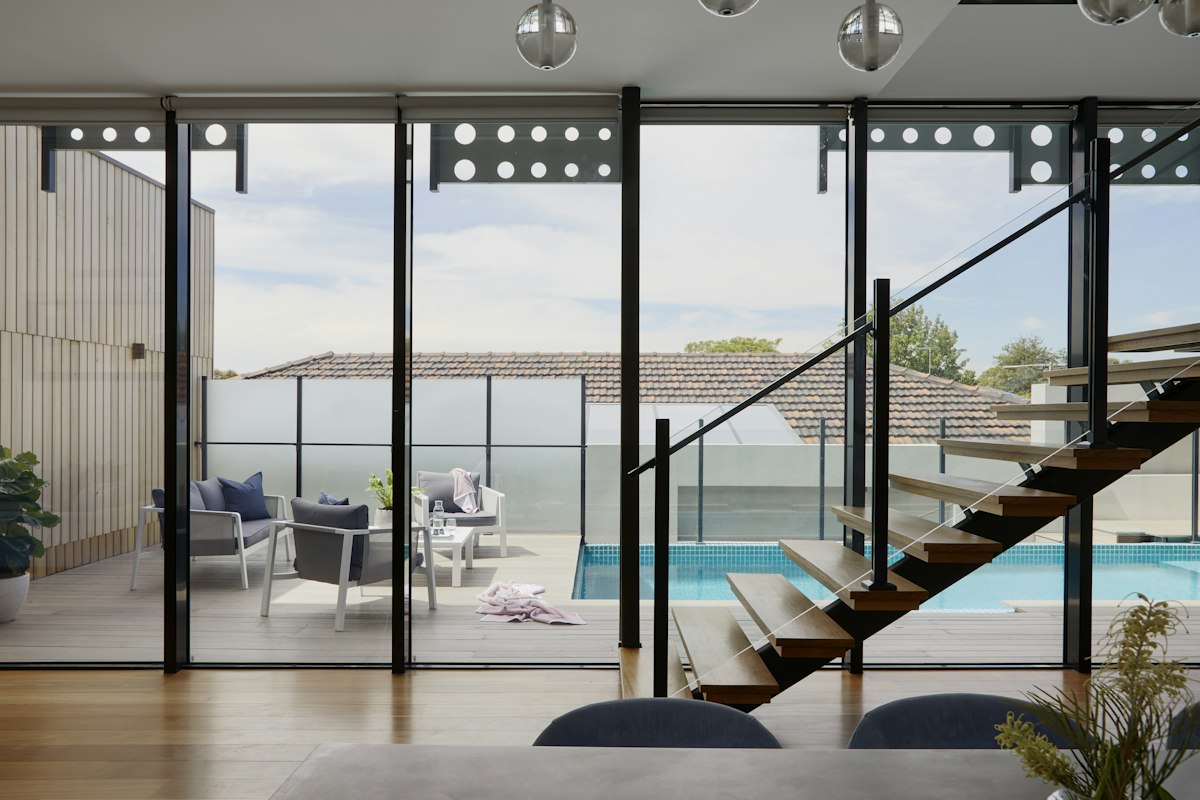
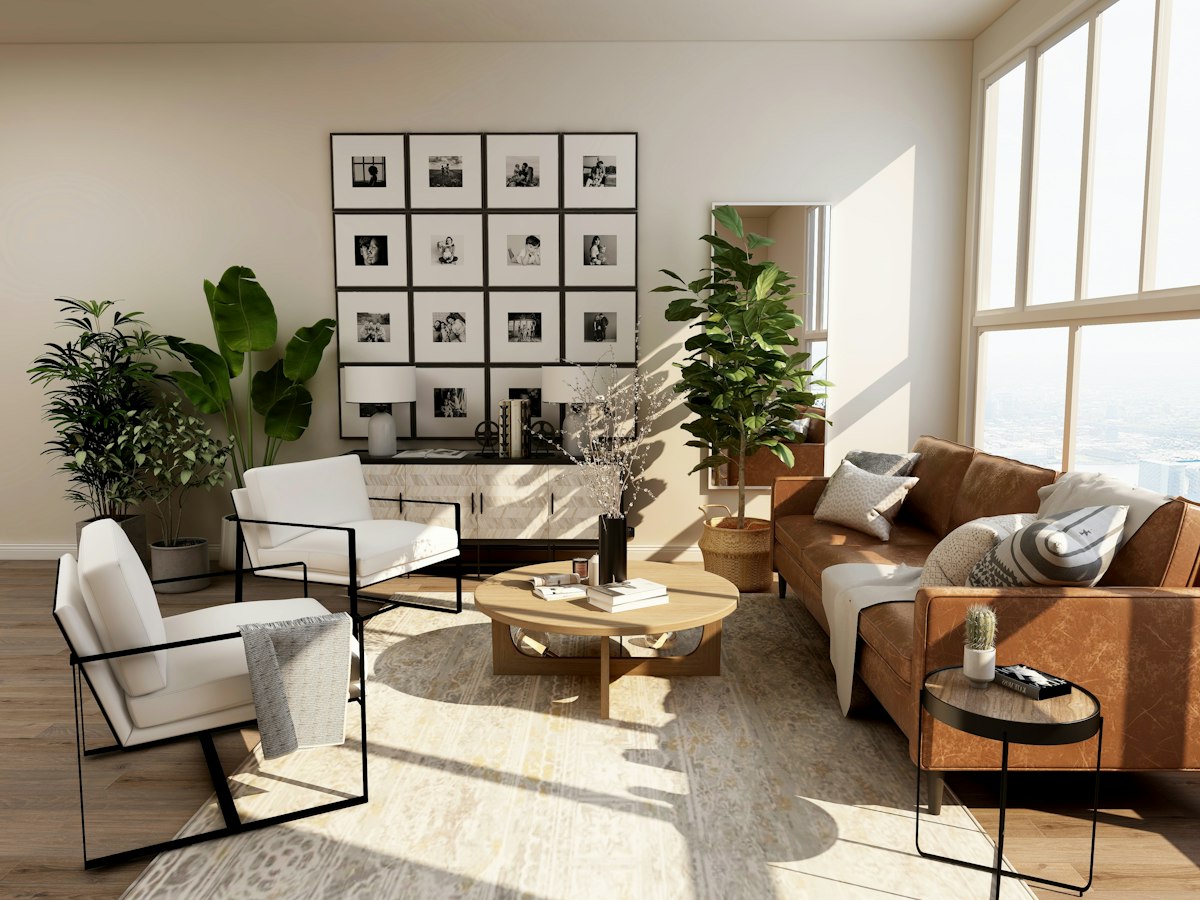
Integrating large expanses of glass—such as sliding doors, bifold doors, or structural glass walls—into an open plan layout fundamentally changes how a home feels and functions. This design approach maximises natural daylight penetration, reducing the reliance on artificial lighting and enhancing the sense of well-being.
Defining Open Plan Living
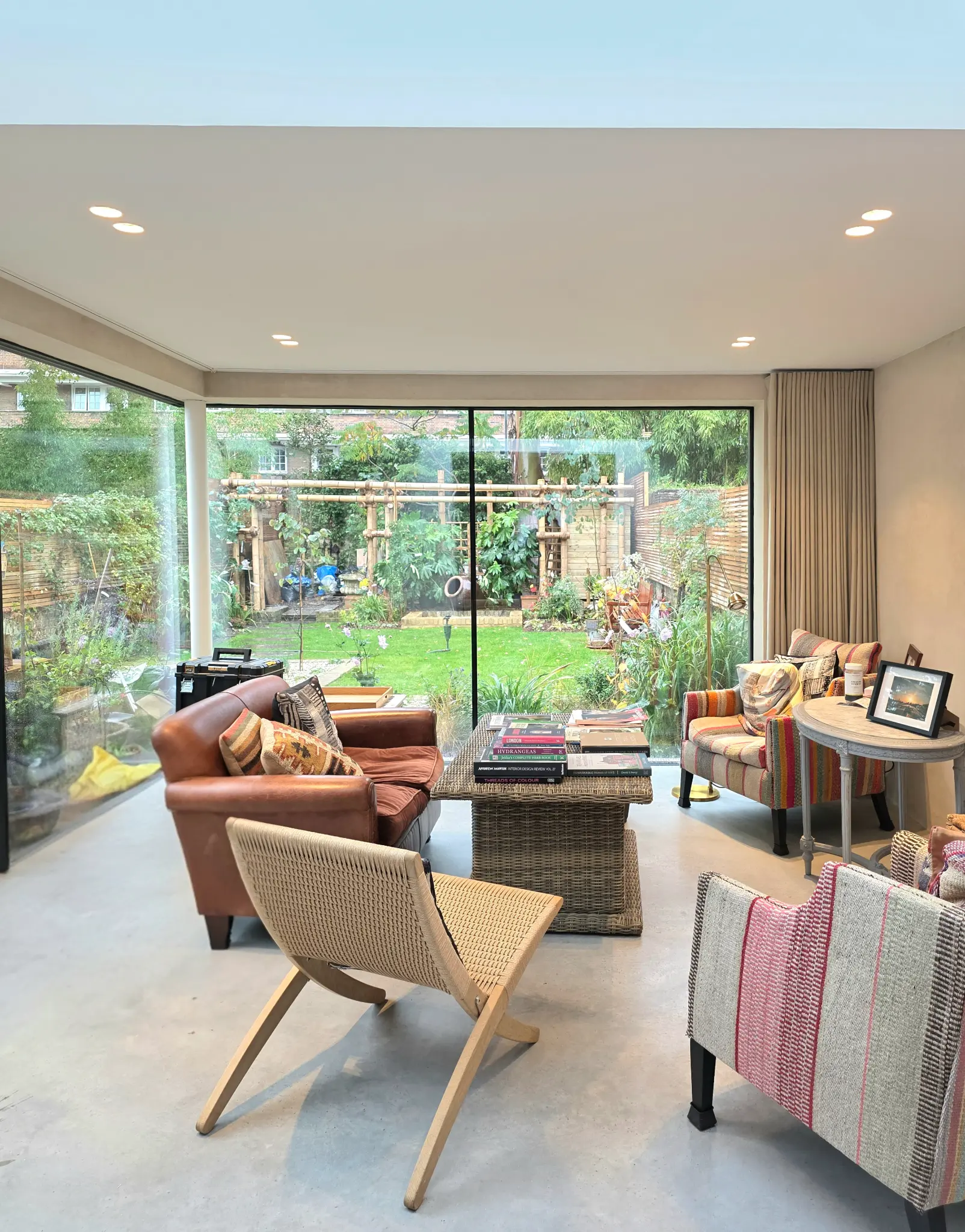
Traditionally, open plan refers to combining two or more functional areas (e.g., kitchen, dining, living room) into a single, undivided space. When combined with large glazing elements, the concept extends further, blurring the boundary between the internal living area and the garden or patio. This is particularly effective in rear extensions where the entire back wall might be replaced by floor-to-ceiling glass.
Enhanced Natural Light
Large glazing panels dramatically increase daylight factor, making the space feel larger and brighter, even on overcast days.
Improved Flow and Space
Seamless transitions, especially with flush thresholds, connect the interior to the garden, effectively extending the usable living area.
Aesthetic Modernity
Minimalist frames and expansive glass offer a contemporary, high-end finish that significantly boosts the visual appeal of the property.
Better Social Interaction
Combining kitchen and living areas encourages family interaction and makes entertaining guests simpler and more inclusive.
Thermal Performance and UK Building Regulations (Part L)
The primary technical challenge when designing open plan areas with extensive glazing is maintaining thermal efficiency. Large glass surfaces inherently lose heat faster than insulated walls. Meeting the requirements of Part L (Conservation of Fuel and Power) of the UK Building Regulations (2022 edition for England) is mandatory for extensions and new builds.
U-Values Explained
The U-value measures how quickly heat passes through a structure (W/m²K). A lower U-value signifies better insulation and thermal performance. For open plan designs, the U-value requirements for the glazing itself are critical, but so is the overall balance of the extension.
- Replacement Windows/Doors: The U-value must be 1.4 W/m²K or better.
- New Build/New Openings: The U-value must be 1.2 W/m²K or better.
However, simply meeting the individual component U-value is often not enough if the glazed area exceeds 25% of the total floor area of the new extension. In such cases, you must use the Target Fabric Energy Efficiency Standard (TFEE) or the Limiting Fabric Parameter (LFP) approach. This means compensating for the heat loss through the glass by significantly improving the insulation standards of the opaque elements (walls, floor, and roof).
Pro Tip
When planning an extension with glazing exceeding 25% of the floor area, ensure your architect or designer uses the 'Whole Dwelling Calculation' method (SAP or similar) to prove compliance. You may need to specify triple glazing (U-values below 1.0 W/m²K) or increase insulation in other areas significantly (e.g., walls to 0.15 W/m²K instead of the required 0.18 W/m²K) to offset the heat loss from the large glass panels.
Specific Insulation Requirements (2022 Part L England)
To put the glazing performance into context, here are the required U-values for opaque elements in extensions:
| Element | Minimum Standard U-Value (W/m²K) | Relevance to Open Plan Design |
|---|---|---|
| External Walls | 0.18 | Crucial for balancing heat loss against large glazed areas. |
| Floors | 0.18 | Essential for underfloor heating efficiency in open plan spaces. |
| Roofs (Flat or Pitched) | 0.15 | High insulation performance helps offset glazing heat loss. |
| New Windows/Doors | 1.2 | Standard required for new openings. |
Structural and Design Considerations
Removing internal walls to create an open plan space, particularly in older properties, requires careful structural engineering. When replacing a load-bearing wall with expansive glazing, the load must be transferred to a new supporting structure, typically a steel beam (RSJ).
Managing Load Transfer
The size and weight of large architectural glazing systems (especially sliding doors or structural glass) mean that the supporting lintels and surrounding structure must be robust. A structural engineer must calculate the precise dimensions and specifications of the steelwork required to ensure the integrity of the building above.
- Pocket Doors: If opting for sliding doors that disappear into a cavity wall ('pocket doors'), the structural requirements become more complex, often needing goalpost steelwork to support the load around the recess.
- Point Loading: Ensure that the foundations beneath the new steel supports are adequate to handle the concentrated load transferred by the beam ends.
Overheating and Solar Gain
While maximizing light is desirable, excessive solar gain (the greenhouse effect) can make large, south or west-facing open plan spaces uncomfortable during summer months. Mitigation strategies are essential:
1. Solar Control Glazing: Specify glass with a low Solar Factor (g-value). This allows visible light through but reflects a high percentage of solar heat. A g-value between 0.30 and 0.40 is often recommended for large south-facing openings.
2. External Shading: Implementing external shading solutions, such as brise soleil, deep roof overhangs, or external blinds, stops the sun's heat before it enters the building envelope.
3. Ventilation: Incorporate strategically placed opening vents or high-level windows (clerestory glazing) to allow for effective cross-ventilation and purging of hot air.
Practical Glazing Options for Open Plan Spaces
The choice of glazing system significantly impacts the functionality and aesthetic of the open plan area.
Bifold Doors
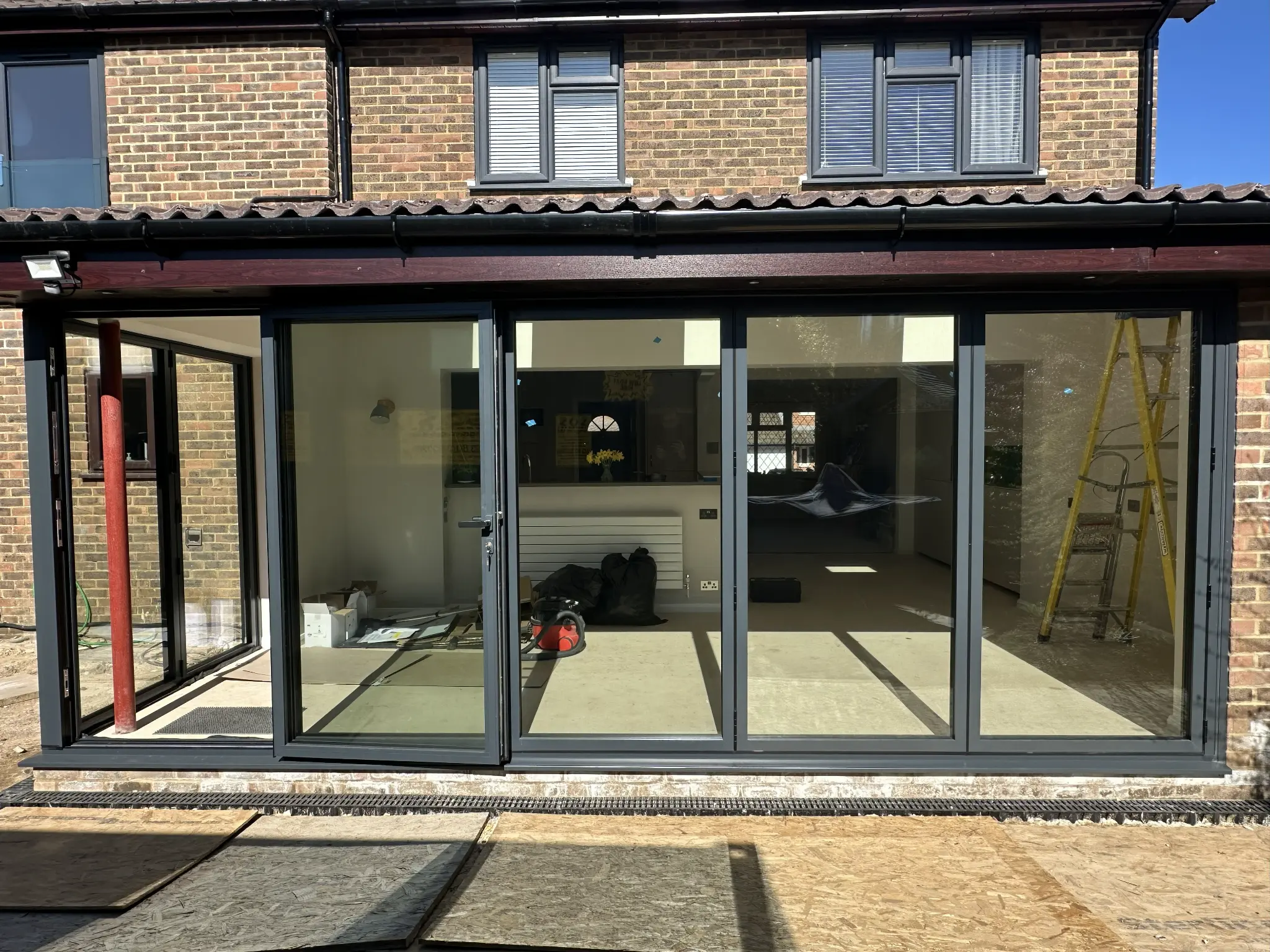
Bifold doors fold back concertina-style, allowing for a near 90% opening. They are excellent for creating a true connection to the garden. However, they require space for the folded stack of panels and the frame profiles tend to be thicker than slimline sliding systems.
Sliding Doors (Lift & Slide or Inline)
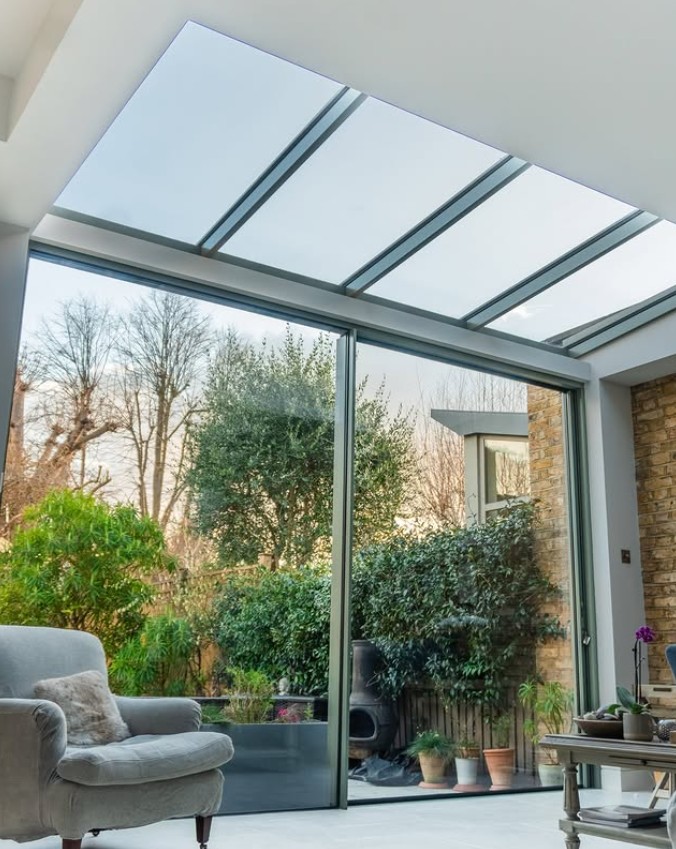
Modern sliding doors, particularly those with slimline aluminium frames (often 20mm sightlines or less), offer maximum uninterrupted views when closed. They typically open 50% or 66% of the aperture, depending on the configuration (two or three tracks). They are ideal where minimal visual obstruction is paramount.
Structural Glass (Fixed Panels)
For areas where views are prioritised over access, fixed structural glass panels can be used. These often achieve the lowest U-values and the cleanest aesthetic, as the glass is bonded directly into the structure with minimal framing visible.
Threshold Design
Achieving a seamless transition requires a flush threshold. While aesthetically pleasing, flush thresholds require careful detailing to ensure they remain weather-tight and comply with drainage requirements, preventing water ingress into the open plan space. It is essential that the drainage channel is correctly specified and installed beneath the external paving.
Fire Safety and Acoustic Considerations (Part B & Part E)
While less common in single-storey extensions, removing walls in multi-storey homes or flats to create open plan layouts introduces specific fire safety concerns (Part B).
Fire Safety
In a traditional layout, walls and doors compartmentalise the home, slowing the spread of fire and smoke. Removing these barriers requires compensatory measures, such as:
- Enhanced Smoke Detection: Installing interconnected smoke and heat alarms throughout the open plan area and circulation spaces.
- Protected Escape Routes: Ensuring that there remains a clear, protected route of escape, particularly from upper floors.
- Mist Systems: In complex or very large open plan areas, an automated fire suppression system (like a domestic sprinkler or mist system) may be required by Building Control to achieve compliance.
Acoustics (Part E)
In an open plan space, sound reverberation can be a significant issue, especially with hard surfaces like polished concrete floors and large glass walls. Glazing itself can also be a weak point for external noise ingress.
To manage acoustics:
- Internal Mitigation: Incorporate soft furnishings, rugs, acoustic panels, or textured wall coverings to absorb sound waves and reduce echo.
- External Noise Reduction: If the property is near a busy road, specify acoustic laminate glass. This glass uses a specialised interlayer to significantly dampen external noise transmission, ensuring the open plan space remains a tranquil environment.
Choosing the Right Partner
Designing and installing large-scale architectural glazing within an open plan context is a highly specialised field. It requires coordination between structural engineers, architects, builders, and the glazing supplier to ensure all regulatory, thermal, and aesthetic requirements are met.
We understand the complexities involved in achieving both stunning aesthetics and rigorous compliance. At Shard AG, we specialise in delivering high-performance, bespoke aluminium and structural glazing systems designed specifically for the demands of modern UK open plan living. Our expertise ensures that your project not only maximises light and space but also exceeds the latest thermal performance standards required by Part L of the Building Regulations.
Explore Our Products
Discover how Shard Architectural Glazing can transform your home with our premium glazing solutions:
Ready to Transform Your Home?
Get in touch with our expert team for a free consultation and personalised quote. We'll help you choose the perfect glazing solution for your property.