Maximising Light & Efficiency: Glazing for Your UK Home Extension
Discover expert tips for choosing the right glazing for your UK home extension. Understand Building Regulations, U-values, and design considerations for a bright, efficient space.

Shard Architectural Glazing
3 February 2026
Discover expert tips for choosing the right glazing for your UK home extension. Understand Building Regulations, U-values, and design considerations for a bright, efficient space.
📋In This Article
Extending your home is an exciting project, offering the chance to create more space, enhance natural light, and improve the overall flow and functionality of your property. A critical element in any modern extension, particularly in the UK, is the glazing. The right choice of windows, doors, and specialist glass structures can transform a new space, making it feel open, bright, and seamlessly connected to the outdoors. However, getting it wrong can lead to issues with thermal performance, privacy, and even Building Regulations compliance. This guide will walk you through the essential considerations for glazing your UK home extension.
Understanding UK Building Regulations for Glazing
Before diving into design choices, it's crucial to understand the regulatory framework governing thermal performance in UK home extensions. Part L (Conservation of Fuel and Power) of the Building Regulations sets stringent standards for the energy efficiency of new and extended buildings. These regulations are designed to minimise heat loss and ensure your home is as energy-efficient as possible.
Key Thermal Performance Metrics: U-values
The primary metric for measuring heat loss through building elements, including glazing, is the U-value. A U-value indicates how effective a material is as an insulator. The lower the U-value, the better the insulation and the less heat will escape through that element. U-values are measured in Watts per square metre Kelvin (W/m²K).
For home extensions in England, the current (2022) Building Regulations Part L specify the following maximum U-values for new thermal elements:
- Walls: 0.18 W/m²K
- Floors: 0.18 W/m²K
- Roofs: 0.15 W/m²K
- Windows/Doors (New Build): 1.2 W/m²K
- Windows/Doors (Replacement): 1.4 W/m²K
It's important to note that for extensions, the overall thermal performance of the new extension must meet these standards. This means that while individual glazing elements might have a U-value slightly higher than the target for new build windows (e.g., a large bi-fold door might be 1.4 W/m²K), the total area-weighted average U-value of all thermal elements in the extension must comply. Your architect or Building Control officer will typically calculate this to ensure compliance. Always aim for the lowest U-values you can reasonably achieve within your budget, as this will result in lower energy bills and a more comfortable living space.
Pro Tip
When comparing glazing products, always ask for the 'whole product U-value' (Uw), not just the glass U-value (Ug). The frame significantly impacts overall thermal performance, and the Uw value provides a more accurate representation of the window or door's efficiency.

Choosing the Right Glazing Types for Your Extension
The variety of glazing options available today is vast, each offering different aesthetic and functional benefits. Consider how you want to use the space, the amount of light you desire, and the connection to the outdoors.
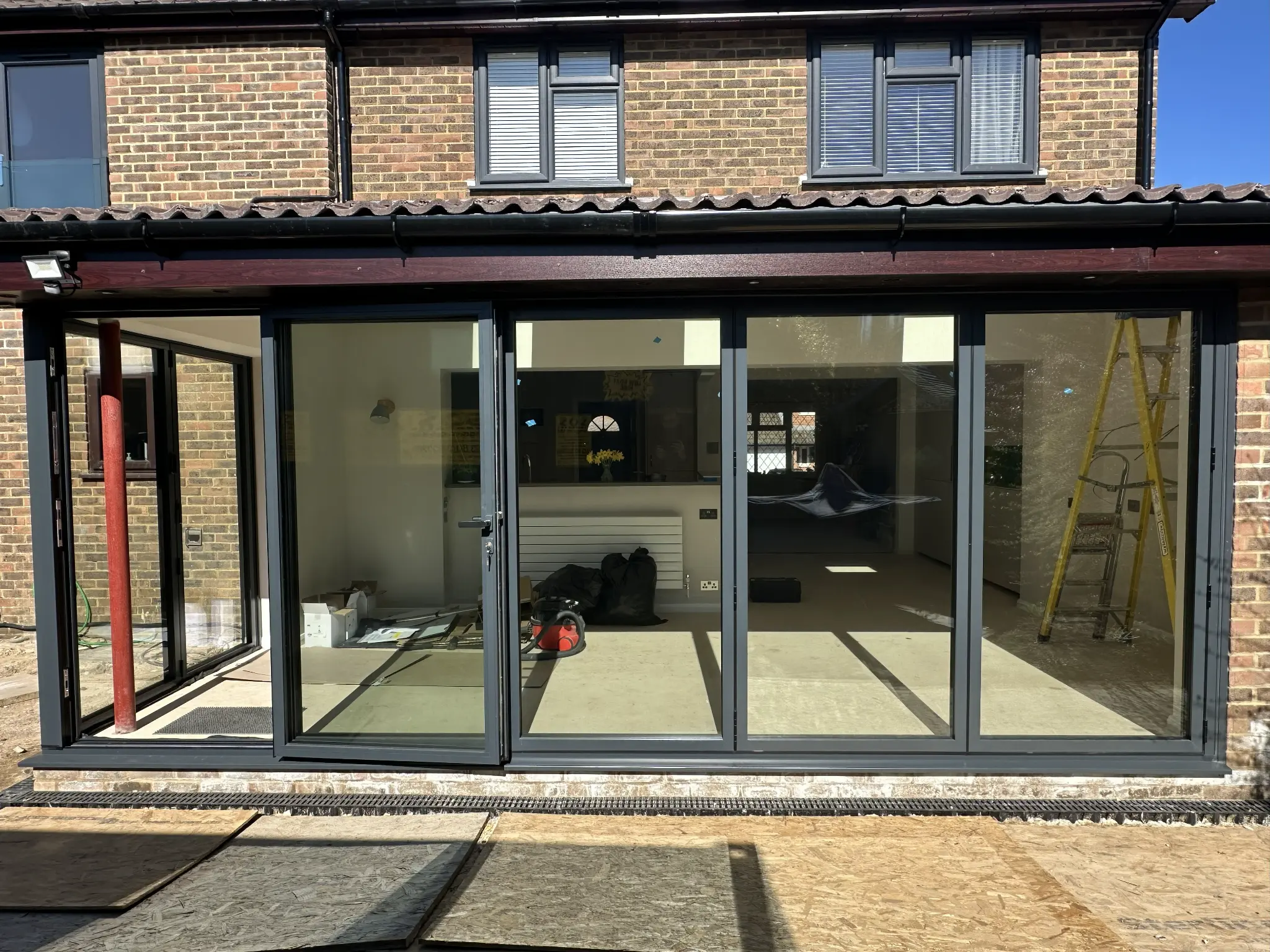
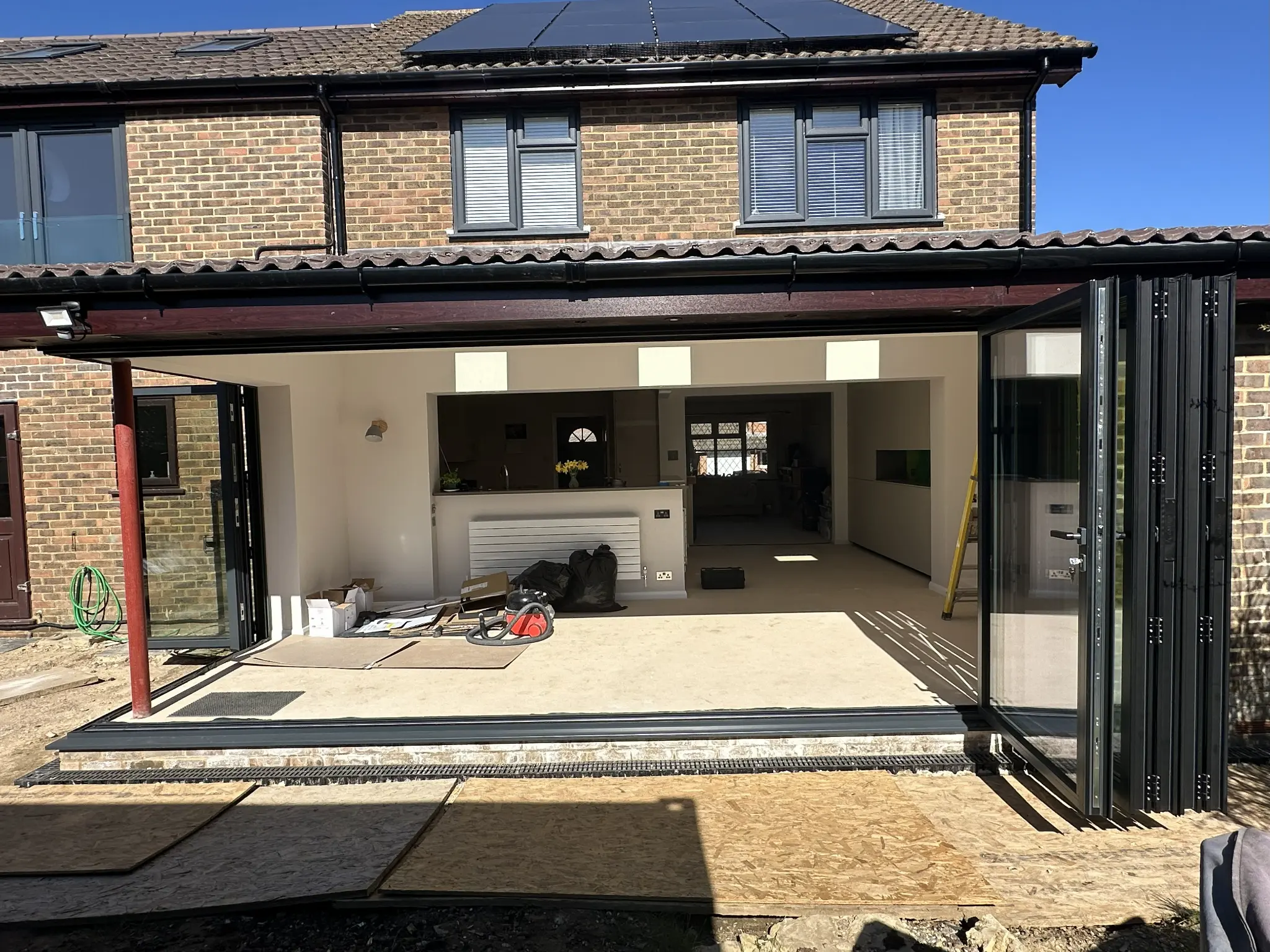
1. Bi-fold Doors
- Description: Consisting of multiple panels that fold back concertina-style, bi-fold doors create a wide, unobstructed opening, seamlessly connecting indoor and outdoor spaces.
- Pros: Excellent for maximising open space, abundant natural light, modern aesthetic.
- Cons: Can be expensive, requires space for panels to fold, potential for slightly higher U-values than fixed panes if not specified correctly.
- Technical: Available in aluminium, timber, or uPVC. Look for slim sightlines and thermally broken frames for optimal performance. Typical U-values range from 1.3 to 1.6 W/m²K.
2. Sliding Doors (Patio Doors)
- Description: Large glass panels that slide horizontally, often allowing for expansive views with fewer vertical interruptions than bi-folds.
- Pros: Maximises views, saves space as panels slide within their frame, can accommodate very large individual panes.
- Cons: Does not offer a 100% clear opening like bi-folds (one panel always overlaps another).
- Technical: Often available as 'lift and slide' systems for smoother operation and better weather sealing. U-values are often comparable to or slightly better than bi-folds, typically 1.2 to 1.5 W/m²K.
3. Fixed Pane Glazing (Picture Windows)
- Description: Non-opening windows designed purely for light and views.
- Pros: Excellent thermal performance (lowest U-values), maximum light ingress, uninterrupted views, cost-effective.
- Cons: No ventilation, can lead to overheating if south-facing without solar control glass.
- Technical: Can achieve very low U-values (e.g., 0.8 to 1.2 W/m²K) due to minimal frame components and superior sealing. Ideal for large, dramatic architectural statements.
4. Rooflights and Lanterns
- Description: Glazing integrated into the roof structure, allowing light to flood in from above. Rooflights are typically flat or slightly pitched, while lanterns are raised, often pyramid or rectangular structures.
- Pros: Brings light deep into the room, creates a sense of height and drama, ideal for north-facing extensions or areas without wall space for windows.
- Cons: Can contribute to overheating (especially south-facing), potential for glare, cleaning can be challenging.
- Technical: Must meet specific U-value requirements (often lower than vertical glazing for new builds, though for extensions they typically fall under the overall roof U-value of 0.15 W/m²K, or a specific rooflight U-value of 1.5 W/m²K if it's considered part of the 'building fabric'). Look for self-cleaning glass and integrated blinds/shading.
Glazing Specifications and Performance
Beyond the type of opening, the specification of the glass itself is paramount for comfort and efficiency.
Double vs. Triple Glazing
- Double Glazing: Two panes of glass separated by a sealed cavity, typically filled with an inert gas like Argon. This is the standard for most new glazing in the UK.
- Triple Glazing: Three panes of glass with two cavities. Offers superior thermal and acoustic performance compared to double glazing, achieving significantly lower U-values.
Enhanced Thermal Efficiency
Triple glazing can reduce heat loss by an additional 30-50% compared to high-performance double glazing, leading to lower heating bills.
Superior Acoustic Insulation
The extra pane and cavity provide better sound dampening, ideal for properties near busy roads or noisy areas.
Improved Comfort
Minimises cold spots near windows and reduces condensation, creating a more comfortable internal environment.
Increased Security
The additional pane of glass adds another layer of resistance against potential intruders.
While triple glazing offers clear advantages, it comes at a higher cost and is heavier, potentially requiring stronger frames and structural support. For most UK extensions, high-performance double glazing with a low-emissivity (low-e) coating and warm edge spacers will comfortably meet Building Regulations.
Specialist Glass Coatings and Treatments
- Low-E Coatings: A microscopically thin, transparent coating on one of the glass surfaces that reflects heat back into the room, significantly improving thermal performance. Essential for modern glazing.
- Solar Control Glass: Designed to reduce the amount of solar heat gain, preventing overheating in large, south-facing glazed areas. It still allows plenty of light through.
- Self-Cleaning Glass: Features a special coating that reacts with sunlight to break down organic dirt, which is then washed away by rain. Useful for hard-to-reach rooflights or large panes.
- Acoustic Glass: Uses laminated panes or different glass thicknesses to reduce external noise transmission.
- Obscure/Privacy Glass: Textured or frosted glass for areas requiring privacy, such as bathrooms or overlooked side extensions.
Design Considerations for Optimal Glazing
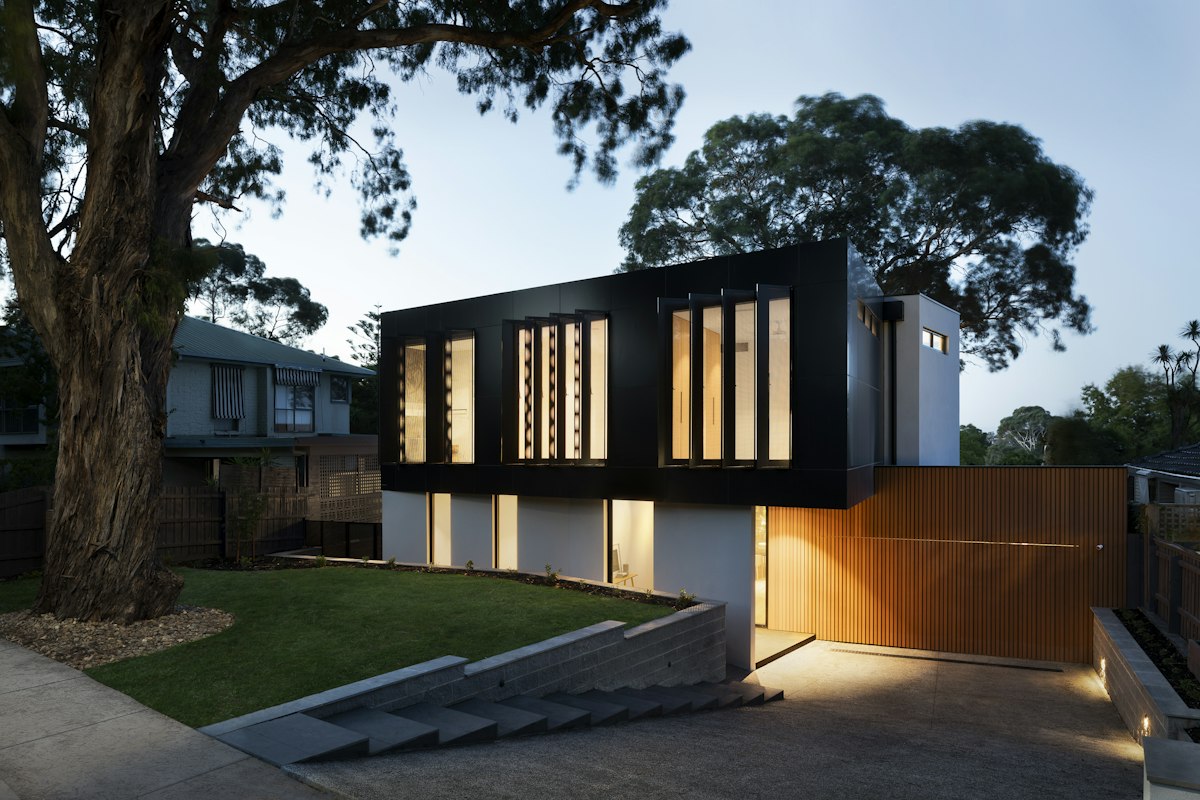
Integrating glazing effectively into your extension design requires careful thought about orientation, shading, and aesthetics.
Orientation and Solar Gain
The direction your extension faces will heavily influence your glazing choices:
- South-facing: Benefits from abundant natural light but is prone to overheating. Consider solar control glass, external shading (e.g., overhangs, pergolas), or internal blinds.
- North-facing: Receives consistent, cooler light. Large glazing areas here are less likely to cause overheating but may benefit from triple glazing to minimise heat loss. Rooflights are excellent for bringing light into north-facing spaces.
- East/West-facing: Can experience strong morning or afternoon sun. Adjustable shading solutions are often beneficial.
Frame Materials
The frame material impacts aesthetics, durability, maintenance, and thermal performance:
| Feature | Aluminium | uPVC | Timber | Timber-Aluminium Composite |
|---|---|---|---|---|
| Aesthetics | Modern, slim sightlines, wide colour range | Versatile, various styles, can mimic timber | Natural, traditional, warm aesthetic | Modern exterior, natural interior |
| Thermal Performance | Excellent (thermally broken frames) | Good (multi-chambered profiles) | Good (natural insulator) | Excellent (combines best of both) |
| Durability/Maintenance | Very high, low maintenance | High, low maintenance | High, requires regular maintenance (painting/staining) | Very high, low maintenance exterior |
| Cost | Mid-to-High | Low-to-Mid | Mid-to-High | High |
| Typical U-value (frame only) | 0.8 - 1.5 W/m²K | 1.0 - 1.6 W/m²K | 1.0 - 1.5 W/m²K | 0.8 - 1.2 W/m²K |
Security
Large glazed areas can be perceived as a security risk. Ensure all glazing, especially doors and ground-floor windows, meets robust security standards. Look for multi-point locking systems, laminated or toughened glass, and adherence to PAS 24 (Publicly Available Specification) or Secured by Design accreditation.
Planning Permission and Building Control
While many extensions can be built under Permitted Development rights, larger or more complex designs may require full planning permission. Regardless, all extensions must comply with Building Regulations. It is advisable to engage with your local Building Control body early in the design process. They will review your plans to ensure compliance with structural integrity, fire safety, ventilation, and crucially, energy efficiency (Part L). Failure to comply could lead to issues when selling your property or even enforcement action.
Installation and Aftercare
The performance of even the best glazing can be compromised by poor installation. Always choose an experienced installer with a proven track record. Look for accreditations such as FENSA or CERTASS for window and door installers, which ensure compliance with Building Regulations and offer consumer protection. Proper sealing, insulation around frames, and correct fitting are vital for achieving the stated U-values and preventing draughts or leaks.
After installation, regular cleaning and maintenance of frames and moving parts will ensure longevity and smooth operation. Check seals periodically for signs of degradation.
Choosing the right glazing for your home extension is a significant decision that impacts aesthetics, comfort, and energy efficiency. By understanding the technical aspects, Building Regulations, and design considerations, you can make informed choices that will enhance your home for years to come. For expert advice and a range of high-performance glazing solutions tailored to your extension project, consider consulting with specialists in architectural glazing.
Explore Our Products
Discover how Shard Architectural Glazing can transform your home with our premium glazing solutions:
Ready to Transform Your Home?
Get in touch with our expert team for a free consultation and personalised quote. We'll help you choose the perfect glazing solution for your property.