


Rooflights & Skylights: The Ultimate UK Homeowner's Guide
Unlock natural light and enhance your home's appeal with our comprehensive guide to rooflights and skylights. Learn about types, regulations, and benefits.

Shard Architectural Glazing
16 May 2026
Unlock natural light and enhance your home's appeal with our comprehensive guide to rooflights and skylights. Learn about types, regulations, and benefits.
📋In This Article
Rooflights & Skylights: The Ultimate UK Homeowner's Guide
Bringing natural light into your home can transform its ambiance, making spaces feel larger, brighter, and more inviting. For many UK homeowners, rooflights and skylights offer an exceptional solution, particularly in extensions, loft conversions, or rooms with limited wall space for traditional windows. This comprehensive guide will delve into everything you need to know about these illuminating architectural features, from types and benefits to crucial Building Regulations and installation considerations.
What Are Rooflights and Skylights? Understanding the Terminology
Often used interchangeably, the terms 'rooflight' and 'skylight' actually refer to slightly different products, though both serve the primary purpose of admitting natural light through a roof structure. Understanding the distinction can be helpful when discussing options with suppliers or architects.
- Skylight: Traditionally, a skylight is a window installed into the pitch of a roof, designed to be in line with the roof's surface. They are typically available in standard sizes and are often manually or electrically operable for ventilation. The term 'skylight' is widely recognised and often refers to products like Velux windows.
- Rooflight: A rooflight is a broader term that encompasses any glazed unit integrated into a roof structure. This can include flat rooflights (often called 'flat glass rooflights' or 'flat roof windows'), pyramid rooflights, lantern rooflights, and walk-on rooflights. Unlike traditional skylights, rooflights often protrude slightly from the roofline and can be custom-designed in various shapes and sizes to create a specific architectural statement. They are frequently used on flat roofs or low-pitch roofs, but can also be integrated into pitched roofs.
For the purpose of this guide, we will often use 'rooflight' as a general term, but will specify when discussing features unique to a particular type.
Types of Rooflights and Skylights for UK Homes
The variety of rooflights available means there's a solution for almost any architectural style or functional requirement. Here are the most common types:
Flat Rooflights
- Description: Designed for flat or very low-pitch roofs (typically 0-15 degrees), these are sleek, minimalist units that sit flush or slightly raised above the roof surface. They often feature a double or triple-glazed unit within an aluminium frame.
- Benefits: Maximise natural light, offer a contemporary aesthetic, excellent thermal performance.
- Considerations: Require a slight pitch for drainage (usually 3-5 degrees) to prevent water pooling.
Pitched Roof Windows (Traditional Skylights)
- Description: Installed within the slope of a pitched roof, these are the most common type for loft conversions and extensions with traditional roof structures. They come in various opening mechanisms: top-hung, centre-pivot, and fixed.
- Benefits: Excellent ventilation, integrate seamlessly with pitched roofs, wide range of sizes and finishes.
- Considerations: Can be harder to clean if very high, may require specific flashing kits for weatherproofing.
Lantern Rooflights
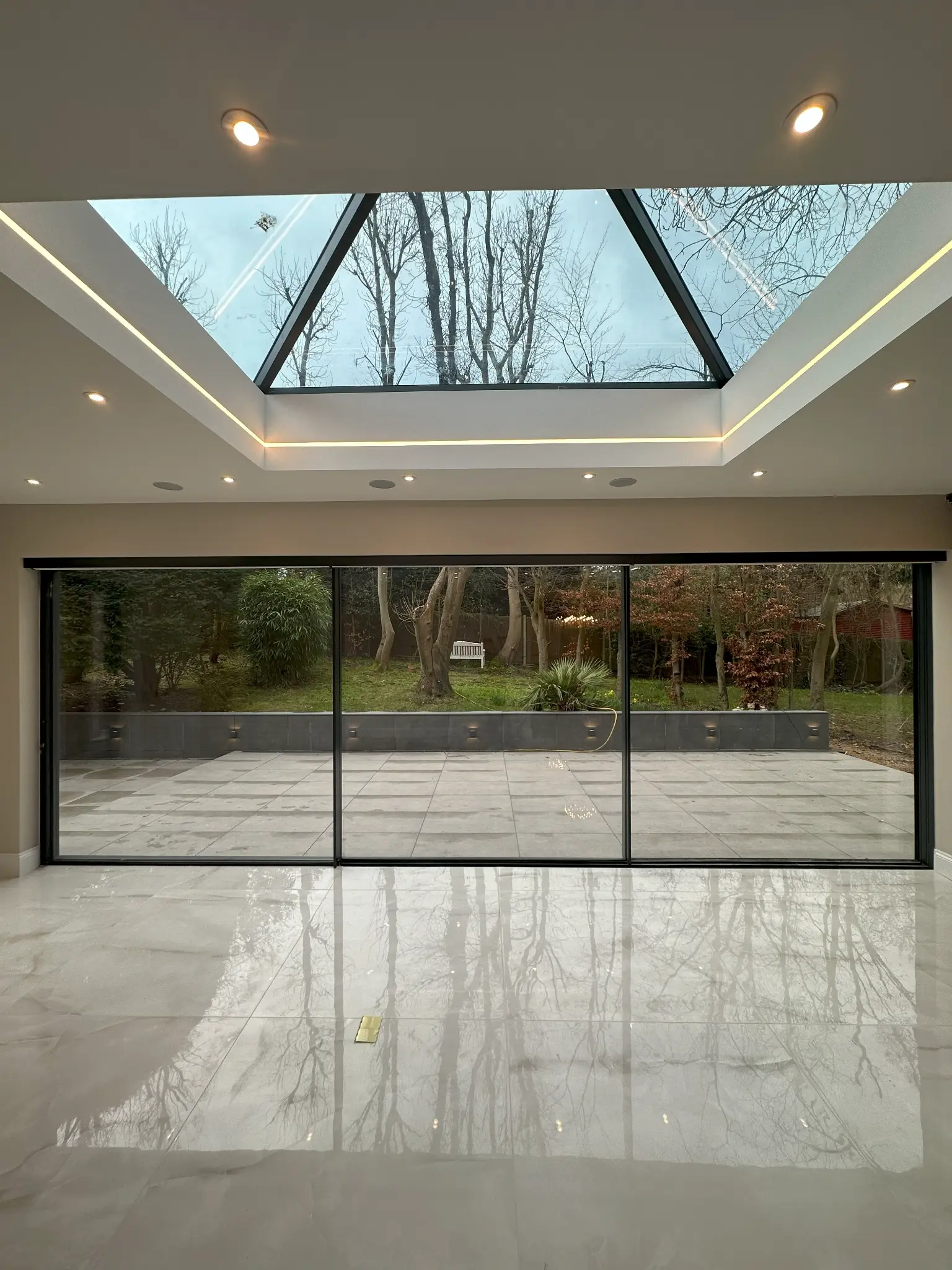
- Description: A more architectural statement, lantern rooflights are multi-faceted glazed structures that sit proud of a flat roof, creating a dramatic focal point. They resemble miniature conservatories on top of a roof.
- Benefits: Flood rooms with light, create a sense of grandeur and height, excellent for open-plan living areas.
- Considerations: More complex installation, higher cost, can have higher heat loss if not specified with high-performance glazing.
Walk-On Rooflights
- Description: Specifically engineered with reinforced glass to withstand foot traffic, these are ideal for terraces, balconies, or basements where light is needed from above.
- Benefits: Create unique architectural features, allow light into subterranean spaces, maintain usable outdoor space.
- Considerations: Specialist product, higher cost due to structural requirements, must meet stringent safety standards.
Access Rooflights
- Description: Designed to provide safe access to a flat roof, often for maintenance or as an escape route. They typically open wide, sometimes with gas struts for assistance.
- Benefits: Dual function of light and access, essential for certain building layouts.
- Considerations: Must meet specific Building Regulations for escape routes if applicable.
Pro Tip
When selecting a rooflight, consider the room's orientation. South-facing rooflights will provide abundant light but can lead to overheating in summer, making solar control glazing or integrated blinds a wise investment. North-facing rooflights offer consistent, diffused light, ideal for studios or offices.
Key Benefits of Installing Rooflights
Enhanced Natural Light
Rooflights bring up to three times more natural light into a room compared to vertical windows of the same size, significantly brightening dark spaces and reducing reliance on artificial lighting.
Improved Ventilation
Operable rooflights create a 'stack effect' – warm air rises and escapes through the rooflight, drawing cooler air in through lower windows. This provides efficient natural ventilation, especially beneficial in kitchens and bathrooms.
Aesthetic Appeal & Value
Modern rooflights offer sleek designs that can dramatically enhance the architectural appeal of your home, both inside and out. They are a desirable feature that can add significant market value to a property.
Energy Efficiency
With advanced glazing technology, contemporary rooflights offer excellent thermal performance, helping to retain heat in winter and reduce solar gain in summer. This can lead to lower energy bills and a more comfortable indoor environment.
UK Building Regulations and Technical Considerations
Installing rooflights is not simply a matter of cutting a hole in your roof. Several critical factors, particularly UK Building Regulations, must be carefully considered to ensure safety, energy efficiency, and compliance.
Thermal Performance (Part L)
One of the most important aspects is thermal performance, governed by Part L (Conservation of Fuel and Power) of the Building Regulations. This dictates the maximum U-value (a measure of heat loss) for glazed elements. A lower U-value indicates better insulation.
- New Build & Extensions: For new dwellings or extensions, rooflights and windows must achieve a U-value of 1.2 W/m²K or better.
- Replacement Rooflights: If you are simply replacing an existing rooflight, the U-value requirement is 1.4 W/m²K or better.
It's crucial to specify rooflights that meet or exceed these values. Modern double and triple glazing, often with low-emissivity (low-e) coatings and argon gas filling, are designed to achieve these standards.
Structural Integrity
Any alteration to a roof structure requires careful consideration of its structural integrity. The rooflight opening must be properly trimmed and supported to distribute loads safely. This typically involves cutting existing rafters and installing new structural timbers (trimmers and headers) around the opening. For larger rooflights, or those in complex roof structures, a structural engineer's assessment is highly recommended.
Weatherproofing and Drainage
Proper flashing and sealing are paramount to prevent water ingress. Rooflights come with specific flashing kits designed to integrate seamlessly with various roofing materials (tiles, slates, felt, etc.). For flat rooflights, ensuring a slight pitch (minimum 3-5 degrees) is vital for water run-off, preventing pooling which can stress seals and lead to leaks.
Safety Glazing (Part K)
Part K (Protection from falling, collision and impact) of the Building Regulations specifies requirements for safety glazing. Any glazing that is within 800mm of floor level, or in a critical location where impact is likely (e.g., adjacent to a door), must be safety glass (toughened or laminated). While rooflights are typically above this height, walk-on rooflights absolutely must be specified with appropriate laminated and toughened glass to withstand impact and support weight safely.
Ventilation (Part F)
If the rooflight is the primary means of ventilation for a room, or if it's in a kitchen or bathroom, it must comply with Part F (Ventilation) requirements for adequate air changes. Operable rooflights contribute significantly to natural ventilation strategies.
Fire Safety (Part B)
In some circumstances, particularly in loft conversions or multi-storey extensions, an access rooflight may need to serve as an escape window for fire safety (Part B). If so, it must meet specific dimensions for clear opening and be easily operable without a key.
Planning Permission vs. Permitted Development
In many cases, installing rooflights falls under 'Permitted Development' rights in the UK, meaning you don't need full planning permission, provided certain conditions are met:
- They must not protrude more than 150mm above the plane of the existing roof slope.
- They must not be higher than the highest part of the roof.
- Side-facing rooflights must be obscure-glazed and non-opening below 1.7m above floor level.
However, if your property is in a Conservation Area, National Park, Area of Outstanding Natural Beauty, or is a Listed Building, or if the rooflight significantly alters the roofline, you will almost certainly require planning permission. Always consult your local planning authority or a qualified architect before proceeding.
Comparison Table: Glazing Options for Rooflights
| Glazing Type | Description | Typical U-Value (W/m²K) | Pros | Cons |
|---|---|---|---|---|
| Double Glazing (Standard) | Two panes of glass with an inert gas (e.g., argon) filled cavity. | 1.2 - 1.6 | Good balance of cost and performance, meets basic Part L. | Less efficient than triple glazing, can be heavy. |
| Double Glazing (Low-E) | Standard double glazing with a microscopic metallic coating on one surface to reflect heat. | 1.0 - 1.2 | Improved thermal performance, widely available. | Slightly higher cost than standard double glazing. |
| Triple Glazing | Three panes of glass with two gas-filled cavities. | 0.6 - 0.9 | Excellent thermal insulation, superior sound reduction. | Heavier, thicker, higher cost, can reduce light transmission slightly. |
| Solar Control Glazing | Special coating to reflect solar heat, reducing overheating in summer. | Varies (often similar to low-e double/triple) | Prevents overheating, reduces glare. | Can slightly reduce light transmission, higher cost. |
| Self-Cleaning Glazing | Coating that uses UV light and rain to break down and wash away dirt. | Varies | Reduces maintenance, especially for hard-to-reach rooflights. | Higher cost, not entirely maintenance-free. |
Installation and Maintenance
Professional Installation is Key
Given the structural, weatherproofing, and regulatory complexities, professional installation of rooflights is highly recommended. A skilled installer will ensure:
- Correct structural support and trimming.
- Precise flashing and sealing for watertightness.
- Compliance with all relevant Building Regulations.
- Safe handling of heavy glazed units.
Always use a reputable installer with experience in rooflight installation. They should be able to provide FENSA/CERTASS certification or similar, demonstrating their competence in meeting building standards for fenestration products.
Maintenance Tips
- Regular Cleaning: Clean the glass periodically with a non-abrasive cleaner to maintain clarity and light transmission. For self-cleaning glass, occasional rinsing may still be beneficial.
- Check Seals and Flashings: Annually inspect the seals around the glass and the flashing around the frame for any signs of degradation, cracks, or dislodgement. Address any issues promptly to prevent leaks.
- Operable Units: Lubricate hinges and moving parts of operable rooflights as per manufacturer guidelines to ensure smooth operation. Check electrical components if applicable.
- Clear Debris: Keep the area around the rooflight clear of leaves, moss, and other debris that could impede drainage or damage seals.
Making the Right Choice for Your Home
Choosing the right rooflight involves balancing aesthetics, performance, budget, and practical considerations. Here's a summary of questions to ask yourself:
- What is the primary purpose? (Maximum light, ventilation, access, aesthetic statement?)
- What type of roof do you have? (Flat, pitched, low-pitch?)
- What is your budget? (Costs vary significantly between basic skylights and custom lantern rooflights.)
- What thermal performance do you need? (Check against current Building Regulations Part L for your project type.)
- Are there any specific safety requirements? (Walk-on, escape route, low-level glazing?)
- Do you require planning permission? (Always check with your local authority.)
By carefully considering these factors and consulting with professionals, you can select and install rooflights that not only flood your home with natural light but also enhance its comfort, value, and energy efficiency for years to come.
At Shard AG, we specialise in high-performance architectural glazing solutions for UK homeowners. Our range of rooflights, from sleek flat rooflights to stunning lantern designs, are engineered to meet the highest standards of thermal efficiency, durability, and aesthetic appeal. We work with leading manufacturers to provide bespoke and standard options, ensuring compliance with all relevant Building Regulations. Contact us today to discuss your project and discover how we can help bring your vision to light.
Explore Our Products
Discover how Shard Architectural Glazing can transform your home with our premium glazing solutions:
Ready to Transform Your Home?
Get in touch with our expert team for a free consultation and personalised quote. We'll help you choose the perfect glazing solution for your property.