
Smart Glass Technology: A UK Homeowner's Guide to Dynamic Glazing
Explore smart glass technology for UK homes. Learn about PDLC, SPD, and Electrochromic glass, their benefits, drawbacks, and compliance with UK Building Regulations.

Shard Architectural Glazing
18 February 2026
Explore smart glass technology for UK homes. Learn about PDLC, SPD, and Electrochromic glass, their benefits, drawbacks, and compliance with UK Building Regulations.
📋In This Article
In the evolving landscape of home improvement, smart glass technology represents a significant leap forward in architectural glazing. No longer confined to futuristic films or high-tech commercial buildings, dynamic glazing solutions are becoming increasingly accessible to UK homeowners, offering unprecedented control over light, privacy, and energy efficiency. This comprehensive guide will delve into the world of smart glass, explaining its various types, practical applications, and what you need to consider for your home.
What is Smart Glass Technology?
At its core, smart glass, often referred to as switchable glass or dynamic glazing, is a type of glass or glazing unit whose light transmission properties can be altered electronically. This means you can change its opacity, tint, or even colour with the flick of a switch, a remote control, or even via a smart home system. This capability allows homeowners to instantly transition between clear and opaque states, or adjust the amount of sunlight and heat entering a room, all without the need for traditional blinds or curtains.
The technology works by embedding or coating the glass with materials that react to an electrical current. When the current is applied or removed, these materials change their molecular structure or alignment, thereby altering the glass's optical properties. This dynamic control offers a blend of aesthetics, functionality, and energy management that traditional glazing cannot match.
Key Types of Smart Glass
While the term 'smart glass' is broad, several distinct technologies underpin its functionality. The most common types available for residential applications in the UK include:
- Electrochromic (EC) Glass: This technology uses materials that change their tint when an electric voltage is applied, allowing for gradual control over light and heat transmission. It typically transitions from clear to a darker, tinted state, similar to sunglasses.
- Polymer-Dispersed Liquid Crystal (PDLC) Glass: Often called 'privacy glass', PDLC glass contains liquid crystals dispersed within a polymer matrix. When no voltage is applied, the crystals are randomly oriented, scattering light and making the glass opaque. When an electric current is applied, the crystals align, allowing light to pass through, making the glass transparent.
- Suspended Particle Device (SPD) Glass: SPD glass works by suspending tiny, rod-like particles in a film, which are then laminated between two panes of glass. Without voltage, these particles are randomly oriented, blocking light. When electricity is applied, they align, allowing light and heat to pass through. SPD offers very fast switching speeds and precise control over light levels.
The Advantages of Integrating Smart Glass into Your Home
The adoption of smart glass technology in residential settings brings a multitude of practical and aesthetic benefits, enhancing comfort, privacy, and energy efficiency.
Enhanced Privacy
Instantly switch glass from transparent to opaque for immediate privacy in bathrooms, bedrooms, or open-plan living areas, eliminating the need for blinds or curtains.
Improved Energy Efficiency
Electrochromic and SPD glass can dynamically control solar heat gain, reducing the need for air conditioning in summer and potentially lowering heating costs in winter by optimising natural light.
Optimised Natural Light
Maintain natural daylight while mitigating glare and UV radiation. This protects furnishings from fading and improves visual comfort without sacrificing views or requiring physical shading.
Modern Aesthetics & Hygiene
Smart glass offers a sleek, minimalist look, decluttering windows and doors. Its smooth surface is also easier to clean than traditional window treatments, promoting better hygiene.
Practical Applications for UK Homes
Smart glass can be integrated into various parts of a UK home, offering both functional and aesthetic improvements:
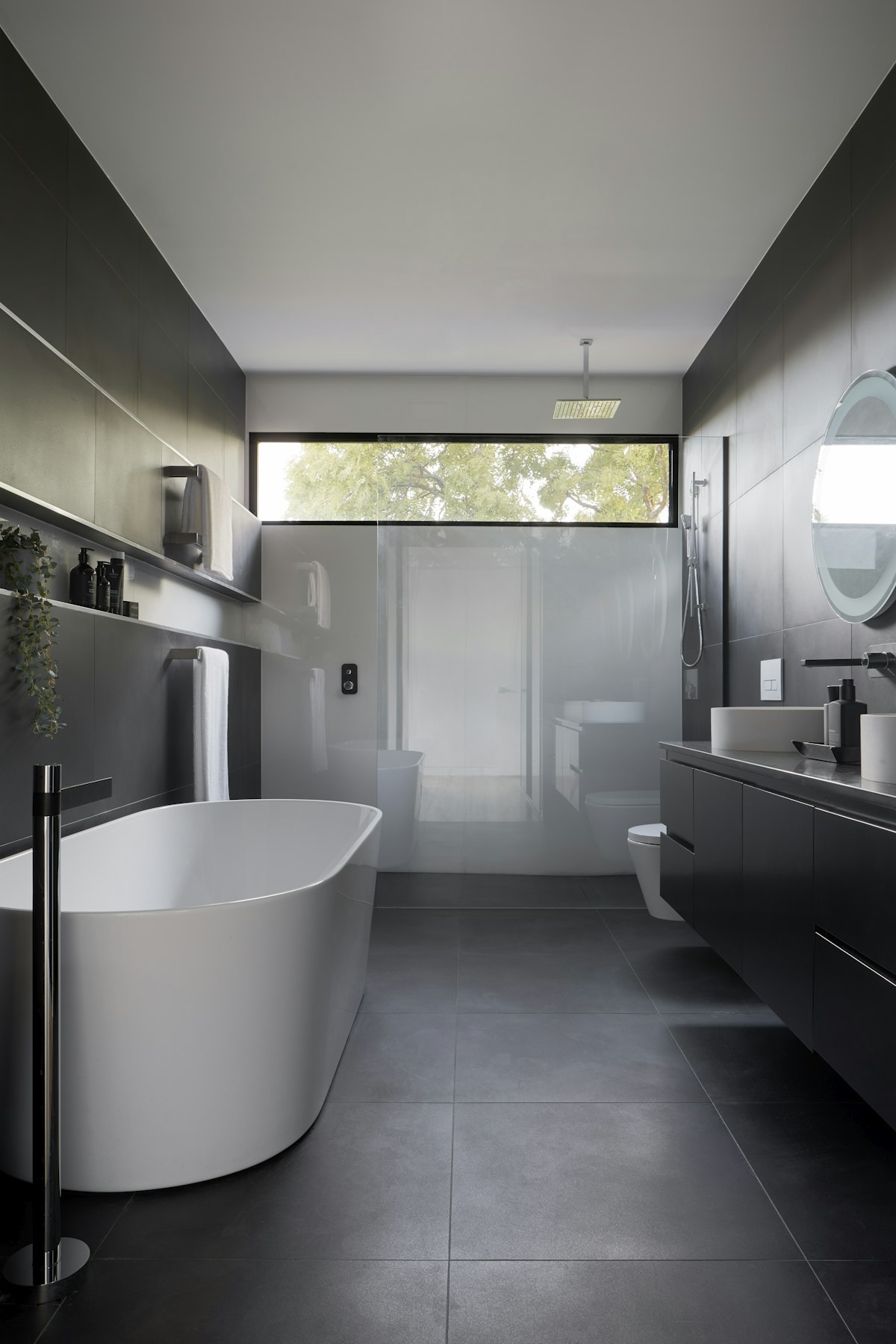
- Bathrooms: Replace traditional shower screens or external windows with PDLC glass for instant privacy at the flick of a switch, ideal for en-suites or overlooked bathrooms.
- Conservatories & Orangeries: Electrochromic or SPD glass in roofs and vertical panels can dramatically reduce solar heat gain on sunny days, making these spaces more comfortable year-round without bulky blinds.
- Internal Partitions: Create dynamic open-plan living spaces. Use PDLC glass for internal doors or walls to switch between an open, airy feel and private, enclosed rooms for work or relaxation.
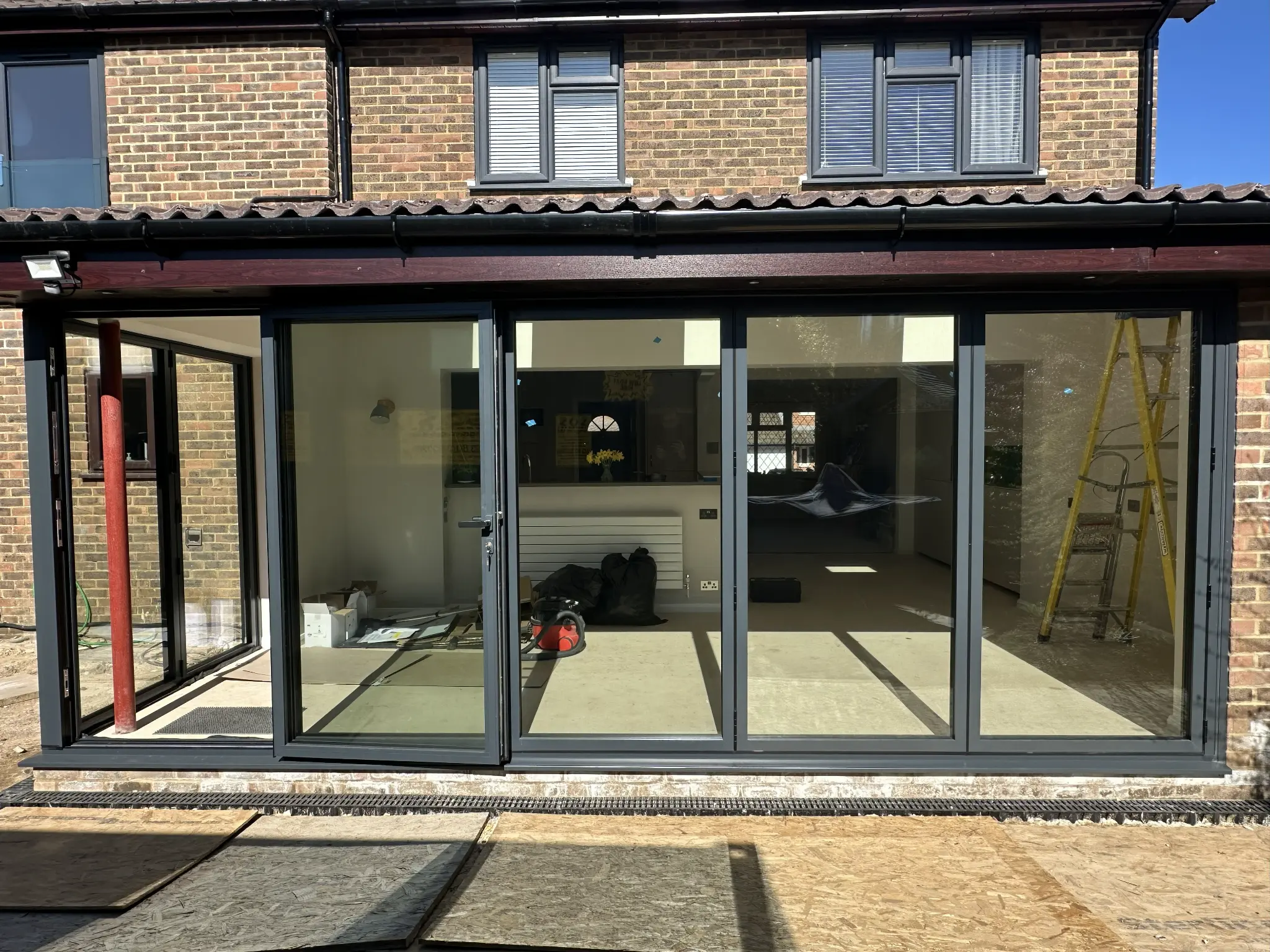
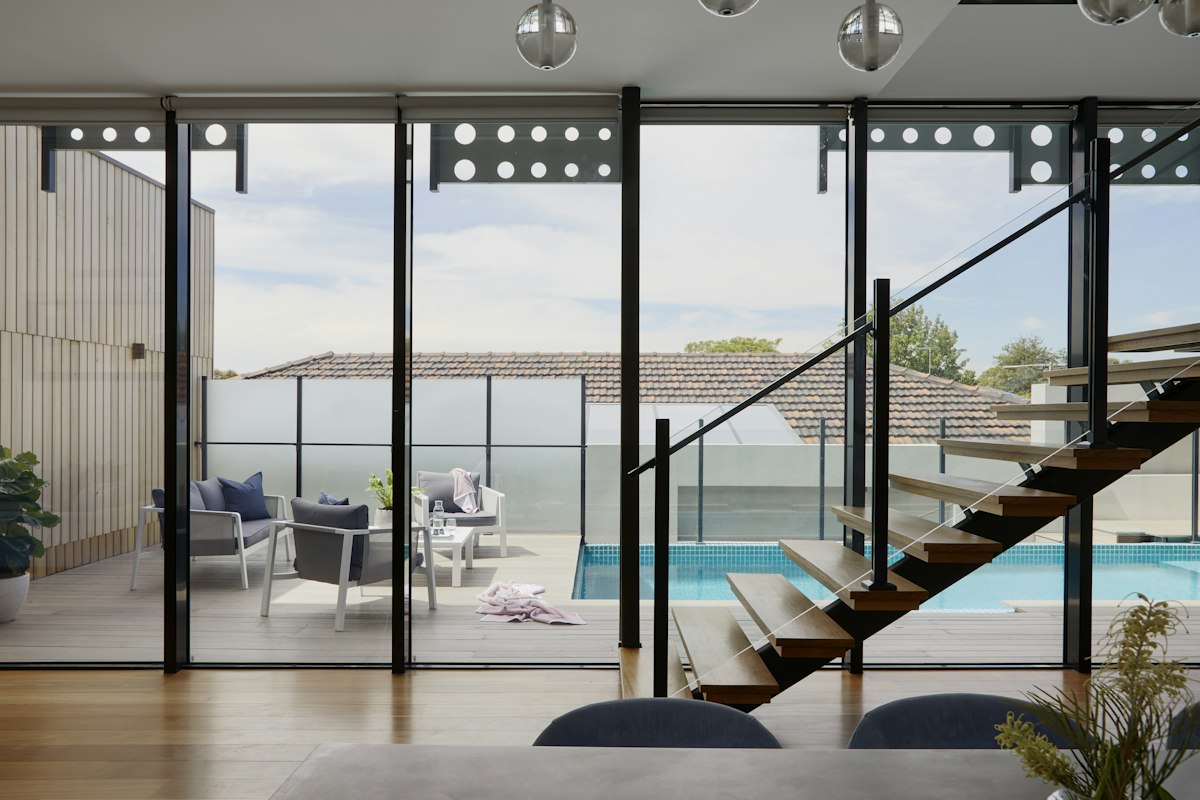
- Bi-fold & Sliding Doors: Integrate smart glass into large glazed doors to control light and privacy, especially useful for south-facing aspects or overlooked gardens.
- Rooflights & Skylights: Manage overhead sunlight and glare in extensions or loft conversions, preventing overheating and protecting interiors.
- Home Offices: For privacy during video calls or focused work, switchable glass offers an elegant solution for internal office partitions.
Pro Tip
When considering smart glass for a south-facing room or a conservatory, prioritise Electrochromic or SPD technologies. These excel at managing solar heat gain, which is crucial for preventing overheating in spaces exposed to intense sunlight. PDLC is primarily for privacy, with less emphasis on heat control.
Technical Considerations & UK Building Regulations
Integrating smart glass into your home involves several technical and regulatory considerations to ensure optimal performance, safety, and compliance.
Power Requirements & Control
All smart glass technologies require a low-voltage electrical supply, typically 24V or 48V AC, converted from your mains supply via a transformer. This power is usually delivered through discreet wiring within the window frame or adjacent wall. Control options range from simple wall switches to remote controls, smartphone apps, or integration with broader smart home automation systems (e.g., Apple HomeKit, Google Home, Amazon Alexa).
Installation and Maintenance
Installation is more complex than standard glazing due to the electrical components. It typically requires a qualified electrician in addition to experienced glaziers. Maintenance is generally minimal; the glass itself is cleaned like any other window, but care must be taken with the electrical connections.
Durability and Lifespan
The lifespan of smart glass varies by technology and manufacturer, but most are designed for long-term use, often exceeding 10-15 years. Factors like UV exposure and the frequency of switching can influence longevity. Reputable manufacturers offer warranties on their products.
UK Building Regulations Part L (Conservation of Fuel and Power)
For any new build, extension, or significant renovation involving new or replacement glazing, compliance with UK Building Regulations Part L (2022 England) is mandatory. The primary concern here is the U-value, which measures how effectively a component insulates. A lower U-value indicates better insulation.
For glazing, the key requirements are:
- New Build: Windows and doors must achieve a U-value of 1.2 W/m²K or better.
- Replacement: Windows and doors must achieve a U-value of 1.4 W/m²K or better.
Smart glass units are typically double or triple glazed, and their U-values must meet these standards. While the smart film or layer itself doesn't significantly alter the U-value of the insulated glass unit (IGU), the overall unit must be specified to comply. For electrochromic and SPD glass, their ability to control solar heat gain (measured by the g-value or solar factor) can contribute positively to the overall energy performance of a building, potentially allowing for more glazing area while still meeting regulatory targets.
It is always advisable to consult with your local Building Control body or a qualified architect/glazing specialist early in your project to ensure full compliance.
Cost and Return on Investment
Smart glass is a premium product and significantly more expensive than conventional glazing. Costs vary widely depending on the type of technology, size, complexity of installation, and control system. While the initial outlay is higher, the long-term benefits in terms of energy savings, enhanced comfort, and increased property value can offer a compelling return on investment. The reduction in reliance on heating/cooling and the elimination of traditional window treatments contribute to these savings.
| Feature | PDLC (Privacy Glass) | Electrochromic (EC) Glass | SPD (Suspended Particle Device) Glass |
|---|---|---|---|
| Primary Function | Instant Privacy (Opaque/Clear) | Solar Control (Tint/Clear) | Solar Control (Tint/Clear/Variable) |
| Switching Speed | Instant (milliseconds) | Slow (minutes) | Fast (seconds) |
| Transparency Control | Binary (On/Off) | Gradual (Multiple Tints) | Gradual (Variable Light/Heat) |
| Power Consumption (Active) | Low | Very Low | Moderate |
| Power Consumption (Passive) | Zero (Opaque) | Zero (Clear/Tinted) | Zero (Dark) |
| UV Blocking | High (99%+) | High (99%+) | High (99%+) |
| Solar Heat Gain Control | Limited | Excellent | Excellent |
| Typical Applications | Bathrooms, Internal Partitions, Privacy Windows | Conservatories, Large Glazed Facades, Skylights | Conservatories, Skylights, Automotive |
| Aesthetics | Frosted when off, Clear when on | Tinted when on, Clear when off | Dark when off, Clear when on |
Potential Drawbacks and Considerations
Despite its many advantages, smart glass technology does have some limitations and considerations:
- Cost: As mentioned, the initial investment is considerably higher than standard glazing.
- Power Dependency: Smart glass requires a continuous, albeit low, electrical supply. A power outage will typically revert PDLC to its opaque state and SPD/EC to their default (usually clear or darkest) state, depending on the system.
- Haze (PDLC): When in its clear state, PDLC glass can sometimes exhibit a slight haze, particularly noticeable in direct sunlight or at certain angles.
- Tinted Appearance (EC/SPD): Even in their clearest state, some EC and SPD glasses may retain a very subtle tint.
- UV Degradation: While most smart glass blocks significant UV, prolonged direct sunlight exposure can, over many years, potentially affect the performance or clarity of some films. Reputable manufacturers design their products to withstand this.
- Repair Complexity: If the smart film or electrical components within the sealed unit fail, the entire unit may need to be replaced, which can be costly.
Choosing the Right Smart Glass for Your Home
Selecting the appropriate smart glass technology depends heavily on your specific needs and the intended application:
- For Privacy: If your primary goal is instant privacy, particularly for internal partitions or overlooked windows, PDLC (privacy glass) is likely the most suitable and cost-effective option.
- For Solar Control and Glare Reduction: For conservatories, large south-facing windows, or rooflights where managing heat gain and glare is paramount, Electrochromic (EC) or SPD glass will offer superior performance. Consider EC for gradual, subtle changes and SPD for faster, more dynamic control.
- Budget: Factor in the overall project budget. While smart glass is an investment, understanding the long-term energy savings and enhanced comfort can help justify the cost.
- Integration: Consider how you want to control the glass. Do you prefer a simple switch, a remote, or full integration with your smart home system?
- Professional Advice: Always seek advice from experienced glazing professionals who specialise in smart glass. They can assess your specific requirements, provide accurate quotes, and ensure correct installation and compliance with all relevant UK Building Regulations.
Smart glass technology offers UK homeowners an exciting opportunity to transform their living spaces, blending innovative functionality with sophisticated design. By understanding the different types, their benefits, and the practical considerations, you can make an informed decision to enhance your home's comfort, privacy, and energy efficiency for years to come.
At Shard AG, we specialise in cutting-edge architectural glazing solutions for UK homes. Our expert team can guide you through the options for smart glass technology, ensuring you select the perfect system to meet your aesthetic and performance requirements. From initial consultation and design to professional installation, we provide a comprehensive service tailored to your project, ensuring compliance with all UK Building Regulations and delivering a seamless, high-quality finish.
Explore Our Products
Discover how Shard Architectural Glazing can transform your home with our premium glazing solutions:
Ready to Transform Your Home?
Get in touch with our expert team for a free consultation and personalised quote. We'll help you choose the perfect glazing solution for your property.