

Bi-Parting Sliding Doors: The Ultimate Guide for UK Homes
Explore bi-parting sliding doors for your UK home. Learn about their design, benefits, technical specifications, and compliance with UK Building Regulations.

Shard Architectural Glazing
6 May 2026
Explore bi-parting sliding doors for your UK home. Learn about their design, benefits, technical specifications, and compliance with UK Building Regulations.
📋In This Article
When considering architectural glazing solutions for your home, bi-parting sliding doors offer a sophisticated and highly functional option. Unlike traditional sliding doors that stack to one side, bi-parting systems open from the centre, creating a grand, symmetrical opening. This design can dramatically transform a living space, blurring the lines between indoors and outdoors and enhancing natural light. For UK homeowners, understanding the nuances of these systems – from their technical specifications to their compliance with Building Regulations – is crucial for making an informed decision.
What Are Bi-Parting Sliding Doors?
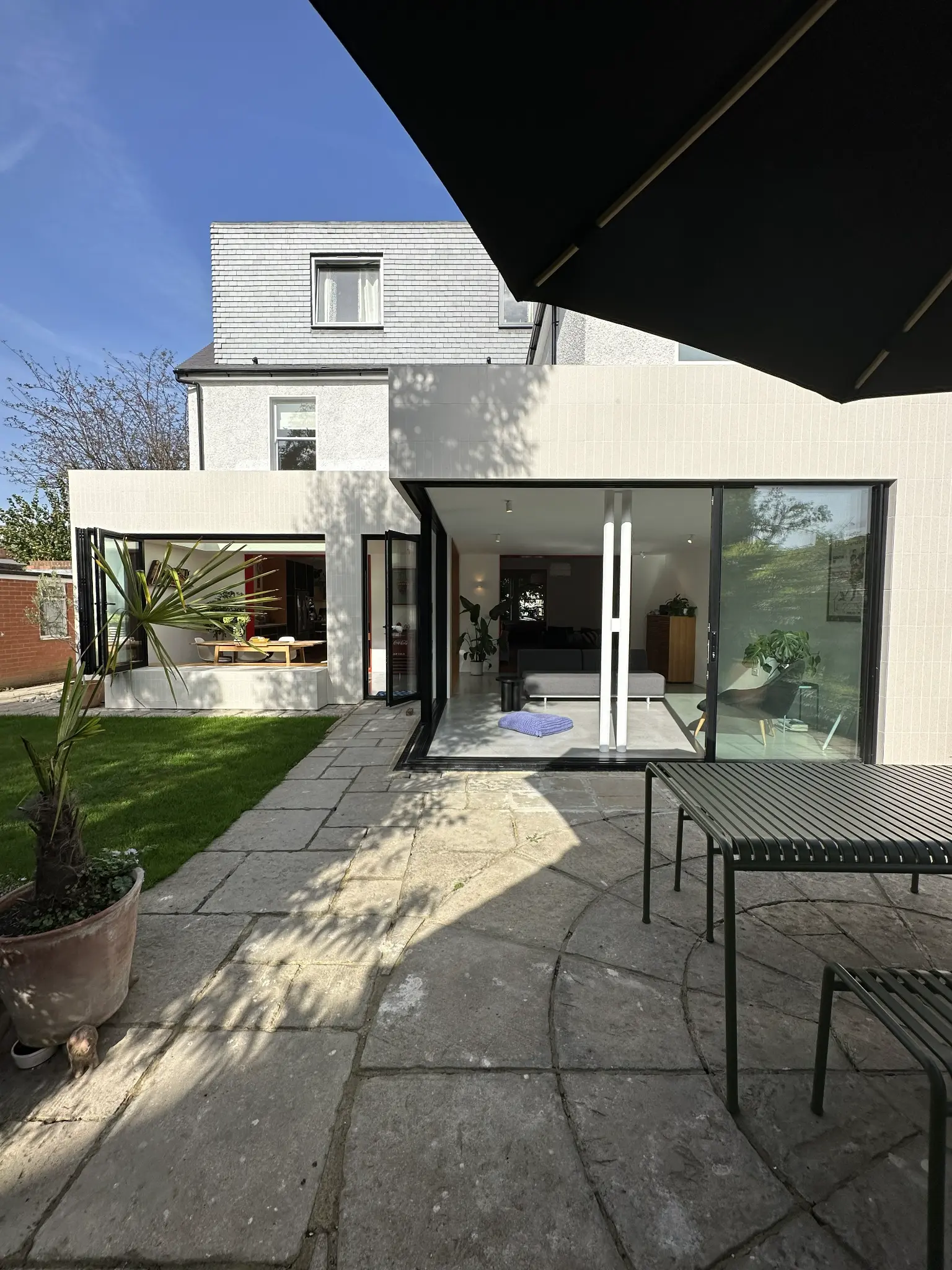
Bi-parting sliding doors consist of two sets of sliding panels that meet in the middle and slide open in opposite directions. Imagine a pair of curtains drawing open from the centre – the principle is similar. Each set of panels typically stacks neatly behind a fixed panel or against an adjacent wall, depending on the configuration. This creates a wide, unobstructed opening, often twice the width of a single sliding door system.
These doors are distinct from bi-fold doors, which fold concertina-style, and standard patio sliders, which usually have one fixed and one moving panel, or multiple panels stacking to one side. Bi-parting systems are particularly popular for larger openings, where their symmetrical operation provides a sense of balance and grandeur.
Common Configurations and Materials
- Configurations: While the core principle is two panels sliding apart, bi-parting systems can be configured with multiple panels on each side. For example, a 4-panel system might have two panels sliding left and two sliding right. A 6-panel system could feature three panels moving in each direction.
- Materials: The most common frame materials in the UK are aluminium, timber, and uPVC. Each offers distinct advantages:
- Aluminium: Known for its strength, slim sightlines, and durability. It's highly resistant to corrosion and requires minimal maintenance. Ideal for large glass expanses and contemporary aesthetics.
- Timber: Offers excellent thermal performance and a classic, natural aesthetic. Requires more maintenance (painting/staining) but can be highly durable if well-maintained.
- uPVC: A cost-effective option with good thermal properties and low maintenance. Frame profiles tend to be thicker than aluminium.
Maximised Openings
Create expansive, symmetrical openings that truly connect indoor and outdoor spaces, ideal for entertaining.
Enhanced Natural Light
The large glass panels allow an abundance of natural light to flood into your home, reducing reliance on artificial lighting.
Sleek Aesthetics
Modern bi-parting designs offer clean lines and a contemporary look, enhancing your home's architectural appeal.
Improved Flow
Facilitate seamless movement between rooms or from your interior to your garden, perfect for social gatherings.
Technical Specifications and Performance
Understanding the technical aspects of bi-parting sliding doors is vital for ensuring they meet your home's needs for comfort, security, and energy efficiency.
Glazing Options
The glass itself is a critical component. For UK homes, double glazing is the minimum standard, but triple glazing is increasingly popular for superior thermal and acoustic performance.
- Double Glazing: Typically consists of two panes of glass separated by a sealed cavity filled with an inert gas like Argon. This significantly reduces heat transfer compared to single glazing.
- Triple Glazing: Features three panes of glass with two gas-filled cavities. Offers even better insulation, leading to lower U-values and enhanced soundproofing.
- Low-E Coatings: Low-emissivity coatings on the glass surface reflect heat back into the room in winter and reduce solar gain in summer.
- Spacer Bars: Warm edge spacer bars (e.g., made of composite materials) reduce thermal bridging at the edge of the glass unit, further improving U-values.
U-Values and Thermal Performance
The U-value measures how effectively a window or door insulates. A lower U-value indicates better thermal performance. For new builds and extensions in England, current Building Regulations Part L (2022) specify a maximum U-value of 1.2 W/m²K for windows and doors. For replacement doors, the maximum is 1.4 W/m²K. Reputable manufacturers will provide U-value certificates for their products.
Security Features
Security is paramount. Look for doors that comply with PAS 24:2016, the UK's enhanced security performance standard for doors and windows. Key features include:
- Multi-point locking systems: Engaging at several points along the frame.
- Anti-lift mechanisms: Preventing panels from being dislodged from their tracks.
- Toughened or laminated glass: More resistant to impact and shattering.
- Secure hardware: High-quality handles and cylinders.
Acoustic Performance
If your home is in a noisy area, consider the acoustic performance, measured in decibels (dB). Thicker glass, laminated glass, and wider gas-filled cavities can significantly improve sound insulation.
Pro Tip
Always request a U-value certificate and PAS 24 compliance documentation from your supplier. This ensures the doors meet current UK standards for energy efficiency and security.
UK Building Regulations and Planning Permission
Navigating UK Building Regulations is essential for any significant home improvement project. While installing bi-parting sliding doors often falls under permitted development, there are crucial considerations.
Building Regulations Part L (Conservation of Fuel and Power)
As mentioned, new and replacement doors must meet specific U-value requirements. For new extensions or new build properties, the U-value must be 1.2 W/m²K or better. For replacing existing doors, the U-value must be 1.4 W/m²K or better. Your installer should be able to provide products that meet these standards and issue a FENSA or CERTASS certificate upon completion, which demonstrates compliance.
Other relevant Part L requirements for new build/extension elements:
- Walls: 0.18 W/m²K
- Floors: 0.18 W/m²K
- Roofs: 0.15 W/m²K
Building Regulations Part F (Ventilation)
New doors or doors installed as part of an extension may require trickle vents to ensure adequate background ventilation. This helps prevent condensation and maintains indoor air quality. The specific requirements depend on the room and overall ventilation strategy of your home.
Building Regulations Part K (Protection from Falling, Collision and Impact)
Large glazed areas, particularly those extending to floor level, must use safety glass (e.g., toughened or laminated) to prevent injury from accidental impact. This is typically a standard feature for reputable door manufacturers.
Planning Permission
In most cases, replacing existing doors with new ones of a similar size and appearance does not require planning permission. However, if you are altering the size of an opening, adding doors to a new extension, or if your property is listed or in a conservation area, you will likely need to consult your local planning authority. It is always advisable to check with your local council before commencing work.
.jpg)
Design Considerations and Installation
The success of your bi-parting sliding door project hinges on careful design and professional installation.
Threshold Options
One of the most appealing aspects of sliding doors is the potential for a flush threshold, creating a seamless transition between inside and out. However, a truly flush threshold can sometimes pose challenges for weather resistance and drainage. Options include:
- Low Threshold: A very shallow step, offering excellent accessibility while maintaining weather performance.
- Flush Threshold: Achieves a completely level transition, often requiring sophisticated drainage solutions to prevent water ingress. This is particularly important in the UK climate.
Frame Colour and Finish
Modern aluminium doors come in a vast array of RAL colours, allowing you to perfectly match or contrast with your home's aesthetic. Timber doors can be painted or stained, while uPVC offers a range of standard colours and woodgrain effects.
Maintenance and Longevity
Bi-parting sliding doors are generally low maintenance. Aluminium and uPVC require only occasional cleaning of frames and lubrication of tracks and moving parts. Timber doors will need more regular inspection and re-treatment to protect against weather damage.
Installation Process
Professional installation is non-negotiable. The weight of large glass panels and the precision required for smooth operation demand experienced fitters. A poor installation can lead to draughts, leaks, security vulnerabilities, and operational issues. Ensure your chosen installer is FENSA or CERTASS registered.
Comparing Bi-Parting with Other Door Types
To help you decide, here's a brief comparison of bi-parting sliding doors with common alternatives:
| Feature | Bi-Parting Sliding Doors | Bi-Fold Doors | Standard Sliding Doors |
|---|---|---|---|
| Opening Style | Panels slide from centre to opposite sides, creating a central opening. | Panels fold and stack to one or both sides. | Panels slide and stack to one side, or one panel slides past a fixed one. |
| Opening Width | Very wide, often creating a large, symmetrical opening. | Can open almost the full width of the aperture. | Typically opens 50-75% of the aperture, depending on configuration. |
| Sightlines (when closed) | Slim, especially with aluminium frames, offering expansive views. | Thicker frames due to multiple hinges and folding mechanisms. | Can be slim, but typically fewer panels mean fewer vertical sightlines. |
| Space Requirement | Panels slide within their own plane, requiring minimal external/internal space. | Panels stack internally or externally, requiring space for the stack. | Panels slide within their own plane, requiring minimal external/internal space. |
| Ventilation Options | Can open partially for ventilation without full opening. | Often requires full opening or a traffic door for ventilation. | Can open partially for ventilation. |
| Aesthetics | Sleek, contemporary, symmetrical. | Modern, can feel more 'open' when fully stacked. | Classic, functional. |
Conclusion and Next Steps
Bi-parting sliding doors represent a premium glazing solution that can significantly enhance the aesthetic appeal, functionality, and value of your UK home. Their ability to create expansive, symmetrical openings, coupled with excellent thermal performance and security features, makes them a compelling choice for homeowners seeking to maximise natural light and seamlessly connect indoor and outdoor living spaces.
When considering these doors, prioritise products that meet or exceed current UK Building Regulations, particularly concerning U-values and security (PAS 24). Always engage with reputable suppliers and installers who can provide detailed technical specifications, ensure professional fitting, and offer appropriate guarantees.
For expert advice and a wide range of high-performance bi-parting sliding door solutions tailored for UK homes, consider consulting with specialists like Shard AG. We can guide you through the options, ensuring your choice perfectly complements your property and meets all regulatory requirements.
Explore Our Products
Discover how Shard Architectural Glazing can transform your home with our premium glazing solutions:
Ready to Transform Your Home?
Get in touch with our expert team for a free consultation and personalised quote. We'll help you choose the perfect glazing solution for your property.