
Bi-Parting Sliding Doors: The Ultimate Guide for UK Homes
Explore bi-parting sliding doors for UK homes. Understand their design, benefits, technical specifications, and compliance with UK Building Regulations.

Shard Architectural Glazing
15 May 2026
Explore bi-parting sliding doors for UK homes. Understand their design, benefits, technical specifications, and compliance with UK Building Regulations.
📋In This Article
When considering modern glazing solutions for your home, bi-parting sliding doors often stand out as a sophisticated and highly functional option. Unlike traditional sliding doors that move in one direction or bifold doors that fold, bi-parting systems offer a unique aesthetic and practical advantage, creating expansive openings that seamlessly connect indoor and outdoor spaces. This comprehensive guide will delve into everything UK homeowners need to know about bi-parting sliding doors, from their design principles and benefits to technical specifications and compliance with Building Regulations.
What Are Bi-Parting Sliding Doors?
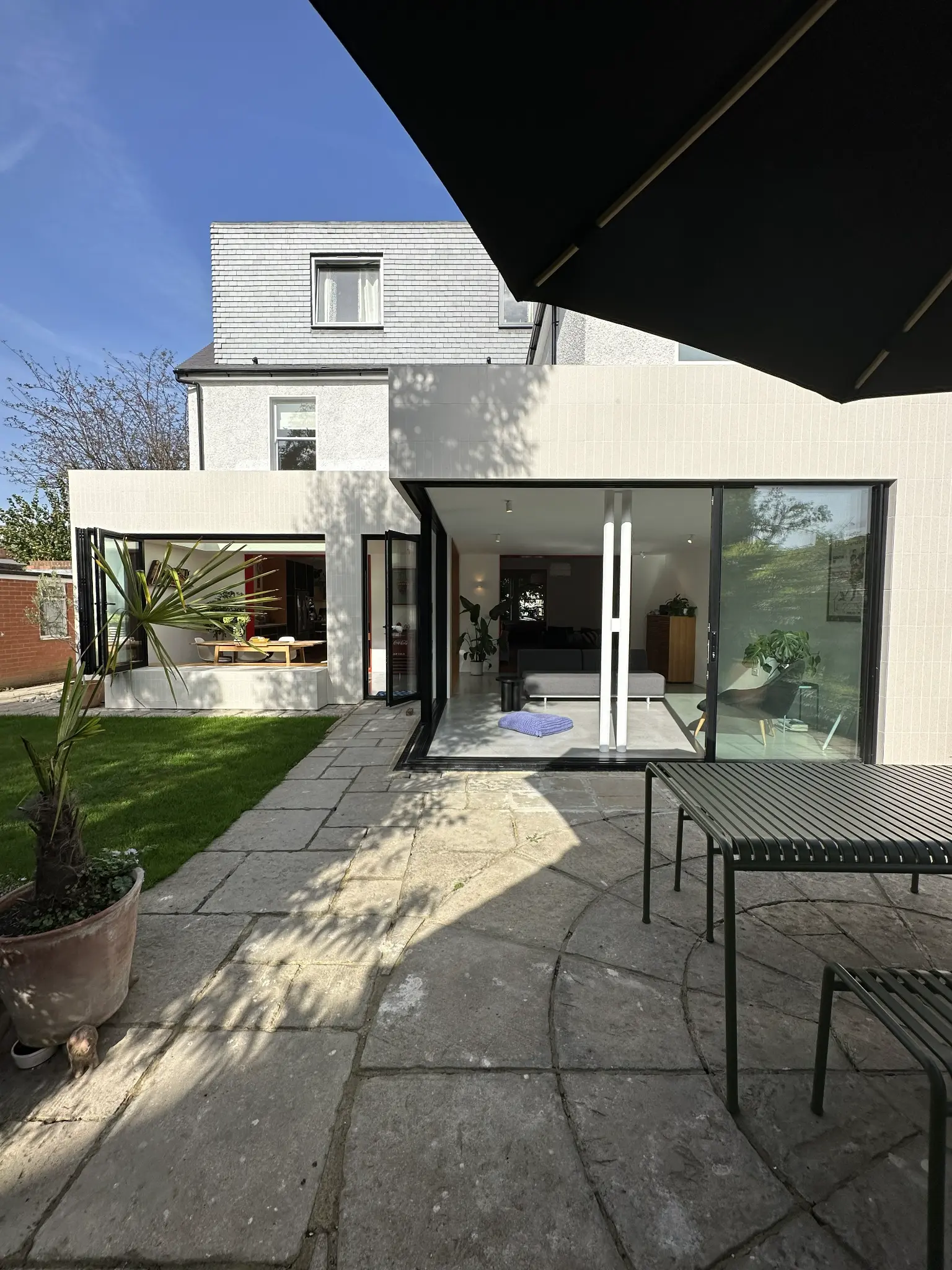
Bi-parting sliding doors consist of two sets of sliding panels that meet in the middle and slide open in opposite directions. Imagine a pair of curtains drawing back from the centre – that's the fundamental concept. Each set of panels typically stacks neatly to one side, creating a wide, unobstructed opening. This design differs significantly from standard sliding patio doors, which usually have one fixed panel and one or more moving panels sliding in a single direction, or bifold doors, which fold up like an accordion.
Key Characteristics:
- Central Opening: The defining feature is the central opening, allowing for symmetrical access.
- Multiple Panels: Often comprise two, three, or even four panels on each side, depending on the overall width of the opening.
- Smooth Operation: Utilise advanced roller mechanisms and tracks for effortless gliding.
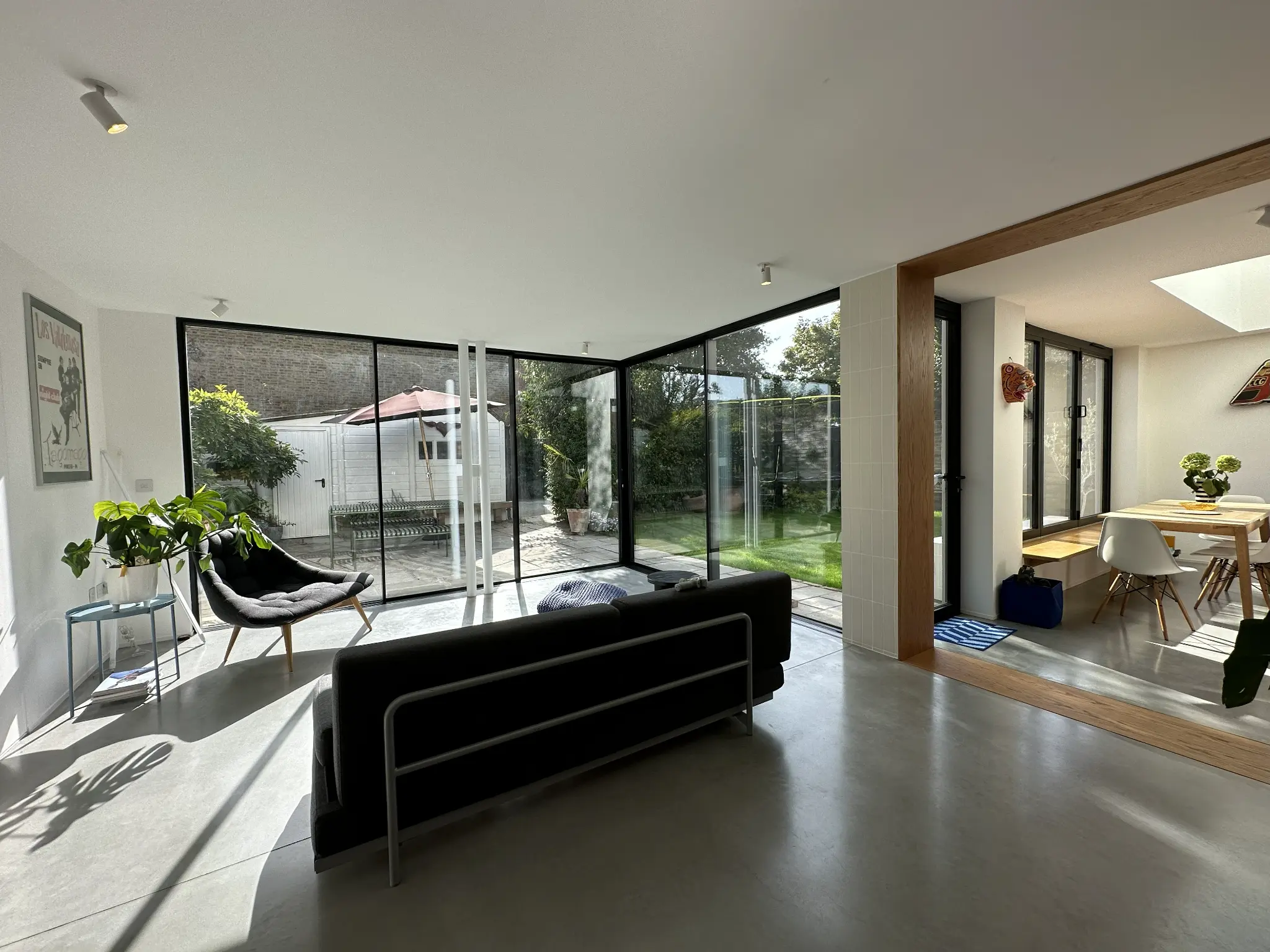
- Large Glazed Areas: Designed to maximise natural light and offer expansive views, often featuring slim frames.
Benefits of Bi-Parting Sliding Doors for UK Homes
Bi-parting sliding doors offer a compelling array of advantages that make them a popular choice for extensions, new builds, and renovation projects across the UK.
Maximised Opening
By sliding panels to both sides, bi-parting doors create a significantly wider clear opening compared to single-direction sliders or even bifolds, which retain some stacked panels within the opening.
Enhanced Views & Light
With large glass panes and often minimal sightlines, these doors flood interiors with natural light and offer uninterrupted panoramic views, blurring the lines between inside and out.
Space Efficiency
Unlike bifold doors that project inwards or outwards when open, sliding panels move parallel to the wall, saving valuable floor space both inside and out.
Modern Aesthetic
Their sleek, contemporary design and symmetrical opening provide a sophisticated architectural statement, enhancing the curb appeal and interior design of any property.
Additional Advantages:
- Ventilation Control: You can open the doors partially from the centre to allow for controlled airflow without fully exposing the interior.
- Durability and Security: Modern systems are built with robust frames (aluminium, uPVC, timber) and incorporate multi-point locking mechanisms for excellent security. Toughened or laminated glass is standard.
- Thermal Performance: High-quality bi-parting doors, especially those with thermal breaks and double or triple glazing, offer excellent insulation, helping to maintain comfortable indoor temperatures and reduce energy bills.
Technical Specifications and Materials
Understanding the technical aspects is crucial for making an informed decision. Material choice, glazing, and U-values are paramount.
Frame Materials:
-
Aluminium: The most popular choice for large sliding doors due to its strength, durability, and ability to be extruded into slim, elegant profiles. Aluminium is lightweight, corrosion-resistant, and requires minimal maintenance. It also offers excellent thermal break capabilities.
-
uPVC: A more budget-friendly option, uPVC offers good thermal performance and is low maintenance. However, it typically has thicker frames than aluminium, which can reduce the glazed area, and may not be suitable for the largest spans.
-
Timber: Provides a natural, warm aesthetic and excellent thermal properties. Timber frames require more maintenance (painting/staining) but can be a beautiful choice for certain architectural styles. Engineered timber offers greater stability.
-
Composite: Combines the best of two materials, e.g., timber internally for warmth and aluminium externally for weather resistance and low maintenance.
Glazing Options:
The glass itself is a critical component for thermal performance, security, and acoustics.
- Double Glazing: The standard for most new installations, consisting of two panes of glass separated by a sealed gap filled with an inert gas (e.g., argon).
- Triple Glazing: Offers superior thermal and acoustic insulation, featuring three panes of glass and two gas-filled gaps. While more expensive and heavier, it significantly improves U-values.
- Low-E Coatings: Applied to glass surfaces to reflect heat, improving thermal efficiency.
- Spacer Bars: Warm edge spacer bars (e.g., made of composite material) reduce heat transfer at the edge of the glass unit compared to traditional aluminium spacers.
- Toughened Glass: Required for safety in doors and low-level glazing, as it shatters into small, relatively harmless pieces if broken.
- Laminated Glass: Consists of two panes bonded by an interlayer, which holds the glass together if broken, offering enhanced security and acoustic performance.
U-Values and Thermal Performance:
The U-value measures how effectively a component (like a door or window) insulates. A lower U-value indicates better thermal performance. For doors, the U-value refers to the entire unit (frame + glass). Achieving good U-values is essential for energy efficiency and compliance with Building Regulations.
Pro Tip
Always request the whole-door U-value (Uw) from your supplier, not just the glass U-value (Ug). The frame significantly impacts overall thermal performance.
.jpg)
UK Building Regulations and Compliance
Any significant alteration to your home, including the installation of new doors and windows, must comply with relevant UK Building Regulations. The most pertinent regulation for bi-parting sliding doors is Part L (Conservation of Fuel and Power), which dictates thermal performance standards.
Key Requirements for Part L (England, 2022 Edition):
- New Build Homes: Windows and doors in new dwellings must achieve a U-value of 1.2 W/m²K or better.
- Replacement Windows and Doors: For existing dwellings, replacement windows and doors must achieve a U-value of 1.4 W/m²K or better.
- Extensions: Glazed elements in new extensions are assessed differently. The total area of openings should generally not exceed 25% of the new floor area, and individual elements must meet the 1.2 W/m²K (new build) or 1.4 W/m²K (replacement) standard, or the whole extension must demonstrate compliance through a SAP calculation.
It is crucial to ensure your chosen bi-parting sliding doors meet or exceed these U-value requirements. Non-compliance could affect the sale of your property and may necessitate costly remedial work.
Other Relevant Regulations:
- Part F (Ventilation): Ensures adequate ventilation. Trickle vents may be required, especially in replacement installations, unless other compensatory ventilation is provided.
- Part K (Protection from Falling, Collision and Impact): Relates to safety glazing. Toughened or laminated glass is typically required in doors and low-level glazing.
- Part B (Fire Safety): Less common for external doors but can be relevant if the doors are part of a fire escape route or in specific boundary conditions.
- Part Q (Security – England only): For new dwellings or extensions, doors must be manufactured to a design that has been shown to satisfy security requirements (e.g., PAS 24:2016). While not mandatory for replacements, it is highly recommended.
Always consult with your local Building Control Body or a qualified installer to confirm specific requirements for your project. They can advise on planning permission (rarely needed for doors unless the property is listed or in a conservation area, but always worth checking) and Building Regulations approval.
Design Considerations and Installation
Careful planning is essential for a successful bi-parting sliding door installation.
Size and Configuration:
Bi-parting doors can span impressive widths. Consider the number of panels on each side (e.g., 2+2, 3+3) and the overall opening size. Larger panels offer fewer sightlines but are heavier and may require more robust hardware.
Threshold Options:
- Standard Threshold: Offers good weather resistance but creates a small step.
- Low Threshold (Part M Compliant): Designed for accessibility, creating a minimal step (typically 15mm or less). While excellent for ease of access, it may offer slightly less weather resistance in exposed locations compared to a standard threshold.
Drainage:
Proper drainage around the threshold area is critical to prevent water ingress, especially with low thresholds. This often involves external drainage channels or gravel beds.
Security:
Look for doors that incorporate multi-point locking systems, anti-lift devices, and internal glazing beads (where glass is fitted from the inside, making it harder to remove from the outside). Certification to PAS 24:2016 is a strong indicator of good security.
Installation:
Due to their size and complexity, bi-parting sliding doors require professional installation. The opening must be perfectly level and square, and the frame securely fixed to the structure to ensure smooth operation and long-term performance. Incorrect installation can lead to operational issues, draughts, and compromised security.
Comparison with Other Door Types
To help you decide, here's a brief comparison of bi-parting sliding doors with other popular large-opening door types:
| Feature | Bi-Parting Sliding Doors | Standard Sliding Doors | Bifold Doors |
|---|---|---|---|
| Opening Type | Panels slide from centre to both sides. | Panels slide in one direction, often one fixed panel. | Panels fold and stack to one or both sides. |
| Clear Opening | Very wide, often up to 70-80% of total width. | Typically 50% of total width (one fixed panel). | Wide, but stacked panels reduce clear opening slightly. |
| Space Usage (Open) | Panels stack parallel to wall, saving space. | Panels stack parallel to wall, saving space. | Panels project inwards/outwards, requiring clear space. |
| Frame Sightlines | Can be very slim, maximising glass area. | Often slim, but can be thicker than bi-parting. | Thicker frames due to multiple hinges and seals. |
| Ventilation Control | Excellent - partial central opening. | Good - partial opening from one side. | Limited - either fully open or closed (or single traffic door). |
| Aesthetic | Sleek, modern, symmetrical. | Modern, clean lines. | Contemporary, concertina effect. |
| Cost | Mid to High. | Low to Mid. | Mid to High. |
Maintenance and Longevity
Modern bi-parting sliding doors are designed for longevity and minimal maintenance, particularly those with aluminium frames. However, some routine care will ensure their smooth operation and appearance for many years.
- Cleaning: Regularly clean glass with a non-abrasive cleaner. Frame cleaning depends on the material: warm soapy water for aluminium and uPVC, and appropriate timber cleaners/treatments for wood.
- Track Maintenance: Keep the bottom track free of debris (leaves, dirt, grit) to prevent blockages and ensure smooth gliding. A soft brush or vacuum cleaner is usually sufficient.
- Hardware Check: Periodically check hinges, locks, and handles for any signs of wear or looseness. Lubricate moving parts with a silicone-based spray if recommended by the manufacturer.
- Seals and Gaskets: Inspect rubber seals and gaskets for perishing or damage, which can compromise weather resistance and thermal performance.
Following the manufacturer's specific maintenance guidelines will help preserve your warranty and extend the lifespan of your doors.
Conclusion
Bi-parting sliding doors offer a truly impressive solution for homeowners seeking to create expansive, light-filled spaces with a modern aesthetic. Their ability to deliver wide, unobstructed openings, combined with excellent thermal performance and security, makes them a compelling choice for contemporary UK homes. By understanding the technical specifications, adhering to Building Regulations, and considering careful design and installation, you can ensure your bi-parting sliding doors become a cherished feature of your property for decades to come.
If you're considering bi-parting sliding doors for your project, Shard AG specialises in high-performance architectural glazing solutions. Our expert team can guide you through the options, ensuring your chosen doors meet your aesthetic, performance, and regulatory requirements. We offer a range of premium aluminium bi-parting sliding door systems designed for the unique demands of the UK climate and architectural styles.
Explore Our Products
Discover how Shard Architectural Glazing can transform your home with our premium glazing solutions:
Ready to Transform Your Home?
Get in touch with our expert team for a free consultation and personalised quote. We'll help you choose the perfect glazing solution for your property.