Choosing Sliding Doors: A UK Homeowner's Guide to Style & Performance
Explore the world of sliding doors for your UK home. Learn about types, materials, glazing, thermal performance, and Building Regulations compliance.

Shard Architectural Glazing
19 May 2026
Explore the world of sliding doors for your UK home. Learn about types, materials, glazing, thermal performance, and Building Regulations compliance.
📋In This Article
Sliding doors offer a fantastic way to open up your living spaces, blur the lines between indoors and out, and introduce abundant natural light. From sleek modern designs to more traditional aesthetics, the right sliding door can transform a room, enhance views, and improve the functionality of your home. However, with a myriad of options available, choosing the 'right' one can feel daunting. This comprehensive guide will walk UK homeowners through the essential considerations, helping you make an informed decision that balances style, performance, and compliance.
Types of Sliding Doors for UK Homes
Understanding the different mechanisms and styles is the first step in selecting the perfect sliding door for your property.
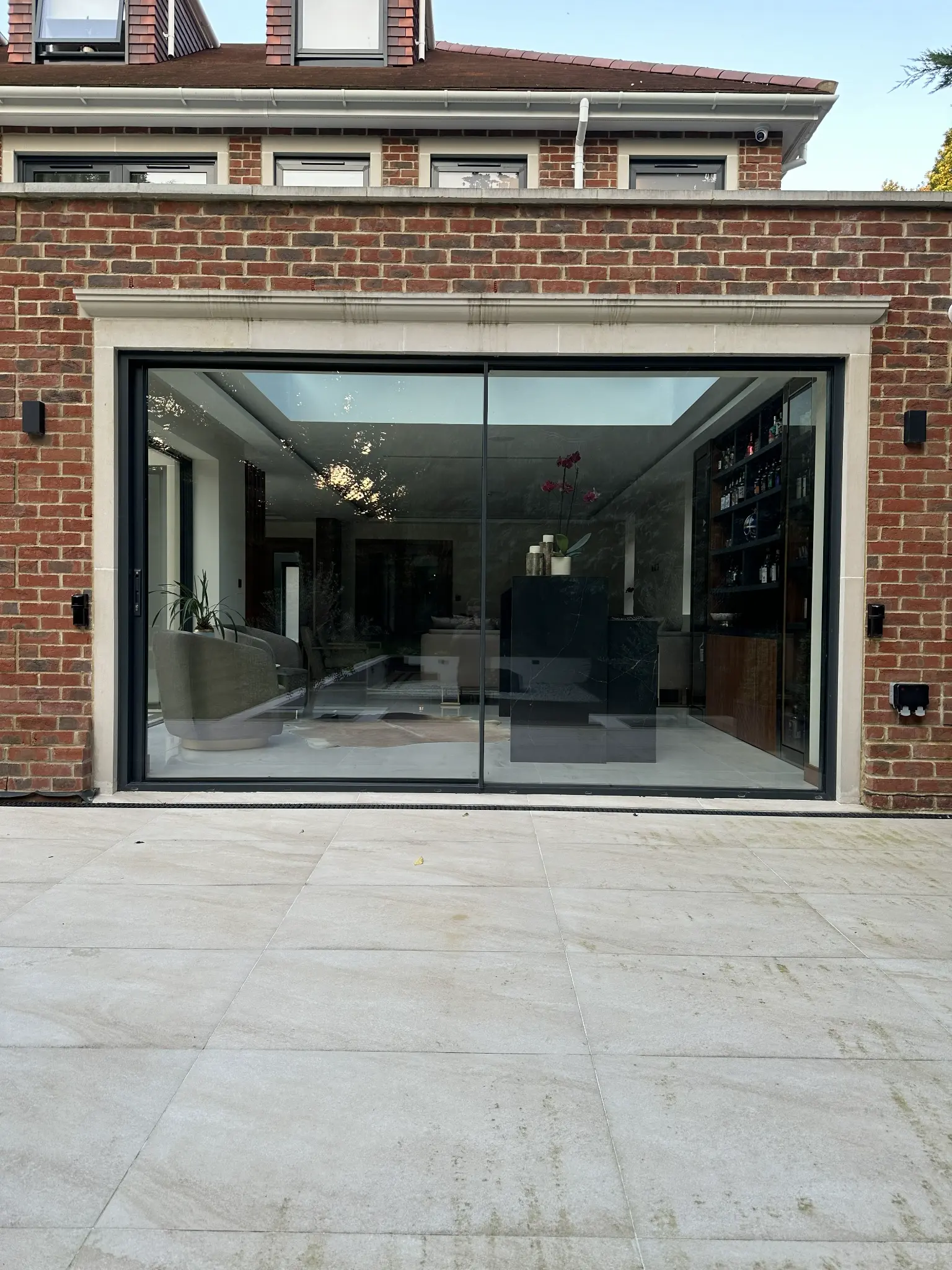
Patio Doors (Inline Sliding Doors)
- Mechanism: These are the most common type, featuring one or more panels that slide horizontally behind a fixed panel or another sliding panel on a single track.
- Advantages: Cost-effective, simple operation, good for smaller openings where bifold doors might be too wide when stacked.
- Considerations: Typically, only 50% of the opening can be cleared, as one panel always remains fixed.
Lift & Slide Doors
- Mechanism: A more advanced system where a special handle mechanism lifts the door panel slightly off its seals and rollers, allowing it to glide smoothly. When closed, the door lowers back down, creating a very tight, weather-sealed closure.
- Advantages: Superior thermal performance and weather sealing, can accommodate much larger and heavier glass panels, smoother operation for large doors, excellent security.
- Considerations: Generally more expensive than standard inline patio doors.
Pocket Sliding Doors
- Mechanism: These doors slide into a cavity within the adjacent wall, disappearing completely when open.
- Advantages: Maximises open space, creates a seamless transition, ideal for contemporary designs where a completely unobstructed opening is desired.
- Considerations: Requires significant structural work to create the wall cavity, more complex installation, higher cost. Not suitable for all wall types (e.g., load-bearing walls without significant alteration).
Pro Tip
Consider the 'stacking' space. Standard patio doors require space for panels to overlap, while pocket doors hide away completely. Lift & Slide doors can often handle larger individual panels, reducing the number of frames and maximising glass area.
Materials and Finishes: Durability Meets Aesthetics
The choice of material significantly impacts the door's appearance, thermal performance, maintenance requirements, and longevity.
uPVC (Unplasticised Polyvinyl Chloride)
- Pros: Most affordable option, excellent thermal efficiency (when well-designed), low maintenance, available in various colours and woodgrain effects.
- Cons: Can be perceived as less premium than other materials, larger frame profiles can reduce glass area, less suitable for very large spans.
Aluminium
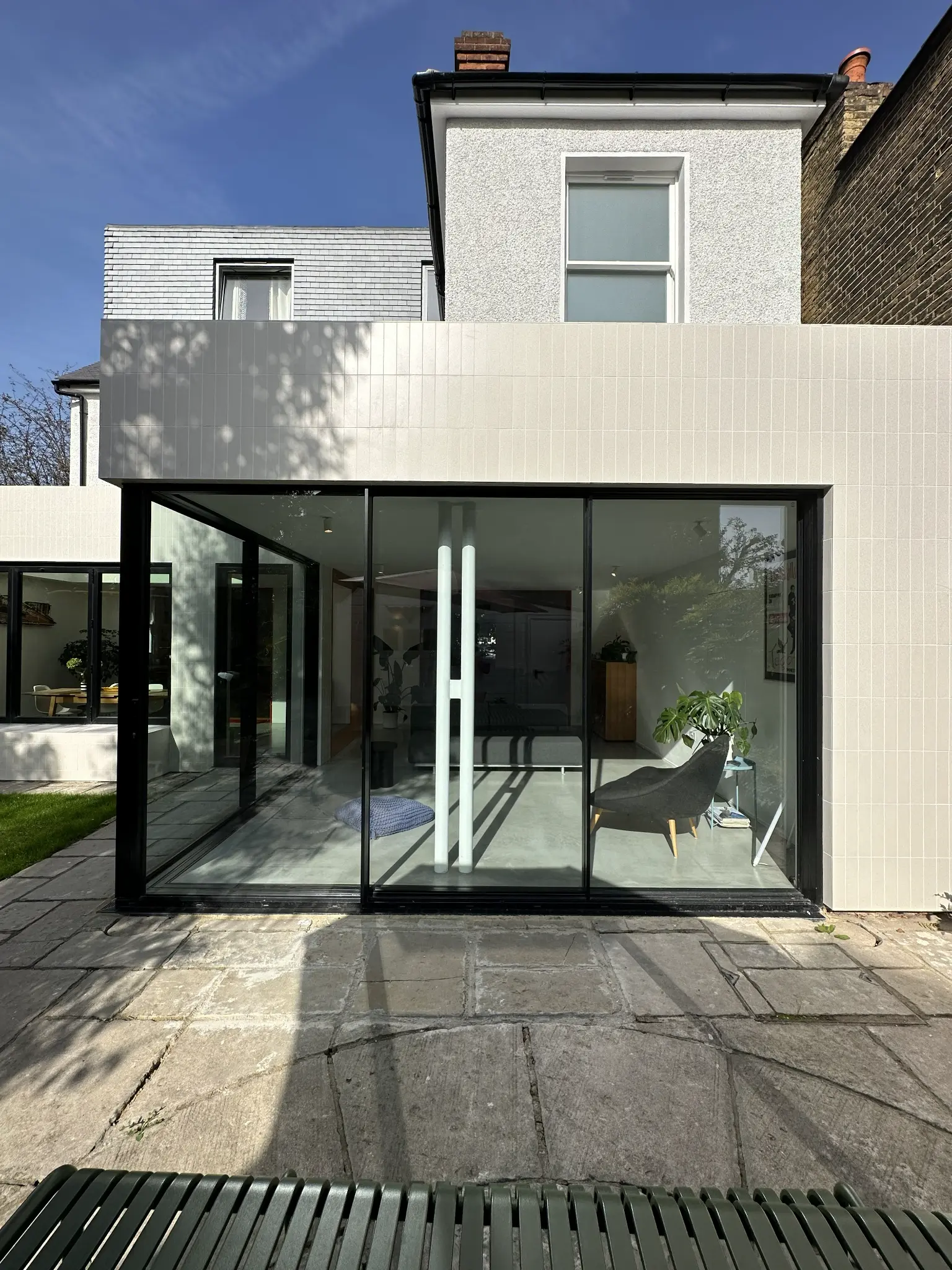
- Pros: Incredibly strong and lightweight, allowing for very slim frames and large expanses of glass. Highly durable, low maintenance, resistant to corrosion. Available in a vast range of RAL colours.
- Cons: Can be more expensive than uPVC. Historically, aluminium had poorer thermal performance, but modern systems with 'thermal breaks' have largely overcome this.
Timber
- Pros: Natural, warm aesthetic, excellent thermal insulator, can be stained or painted to match any decor, sustainable choice if sourced responsibly.
- Cons: Requires regular maintenance (painting/staining) to prevent weathering and rot, generally more expensive than uPVC, can be prone to expansion/contraction with humidity changes.
Composite (e.g., Aluminium Clad Timber)
- Pros: Combines the best of both worlds – timber internally for warmth and aesthetics, aluminium externally for durability and low maintenance. Excellent thermal performance.
- Cons: Highest cost option, more complex manufacturing.
Glazing and Thermal Performance: Keeping Your Home Warm and Secure
The glass itself is a critical component, impacting insulation, security, and noise reduction.
Double Glazing vs. Triple Glazing
- Double Glazing: Two panes of glass separated by a sealed cavity, typically filled with an inert gas like Argon. Standard for most new installations in the UK.
- Triple Glazing: Three panes of glass with two sealed cavities. Offers superior thermal and acoustic insulation.
Low-E Coatings
A microscopic, transparent metallic coating applied to one of the glass surfaces. It reflects heat back into the room in winter and reduces heat gain in summer, significantly improving the U-value.
Warm Edge Spacers
The spacer bar separating the glass panes can be made from a low-conductivity material (e.g., composite or plastic) instead of aluminium, reducing heat loss at the edges of the sealed unit and minimising condensation.
U-Values and Building Regulations
In the UK, the thermal performance of windows and doors is measured by their U-value (W/m²K), which indicates how effectively a material insulates. A lower U-value means better insulation.
For replacement windows and doors in existing dwellings, UK Building Regulations Part L (2022 England) typically require a maximum U-value of 1.4 W/m²K. For new builds and extensions, the requirement is even stricter at 1.2 W/m²K. Always ensure your chosen sliding doors meet or exceed these standards.
Here's a comparison of typical U-values for different door types and glazing:
| Door Type/Glazing | Typical U-value (W/m²K) | Notes |
|---|---|---|
| Standard Double Glazed (Older) | 1.6 - 2.0 | May not meet current regulations for new installations. |
| Modern Double Glazed (Low-E, Argon, Warm Edge) | 1.2 - 1.4 | Meets current UK Building Regulations for replacement doors. |
| High-Performance Double Glazed | 1.0 - 1.2 | Often meets new build requirements, excellent efficiency. |
| Triple Glazed | 0.8 - 1.0 | Superior thermal and acoustic performance. |
| Aluminium Lift & Slide (High-Spec) | 1.0 - 1.3 | Achieved with thermal breaks and advanced glazing. |

Security and Weather Resistance
Your sliding doors should provide robust security and protection against the unpredictable British weather.
Security Features
- Multi-Point Locking Systems: Essential for all sliding doors, engaging at several points along the frame.
- Anti-Lift Devices: Prevent panels from being lifted off their tracks.
- Toughened or Laminated Glass: Toughened glass shatters into small, relatively harmless pieces upon impact, making it harder to break through. Laminated glass has an interlayer that holds the glass together even if shattered, providing a higher level of security.
- PAS 24 Certification: Look for doors that are certified to PAS 24, a UK standard for enhanced security performance for doors and windows. This demonstrates they have been rigorously tested against common attack methods.
Weather Resistance
- Effective Seals: High-quality EPDM (ethylene propylene diene monomer) rubber seals are crucial for preventing draughts and water ingress.
- Drainage Systems: Integrated drainage within the frame ensures any water that penetrates the outer seal is channelled away safely.
- Testing: Reputable manufacturers will have their doors tested for air permeability, water tightness, and wind resistance to British Standards (e.g., BS 6375 Parts 1 & 2).
Building Regulations and Planning Permission
Understanding your obligations is vital for any home improvement project in the UK.
Building Regulations
Replacing or installing new sliding doors typically falls under Building Regulations. This ensures that the work meets minimum standards for safety, energy efficiency, and structural integrity. Key areas include:
- Thermal Performance (Part L): As mentioned, U-values must comply with current standards (e.g., 1.4 W/m²K for replacements, 1.2 W/m²K for new builds/extensions).
- Safety Glazing (Part K): Glazing in critical locations (e.g., low-level glass, adjacent to doors) must be toughened or laminated to prevent injury.
- Ventilation (Part F): If your existing windows have trickle vents, your new sliding doors should also incorporate them to maintain adequate background ventilation.
- Structural Integrity (Part A): If you are creating a new opening or significantly widening an existing one, structural calculations and support (e.g., lintels) will be required. This work must be approved by Building Control.
It is advisable to consult with your local Building Control body or a qualified professional before commencing work to ensure full compliance. Reputable installers can often self-certify their work through schemes like FENSA or CERTASS, which notifies Building Control on your behalf.
Planning Permission
In most cases, replacing existing doors with new ones of a similar size and appearance does not require planning permission, as it falls under 'Permitted Development'. However, you may need permission if:
- Your property is in a Conservation Area, National Park, Area of Outstanding Natural Beauty, or a Listed Building.
- The new doors significantly alter the appearance of the property (e.g., changing from a window to a large sliding door).
- The doors face a highway and are within a certain distance.
Always check with your local planning authority before undertaking any significant changes.
Key Benefits of Modern Sliding Doors
Enhanced Natural Light
Large glass panels flood interiors with daylight, reducing the need for artificial lighting and creating a brighter, more inviting atmosphere.
Seamless Indoor-Outdoor Flow
Sliding doors create expansive openings, making gardens, patios, and balconies feel like an extension of your living space, perfect for entertaining or relaxing.
Space-Saving Design
Unlike hinged doors, sliding doors don't require additional space to open inwards or outwards, making them ideal for areas where space is at a premium.
Improved Views
With minimal frames and large glass areas, modern sliding doors offer unobstructed panoramic views, connecting your home with its surroundings.
Choosing the right sliding doors involves balancing aesthetic desires with practical considerations like thermal performance, security, and budget. By carefully considering the type of door, material, glazing specifications, and ensuring compliance with UK Building Regulations, you can select a solution that truly enhances your home for years to come.
At Shard AG, we specialise in high-performance architectural glazing solutions for UK homeowners. Our expert team can guide you through the selection process, offering bespoke sliding door systems crafted from premium materials, designed to meet the highest standards of energy efficiency, security, and aesthetics. We ensure full compliance with all relevant UK Building Regulations, providing peace of mind and a seamless installation experience. Contact us today to discuss your project and discover how our sliding doors can transform your home.
Explore Our Products
Discover how Shard Architectural Glazing can transform your home with our premium glazing solutions:
Ready to Transform Your Home?
Get in touch with our expert team for a free consultation and personalised quote. We'll help you choose the perfect glazing solution for your property.