
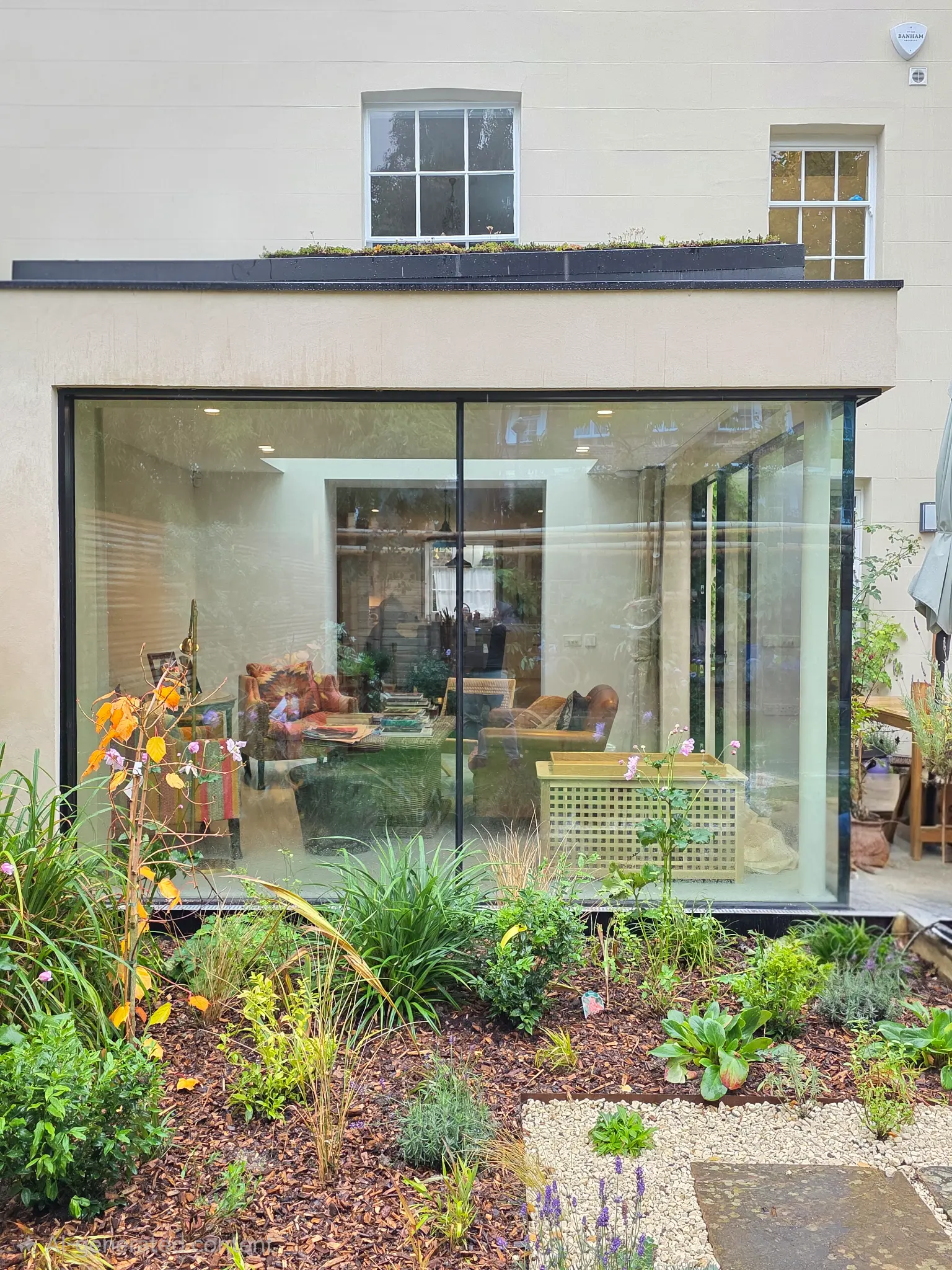
Corner Sliding Doors: Maximising Light, Space & Views
Explore the benefits of corner sliding doors for UK homes. Learn about design, performance, Building Regulations, and practical considerations for this stunning architectural feature.

Shard Architectural Glazing
14 May 2026
Explore the benefits of corner sliding doors for UK homes. Learn about design, performance, Building Regulations, and practical considerations for this stunning architectural feature.
📋In This Article
In modern architectural design, the pursuit of natural light, expansive views, and seamless indoor-outdoor living has led to innovative glazing solutions. Among these, corner sliding doors stand out as a particularly striking and effective way to transform a living space. Unlike traditional patio doors or even standard bi-fold systems, corner sliding doors eliminate the need for a fixed corner post, creating an unobstructed opening that truly blurs the lines between your home and garden.
This comprehensive guide will delve into the numerous benefits of incorporating corner sliding doors into your UK property, covering everything from design aesthetics and performance to practical considerations and compliance with Building Regulations.
What Are Corner Sliding Doors?
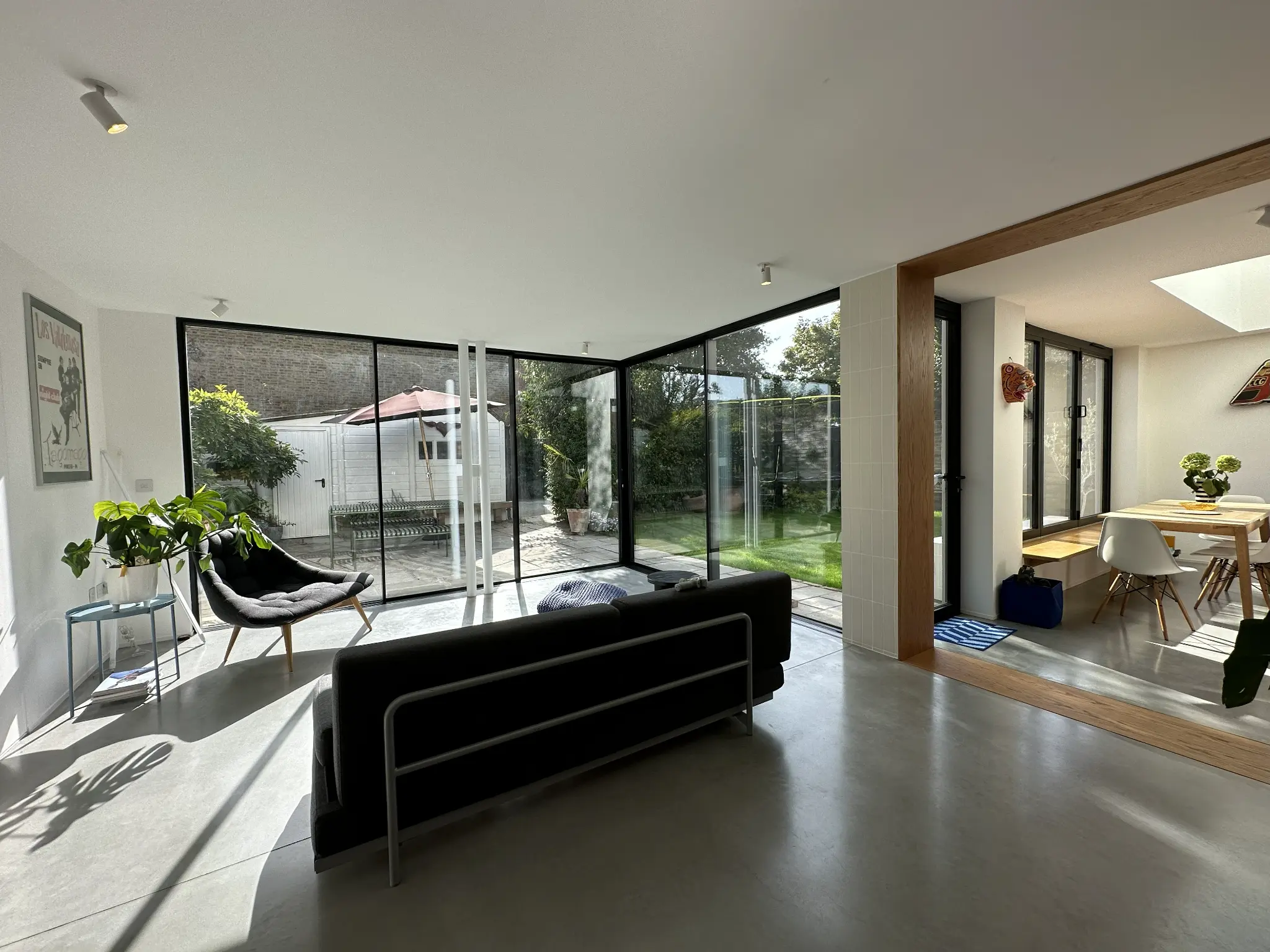
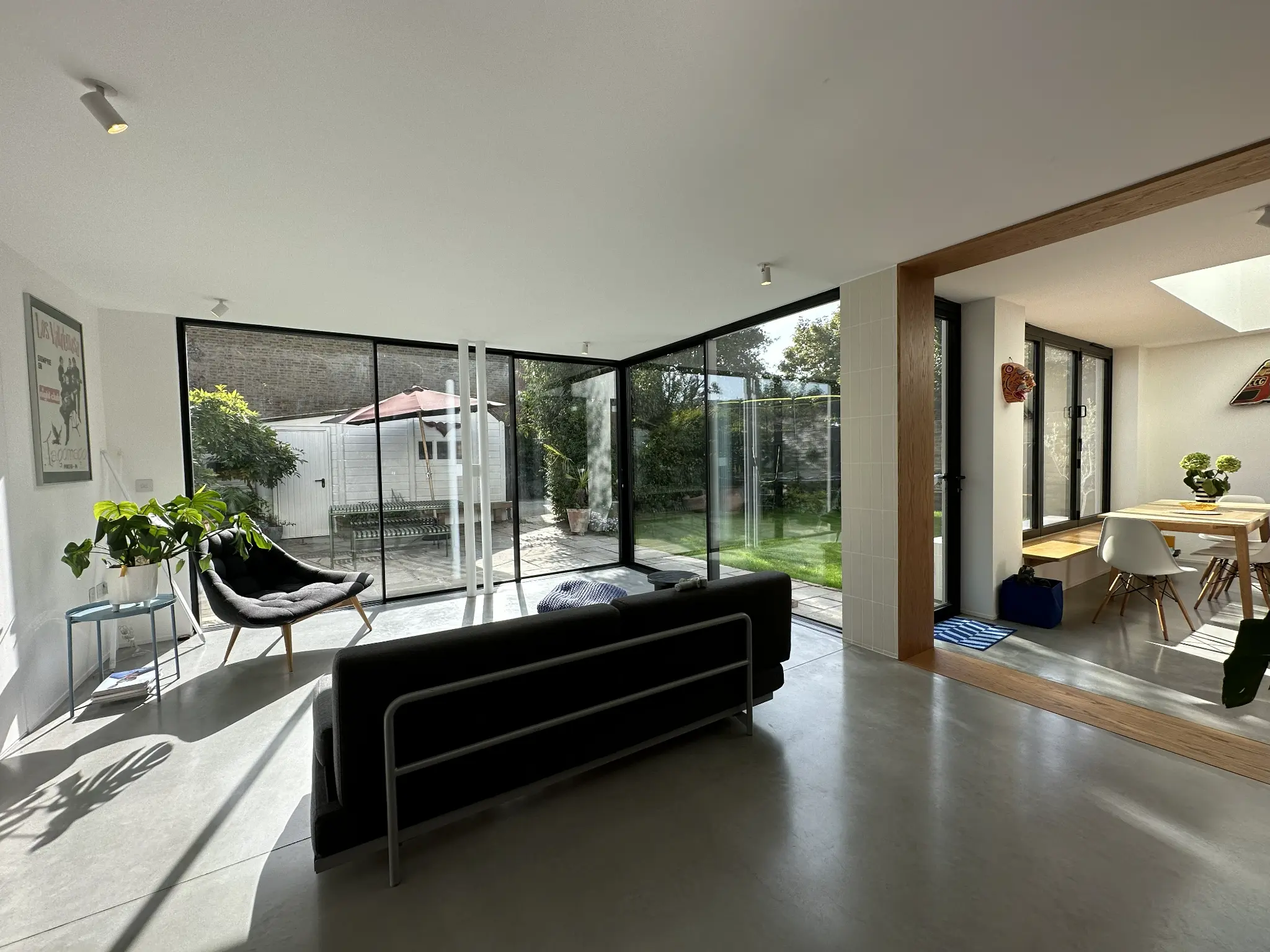
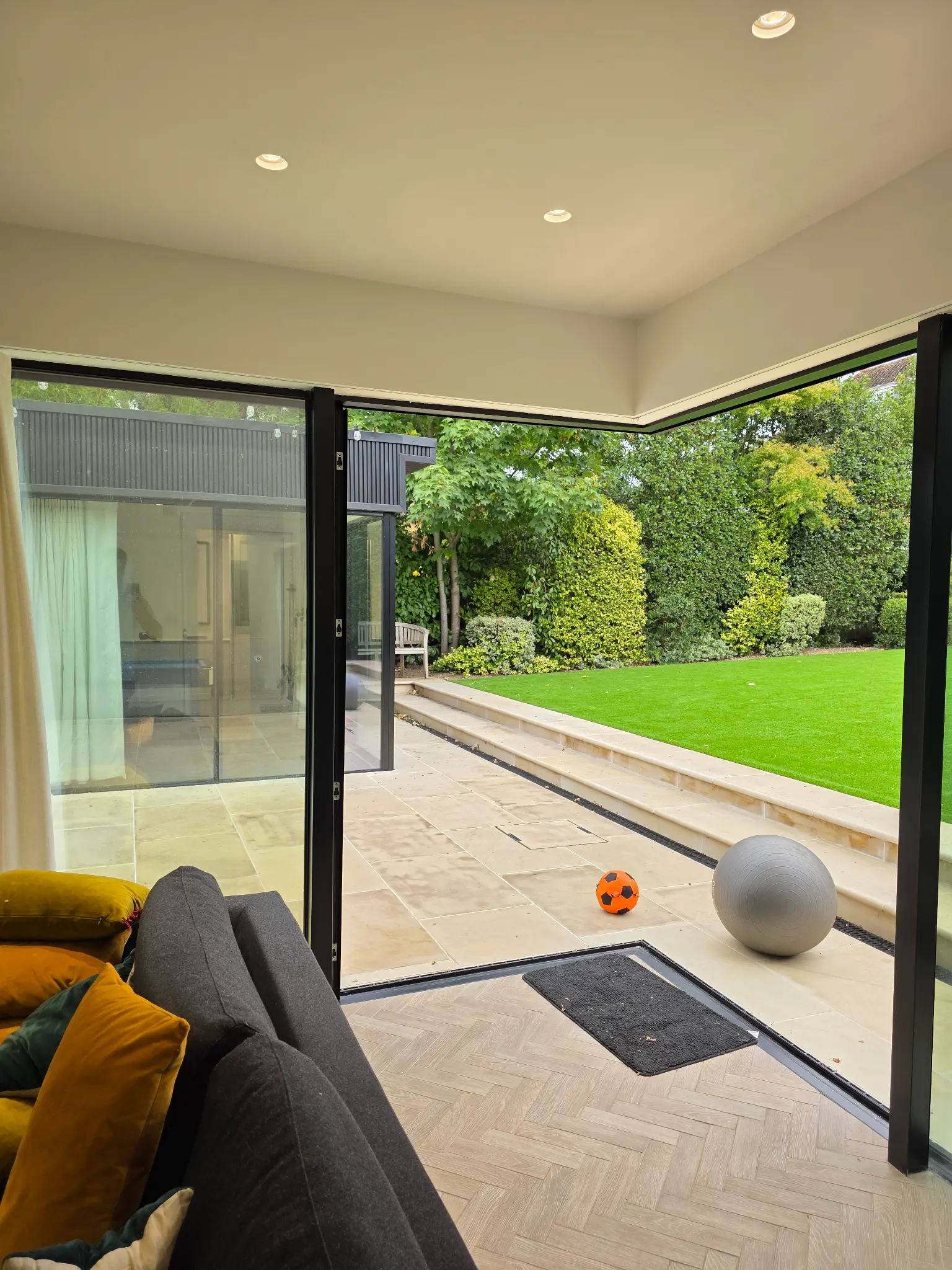
Corner sliding doors are a sophisticated glazing system designed to meet at a 90-degree angle, typically at the corner of a building or extension. The defining feature is their ability to open fully, with the individual door panels sliding away from the corner, often stacking neatly along adjacent walls. Crucially, when fully open, there is no structural post or frame left in the corner, providing a completely clear aperture.
This effect is achieved through clever engineering, often involving reinforced lintels above the opening that bear the structural load, allowing the corner to appear 'floating' or unsupported when the doors are retracted. They are available in various configurations, including two panels meeting at a corner, or multiple panels sliding from both sides to create a grand, open space.
Key Benefits of Corner Sliding Doors
Corner sliding doors offer a unique combination of aesthetic appeal and practical advantages that can significantly enhance a property.
Unrivalled Views & Natural Light
The most immediate and striking benefit is the creation of an expansive, uninterrupted panoramic view. By removing the corner post, your line of sight is completely clear, offering a truly immersive connection with your garden or surrounding landscape. This also floods the interior with an exceptional amount of natural light, making rooms feel larger, brighter, and more inviting, reducing reliance on artificial lighting.
Seamless Indoor-Outdoor Living
When fully open, corner sliding doors literally remove a section of your wall, creating a vast opening that seamlessly merges your internal living space with your external patio or garden. This is ideal for entertaining, family gatherings, or simply enjoying the fresh air, transforming how you interact with your home's exterior.
Modern Aesthetic & Design Flexibility
These doors provide a sleek, contemporary aesthetic that complements modern architectural styles. Their minimalist frames and large glass panels create a sophisticated look. They offer design flexibility, allowing for various opening configurations and panel sizes, tailored to the specific dimensions and design intent of your project.
Space Optimisation
Unlike traditional hinged doors that require clearance for opening, sliding doors operate within their own footprint. The panels slide parallel to the wall, meaning no internal or external space is taken up by swinging doors. This is particularly beneficial for smaller patios or rooms where space is at a premium, allowing for more flexible furniture placement.
Energy Efficiency and Thermal Performance
Modern corner sliding doors are engineered for excellent thermal performance, crucial for UK homes. They typically feature thermally broken aluminium frames and high-performance double or triple glazing. The thermal break is a non-conductive material inserted into the frame profile to prevent heat transfer, while the glazing units are filled with inert gases like argon and have low-emissivity (low-e) coatings to reflect heat.
When selecting corner sliding doors, it's vital to check the U-value. A lower U-value indicates better thermal insulation. For new build extensions in England, the current Building Regulations (Part L, 2022) require windows and doors to achieve a maximum U-value of 1.2 W/m²K. For replacement doors, the requirement is 1.4 W/m²K. Reputable manufacturers will provide U-value certificates for their products, ensuring compliance.
Design and Technical Considerations
While the benefits are clear, careful planning is essential for a successful corner sliding door installation.
Structural Requirements
The absence of a corner post means that the structural load from above must be adequately supported. This typically involves installing a substantial steel or concrete lintel that spans across the entire opening. This structural work is critical and will require careful design by a structural engineer to ensure the integrity of your building. Building Control approval will be mandatory for such structural alterations.
Drainage and Weatherproofing
Effective drainage is paramount, especially with flush threshold designs that create a seamless transition between inside and out. A well-designed drainage channel or linear drain along the external perimeter of the doors is essential to prevent water ingress. The system must also be robustly weather-sealed against wind and rain, which is particularly important in the often-unpredictable UK climate. Look for systems tested to British Standards for weather resistance.
Security Features
Large glazing units and sliding mechanisms require robust security. Modern corner sliding doors incorporate multi-point locking systems, anti-lift devices, and toughened or laminated glass as standard. Always ensure the doors meet relevant security standards, such as PAS 24:2016, which is often a requirement for new build properties and can provide peace of mind for homeowners.
Threshold Options
You generally have two main threshold options:
- Flush Threshold: This creates a level transition between inside and outside, minimising trip hazards and enhancing the seamless aesthetic. It requires meticulous detailing for drainage and weatherproofing.
- Rebated Threshold: This involves a slight step up, offering enhanced weather protection but creating a small barrier.
Panel Configuration and Size
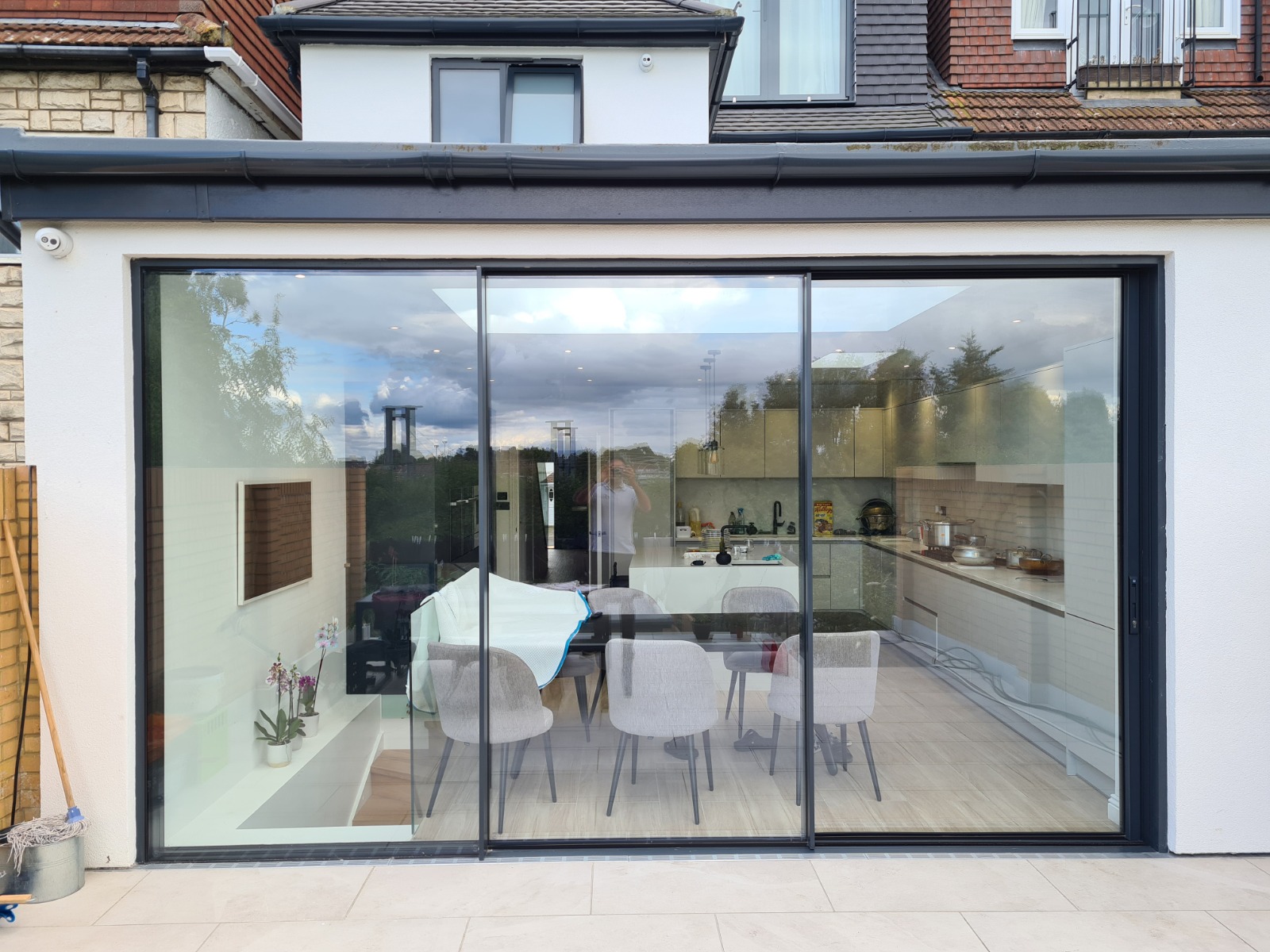
Corner sliding doors can be configured in various ways, from two large panels meeting at a corner to multiple panels sliding from both sides. The maximum size of individual panels will depend on the chosen system and material (e.g., aluminium, timber, uPVC). Larger panels offer fewer sightlines but are heavier and require more robust hardware.
Pro Tip
When planning for corner sliding doors, consider the 'stacking' space. Ensure there's adequate clear wall space on the adjacent walls for the panels to slide and stack neatly without obstructing pathways or furniture. This is crucial for achieving the desired open-corner effect.
UK Building Regulations and Compliance
Any significant alteration to your property, especially those involving structural changes and external openings, will typically fall under UK Building Regulations. For corner sliding doors, the following Approved Documents are particularly relevant:
- Approved Document A (Structure): Crucial for ensuring the structural integrity of your building after removing a corner post. A structural engineer's calculations and design will be required.
- Approved Document B (Fire Safety): Depending on the location and size, fire safety considerations may apply, particularly regarding means of escape.
- Approved Document F (Ventilation): Ensuring adequate ventilation is maintained.
- Approved Document L (Conservation of Fuel and Power): This is highly important for thermal performance. As mentioned, new windows and doors must meet specific U-value requirements (1.2 W/m²K for new build, 1.4 W/m²K for replacement).
- Approved Document K (Protection from falling, collision and impact): Relates to safety glazing and preventing collisions with large glass panes.
It is always advisable to consult with your local Building Control body or an approved inspector early in the planning process. They can provide specific guidance for your project and ensure that all aspects of the installation comply with current regulations. Failure to comply could affect future property sales or require costly remedial work.
Material Options and Performance
Corner sliding doors are predominantly available in aluminium, though timber and composite options exist.
| Feature | Aluminium | Timber | Composite (Alu-Clad Timber) |
|---|---|---|---|
| Frame Strength | Excellent, allows for very large panels and slim sightlines. | Good, but frames can be thicker for structural integrity. | Excellent, combines strength of aluminium with warmth of timber. |
| Thermal Performance (U-value) | Excellent with thermal breaks (achieves <1.2 W/m²K). | Very good naturally, but requires careful design. | Outstanding, best of both worlds. |
| Durability & Maintenance | Very high, low maintenance (occasional cleaning). Resistant to corrosion. | High, but requires regular treatment/painting to prevent rot/warping. | Very high, minimal external maintenance. |
| Aesthetics | Sleek, modern, industrial look. Wide range of RAL colours. | Natural, traditional, warm aesthetic. Can be stained or painted. | Modern external, warm internal. Wide colour choice. |
| Cost | Mid to High. | Mid to High. | High. |
| Typical Application | Contemporary extensions, new builds. | Traditional or period properties, eco-homes. | High-end projects seeking best performance and aesthetics. |
Choosing the Right Supplier and Installer
Given the complexity and structural implications of corner sliding doors, selecting an experienced and reputable supplier and installer is paramount. Look for companies that:
- Have a proven track record with similar installations.
- Can provide detailed technical specifications and U-value certificates for their products.
- Offer comprehensive warranties on both the product and installation.
- Are FENSA or CERTASS registered for replacement installations, ensuring compliance with Building Regulations. For new builds or extensions, ensure they work closely with your architect and structural engineer.
- Provide excellent customer service and aftercare.
Conclusion
Corner sliding doors represent a pinnacle of modern architectural glazing, offering unparalleled views, abundant natural light, and a truly seamless connection to the outdoors. While they require careful planning, structural consideration, and a commitment to quality, the transformative impact they can have on a home is undeniable. By understanding the technical requirements, Building Regulations, and design options, UK homeowners can confidently embark on a project that will enhance their living space for years to come.
If you're considering enhancing your property with the elegance and functionality of corner sliding doors, Shard Architectural Glazing specialises in bespoke, high-performance glazing solutions tailored to the unique demands of UK homes. Our expert team can guide you through every step of the process, from initial design consultation to professional installation, ensuring compliance with all relevant Building Regulations and delivering a stunning, energy-efficient outcome.
Explore Our Products
Discover how Shard Architectural Glazing can transform your home with our premium glazing solutions:
Ready to Transform Your Home?
Get in touch with our expert team for a free consultation and personalised quote. We'll help you choose the perfect glazing solution for your property.