
Maximising Light & Efficiency: Glazing for Your UK Home Extension
Discover expert tips for choosing the right glazing for your UK home extension. Learn about Building Regulations, U-values, design considerations, and practical advice.

Shard Architectural Glazing
12 May 2026
Discover expert tips for choosing the right glazing for your UK home extension. Learn about Building Regulations, U-values, design considerations, and practical advice.
📋In This Article
Adding an extension to your home is an exciting project, offering increased living space, enhanced functionality, and the potential to dramatically improve your property's aesthetic appeal. A critical element in any modern extension design is glazing. The right windows, doors, and rooflights can transform a space, flooding it with natural light, connecting indoors with outdoors, and significantly influencing the extension's energy efficiency and comfort. However, navigating the myriad of options and complying with UK Building Regulations can be a complex task. This guide provides comprehensive, expert advice to help you make informed decisions about glazing for your home extension.
Understanding UK Building Regulations for Glazing
Compliance with UK Building Regulations is paramount for any extension project. Part L (Conservation of Fuel and Power) is particularly relevant to glazing, setting stringent requirements for thermal performance to ensure energy efficiency. The regulations aim to reduce carbon emissions and heat loss from buildings.
Key Thermal Performance Metrics: U-Values
The primary metric for measuring thermal performance is the U-value, expressed in Watts per square metre Kelvin (W/m²K). A lower U-value indicates better insulation and less heat loss. For new extensions in England, the current requirements (Part L 2022) are:
- New Build & Extension Walls: 0.18 W/m²K
- Floors: 0.18 W/m²K
- Roofs: 0.15 W/m²K
- Windows/Doors (New Build): 1.2 W/m²K
- Windows/Doors (Replacement): 1.4 W/m²K
It's crucial that your chosen glazing products meet or exceed these U-value requirements. While individual elements must meet these standards, Building Control will also assess the overall thermal performance of the extension as a whole, often through calculations like the SAP (Standard Assessment Procedure) or SBEM (Simplified Building Energy Model) for larger projects. This means that if you opt for a large area of glazing, you might need to compensate with even better insulation in other parts of the extension (e.g., walls or roof) to achieve overall compliance.
Pro Tip
Always aim for U-values lower than the minimum regulatory requirements if your budget allows. Investing in higher-performance glazing will lead to lower energy bills and a more comfortable living environment in the long run. Consider future-proofing your home against potential stricter regulations.
Choosing the Right Glazing Type and Frame Materials
The type of glazing and the frame material you select will significantly impact performance, aesthetics, and cost.
Glazing Types: Double vs. Triple Glazing
- Double Glazing: Consists of two panes of glass separated by a sealed gap, typically filled with an inert gas like Argon. This is the standard for most new installations and replacements, easily meeting the 1.2 W/m²K (new build) and 1.4 W/m²K (replacement) U-value requirements.
- Triple Glazing: Features three panes of glass with two sealed, gas-filled gaps. It offers superior thermal performance, often achieving U-values as low as 0.8 W/m²K or even lower. While more expensive and heavier, it provides exceptional insulation, improved soundproofing, and can help achieve very low overall energy consumption for the extension.
Frame Materials Comparison
The frame material plays a vital role in both the U-value and the overall look of your glazing.
| Material | Pros | Cons | Typical U-value (Frame Only) |
|---|---|---|---|
| uPVC | Cost-effective, low maintenance, good thermal performance, wide colour range. | Can appear bulky, less rigid than other materials, aesthetic limitations for some designs. | 1.2 - 1.6 W/m²K |
| Aluminium | Slim sightlines, strong, durable, modern aesthetic, wide colour range, recyclable. | Higher cost than uPVC, traditionally poorer thermal performance (though modern thermal breaks mitigate this). | 1.4 - 1.8 W/m²K (with thermal break) |
| Timber | Natural aesthetic, excellent thermal performance, sustainable, can be painted/stained. | Higher maintenance (requires regular painting/staining), higher initial cost, prone to rot if not maintained. | 1.0 - 1.4 W/m²K |
| Composite (Timber-Aluminium) | Combines timber's internal warmth with aluminium's external durability and low maintenance, excellent thermal performance. | Highest cost, complex manufacturing. | 0.8 - 1.2 W/m²K |
Design Considerations for Extension Glazing
Beyond thermal performance, the design of your glazing will define the character and functionality of your new space.
Maximising Natural Light
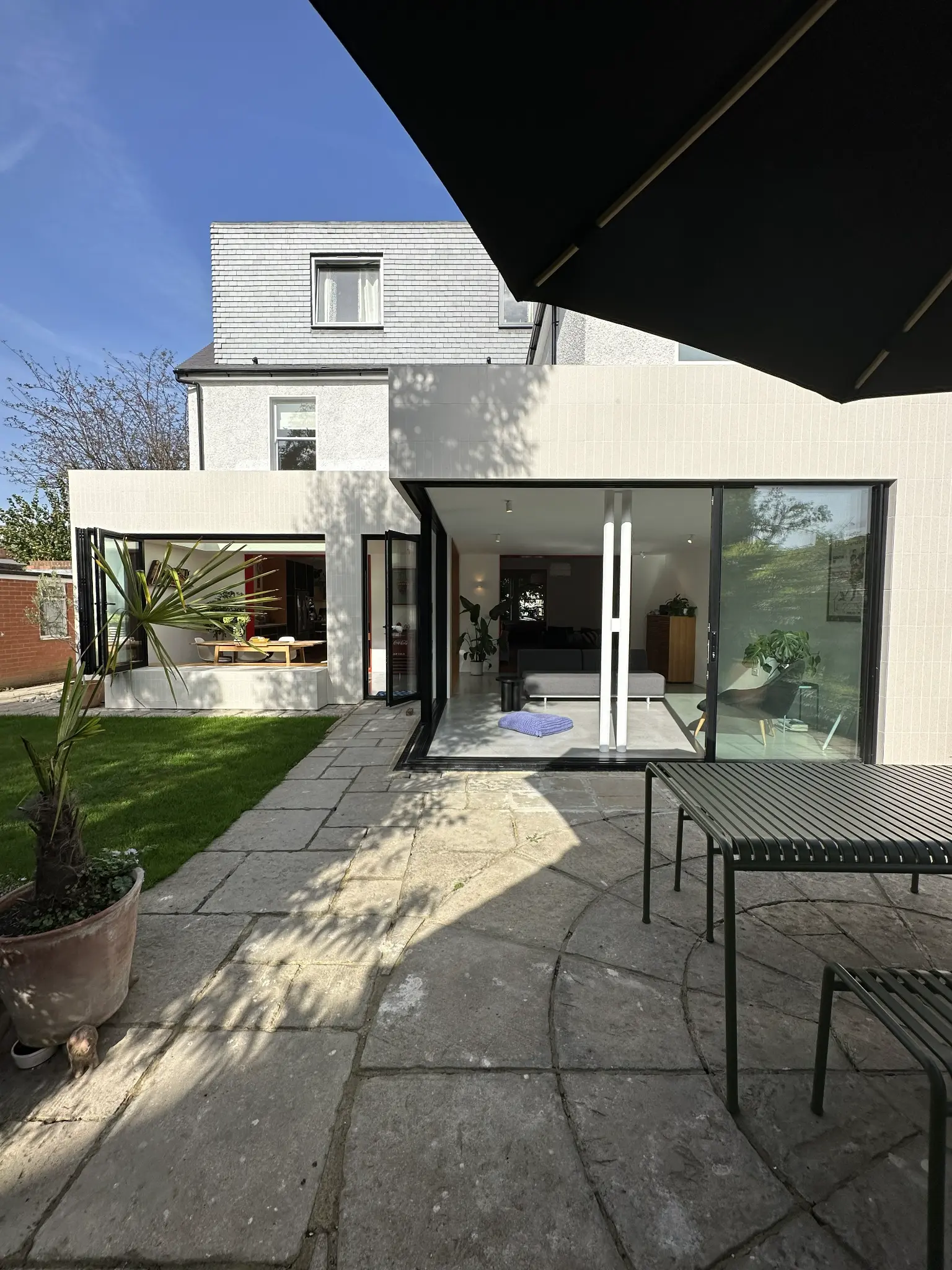
- Bi-fold Doors: Ideal for creating large, uninterrupted openings, seamlessly connecting your extension to the garden. They fold back compactly, offering maximum light and ventilation.
- Sliding Doors: Offer larger individual glass panels than bi-folds, providing expansive views even when closed. They don't intrude on internal or external space when open.
- French Doors: A classic option, offering a more traditional aesthetic with two hinged doors opening outwards or inwards.
- Rooflights & Skylights: Crucial for bringing light deep into the extension, especially if it's north-facing or overshadowed by existing structures. Options include fixed panes, manual or electric opening vents, and walk-on rooflights for terraces above.
- Glazed Roofs & Lanterns: Create a dramatic architectural statement, flooding the space with overhead natural light. Ensure these are designed with excellent thermal performance and solar control.
Solar Gain and Overheating
While natural light is desirable, excessive solar gain can lead to overheating, particularly in south-facing extensions with large glazed areas. Consider:
- Solar Control Glass: Special coatings on the glass can reflect a significant portion of solar radiation while still allowing light through, reducing heat build-up.
- External Shading: Overhangs, brise soleil, or external blinds can effectively block direct sunlight during the hottest parts of the day.
- Ventilation Strategy: Ensure adequate cross-ventilation or trickle vents to allow hot air to escape.
Privacy and Security
Your glazing choices should also address privacy and security concerns:
- Obscure or Frosted Glass: Ideal for bathrooms or areas where privacy is needed without sacrificing light.
- Laminated or Toughened Glass: Enhances security and safety. Laminated glass holds together when broken, while toughened glass shatters into small, less dangerous pieces. Both are typically required for low-level glazing (below 800mm from floor level) and in or near doors.
- Multi-point Locking Systems: Ensure all doors and accessible windows are fitted with robust, multi-point locking mechanisms. Look for products certified to PAS 24 (Publicly Available Specification) for enhanced security.

Installation and Long-Term Considerations
Even the best glazing products will underperform if not installed correctly. Proper installation is crucial for thermal performance, weatherproofing, and longevity.
Professional Installation
Always use experienced, certified installers. Look for companies that are FENSA or CERTASS registered, which ensures their work complies with Building Regulations and is covered by an insurance-backed guarantee. They will also handle the necessary Building Control notifications for you.
Ventilation Requirements
Building Regulations Part F (Ventilation) requires adequate ventilation to prevent condensation and ensure good indoor air quality. This typically means incorporating trickle vents into windows or using mechanical ventilation systems. Your installer or architect can advise on specific requirements for your extension.
Maintenance
Consider the long-term maintenance of your chosen glazing. uPVC and aluminium are generally low maintenance, requiring only occasional cleaning. Timber frames, while beautiful, will need regular painting or staining to protect them from the elements.
Benefits of Well-Designed Extension Glazing
Enhanced Natural Light
Flooding your new space with daylight reduces the need for artificial lighting, creating a brighter, more inviting, and healthier environment.
Improved Energy Efficiency
High-performance glazing significantly reduces heat loss, leading to lower heating bills and a more comfortable temperature year-round.
Strong Indoor-Outdoor Connection
Large glazed elements like bi-fold or sliding doors blur the lines between your extension and garden, enhancing the sense of space and openness.
Increased Property Value
A well-designed, energy-efficient extension with modern glazing is a significant asset, adding considerable value and appeal to your home.
Final Thoughts and Expert Advice
Planning the glazing for your home extension requires careful consideration of aesthetics, performance, budget, and regulatory compliance. It's advisable to consult with an architect or experienced extension designer early in the process. They can help you balance your design aspirations with practical considerations and ensure all aspects meet UK Building Regulations.
Remember that the cheapest option isn't always the most cost-effective in the long run. Investing in quality, high-performance glazing will pay dividends through reduced energy bills, enhanced comfort, and a beautiful, functional living space for years to come.
At Shard AG, we specialise in providing high-quality architectural glazing solutions for home extensions across the UK. Our expert team can guide you through the selection process, offering bespoke advice on everything from U-values and frame materials to design aesthetics and installation. We ensure all our products meet or exceed current Building Regulations, helping you create a stunning, energy-efficient extension that truly enhances your home.
Explore Our Products
Discover how Shard Architectural Glazing can transform your home with our premium glazing solutions:
Ready to Transform Your Home?
Get in touch with our expert team for a free consultation and personalised quote. We'll help you choose the perfect glazing solution for your property.