

Maximising Space with Glass Doors: A UK Homeowner's Guide
Discover how glass doors can transform your UK home, creating an illusion of space, enhancing natural light, and offering practical benefits. Explore types, regulations, and installation tips.

Shard Architectural Glazing
16 May 2026
Discover how glass doors can transform your UK home, creating an illusion of space, enhancing natural light, and offering practical benefits. Explore types, regulations, and installation tips.
📋In This Article
In the UK, where living spaces can often be at a premium, homeowners are constantly seeking innovative solutions to make their properties feel larger, brighter, and more open. One of the most effective and aesthetically pleasing ways to achieve this is through the strategic use of glass doors. Far from being a mere functional barrier, glass doors serve as architectural features that can dramatically alter the perception and utility of a room.
This comprehensive guide will delve into the various types of glass doors available, their benefits, key considerations for UK homeowners, and how they interact with vital building regulations. Our aim is to provide you with the knowledge needed to make an informed decision, transforming your home into a more spacious and luminous environment.
The Power of Transparency: Why Choose Glass Doors?
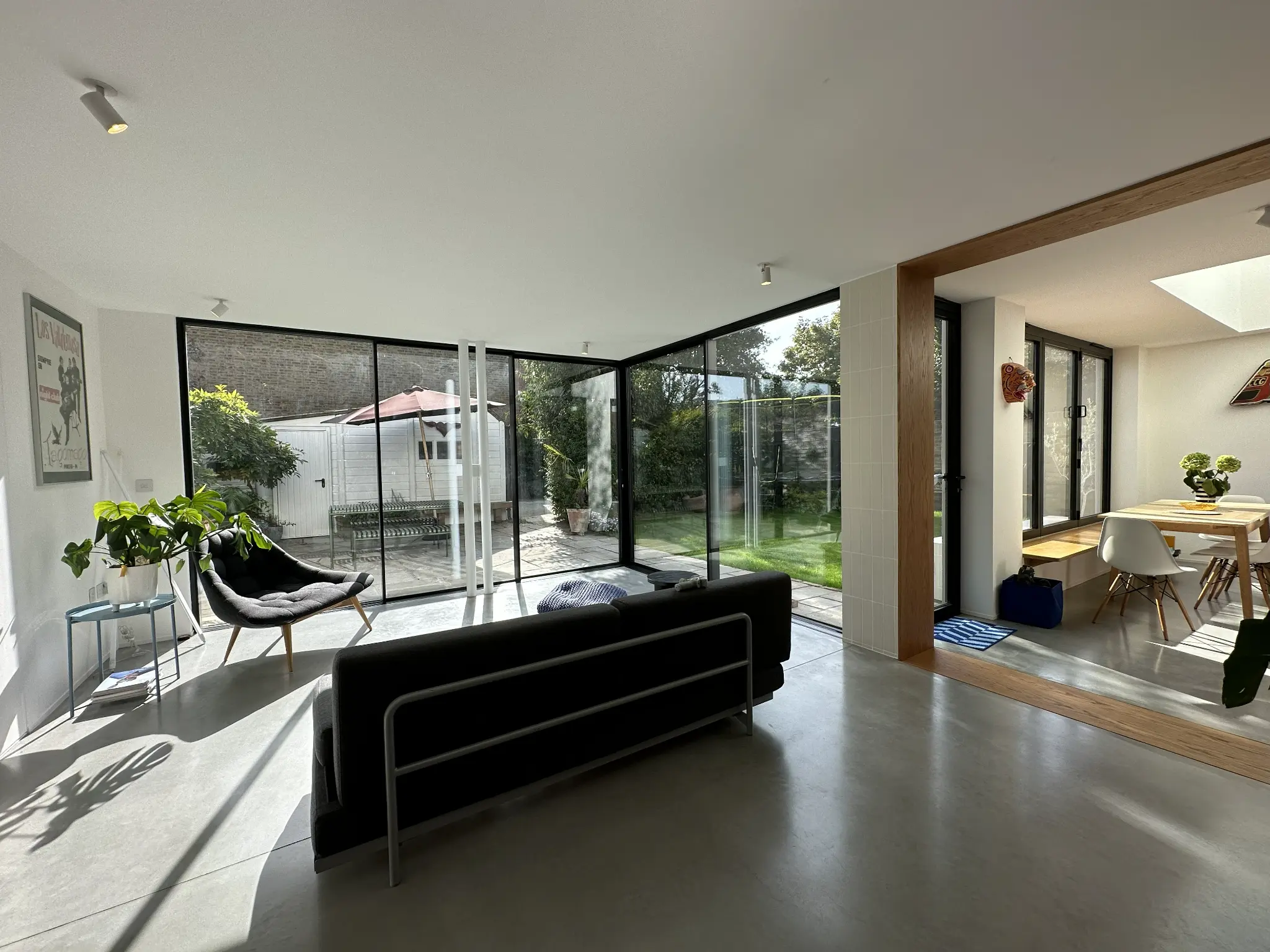
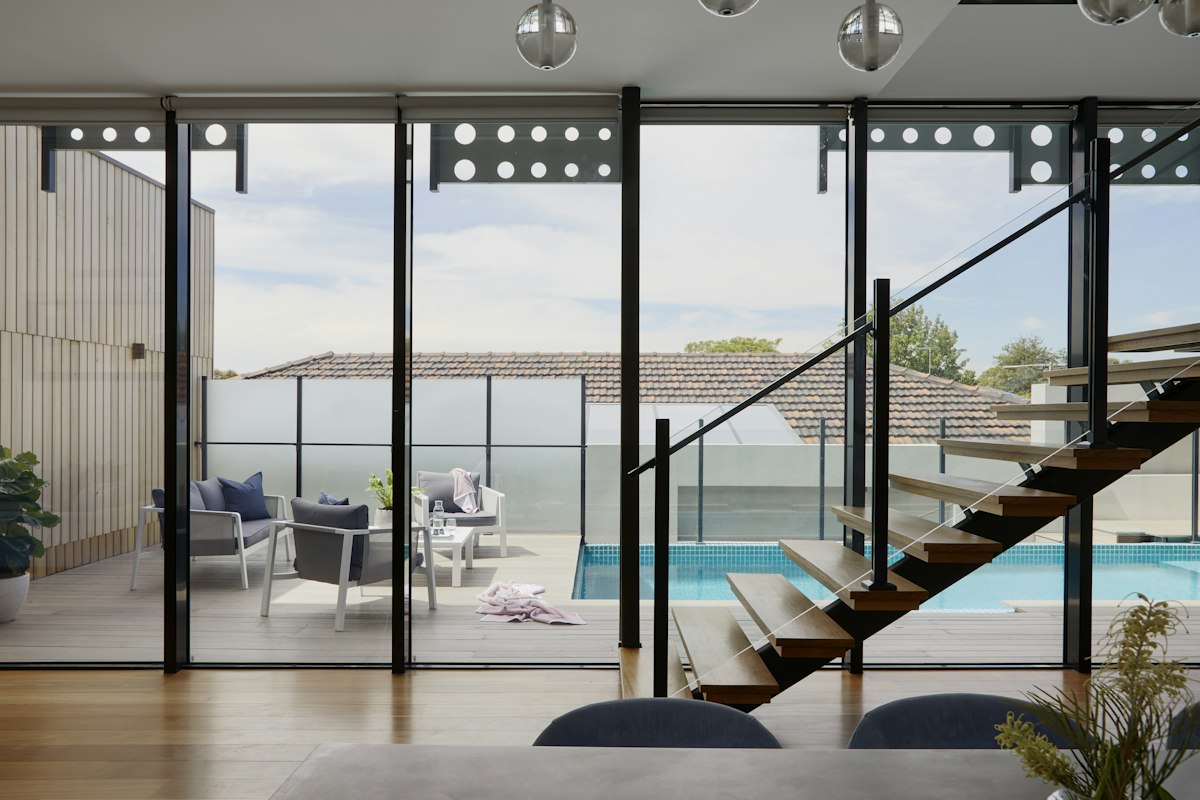
The primary appeal of glass doors lies in their ability to foster an open-plan feel without sacrificing the benefits of defined rooms. They allow natural light to penetrate deeper into your home, reducing reliance on artificial lighting and creating a more uplifting atmosphere. This transparency also creates a visual connection between spaces, making individual rooms feel less confined and the overall property appear larger.
Key Benefits for UK Homes:
Enhanced Natural Light
Glass doors maximise the ingress of daylight, brightening interiors and potentially reducing energy consumption for lighting. This is particularly valuable in the UK's often overcast climate.
Illusion of Space
By allowing sightlines to extend beyond a single room, glass doors create a perception of greater depth and openness, making even compact rooms feel more expansive.
Versatile Design
Available in numerous styles, frame materials, and glass types, glass doors can complement any architectural aesthetic, from traditional Victorian homes to modern new builds.
Improved Flow & Connection
They facilitate a seamless transition between rooms, promoting better social interaction within open-plan living areas while still offering the option for acoustic or thermal separation.
Types of Glass Doors for Space Maximisation
The choice of glass door type significantly impacts both the aesthetic and functional aspects of space maximisation. Each design offers unique advantages:
1. Sliding Glass Doors (Patio Doors)
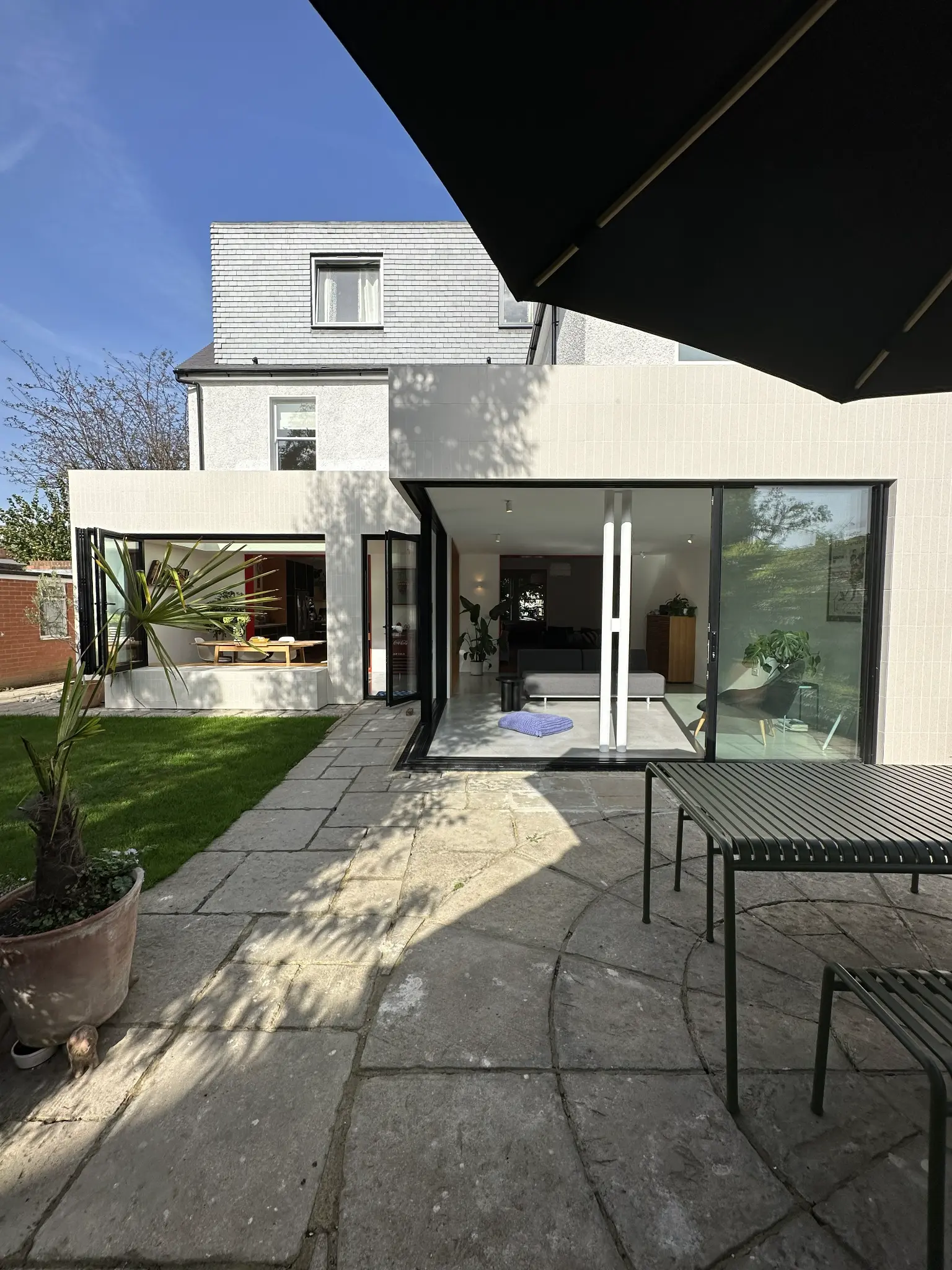
- How they save space: These doors operate along a track, meaning the door panels slide past each other rather than swinging inwards or outwards. This eliminates the need for a 'swing arc', freeing up valuable floor space on both sides of the opening.
- Ideal for: Connecting living rooms to gardens or patios, creating large openings between internal rooms, or as wardrobe doors.
- Considerations: Requires sufficient wall space for panels to slide into or alongside. Can be single-track (one fixed panel, one sliding) or multi-track (multiple sliding panels).
2. Bi-Fold Doors (Folding Sliding Doors)
- How they save space: Bi-fold doors consist of multiple panels that fold back concertina-style, stacking neatly to one or both sides of the opening. When fully open, they can create an almost uninterrupted opening, blurring the lines between indoor and outdoor spaces.
- Ideal for: Large openings to gardens, conservatories, or creating a flexible division between two large internal rooms.
- Considerations: Require a sturdy lintel for support due to their weight. The stacked panels will occupy some space at the side of the opening when fully open.
3. Pocket Doors
- How they save space: These are a type of sliding door where the door panel slides directly into a cavity within the adjacent wall. This completely conceals the door when open, offering the ultimate space-saving solution as no floor or wall space is taken up.
- Ideal for: En-suites, utility rooms, kitchens, or any area where swing doors would obstruct furniture or traffic flow.
- Considerations: Requires significant structural work to create the wall cavity, which can be more complex in existing homes. Not suitable for load-bearing walls without extensive modification.
4. French Doors
- How they save space: While traditional French doors swing open, modern designs can feature slimmer frames and larger glass panels, enhancing light and visual connection. They typically open outwards to save internal space.
- Ideal for: Creating an elegant opening to a garden or balcony, or as an internal room divider where a wider opening than a single door is desired.
- Considerations: Still require a swing arc, so planning for furniture placement is crucial.
5. Internal Glazed Partitions & Screens
- How they save space: Not strictly doors, but these full-height glass panels with integrated doors (often pivot or sliding) can divide large open-plan areas without blocking light or visual flow. They offer acoustic separation while maintaining an open feel.
- Ideal for: Dividing a large living/dining area, creating a home office within an open space, or sectioning off a hallway.
- Considerations: Can be costly due to custom design and installation.
Glass Types and Frame Materials
Glass Options:
- Toughened Glass: Standard for safety, approximately five times stronger than ordinary glass. If it breaks, it shatters into small, relatively harmless pieces.
- Laminated Glass: Two or more panes bonded with an interlayer, holding fragments together if broken. Offers enhanced security and sound reduction.
- Double or Triple Glazing: Essential for external doors to meet thermal performance requirements (U-values). Internal doors can also benefit from double glazing for improved acoustic insulation.
- Low-E Coatings: Applied to glass to improve thermal efficiency by reflecting heat.
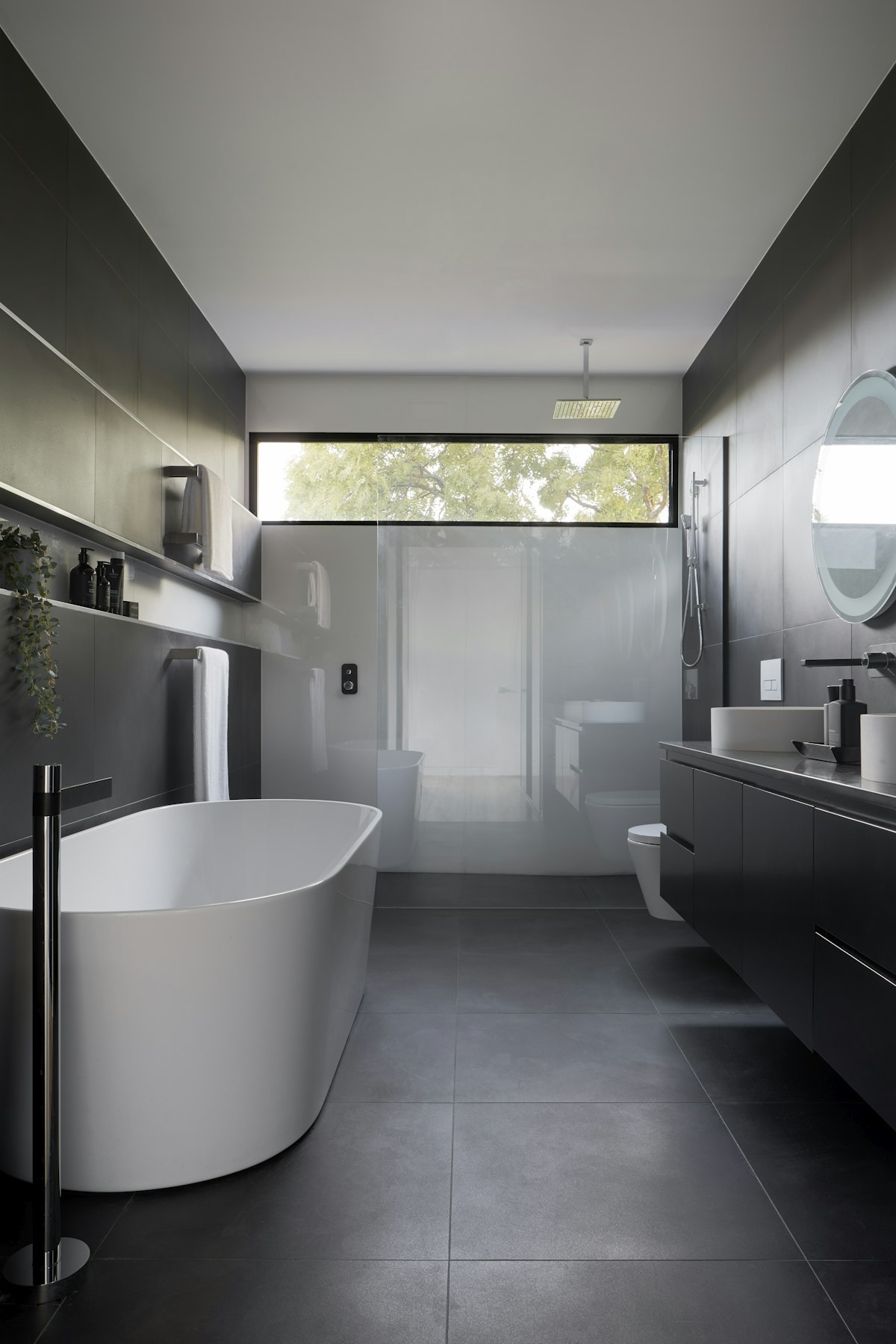
- Obscure/Frosted Glass: Provides privacy while still allowing light transmission, ideal for bathrooms or utility rooms.
Frame Materials:
- Aluminium: Strong, lightweight, durable, and allows for very slim frames, maximising glass area. Excellent thermal performance when thermally broken.
- uPVC: Cost-effective, low maintenance, and good thermal insulation. Frames can be thicker than aluminium.
- Timber: Aesthetically pleasing, excellent natural insulator, but requires more maintenance. Can be expensive.
- Composite: Combines materials (e.g., timber interior, aluminium exterior) for the best of both worlds – aesthetics, durability, and thermal performance.
Pro Tip
When selecting frame materials, consider the U-value of the entire door unit (glass + frame). For external doors, this is critical for thermal efficiency and Building Regulations compliance. Slimmer frames generally mean more glass and thus more light, but ensure they don't compromise structural integrity or thermal performance.
UK Building Regulations and Compliance
Installing or replacing external glass doors, and in some cases internal doors, will typically fall under the scope of UK Building Regulations. It is crucial to ensure your chosen doors comply, especially regarding thermal performance, safety, and fire safety.
Key Regulations to Consider:
- Part L (Conservation of Fuel and Power): This is paramount for external doors. New external doors (e.g., for an extension) must achieve a U-value of 1.2 W/m²K or better. Replacement external doors must achieve 1.4 W/m²K or better. These values are for the entire door unit, not just the glass.
- Part K (Protection from Falling, Collision and Impact): Relates to safety glazing. Any glass in a critical location (e.g., within 800mm of floor level, or in/around a door) must be safety glass (toughened or laminated) to prevent injury from breakage.
- Part B (Fire Safety): For internal doors, especially those in a protected escape route (e.g., a hallway leading to an exit in a two-storey or higher dwelling), fire resistance may be required. This typically means a solid fire door, but specialist fire-rated glazed doors are available, though they are often significantly more expensive and have specific installation requirements. Consult Building Control for specific requirements related to your property's layout and height.
- Part M (Access to and Use of Buildings): While primarily for new builds and public buildings, it's good practice to consider accessibility. Door widths should be adequate for wheelchair access where appropriate (minimum 800mm clear opening width is a common recommendation).
Always consult your local Building Control body or a qualified architect/surveyor before undertaking significant alterations involving external doors or structural changes for pocket doors. They can advise on specific requirements for your project and ensure compliance.
Installation and Maintenance
Professional Installation:
Due to their weight, complexity, and the need for precision to ensure smooth operation and weather-tightness, professional installation is highly recommended for all types of glass doors, especially bi-folds and large sliding systems. Incorrect installation can lead to drafts, leaks, operational issues, and even safety hazards.
Maintenance:
- Cleaning: Regular cleaning of glass with a suitable glass cleaner and soft cloth will maintain clarity.
- Frames: Aluminium and uPVC frames require minimal maintenance, typically just a wipe down with soapy water. Timber frames will require periodic re-painting or re-varnishing.
- Hardware: Tracks, rollers, hinges, and locks should be kept clean and free of debris. Lubricate moving parts periodically with a silicone-based spray as per manufacturer guidelines.
- Seals: Check seals and gaskets periodically for signs of wear or damage to ensure continued thermal performance and weather resistance.
Comparison Table: Door Types at a Glance
| Door Type | Space Saving | Light Maximisation | Installation Complexity | Typical Use |
|---|---|---|---|---|
| Sliding Glass Doors | High (no swing arc) | High | Medium | External patio, internal room divider |
| Bi-Fold Doors | Very High (when fully open) | Very High | High | Large external openings, flexible internal division |
| Pocket Doors | Maximum (door disappears) | High | Very High (structural work) | Internal en-suites, utility rooms, offices |
| French Doors | Low (requires swing arc) | Medium-High | Medium | External garden access, internal room divider |
| Glazed Partitions | High (visual space) | Very High | High (custom) | Open-plan zoning, home offices |
Conclusion
Glass doors offer a powerful solution for maximising space, enhancing natural light, and improving the aesthetic appeal of any UK home. Whether you opt for the sleek efficiency of sliding doors, the expansive openness of bi-folds, or the ingenious concealment of pocket doors, careful planning and adherence to Building Regulations are key to a successful project.
By understanding the different types, materials, and regulatory requirements, you can make an informed choice that will not only transform your living environment but also add significant value to your property.
If you're considering incorporating glass doors into your home improvement project, we recommend consulting with experienced professionals. Shard AG specialises in high-quality architectural glazing solutions across the UK, offering expert advice, design, and installation services for a wide range of glass doors and partitions. Our team can guide you through the options, ensuring your chosen solution meets both your aesthetic desires and all necessary compliance standards.
Explore Our Products
Discover how Shard Architectural Glazing can transform your home with our premium glazing solutions:
Ready to Transform Your Home?
Get in touch with our expert team for a free consultation and personalised quote. We'll help you choose the perfect glazing solution for your property.