

Slim Profile Door Frames: Maximising Light & Views in UK Homes
Explore the benefits, technical considerations, and UK Building Regulations for slim profile door frames. Enhance your home with more light and expansive views.

Shard Architectural Glazing
17 May 2026
Explore the benefits, technical considerations, and UK Building Regulations for slim profile door frames. Enhance your home with more light and expansive views.
📋In This Article
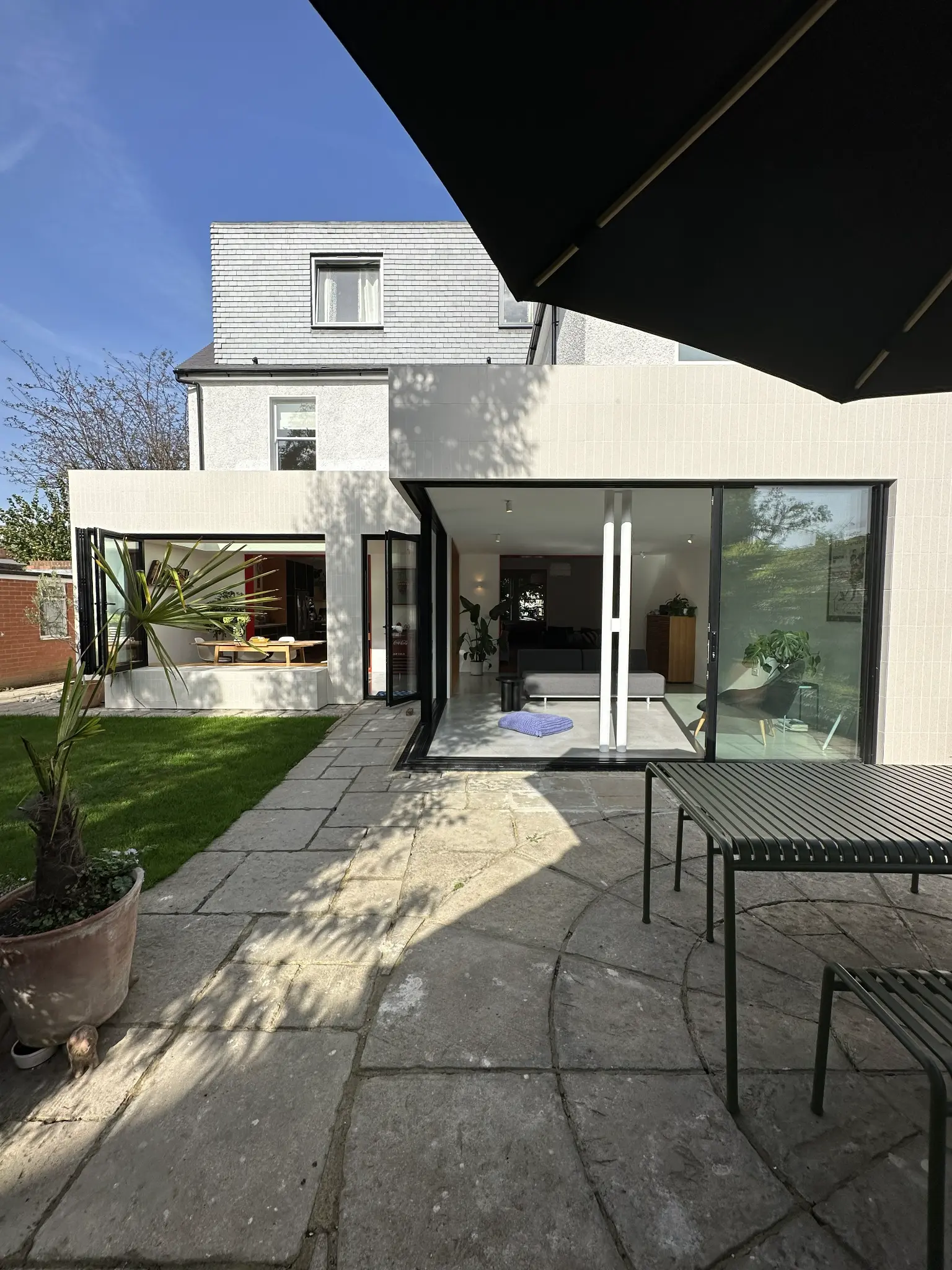
In modern architectural design, the pursuit of natural light and expansive views is paramount. Homeowners in the UK are increasingly seeking ways to blur the lines between indoor and outdoor spaces, and one of the most effective solutions gaining traction is the adoption of slim profile door frames. These innovative systems offer a minimalist aesthetic, allowing for larger glass areas and significantly reducing the visual obstruction typically associated with traditional door frames.
This comprehensive guide will delve into the world of slim profile door frames, covering their advantages, types, technical specifications, and crucial considerations for UK homeowners, including compliance with Building Regulations. Whether you're planning a new build, an extension, or a renovation, understanding these systems can help you make an informed decision for your property.
What Are Slim Profile Door Frames?
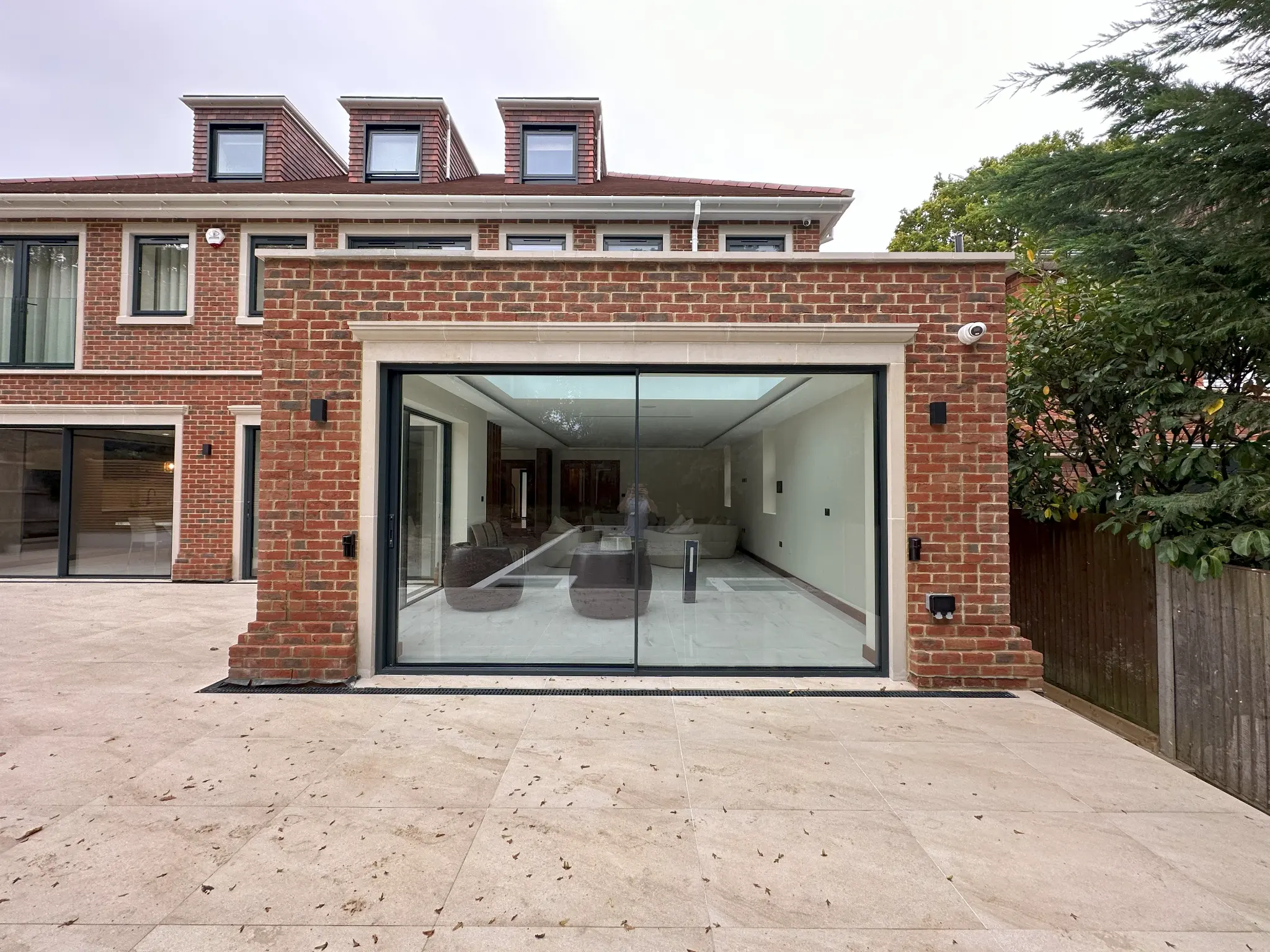
Slim profile door frames, often referred to as 'minimalist' or 'ultra-slim' frames, are engineered door systems designed with significantly narrower sightlines compared to conventional door frames. The primary objective is to maximise the glass area, thereby increasing natural light penetration and offering unobstructed views. This is achieved through advanced material science and clever engineering, allowing the structural integrity to be maintained with less frame material.
While the term 'slim profile' can apply to various door types, it most commonly refers to sliding patio doors (including lift-and-slide and inline sliding), bifold doors, and sometimes large pivot or French doors. The true 'slimness' is measured by the width of the vertical interlock (the part where two door panels meet) and the perimeter frame.
Key Characteristics
- Minimal Sightlines: Interlocks can be as narrow as 20mm-35mm, significantly less than standard frames which might be 50mm-80mm or more.
- Maximised Glass Area: More glass means more light and better views.
- Contemporary Aesthetic: Clean lines and a sleek appearance that complements modern and contemporary architecture.
- High Performance: Despite their slimness, leading systems offer excellent thermal efficiency, security, and weather resistance.
Benefits of Choosing Slim Profile Door Frames
The appeal of slim profile door frames extends beyond mere aesthetics, offering a range of practical and environmental advantages for your home.
Enhanced Natural Light
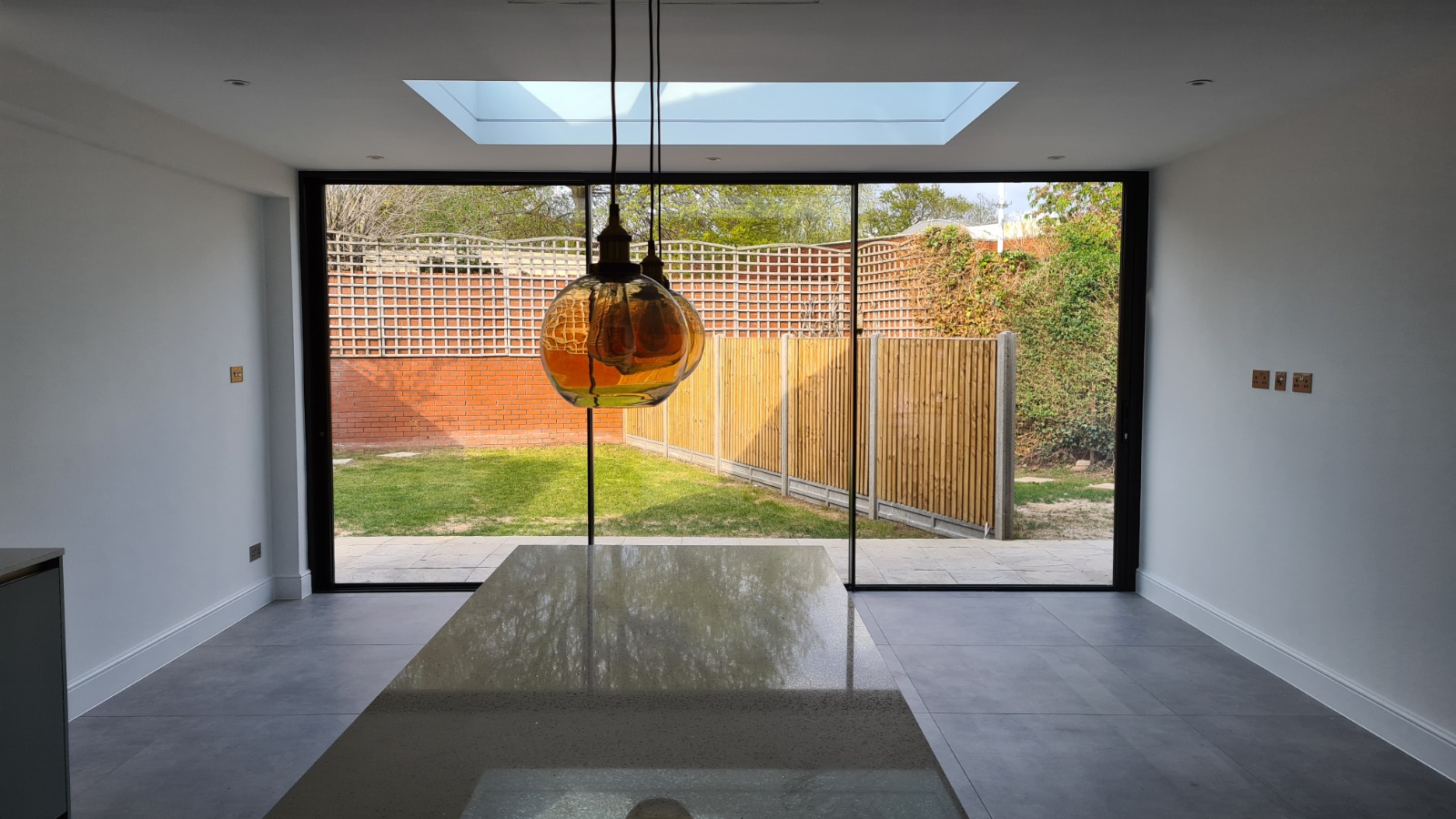
By reducing the frame's visible mass, slim profiles allow a greater influx of natural light into your living spaces. This brightens interiors, reduces reliance on artificial lighting during the day, and can positively impact mood and well-being.
Uninterrupted Views
Whether you have a sprawling garden, a city skyline, or a picturesque landscape, slim frames offer panoramic, virtually uninterrupted views. This creates a seamless connection between your indoor and outdoor environments, enhancing the sense of space.
Modern Aesthetic Appeal
The minimalist design of slim profiles perfectly suits contemporary architectural styles. They provide a sleek, sophisticated look that can elevate the overall design of your home, adding significant visual value and curb appeal.
Improved Thermal Performance
Modern slim profile systems are engineered with advanced thermal breaks and often utilise high-performance glazing. This ensures that despite the larger glass area, they can achieve excellent U-values, contributing to a more energy-efficient home.
Pro Tip
When comparing slim profile systems, always ask for the 'sightline' measurement, especially for the vertical interlock where panels meet. This is the most critical dimension for determining how 'slim' the system truly is and how much glass you'll see.
Materials and Technical Specifications
The ability to achieve slim profiles while maintaining structural integrity and performance largely depends on the materials used and the engineering behind them.
Common Materials
- Aluminium: This is the most prevalent material for slim profile door frames. Aluminium is strong, lightweight, durable, and highly malleable, allowing for intricate extrusions and slim sightlines. It's also resistant to corrosion and requires minimal maintenance. Modern aluminium systems incorporate sophisticated thermal breaks to prevent heat transfer.
- Steel: For the absolute slimmest sightlines, particularly in heritage or industrial-style applications, steel frames can be used. Steel is incredibly strong, allowing for very slender profiles. However, it can be more expensive, heavier, and requires careful consideration for thermal performance (often needing advanced thermal breaks) and corrosion protection.
- Composite: Some manufacturers offer composite frames, combining materials like aluminium externally with timber internally. These can offer good thermal performance and a warm internal aesthetic but may not achieve the same ultra-slim sightlines as pure aluminium or steel.
Glazing Considerations
The glass itself plays a crucial role in the performance of slim profile doors. Given the increased glass area, specifying the right glazing is vital:
- Double Glazing: Standard for most UK applications, typically 24mm to 28mm units, often with argon gas infill and low-emissivity (low-e) coatings for improved thermal insulation.
- Triple Glazing: For superior thermal performance, especially in larger openings or very exposed locations, triple glazing (e.g., 36mm-48mm units) can be specified. While offering better U-values, it adds weight and cost, and some ultra-slim systems may have limitations on glass thickness.
- Safety Glass: All large glazed areas, especially in doors, must use safety glass (toughened or laminated) in accordance with Building Regulations Part K.
Thermal Performance and U-values
A critical technical aspect is the U-value, which measures how effectively a component insulates. A lower U-value indicates better insulation. For doors and windows, the U-value is expressed in Watts per square metre Kelvin (W/m²K).
Modern slim profile door systems are designed to meet stringent thermal performance standards. This is achieved through:
- Polyamide Thermal Breaks: Integrated into the frame profiles to separate the inner and outer aluminium sections, significantly reducing heat transfer.
- Warm Edge Spacers: Used within the double or triple glazed units to minimise heat loss at the edges of the glass.
- Low-Emissivity Coatings: Applied to glass panes to reflect heat back into the room in winter and out in summer.
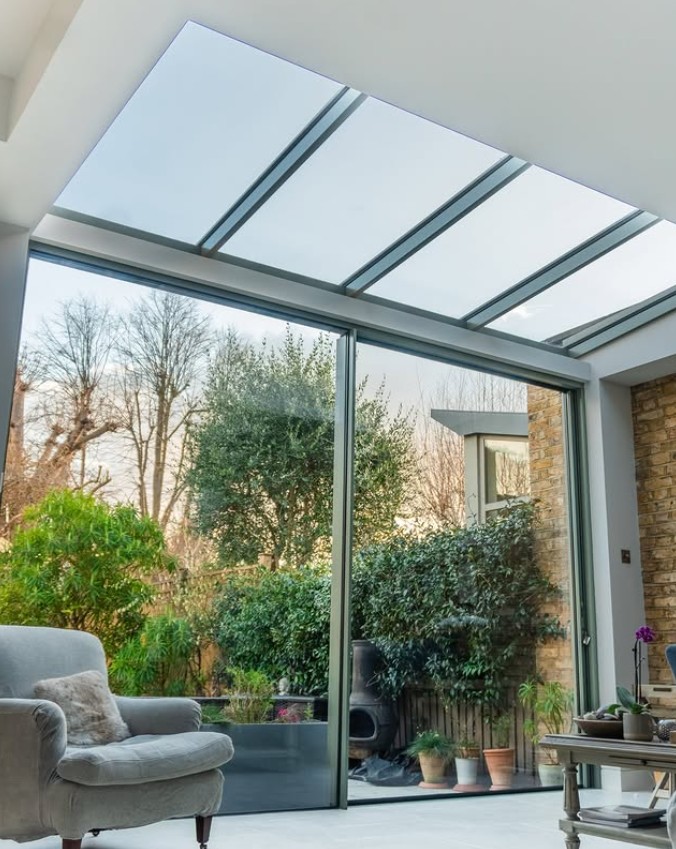
UK Building Regulations and Compliance
Any installation of new or replacement doors and windows in a UK home must comply with the relevant Building Regulations. For slim profile door frames, the most pertinent parts are:
Part L: Conservation of Fuel and Power (England, 2022 Edition)
This section sets minimum standards for the energy efficiency of buildings. For doors and windows, specific U-value requirements must be met:
- New Builds & Extensions: The entire dwelling or extension must achieve a target U-value for its fabric, but individual elements also have limiting U-values. For new windows and doors in a new build, the limiting U-value is 1.2 W/m²K.
- Replacement Doors: For existing dwellings, replacement windows and doors must achieve a maximum U-value of 1.4 W/m²K.
It is crucial to ensure that your chosen slim profile system, including its glazing, meets or exceeds these values. Reputable manufacturers will provide U-value certificates for their products.
Part K: Protection from Falling, Collision and Impact
This regulation covers safety glazing. Any large glazed area in a critical location (e.g., within 800mm of floor level, or in a door) must use safety glass (toughened or laminated) to prevent serious injury in case of breakage. Your installer should ensure compliance with this.
Part F: Ventilation
When replacing old windows or doors, it's often a requirement to maintain or improve the ventilation provision. This typically means including trickle vents in the new frames. While some homeowners dislike the aesthetic of trickle vents, they are often a non-negotiable requirement for compliance, especially in replacement projects. Some slim profile systems can integrate these more discreetly.
Planning Permission
While replacing existing doors with similar ones usually falls under permitted development, significant alterations, especially in conservation areas, listed buildings, or for new openings/extensions, will likely require planning permission. Always check with your local planning authority before commencing work.
It is always advisable to consult with your local Building Control Body or an experienced architect/designer to ensure full compliance with all relevant regulations for your specific project.
Types of Slim Profile Door Systems
Slim profiles can be applied to various door types, each offering distinct operational and aesthetic characteristics.
Slim Profile Sliding Doors
These are perhaps the most popular application for slim profiles. They consist of large glass panels that slide horizontally, often stacking behind one another or into a pocket wall. The minimalist interlocks create vast expanses of glass when closed.
- Lift-and-Slide: Panels are lifted slightly off their seals before sliding, allowing for very large, heavy panels and superior weather sealing.
- Inline Sliding: Panels slide directly along a track. Simpler mechanism, often used for smaller openings.
- Pocket Sliding: Panels slide completely into a cavity wall, disappearing from view for a fully open space.
Slim Profile Bifold Doors
While bifolds inherently have more frame due to their folding mechanism, some manufacturers have developed slimline versions. These aim to reduce the visible frame width of the individual panels and the meeting stiles, offering a more contemporary look than traditional bifolds.
Slim Profile Pivot and French Doors
For single or double door configurations, slim profile pivot doors (where the door rotates on a vertical axis) or slimline French doors can provide a striking entrance with minimal frame intrusion, particularly effective for creating a grand statement.
Comparison Table: Slim vs. Standard Frames
To help illustrate the differences, here's a general comparison:
| Feature | Slim Profile Door Frames | Standard Door Frames |
|---|---|---|
| Vertical Interlock Width | Typically 20mm - 35mm | Typically 50mm - 80mm+ |
| Glass Area | Maximised (85-95% glass) | Standard (60-80% glass) |
| Aesthetic | Minimalist, sleek, contemporary | Traditional to modern, more visible frame |
| Material Focus | Aluminium, sometimes steel | uPVC, Aluminium, Timber, Composite |
| Thermal Performance | Excellent (U-values often 1.2 W/m²K or better) | Good to excellent (varies widely by material/spec) |
| Cost | Generally higher due to advanced engineering | Generally lower to mid-range |
| Maintenance | Low (aluminium) | Low to moderate (uPVC/aluminium), higher (timber) |
Considerations and Potential Drawbacks
While slim profile door frames offer numerous advantages, it's important to consider potential drawbacks and practicalities before committing.
-
Cost: Due to the advanced engineering, specialist materials, and precision manufacturing required, slim profile systems are typically more expensive than standard uPVC or even some standard aluminium doors. Budgeting for this premium is essential.
-
Installation Complexity: The precision required for these systems means installation can be more complex and may require specialist installers. Proper installation is critical for performance, security, and longevity.
-
Weight: Large glass panels can be very heavy, especially with triple glazing. This necessitates robust structural support for the opening and careful consideration of the floor structure, particularly for upper-floor installations.
-
Maintenance of Large Glass Areas: While the frames are low maintenance, the sheer volume of glass means more surface area to clean to maintain those pristine views. Consider accessibility for cleaning, especially for very tall or wide panels.
-
Security: Reputable slim profile systems are designed with high security in mind, often incorporating multi-point locking mechanisms and toughened glass. However, always verify the security ratings (e.g., PAS 24 or Secured by Design certification) of any system you consider, as the perception of less frame can sometimes lead to concerns.
-
Thermal Bridging at Thresholds: While frames have good thermal breaks, the threshold (the bottom track) can sometimes be a point of thermal bridging if not designed and installed correctly. Ensure the system includes an insulated threshold to prevent cold spots and condensation.
Slim profile door frames represent a significant investment and a stylish enhancement to any modern UK home. By understanding the technical aspects, regulatory requirements, and practical considerations, you can confidently choose a system that perfectly balances aesthetics, performance, and functionality for your property.
If you're considering enhancing your home with the elegance and performance of slim profile door frames, seeking expert advice is a crucial first step. Shard AG specialises in high-performance architectural glazing solutions, including a range of cutting-edge slim profile door systems. Our team of experts can guide you through the selection process, ensuring your chosen system meets your aesthetic aspirations, performance requirements, and complies with all relevant UK Building Regulations. We provide tailored solutions, from initial design consultation through to professional installation, helping you transform your living spaces with light and expansive views.
Explore Our Products
Discover how Shard Architectural Glazing can transform your home with our premium glazing solutions:
Ready to Transform Your Home?
Get in touch with our expert team for a free consultation and personalised quote. We'll help you choose the perfect glazing solution for your property.