
Bi-Parting Sliding Doors: UK Homeowner's Comprehensive Guide
Explore bi-parting sliding doors for your UK home. Learn about their benefits, design considerations, technical specifications, and Building Regulations compliance.

Shard Architectural Glazing
28 March 2026
Explore bi-parting sliding doors for your UK home. Learn about their benefits, design considerations, technical specifications, and Building Regulations compliance.
📋In This Article
Bi-parting sliding doors offer a sophisticated and practical solution for connecting interior spaces with the outdoors, or for creating flexible divisions within larger rooms. Unlike traditional single-panel sliding doors or bifold doors, bi-parting systems open from the centre, with two panels sliding away from each other to reveal a wide, unobstructed opening. This guide delves into the technical aspects, design considerations, and practical implications of installing bi-parting sliding doors in your UK home.
What Are Bi-Parting Sliding Doors?
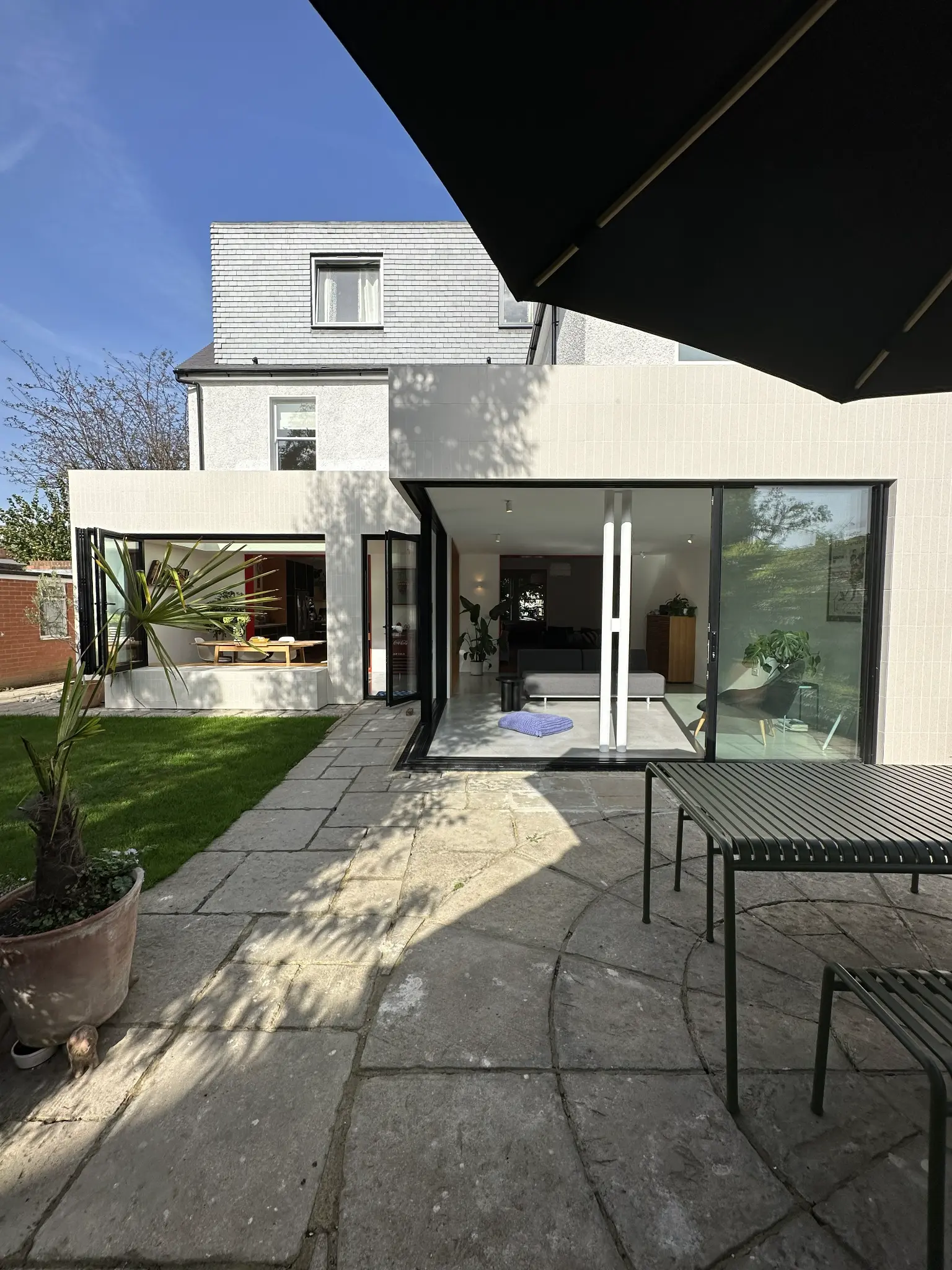
Bi-parting sliding doors consist of two door panels that meet in the middle of an opening. When operated, each panel slides horizontally in an opposing direction, typically along a track system, to stack neatly at either side of the opening. This creates a central, expansive passageway. They are often chosen for larger openings where a single sliding panel would be too wide or heavy, or where the aesthetic of a symmetrical opening is desired.
Common Configurations and Materials
- Two-Panel System: The most common, with one panel sliding left and the other right.
- Multi-Panel Systems: Can involve four panels (two bi-parting sets) or more, where multiple panels slide to each side, often stacking behind a fixed panel or into a pocket.
- Materials:
- Aluminium: Popular for its strength, slim sightlines, and low maintenance. Excellent for large glazed areas.
- Timber: Offers a natural, warm aesthetic. Can be engineered timber for improved stability. Requires more maintenance.
- uPVC: A cost-effective option, good thermal performance, but can have thicker frames, limiting glass area.
- Composite: Combines materials (e.g., timber interior, aluminium exterior) for the best of both worlds.
Expansive Openings
Create large, unobstructed access to outdoor spaces, enhancing the connection between indoors and out.
Symmetrical Aesthetics
Offer a balanced and elegant appearance, especially appealing in contemporary architectural designs.
Space Efficiency
Unlike bifold doors, sliding panels do not intrude into living spaces when open, making them ideal for smaller patios or balconies.
Excellent Views
Often feature slim frames, maximising glass area and offering uninterrupted panoramic views even when closed.

Design and Technical Considerations
Frame Materials and Glazing
The choice of frame material significantly impacts both the aesthetics and performance of your bi-parting doors. Aluminium frames are particularly popular for modern installations due to their inherent strength, allowing for very slim sightlines and larger glass panels. This maximises natural light and views. For glazing, double glazing is standard in the UK, but triple glazing is increasingly specified for enhanced thermal and acoustic performance.
Thermal Performance (U-Values)
A critical technical specification is the U-value, which measures how effectively a component prevents heat from escaping. A lower U-value indicates better insulation. For new builds and extensions in England, current Building Regulations Part L (2022) require windows and doors to achieve a maximum U-value of 1.2 W/m²K. For replacement doors, the maximum is 1.4 W/m²K. Reputable manufacturers will provide U-value certificates for their products.
Pro Tip
When comparing different bi-parting door systems, always ask for the 'whole product' U-value, not just the 'centre pane' U-value. The whole product U-value accounts for the frame, glass, and spacers, giving a more accurate representation of overall thermal performance.
Security Features
Security is paramount for any external door. Look for systems that comply with PAS 24:2016, the UK's enhanced security performance standard for doors and windows. Key features include:
- Multi-point locking systems: Engaging at several points along the frame.
- Anti-lift mechanisms: Preventing panels from being dislodged from their tracks.
- Laminated or toughened glass: More resistant to impact.
- Secure cylinder locks: Such as 'snap-safe' cylinders.
Threshold Options
Bi-parting doors offer various threshold designs:
- Standard Threshold: Features a raised lip to ensure weather-tightness, suitable for external applications.
- Low Threshold: A reduced height threshold, offering improved accessibility but potentially slightly less weather resistance.
- Flush Threshold: Designed to be level with the interior and exterior floor finishes, providing a seamless transition and excellent accessibility. This option requires careful consideration of drainage and weather protection, especially in exposed locations.
UK Building Regulations and Compliance
When installing bi-parting sliding doors, particularly as part of an extension or new build, adherence to UK Building Regulations is essential. The key areas of compliance are:
Part L (Conservation of Fuel and Power)
As mentioned, thermal performance is crucial. New doors must meet specific U-value requirements:
- New Build/Extension: Maximum 1.2 W/m²K for windows and doors.
- Replacement Doors: Maximum 1.4 W/m²K for windows and doors.
These values are designed to ensure energy efficiency and reduce carbon emissions. It's important to note that these are minimum standards, and exceeding them can lead to lower energy bills and a more comfortable home.
Part F (Ventilation)
New or replacement doors may affect natural ventilation. If the new doors significantly reduce the existing ventilation capacity, trickle vents may be required to ensure adequate background ventilation. This is particularly relevant if replacing older, less airtight doors.
Part K (Protection from Falling, Collision and Impact)
This part relates to safety glazing. Any glass in doors or adjacent to them (within 300mm) must be safety glass (toughened or laminated) to prevent serious injury in case of breakage. Large glazed panels in bi-parting doors will always need to comply with this.
Part M (Access to and Use of Buildings)
If the doors are part of an accessible route, Part M may apply, particularly regarding threshold heights. A flush or low threshold would be beneficial for wheelchair users or those with mobility issues.
Always consult with your local Building Control Body or a qualified professional before commencing work to ensure full compliance with all relevant regulations. Failure to comply could affect the sale of your property in the future.
Installation and Maintenance
Professional Installation
Given the size, weight, and precision required for bi-parting sliding doors, professional installation is highly recommended. An experienced installer will ensure:
- The opening is correctly prepared and level.
- The frame is plumb and square.
- The tracking system is accurately aligned for smooth operation.
- Proper sealing and weatherproofing are achieved.
- Compliance with Building Regulations.
Many installers are FENSA or CERTASS registered, which means they can self-certify their work for Building Regulations compliance, saving you the need to involve local authority Building Control directly.
Maintenance
The level of maintenance required depends on the frame material:
- Aluminium: Generally low maintenance. Regular cleaning with soapy water and occasional lubrication of tracks and moving parts is usually sufficient.
- uPVC: Similar to aluminium, requiring only periodic cleaning.
- Timber: Requires more regular attention, including cleaning, re-painting or re-staining every few years to protect the wood from weathering.
Regardless of material, it's advisable to keep the tracks free of debris to ensure smooth and effortless operation of the sliding panels.
Comparison: Bifold vs. Bi-Parting Sliding Doors
While both bifold and bi-parting sliding doors offer large openings, their operational mechanics and aesthetic impact differ significantly. Understanding these differences can help you choose the best option for your home.
| Feature | Bi-Parting Sliding Doors | Bifold Doors |
|---|---|---|
| Opening Mechanism | Panels slide past each other and stack at the sides. | Panels fold concertina-style and stack at one or both ends. |
| Opening Size | Can achieve very large openings, often with fewer, wider panels. | Can open almost the entire width, but panels stack inwards or outwards. |
| Aesthetics (Closed) | Fewer, larger glass panels; very slim sightlines possible. | More vertical frames due to multiple narrower panels. |
| Aesthetics (Open) | Panels stack neatly to the sides, minimal intrusion. | Panels stack into the living space or onto the patio, creating a 'stack' of doors. |
| Space Intrusion | Minimal intrusion into the living space or patio. | Requires space for the folded panels to stack. |
| Ventilation Options | Can be partially opened for ventilation. | Often include a 'traffic door' for easy access without opening all panels. |
| Weather Performance | Excellent, with robust sealing. Flush thresholds require careful detailing. | Excellent, with robust sealing. |
| Cost | Generally comparable to bifolds, can vary with size and material. | Generally comparable to sliding doors, can vary with size and material. |
Bi-parting sliding doors excel where uninterrupted views and minimal intrusion are priorities. Bifold doors, on the other hand, offer the ability to open up almost the entire wall, creating a truly expansive connection, albeit with the door panels stacking.
Conclusion
Bi-parting sliding doors represent a premium choice for homeowners seeking to enhance their living spaces with natural light, expansive views, and a seamless connection to the outdoors. Their elegant symmetry and efficient operation make them a compelling alternative to other large glazing solutions.
When considering bi-parting sliding doors for your UK home, prioritise thermal performance (U-values), robust security features, and compliance with all relevant Building Regulations. Engaging with a reputable supplier and experienced installer will ensure your investment provides lasting beauty, comfort, and functionality.
For expert advice and a range of high-quality bi-parting sliding door options tailored to your specific needs, consider consulting with specialists in architectural glazing. Shard AG offers a comprehensive selection of bespoke glazing solutions, ensuring precision engineering and professional installation for your project.
Explore Our Products
Discover how Shard Architectural Glazing can transform your home with our premium glazing solutions:
Ready to Transform Your Home?
Get in touch with our expert team for a free consultation and personalised quote. We'll help you choose the perfect glazing solution for your property.